Golf Hunting Digital Laser Rangefinder Suppliers and Manufacturers
Explore 11 verified options for Golf Hunting Digital Laser Rangefinder from China Hubei and Chongqing. Compare ISO certifications, response times, lead times, and product specifications like magnification and accuracy before contacting suppliers directly; review the available evidence before requesting comparable quotations from suitable candidates.
Suppliers List

Onick Optics (Wuhan) Co., Ltd.
- Verified by SGS
- Combined
- China Hubei
- Lead time15 days
- Avg. response≤ 5h
Main productsRange Finder, Telescope, Night Vision, Thermal Imager, Trail Cameras, Speedometer, Photovoltaic Energy Storage
Main marketsDomestic

3000m Distance Hunting Laser Range Finder Outdoor Golf Portable Hunting Rangefinder
$988.00 - $1155.00
MOQ: 1 Pieces

Hot Sale Laser Distance Meter 2000m Outdoor Sport Hunting Golf Rangefinder
$300.00 - $500.00
MOQ: 2 Pieces


Chongqing Dontop Optics Co., Ltd.
- Trading Company,Manufacturer/Factory
- China Chongqing
- Lead time38 days
- Avg. response≤ 5h
Main productsBinoculars, Rifle Scope, Range Finder, Spotting Scope, Telescope, Lenses, Red DOT, Night Vision, Monoculars, Mount
Main marketsSouth America,Eastern Europe,Mid East,North America,Southeast Asia,Eastern Asia,Oceania,Western Europe,Africa

1000 Dontop Hunting Distance Meter Digital Rangefinder Instrument Golf Laser Rangefinder
$36.00 - $44.00
MOQ: 20 Pieces


Shenzhen Guangyan Communication Co., Ltd.
- Manufacturer, Trading Company
- Guangdong, China
- Lead time0 days
- Avg. response≤ 3h
Main productsFusion Splicer, Optical Power Meter, Fiber Cleaver, Visual Fault Locator
Main marketsSoutheast Asia(45.00%), South America(25.00%), North America(20.00%), Africa(10.00%)
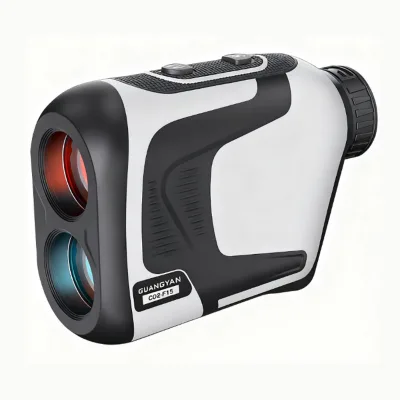
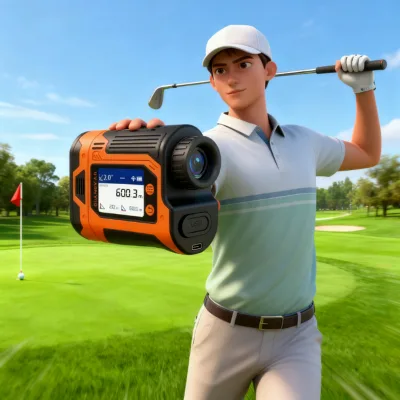
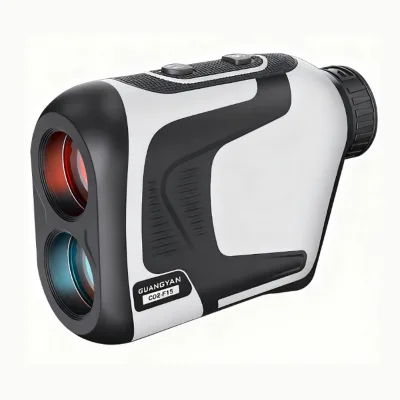
$50.00 - $70.00
MOQ: 2 Minimum
Dongguan Taizhikang Technology Co., Ltd.
- Verified by TüVRheinland
- Manufacturer, Trading Company
- Lead time10 days
- Avg. response≤ 2h
Main productsSalinity Meter, Sugar Meter, Barbecue Thermometer, Golf Rangefinder, Chlorine Meter
Main marketsSoutheast Asia(25%), Eastern Asia(20%), Domestic Market(16%)
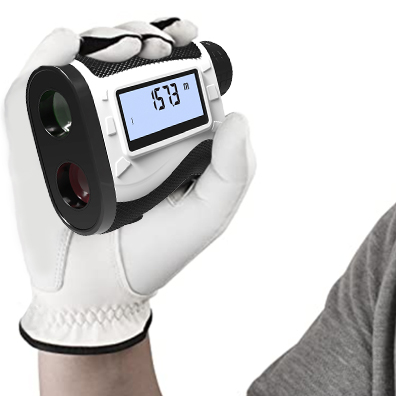
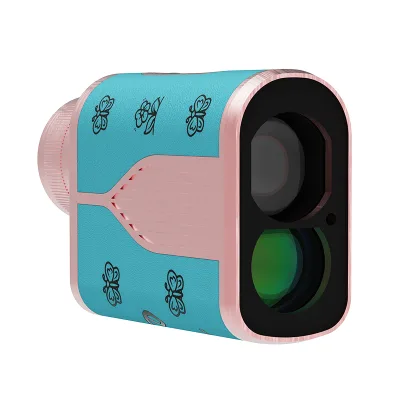
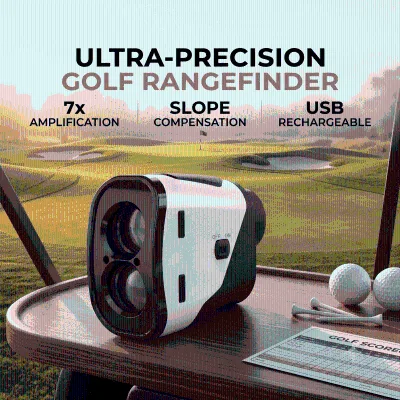
Budget Friendly Compact Pocket Size 1200 Yard Hunting Scope HD Optical System Laser Rangefinder Golf
$165.00 - $169.00
MOQ: 5 pieces

Changzhou Skyvictor Import and Export Co., Ltd.
- Verified by BV
- Trading Company
- China Jiangsu
- Lead time23 days
- Avg. response≤ 25h
Main productsLaser Level, Rotary Laser Level, Surveying Instrument, Laser Distance Meter, Electrical Measuring Meter, Multimeter, Total Station, Machine Control System, EDM, Electronic Tools
Main marketsSoutheast Asia/ Mideast

YINGTAN CITY AOXIANG OPTICS CO., LTD.
- Verified by SGS
- Combined
- China Jiangxi
- Lead time15 days
- Avg. response≤ 2h
Main productsRiflescope, Binoculars, Astronomical Telescope, Range Finder, Magnifier, Compass, Night Vision, Gun Brush, DOT Sight, Spotting Scope
Main marketsSouth America,East Asia(Japan/ South Korea),Domestic,Europe,Australia,North America

$32.50 - $38.40
MOQ: 5 Pieces


Professional Outdoor Laser Golf Rangefinder 6X Multi-Functional Digital Golf Laser Rangfinder
$31.50 - $37.50
MOQ: 5 Pieces

Hot Sale High Quality Handheld Laser Rangefinder Digital Golf Rangefinder
$47.10 - $57.10
MOQ: 5 Pieces

$30.80 - $36.70
MOQ: 5 Pieces

$31.50 - $37.50
MOQ: 5 Pieces
Henan Bosean Technology Corporation Limited
- Manufacturer, Trading Company
- Lead time旺季: "1 - 50":7,"> 50":"To be negotiated", 淡季: "1 - 50":7,"> 50":"To be negotiated"
- Avg. response≤ 2h
Main productsLaser Range Finder

Jinan Azure International Trade Co., Ltd.
- Trading Company
- China Shandong
- Lead time23 days
- Avg. response≤ 2h
Main productsThermal Imaging Camera, Laser Distance Meter, Thermal Imaging Module, Laser Distance Module, Handheld Thermal Imager, Industrial Thermal Cameras, Time-of-Flight Distance Sensors, Thermal Imaging Components for Drones, Laser Rangefinder Devices, Portable Infrared Cameras
Main marketsSouth America,Eastern Europe,Mid East,North America,Southeast Asia,Eastern Asia,Oceania,Western Europe,Africa


$50.00 - $59.00
MOQ: 1 Pieces

OEM 6X Laser Rangefinder 1000m Long Distance for Golf, Hunting and Shooting
$40.00 - $43.00
MOQ: 1 Pieces

Handheld 2000m Long Range Laser Range Finder Digital High Precision OEM Laser Rangefinder for Golf
$81.00 - $89.00
MOQ: 1 Pieces

Shenzhen Feikasi Industrial Co., Limited
- Manufacturer
- Guangdong, China
- Lead time15 days
- Avg. response≤ 1h
Main productsUSB Bodycam,Sport Camera,Car Dash Camera,WiFi Mini Camera,Hunting Trail Camera
Main marketsNorth America(36.00%), Eastern Europe(24.00%), Southeast Asia(18.00%), South America(6.00%), South Asia(4.00%), Africa(4.00%), Western Europe(3.00%), Southern Europe(2.00%), Oceania(1.00%), Central America(1.00%), Northern Europe(1.00%)
Chongqing Diaoran Photoelectric S&T Co., Ltd.
- Manufacturer, Trading Company
- Chongqing, China
- Lead time45 days
- Avg. response≤ 6h
Main productsLaser Rangefinder,Optical Parts,Mechanical Parts,Laser Spare Parts,Laser Ranger Finder
Main marketsNorth America(22.00%), Mid East(18.00%), Western Europe(12.00%), Domestic Market(10.00%), Eastern Europe(10.00%), South Asia(6.00%), Oceania(5.00%), South America(5.00%), Southeast Asia(3.00%), Eastern Asia(2.00%), Africa(2.00%), Southern Europe(2.00%), Northern Europe(2.00%), Central America(1.00%)
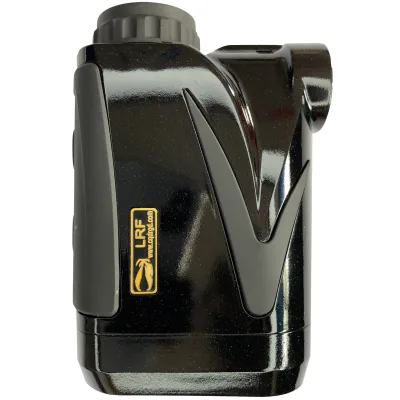
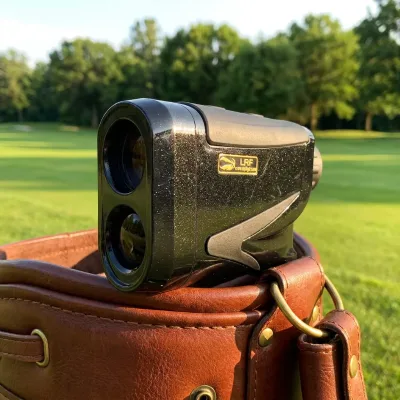
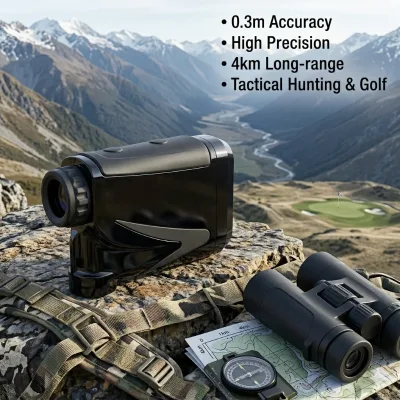
2km Handheld Laser Rangefinder for Outdoor Telescope Hunting
$49.00 - $81.00

Ningbo Barride Optics Co., Ltd.
- Trading Company,Manufacturer/Factory
- China Zhejiang
- Lead time75 days
- Avg. response≤ 4h
Main productsMicroscope, Telescope, Binoculars, Riflescope, Magnifier, Spotting Scope, Range Finer, Astronomical Telescope, Night Vision, Biological Microscope
Main marketsSouth America,Eastern Europe,Mid East,North America,Southeast Asia,Eastern Asia,Oceania,Western Europe,Africa




Comprehensive Sourcing Guide
Golf Hunting Digital Laser Rangefinder Supplier Concentration and Factory Types
Suppliers offering golf hunting digital laser rangefinders on B2B platforms are heavily concentrated in China, and the current results reflect that pattern. One combined manufacturer-and-brand operation is located in Hubei province, listing range finders, telescopes, night vision devices, thermal imagers, trail cameras and speedometers among its main products, with golf rangefinders appearing under sports and entertainment categories. Another supplier base sits in Chongqing, a trading company combined with factory manufacturing whose product lines span binoculars, rifle scopes, spotting scopes, monoculars, red dot sights and mounts alongside range finders. These clusters matter because optics assembly, lens coating and laser module sourcing tend to develop regionally, and buyers who confirm a supplier's province can assess how close it sits to the component ecosystem for laser diodes, prisms and electronic boards.
Supplier types vary in ways that affect sourcing strategy. Combined manufacturers may carry their own brands plus ODM capability, which suits buyers wanting customized firmware, housing molds or private labeling. Trading-plus-factory hybrids can offer broader catalogs and consolidated shipments of rangefinders with adjacent optics. When reviewing listings, note whether the supplier describes itself as a factory, a trading company or both, and whether it claims ODM, OEM or own-brand capacity. Buyers should also cross-check that golf rangefinders are a core line rather than an incidental item, since depth in laser ranging products usually signals better after-sales support and replacement-module availability.
How to Verify Golf Hunting Digital Laser Rangefinder Suppliers
Verification begins with third-party checks displayed on the platform. Some suppliers in this category carry SGS verification, which confirms that company registration, business scope and basic operational data were audited by an independent inspection firm. Others list system certifications such as ISO 9001:2015 quality management and ISO 14001:2015 environmental management, or earlier ISO 9000 and ISO 9001 family certificates. Treat these as starting signals rather than proof of product quality: an ISO certificate covers process discipline, not whether a specific rangefinder model meets your accuracy specification. Ask for the certificate number and validity dates, and confirm the certified scope covers the manufacturing entity you are contracting with.
Beyond documents, verify capability directly. Request the product's test data for measurement accuracy, since listed rangefinders in this category claim figures such as ±0.2m below 200m or ±0.3m overall, and you should confirm these against your own range testing of samples. Ask whether the supplier offers customization, as several listings state it is available, and probe what that covers: logo printing, packaging, firmware, optical parameters or housing color. Check production evidence such as photos of the assembly line, laser module sourcing and finished-goods warehouses. Finally, request references or export records for your target market, and confirm whether the supplier holds any product-level certifications required for electronics in your destination country, since platform-verified company data does not guarantee market-specific compliance.
What to Compare Across Golf Hunting Digital Laser Rangefinder Suppliers
Build a comparison sheet from the attributes suppliers actually display, without assuming every supplier shows the same fields. Practical dimensions include lead time, which varies widely in this category, from around fifteen days for one Hubei-based combined manufacturer to roughly thirty-eight days for the Chongqing trading-and-factory operation. Response time is another visible metric, with listed averages of roughly four to five hours, and it often predicts how smoothly technical questions and after-sales claims will be handled. Compare main product lines to judge whether a supplier is an optics specialist or a diversified electronics maker, since specialization usually correlates with deeper engineering support for laser ranging modules.
Product-level comparison matters just as much. Listed models in this category differ sharply in magnification, from 6X to 8X, in measuring range, from around 600m up to 3000m, and in accuracy class, with quoted tolerances from ±0.2m to ±0.3m depending on distance. Compare battery approach, since some models use a 1200mAh rechargeable lithium pack while others use a CR2 3V lithium cell, and check features such as GPS coordinates, Bluetooth app connectivity, slope measurement, external displays and data storage, which appear only on certain models. Note MOQ, which ranges from a single unit on one 3000m model to five units on a 600m long-distance unit, and price bands, which span from the mid-hundreds up to nearly a thousand dollars per unit on the longest-range professional models.
Common Golf Hunting Digital Laser Rangefinder Sourcing Risks
The most common risk in this category is accuracy specification drift. Listings quote figures such as ±0.2m below 200m and ±1m beyond 200m, or flat ±0.3m, but these are manufacturer claims that may reflect ideal conditions with cooperative targets. Buyers who accept paper specifications without sample testing frequently discover real-world performance degrades on dark, wet or angled surfaces, in bright sunlight, or at the far end of the claimed range. Require a signed sample with your own measured results at several distances before production, and specify acceptance criteria in the purchase contract rather than referencing the catalog page.
Other risks cluster around product configuration and compliance. Working temperature ranges differ across models, from -20 to 40 degrees Celsius on one unit to -10 to 50 degrees on another, which matters if your customers hunt or golf in extreme climates. Battery type inconsistency, rechargeable versus disposable CR2 cells, can generate warranty disputes if replacement logistics are unclear. Buyers also underestimate the risk of missing product-level certifications for laser safety and electromagnetic compatibility in destination markets; ISO system certificates do not cover these. Finally, long lead times on some suppliers, approaching nearly forty days, create stockout risk if you fail to align reorder cycles, and single-sourcing from one province leaves you exposed to regional production disruptions. Qualify at least one alternative supplier before committing to volume orders.
Golf Hunting Digital Laser Rangefinder Regional Sourcing and Logistics
The confirmed sourcing geography for this category is concentrated in China, with verified supplier results pointing to Hubei province and Chongqing municipality. Hubei hosts a combined manufacturer with ODM capacity and its own brand whose catalog extends from golf rangefinders to thermal imagers and photovoltaic energy storage, suggesting a diversified electronics manufacturing base. Chongqing hosts a trading-company-plus-factory operation rooted in sporting optics such as binoculars, spotting scopes and rifle scopes, where rangefinders complement a broader optical assembly cluster. Because both regions are inland, ask each supplier how finished goods reach the major export ports, and factor inland trucking time into quoted lead times rather than assuming coastal port schedules apply directly.
For logistics planning, rangefinders are compact, moderately valuable optical-electronics goods, which makes them suitable for air freight on urgent replenishment and consolidated sea freight for routine orders. Confirm export packaging details, since listed models ship in cartons or color boxes, and specify inner-box drop testing for precision optics. Lithium battery configurations have shipping implications: models with built-in rechargeable lithium packs may face air transport restrictions that CR2-cell models avoid, so state the battery variant at quotation stage. Ask each supplier for its standard Incoterms, typical dispatch documents and whether it has export experience to your market. For buyers sourcing outside these confirmed regions, use platform location filters, business license addresses and inspection reports to identify whether additional clusters exist before assuming a single-region strategy.
Golf Hunting Digital Laser Rangefinder Commercial Terms and Order Planning
Commercial terms in this category vary enough to reward structured negotiation. Quoted price ranges span a wide band: a 600m long-distance model lists at around fifty-five dollars with a five-unit minimum, mid-tier 600–1000 yard models fall roughly between one hundred seventy and five hundred dollars, while 3000m professional units reach into the high hundreds and approach a thousand dollars on one listing with a single-unit MOQ. Use these bands to frame negotiations, but always tie price to a specific configuration, since accuracy class, magnification, battery type and slope features materially change cost. Payment terms, escrow availability and trade assurance protection should be confirmed supplier by supplier, as these are displayed attributes that not every listing carries.
Order planning should anchor on verified lead times and MOQ data. One Hubei combined manufacturer lists a lead time of about fifteen days, while the Chongqing operation lists roughly thirty-eight days, and MOQs run from one to five units across current listings. Build reorder points from the longer end of these ranges, add sample-approval and quality-inspection time, and reserve capacity ahead of peak golfing and hunting seasons rather than ordering into demand. Specify customization scope, acceptance testing, warranty duration and spare-parts availability in writing before deposit. Finally, confirm unit-of-measure consistency, since some listings state objective lens diameter with inconsistent units, and resolve every specification ambiguity in the proforma invoice before production begins.
(Word count: approximately 1390)
FAQs
What minimum order quantity applies to laser rangefinders on this page?
Listed minimum order quantities range from a single unit on one 3000m golf model to two units on a 2000m distance meter and five units on a 600m hunting rangefinder. Small trials are therefore practical for testing quality before scaling. Always confirm the current MOQ in writing, since limits can change with customization levels, packaging requirements, and negotiated order volumes.
How long does production and delivery typically take?
Observed lead times span roughly 15 days to 38 days depending on the supplier and order complexity. Simple stock orders of handheld rangefinders tend to sit at the shorter end, while OEM or ODM customization adds time. Ask each supplier to confirm the lead time for your specific quantity, branding, and shipping destination before placing a deposit.
Do suppliers support OEM or ODM customization of rangefinders?
Yes, customization is available on the listed models, and the companies advertise ODM capability, own-brand programs, and OEM manufacturing or trading combinations. This covers branding, packaging, and specification adjustments on models such as slope-measuring golf units. Request a written statement of what can be changed, any tooling fees, and the revised lead time before committing to a customized order.
What certifications should I verify before ordering?
The listed suppliers report ISO9001:2015 and ISO14001:2015 certificates at one company and ISO 9000, ISO 9001, and ISO 20000 at another, with SGS verification noted. Treat these as claims to confirm: request copies of current certificates, check scope and expiry dates, and ask whether the certificate covers the factory producing your units rather than only an office entity.
What accuracy and range do these golf and hunting rangefinders offer?
Listed models quote measurement accuracy from about plus or minus 0.2 meters at short distances to plus or minus 1 meter beyond 200 or 300 meters, with measuring ranges from 600 meters up to 3000 meters. Magnification runs 6X to 8X. Match the range class to your use case, since golf use rarely needs the longest-distance hunting specifications and prices differ accordingly.
What price range should I expect per unit?
Listed unit prices run from about 55 dollars for a compact 600m hunting model, through the 170 to 500 dollar mid-range, up to roughly 988 to 1155 dollars for a GPS-enabled 3000m golf rangefinder. Features such as slope correction, Bluetooth app connection, external displays, and GPS drive the differences. Request quotations at your target quantity, since listed prices usually reflect small-volume tiers.
How quickly do these suppliers respond to inquiries?
Recorded average response times are about four to five hours, which is workable for cross-time-zone negotiation but still leaves room for follow-up delays during busy seasons. Send a detailed first inquiry covering quantity, customization, and destination to reduce back-and-forth. Test responsiveness with a technical question before relying on a supplier for time-sensitive reorders or pre-shipment coordination.
Where are the featured rangefinder suppliers located?
The featured companies are located in Hubei and Chongqing, China, and manufacture or trade optics including rangefinders, binoculars, telescopes, night vision, and thermal imagers. Location matters for factory audits and consolidated shipping with other optics products. Verify the actual factory address through an audit or third-party inspection, especially when a listing combines a trading company with manufacturing facilities.