Plastic and Rubber Shore Hardness Tester Suppliers and Manufacturers
Source 26 verified suppliers for Plastic and Rubber Shore Hardness Tester equipment. Compare key dimensions including ISO 9001 certification, OEM/ODM capabilities, lead times, and pricing ranges. Review product specifications and request quotes directly from manufacturers in China; review the available evidence before requesting comparable quotations from suitable candidates.
Suppliers List

TAIZHOU EBPU PRECISION INSTRUMENTS CO., LTD.
- Trading Company,Manufacturer/Factory
- China Zhejiang
- Lead time15 days
- Avg. response≤ 12h
Main productsMetallographic Sample Preparation Machine, Ultrasonic Flaw Detector, Surface Roughness Tester, Thickness Meter, Metallurgical Microscope, Brinell Hardness Testing Machine, Vickers Hardness Testing Equipment, Shore Durometer, Portable Leeb Rebound Hardness Test Equipment, Rockwell Hardness Tester
Main marketsSouth America,Eastern Europe,Mid East,North America,Southeast Asia,Eastern Asia,Oceania,Western Europe,Africa

Xiuyan Precision Instrument Factory
- Manufacturer
- China Liaoning
- Lead time0 days
- Avg. response≤ 16h
Main productsFlow Meter, Level Meter, Electromagnetic Flowmeter, Ultrasonic Flowmeter, Ultrasonic Level Meter, Vortex Flowmeter, Turbine Flowmeter, Target Flowmeter, Krohne Flow Meter, Flowmeter


MOQ: 1 Pieces

- Verified by TUVRHEINLAND
- Trading Company,Manufacturer/Factory
- China Shandong
- Lead time15 days
- Avg. response≤ 8h
Main productsThermal Analysis, Water Quality Analyzer, Textile Testing, Pulp Testing, Rubber and Plastictesting, Density Meter, Electronic Balance, Gas Detector, Moisture Meter, Paper and Paperboard Testing
Main marketsSouth America,Eastern Europe,Mid East,North America,Southeast Asia,Eastern Asia,Oceania,Western Europe,Africa


Skz128A Plastic and Vulcanized Rubber Shore a Hardness Test Machine Device
$180.00 - $200.00
MOQ: 1 Sets

Skz128A Price Thermoplastic Rubber ISO868 ISO7619 Shore Hardness Tester Machine
$180.00 - $200.00
MOQ: 1 Sets

JINAN JMLAB INSTRUMENT CO., LTD.
- Verified by BV
- Trading Company,Manufacturer/Factory
- China Shandong
- Lead time15 days
- Avg. response≤ 5h
Main productsHydraulic Universal Testing Machines, Electronic Universal Testing Machines, Fatigue Testing Machines, Horizontal Tensile Testing Machines, Glass Bottle Testing Machines, Packaging Material Testing Machine, Asphalt and Geotextile Testing Machine, Sample Making Machines and Cutters, Plastic Bottle Cutting and Slitting Machines, Rubber Deflashing Machines
Main marketsSouth America,Eastern Europe,Mid East,North America,Southeast Asia,Eastern Asia,Oceania,Western Europe,Africa

Measuring Equipment /Shore Hardness Tester for Measuring Vulcanized Rubber and Plastic Products
$150.00 - $200.00
MOQ: 1 set


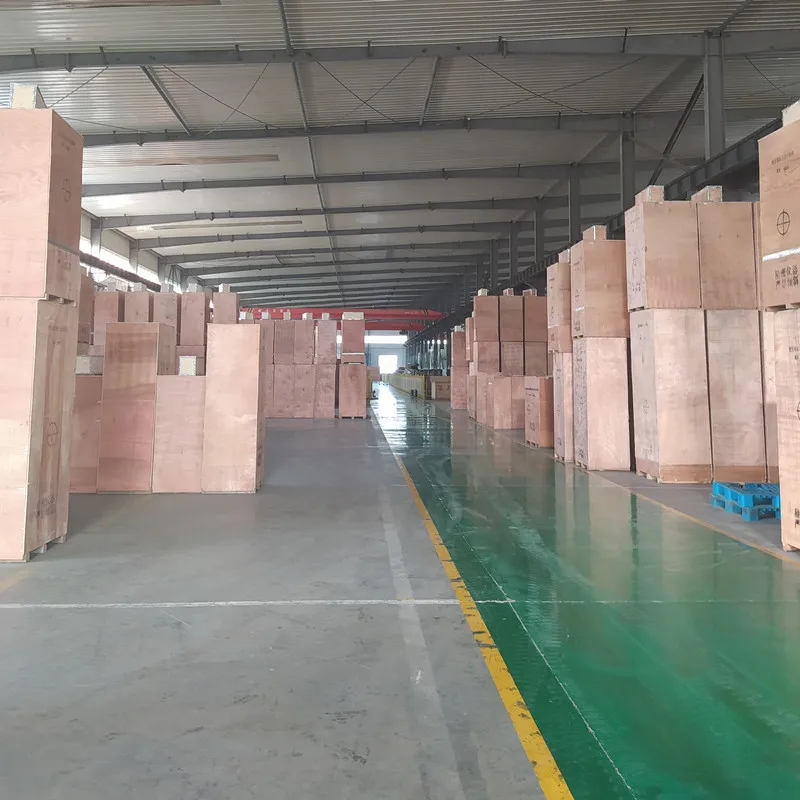
Cangzhou Zhulong Engineering Instrument Co., Ltd.
- Manufacturer, Trading Company
- Hebei, China
- Lead time15 days
- Avg. response≤ 5h
Main productsUniversal test machine,compression test machine,Blast drying oven,Box type high temperature furnace,concrete Gas content
Main marketsSoutheast Asia(15.00%), North America(15.00%), Eastern Europe(10.00%), Mid East(10.00%), South America(5.00%), Domestic Market(5.00%), South Asia(5.00%), Southern Europe(5.00%), Northern Europe(5.00%), Central America(5.00%), Western Europe(5.00%), Eastern Asia(5.00%), Oceania(5.00%), Africa(5.00%)
Dongguan Zhongli Instrument Technology Co., Ltd.
- Trading Company
- Lead time旺季: "1 - 1":13,"> 1":"To be negotiated", 淡季: "1 - 1":13,"> 1":"To be negotiated"
- Avg. response≤ 2h
Main productsRheometer Machine For Rubber, Tensile Strength Tester, Banbury Mixer, Roll Open Mixing Mill, Climatic Temperature Humidity Tester

Dongguan Zhongli Instrument Technology Co., Ltd
- Verified by CTI
- Trading Company
- China Guangdong
- Lead time23 days
- Avg. response≤ 3h
Main productsEnvironmental Chamber, Universal Testing Machine, Test Machine, Lab Two Roll Mill, Banbury Mixer, Lab Hydraulic Press, Textile Testing Machine, Packaging/Carton/Paper Test Machine, Leather/Shoes Testing Machine, Rubber and Plastic Testing Machine
Main marketsSouth America,Africa,Southeast Asia/ Mideast,East Asia(Japan/ South Korea),Domestic,Europe,Australia,North America


High Accuracy Shore a Rubber Hardness Tester Shore a Hardness Testing Machine Price
$150.00 - $350.00
MOQ: 1 Pieces

Guangzhou Amittari Instruments Co., Ltd.
- Trading Company
- China Guangdong
- Lead time0 days
- Avg. response≤ 15h
Main productsPaint Thickness Meter, Coating Thickness Gauge, Roughness Tester, Hardness Tester, Moisture Meter, Vibration Meter, Tension Tester, Window Tint Meter, Glossmeter, Anemometer


Digital Plastic Durometer Testing Equipment Shore a Rubber Hardness Tester Meter
$248.00
MOQ: 1 Pieces


Xuzhou Perfect Tools Co., Ltd.
- Trading Company
- China Jiangsu
- Lead time23 days
- Avg. response≤ 19h
Main productsHSS Drill Bit, Saw Blade, Hole Saw, Screw Taps, End Mill, Drill Bits, Screwdriver, Wrench, Air Tools, Plier
Main marketsSouth America,Africa,Southeast Asia/ Mideast,East Asia(Japan/ South Korea),Europe,Australia,North America

Shenzhen Pride Instrument Inc.
- Verified by SGS
- Trading Company,Manufacturer/Factory
- China Guangdong
- Lead time0 days
- Avg. response≤ 25h
Main productsHardness Testers Rocwell Testers Durometers, Measuring Tools Micrometers Dial Gauges, Force Gauges Torque Gauges Torque Wrenches, Metallographic Equipments Cutting Machines, Non Destructive Testing Coating Thickness Gauges, Optical Instruments Video Measuring Machines, Material Testing Machines Impact Testing Machine, Paint Testing Equipments DIN Cups Grind Gauges, Electronic Instruments Tachometers Refractometer, Hardwares Tools
Main marketsSouth America,Eastern Europe,Mid East,North America,Southeast Asia,Eastern Asia,Oceania,Western Europe,Africa

Dongguan Miko Testing Instrument Co., Ltd.
- Verified by SGS
- Trading Company,Manufacturer/Factory
- China Guangdong
- Lead time23 days
- Avg. response≤ 3h
Main productsTwo Roll Mill, Film Blowing Machine, Twin Screw Extruder, Injection Molding Machine, Vulcanizing Press Machine, Internal Mixer, Lab Plastic Extruder, Plastic Crusher, Aging Test Chamber, Salt Spray Test Chamber
Main marketsSouth America,Eastern Europe,Mid East,North America,Southeast Asia,Eastern Asia,Western Europe


Laboratory Digital Shore a&D Hardness Tester for Rubber and Plastic Materials
$400.00 - $580.00
MOQ: 1 set

High Precision Laboratory Hardness Tester for Material Testing and Analysis
$400.00 - $580.00
MOQ: 1 set


Jinan Liling Testing Machine Co., Ltd
- Verified by TUVRHEINLAND
- Combined
- China Shandong
- Lead time15 days
- Avg. response≤ 1h
Main productsTesting Machine, Pressure Testing Machine, Electronic Universal Testing Machine, Material Tensile Testing Machine, Tensile Testing Machine, Torsion Testing Machine, Creep Endurance Testing Machine, Cupping Testing Machine, Spring Testing Machine, Laboratory Equipment
Main marketsEast Asia(Japan/ South Korea),Europe,North America

$60.00 - $100.00
MOQ: 1 Sets


Lx-F Shore Hardness Tester for Testing Hardness of Soft Foam Materials, Polyurethane Foam Products
$600.00 - $650.00
MOQ: 1 Sets


- Verified by TUVRHEINLAND
- Manufacturer/Factory
- China Shaanxi
- Lead time38 days
- Avg. response≤ 2h
Main productsDial Indicators, Micrometers, Calipers, Thickness Gauges, Bore Gauges, Depth Gauges, Height Gauges, Bevel Protractors, Oil Pipe Thread Instruments, CNC Lathe
Main marketsSouth America,Eastern Europe,North America,Western Europe,Africa


$88.00 - $101.00
MOQ: 10 Pieces

Portable Digital Shore Hardness Tester Durometer Shore a/D/C for Rubber Plastic Silicone Test
$88.00 - $101.00
MOQ: 10 Pieces

- Verified by SGS Group
- Manufacturer, Trading Company
- Lead time10 days
- Avg. response≤ 4h
Main productsTest Instruments, Lab Supplies
Main marketsSoutheast Asia(28%), North America(20%), Africa(15%)

Suzhou Qiantong Instrument Equipment Co., Ltd.
- Combined
- China Jiangsu
- Lead time23 days
- Avg. response≤ 3h
Main productsUniversal Testing Machine, Solar Cell Temsile Testing Machine, Melt Flow Rate Measurer, Hydraulic Testing Machine
Main marketsSoutheast Asia/ Mideast,East Asia(Japan/ South Korea),Domestic,North America
Zhengzhou Eastar Instrument Equipment Co., Ltd.
- Trading Company
- Henan, China
- Lead time1 days
- Avg. response≤ 4h
Main productsLab Instrument and Equipment,Extraction Distillation Equipment,Analysis Instruments,Testing Instrument,Physical Measurement Equipment
Main marketsEastern Europe(15.00%), Southeast Asia(13.00%), Domestic Market(10.00%), South Asia(9.00%), Mid East(8.00%), Africa(8.00%), Western Europe(7.00%), North America(6.00%), Eastern Asia(5.00%), Southern Europe(5.00%), Oceania(4.00%), South America(4.00%), Central America(3.00%), Northern Europe(3.00%)
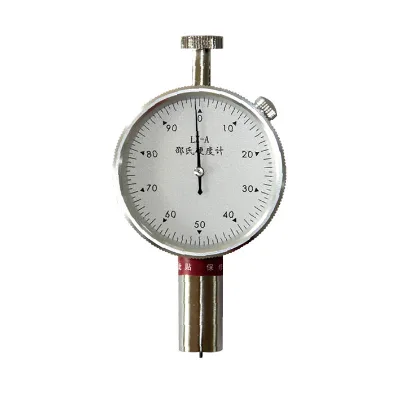
Physical Testing Manual test Shore Rubber and Plastic Hardness Tester Shore Durometer LX-A
$179.00 - $210.00
MOQ: 1
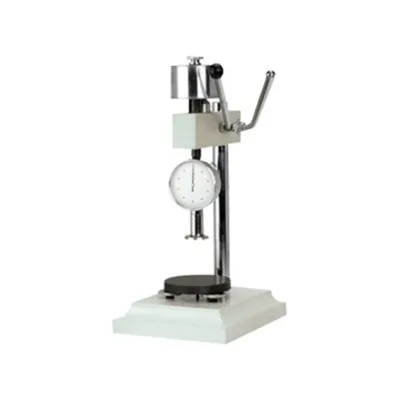
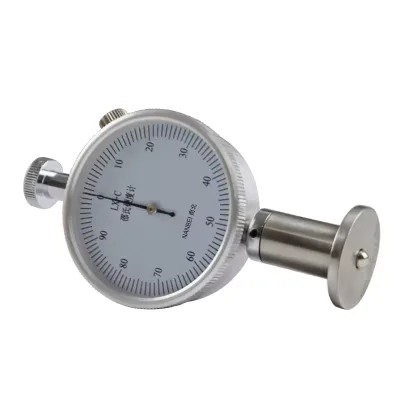
Low Hardness Rubber Leather Shore Durometer Hardness Tester
$70.00 - $80.00

Guangdong Guangce Instrument Technology Co., Ltd.
- Verified by BV
- Combined
- China Guangdong
- Lead time23 days
- Avg. response≤ 3h
Main productsTesting Equipment
Main marketsSouth America,Southeast Asia/ Mideast,Europe,North America
Shenzhen Graigar Technology Co., Ltd.
- Manufacturer, Trading Company
- Guangdong, China
- Lead time3 days
- Avg. response≤ 3h
Main productsUltrasonic Flaw Detector,Ultrasonic Flow Meter,Thickness Gauge,Underground Metal Detector,Leeb Hardness Tester
Main marketsNorth America(20.00%), Western Europe(15.00%), South America(10.00%), Mid East(10.00%), Oceania(10.00%), Africa(10.00%), Southeast Asia(10.00%), Eastern Europe(10.00%), Domestic Market(5.00%)
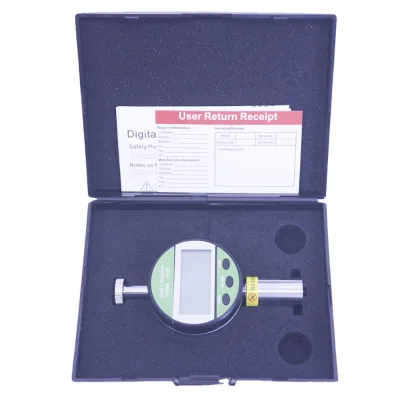
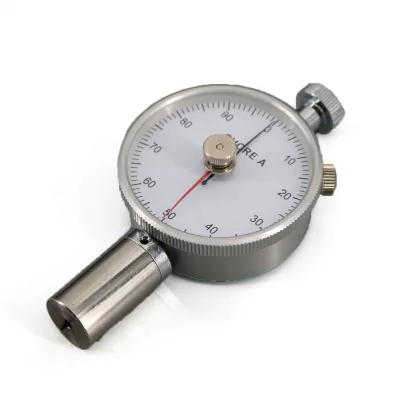
LX-A Shore a Dual Durometer(Dual Needle) Hardness Tester Rubber/Leather/Wax Hardness Meter LX-A-2
$50.00 - $90.00
MOQ: 1 Minimum
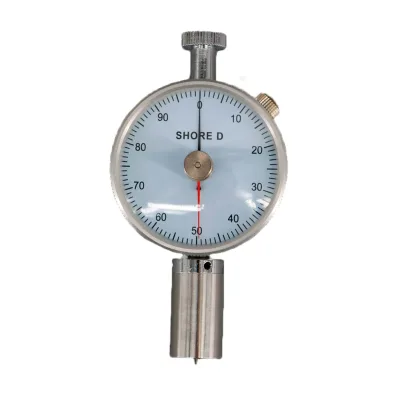
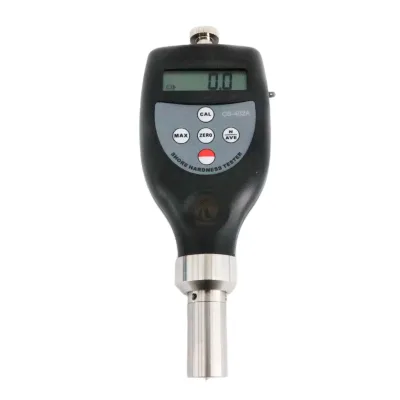
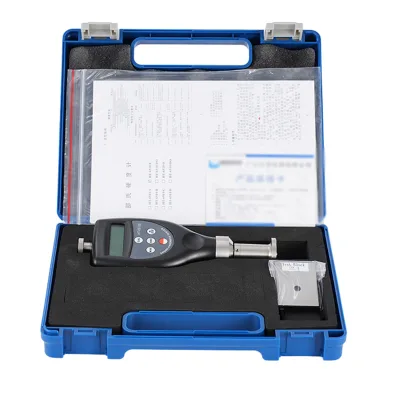
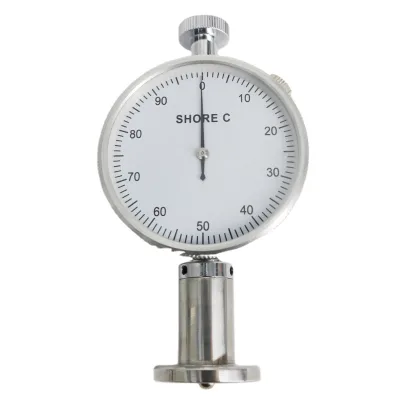
CS-402A Shore a Hardness Tester Hardness Values 10-90 HA Resolution 0.1 HA
$199.00 - $209.00
MOQ: 1 Minimum
Shanghai Total Industrial Co., Ltd.
- Verified by SGS
- Manufacturer/Factory
- China Shanghai
- Lead time0 days
- Avg. response≤ 24h
Main productsFeeder Clamp, Weather Shield Enclosure, Rubber Grommet, Hoisting Grip, Cable Entry, Flexible Jumper Cable, Cablen Ties, Terminal Lugs, Conduit and Fittings, Hole Saw

Shore Hardness Tester (SR1510F)
MOQ: 1 Pieces

MOQ: 1 Pieces
Dongguan Laika Electronic Equipment Co., Ltd.
- Manufacturer, Trading Company, Agent
- Guangdong, China
- Lead time0 days
- Avg. response≤ 6h
Main productsThickness table,depth gauge,Force measuring instrument,Torque instrument,screwdriver
Main marketsNorth America(10.00%)

Guangdong Newgoer Instrument Co., Ltd
- Verified by SGS
- Combined
- China Guangdong
- Lead time15 days
- Avg. response≤ 2h
Main productsFood Metal Detector, Conveyor Checkweigher, X-ray Baggage Inspection, Universal Tensile Testing Machine, Temperature and Himidity Test Chamber, Melt Flow Index Tester, Xenon Lamp Weather Resistant Aging Testing Chamb, Salt Spray Corrosion Test Chamber, UV Weather Aging Test Chamber, Thermal Analyzer
Main marketsSouth America,Africa,Others(foreignTradeCapacity.exportBusinessCapacityMarketOther),Southeast Asia/ Mideast,East Asia(Japan/ South Korea),Domestic,Europe,Australia,North America

Shore Hardness Tester Shore Durometer a C D Hardness Test Instruments
$3200.00 - $4200.00
MOQ: 1 Pieces

$500.00 - $600.00
MOQ: 1 Pieces

Qingdao Tlead International Co., Ltd.
- Trading Company
- China Shandong
- Lead time23 days
- Avg. response≤ 25h
Main productspH Meters, Counter Meters, Arbor Press, Tools, Ddvp
Main marketsSouth America,Africa,Southeast Asia/ Mideast,East Asia(Japan/ South Korea),Europe,Australia,North America

Changchun Intelligent Instrument Equipment Co.,Ltd.
- Verified by TUVRHEINLAND
- Combined
- China Jilin
- Lead time30 days
- Avg. response≤ 2h
Main productsMaterial Testing Machine, Torque Rheometer, Voltage Breakdown Tester, Capillary Rheometer, Melt Flow Index Tester
Main marketsDomestic

Advanced Digital Hardness Tester for Reliable Plastic Material Analysis
$2800.00 - $5000.00
MOQ: 1 Sets

High Precision Plastic Hardness Analyzer for Accurate Quality Control Testing
$2800.00 - $5000.00
MOQ: 1 Sets

Efficient Professional Material Tester for High Precision Plastic Hardness Evaluation
$2800.00 - $5000.00
MOQ: 1 Sets

Professional Plastic Material Quality Tester with Digital Hardness Measurement Features
$2800.00 - $5000.00
MOQ: 1 Sets

Zhangzhou Green-Lake Import & Export Co., Ltd.
- Verified by TUVRHEINLAND
- Trading Company
- China Fujian
- Lead time15 days
- Avg. response≤ 19h
Main productsCanned Food
Main marketsSouth America,Eastern Europe,Mid East,North America,Southeast Asia,Eastern Asia,Oceania,Western Europe,Africa

Needle Type Durometers Shore Hardness Tester 0-100ho Shore O
MOQ: 100 Pieces

Needle Type Durometers Shore Hardness Tester Shore a 0-100ha
MOQ: 100 Pieces

Needle Type Durometers Shore Hardness Tester 0-100 HD
MOQ: 100 Pieces

Digital Durometer Hardness Tester 0-100h a C D
MOQ: 100 Pieces

- Trading Company
- China Guangdong
- Lead time30 days
- Avg. response≤ 2h
Main productsCaliper, Micrometer, Gauges, Indicator, Indicator Stands, Bore Gauge, Levelling Tools, Height Gauge, V- Block, Magnetic Base
Main marketsSouth America,Southeast Asia/ Mideast,Europe,Australia,North America

Guangdong Hongtuo Instrument Technology Co., Ltd.
- Verified by BV
- Combined
- China Guangdong
- Lead time15 days
- Avg. response≤ 2h
Main productsInstrument
Main marketsSouth America,Africa,Southeast Asia/ Mideast,East Asia(Japan/ South Korea),Europe,Australia,North America


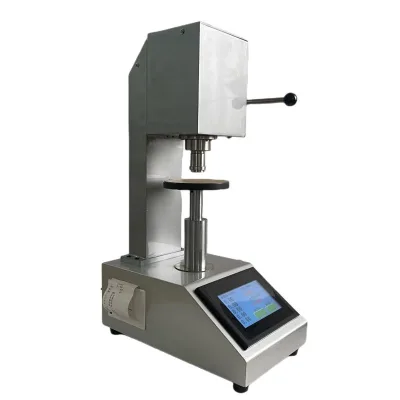
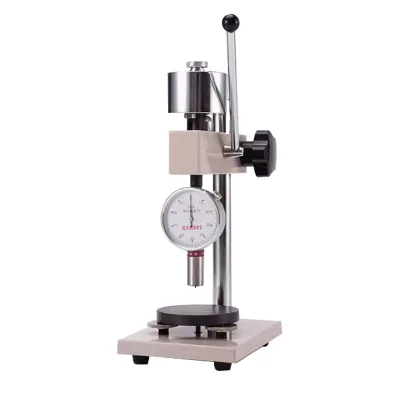
Digital Shore F Hardness Tester Sponge Hardness Meter Foam Durometer DH-SL-F
$199.00 - $399.00
MOQ: 1 Pieces








Comprehensive Sourcing Guide
Plastic and Rubber Shore Hardness Tester Supplier Concentration and Factory Types
Suppliers offering plastic and rubber shore hardness testers cluster in specific Chinese provinces, and the current results point to Zhejiang, Liaoning and Shandong as active sourcing locations. Zhejiang-based sellers in this category operate as a mix of trading companies and manufacturer/factory entities, with ISO 9001 system certification displayed and an average response time of roughly eleven to twelve hours. Their catalogues typically span the full physical-testing bench, including metallographic sample preparation machines, ultrasonic flaw detectors, surface roughness testers, and the Shore A, Shore C, analog and IRHD hardness testers relevant to this keyword. Liaoning suppliers are registered as manufacturers with an ODM and OEM research profile, focusing on flow and level instrumentation but also listing pointer-type shore hardness testers. Shandong suppliers carry their own brand alongside OEM capability and are third-party verified by TUV Rheinland.
Before committing to any region, check whether the location shown on the listing is the production site or a sales office, since trading companies in Zhejiang may source instruments from factories elsewhere. Factory-type suppliers generally offer better customization support, which matters here because listings in this category explicitly mark customization as available on most Shore A, Shore C, IRHD and analog models. When a profile does not display a company type, verification status, or certification, treat those fields as gaps to close through direct inquiry rather than assuming a factory relationship behind the listing.
How to Verify Plastic and Rubber Shore Hardness Tester Suppliers
Verification should start with the credentials actually displayed on the supplier profile. In this category, the Shandong suppliers show third-party verification by TUV Rheinland, which is a meaningful trust signal, while Zhejiang suppliers display ISO 9001 system certification, indicating a documented quality-management process. Liaoning manufacturers show no certification in the current data, so if that supplier type fits your needs, request evidence of quality systems directly, such as certificate copies you can cross-check with the issuing body. Response time is another verifiable behavior: measured figures here range from under eight hours to over fifteen hours, and a slow pre-sale response usually predicts slow engineering and after-sales communication once an order is placed.
Second, verify the product itself against the attributes listed. Several listings state compliance with ASTM, ISO and GB/T standards, calibrated using standard hardness test blocks, with a one-year warranty; ask which specific standard version each model is built to and whether a calibration certificate is included. For a Shore A digital model priced between thirty and one hundred dollars with a minimum order of one unit, the low barrier makes a sample order a legitimate verification step: test repeatability on reference blocks before scaling. For benchtop IRHD units rated at plus or minus one IRHD accuracy and priced from three hundred to nine hundred dollars, request factory calibration records and confirm the pressure-needle dimensions match the published specifications before payment.
What to Compare Across Plastic and Rubber Shore Hardness Tester Suppliers
Build a comparison table around the dimensions the platforms actually expose, then fill gaps through inquiry. Useful displayed attributes in this category include location, company type, verification status, system certification, average response time, lead time, OEM/ODM capability and main products. Note that these fields are not uniform: the Zhejiang group displays ISO 9001 and a fifteen-day lead time, the Liaoning manufacturer shows OEM/ODM capability but lists no lead time value, and the Shandong brand owner shows verification but no stated lead time in the visible data. Never assume a missing field means a poor performer; treat it as an item to request in your first message. Comparing main-product breadth also matters, because a supplier whose core catalogue is flow meters may treat hardness testers as sideline items, affecting spare-part and calibration support.
Price and order structure deserve the same disciplined comparison. Displayed ranges here run from roughly thirty dollars for a portable digital Shore A durometer with a minimum order of one, through fifty to four hundred dollars for an analog Shore durometer with stand, up to three hundred to nine hundred dollars for a desktop IRHD tester rated at 220V. Ask each supplier for the price at your actual quantity, since listed ranges often reflect single-piece versus volume tiers. Also compare packing formats shown in the data, such as carton box versus plywood box, because benchtop instruments shipped in plywood cases tolerate freight handling far better than carton-packed units.
Common Plastic and Rubber Shore Hardness Tester Sourcing Risks
The most frequent risk in this category is standard mismatch. Several listings claim conformance with ASTM, ISO and GB/T simultaneously, but Shore A, Shore C and IRHD are different scales with different indenter geometries; a Shore A digital model with a 2.5mm pressure-needle range and a 0.79mm pressure-head diameter is not interchangeable with a Shore C unit, even when both are marketed for rubber. Ordering the wrong scale for your material is a costly and avoidable error. A related risk is confusing laboratory-grade IRHD benchtop machines, which specify accuracy of plus or minus one IRHD, with inexpensive portable durometers that are suitable for shop-floor comparative checks but not certified-grade measurement. Clarify the intended use before comparing prices across these tiers.
Operational risks follow from thin supplier data. Where lead time is displayed as zero or absent, do not interpret it as immediate shipment; confirm production and dispatch timing in writing. Listing attributes such as "customization available" may reflect a willingness to label rather than genuine engineering depth, so ask whether changes affect the measuring mechanism or only cosmetics. Warranty is uniformly stated as one year across these listings, but scope, return logistics and calibration support after warranty are rarely specified; get these terms in the proforma invoice. Finally, beware suppliers whose main-product lists center on unrelated instruments, as this can indicate reselling with limited technical after-sales capability for hardness testing questions.
Plastic and Rubber Shore Hardness Tester Regional Sourcing and Logistics
The regional picture from current results is concentrated in three provinces. Zhejiang combines trading companies and factories, with the observed fifteen-day lead time and a product origin explicitly listed as Zhejiang, China; it is the most documentable cluster in this dataset for portable and benchtop hardness testers. Liaoning contributes a manufacturer-type supplier with ODM and OEM capability, which matters if you need private-label or modified instruments, though its core catalogue is flow instrumentation, so verify how deeply hardness testers sit in its own production. Shandong supplies a brand-owning, TUV Rheinland-verified seller focused on rubber and plastic testing among other laboratory instruments, positioning it well for buyers who want testing-instrument specialization rather than general metrology breadth.
For logistics, instrument characteristics dictate handling requirements. Portable durometers in the thirty-to-one-hundred-dollar bracket ship in carton boxes and are light enough for express couriers, making sample orders quick to evaluate. Desktop IRHD units, listed at dimensions around 180x150x400mm and packed in plywood boxes, move better by sea or consolidated air freight with protective crating. Confirm with each supplier whether the quoted lead time includes export documentation, and ask which Incoterms they routinely handle; a factory in an inland province may face different freight economics than a coastal Zhejiang exporter. Always request the packed weight and dimensions per carton before finalizing freight quotations.
Plastic and Rubber Shore Hardness Tester Commercial Terms and Order Planning
Plan the first order around the low minimums this category supports. A displayed MOQ of one unit on the digital Shore A model, with pricing from thirty to one hundred dollars, means you can validate a supplier with a genuine sample purchase rather than negotiating blind. Structure a two-stage plan: an initial one-to-three-unit sample order to test measurement repeatability against standard hardness blocks, then a volume order once the instrument and the supplier's communication have proven reliable. For benchtop IRHD machines in the three-hundred-to-nine-hundred-dollar band, use the sample-stage logic too, but add factory calibration documentation and warranty terms to the purchase order before releasing funds.
On commercial terms, anchor negotiations to the attributes displayed rather than assumed. Response times ranging from under eight to over fifteen hours should inform how much buffer you build into quotation and approval cycles; a supplier answering in eight hours can compress your development timeline meaningfully. Ask explicitly for lead time in writing where the profile shows none, and confirm whether the fifteen-day figure observed in this category applies to stocked models only or to customized units as well. Payment structure should reflect order size: small sample orders can use simple advance payment, while larger IRHD orders justify staged payments tied to inspection. Keep the one-year warranty, calibration method, standard compliance and packing format as line items in every contract, since these are the terms most often left ambiguous in this instrument category.
FAQs
What types of plastic and rubber shore hardness testers are available from suppliers on this page?
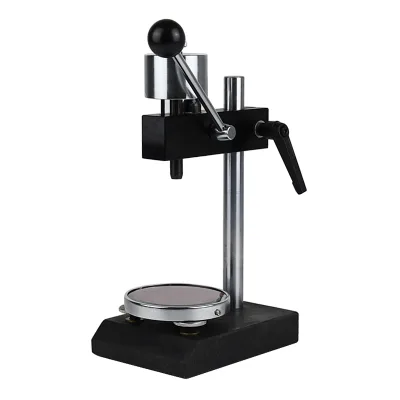
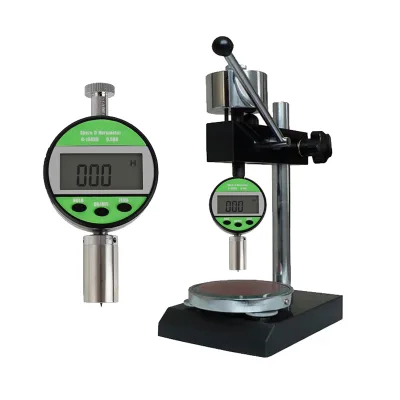
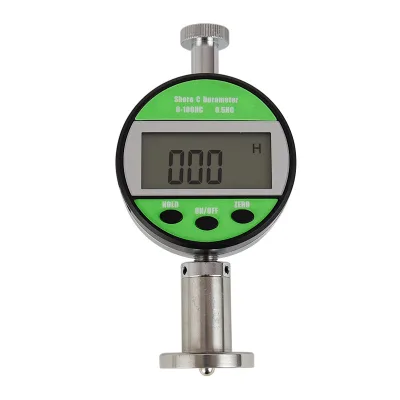
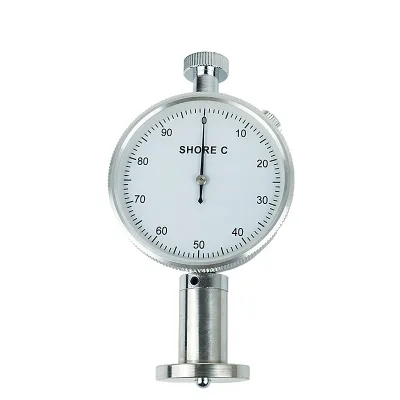
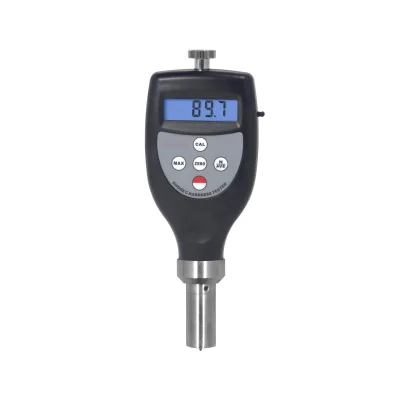
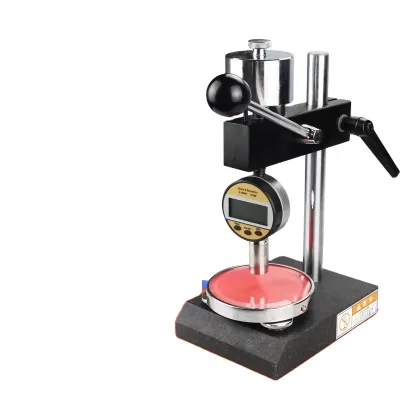
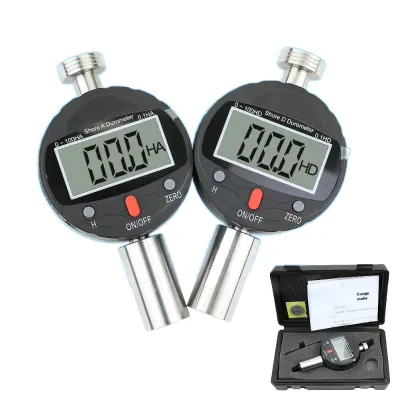
Listings include digital Shore A durometers, analog Shore durometers with stands, Shore C durometers for rubber and oak, pointer-style Shore testers, desktop Shore and IRHD hardness testers, and IRHD hardness testing machines. Most are designed for rubber and plastic applications, with portable and desktop mobility options, and several list standards such as ASTM, ISO, and GB/T for compliance verification.
What is the typical measuring range for a Shore A hardness tester used on rubber and plastic?
Several listings recommend a measuring range of 10 to 90 Shore A, with full scale ranges of 0 to 100 Shore A also shown. Check that the instrument covers your material's expected hardness band before ordering. Pressure needle diameters around 1.25 mm and tip end diameters near 0.79 mm appear in specifications and should match your required test standard.
How much does a Plastic and Rubber Shore Hardness Tester cost?
Listed price ranges vary by model and format: a digital Shore A hardness tester is listed from 30 to 100 USD with an MOQ of 1 piece, an analog Shore durometer with stand runs 50 to 400 USD, and a desktop Shore and IRHD tester is listed at 300 to 900 USD. Confirm current pricing and configuration directly with each supplier.
What is the minimum order quantity for a shore hardness tester?
At least one digital Shore A hardness tester listing shows a minimum order quantity of 1 piece, which suits laboratories and buyers wanting samples before bulk orders. MOQs are set per product and supplier, so entry-level durometers and benchtop IRHD machines may carry different terms. Verify the exact MOQ for your chosen model and any calibration accessories in writing before confirming a purchase order.
What standards do these shore hardness testers comply with?
Multiple listings state compliance with ASTM, ISO, and GB/T standards, while pointer-style testers reference ISO specifically. Calibration is typically performed using standard hardness test blocks. Because standard applicability depends on your industry and region, ask suppliers for the certificates and test reports backing each claim, and confirm which specific standard versions your acceptance criteria require before placing an order.
What warranty and customization options are offered for these testers?
Listed shore hardness testers commonly show a 1-year warranty, and several products state customization is available, including OEM and ODM capability from certain suppliers. One supplier holds ISO 9001 system certification. Scope matters, so clarify what the warranty covers, whether calibration certificates are included, and exactly which customizations, such as branding, ranges, or accessories, are feasible for your specification.
What is the typical lead time for shipping a shore hardness tester?
Lead times shown in current supplier results range from 15 days to no stated lead time, so this varies significantly between suppliers. Instrument complexity and customization requests will affect production schedules. Ask each shortlisted supplier to confirm production and dispatch timelines for your specific model, and factor in shipping method and customs clearance when planning delivery to your facility.
Which shore hardness tester should I choose for soft rubber versus harder plastics?
Shore A testers suit softer rubbers and flexible plastics, with listings recommending 10 to 90 Shore A ranges. Shore D and Shore C models cover harder or specialized materials, while desktop IRHD testers offer higher accuracy, with one listing stating plus or minus 1 IRHD. Match the indenter type and scale to your material specification, then confirm the standard your industry requires.