Home Automation Smoke Detector Suppliers and Manufacturers
Compare 10 suppliers of the Home Automation Smoke Detector on location, company type, response time, lead time, certifications, MOQ and pricing. Review listed models and specifications, then contact shortlisted suppliers to request quotations and samples for verification; review the available evidence before requesting comparable quotations from suitable candidates.
Suppliers List

Shenzhen Alisi Electronic Technology Co., Ltd.
- Trading Company, Distributor/Wholesaler
- Guangdong, China
- Lead time3 days
- Avg. response≤ 2h
Main productselectron component,temperature controller,Auto parts,sensor,Wireless Controller
Main marketsSouth America(20.00%), Eastern Europe(20.00%), North America(15.00%), Western Europe(5.00%), Domestic Market(5.00%), South Asia(5.00%), Southern Europe(5.00%), Northern Europe(5.00%), Central America(5.00%), Eastern Asia(3.00%), Mid East(3.00%), Oceania(3.00%), Africa(3.00%), Southeast Asia(3.00%)

Ningbo Kingdun Electronic Industry Co., Ltd.
- Verified by BV
- Combined
- China Zhejiang
- Lead time30 days
- Avg. response≤ 17h
Main productsSmoke Detector, Wireless Online Smoke Alarm, Carbon Monoxide Alarm, Gas Alarm, Power Meter
Main marketsEurope

Ningbo Ambest Electronics Co., Ltd.
- Verified by BV
- Combined
- China Zhejiang
- Lead time23 days
- Avg. response≤ 18h
Main productsAddressable Fire Alarm System, Non-Addressable Fire Alarm System, Residential Alarm Products, Heat Detector, Fire Alarm Control System, Gas Detector, Flame Detector, Fire Alarm, Conventional Smoke Detector, Addressable Smoke Detector
Main marketsSouth America,Africa,Southeast Asia/ Mideast,Europe,Australia

Kunming Gen Qian Commercial Co., Ltd.
- Trading Company
- China Yunnan
- Lead time15 days
- Avg. response≤ 7h
Main productsFire Extinguisher, FM200, Low Pressure CO2 Fire Fighting System, High Pressure Water Mist Fire Fighting System, Fire Fighting System for Tobacco Green Warehouse, Fire Fighting System for Tobacco Pmd Line, Fire Fighting System for Civil Building Project, Fire Fighting System for Warehouse Logistics, Fire Fighting System Fore Industry Field Project, High Pressure CO2 Fire Fighting System
Main marketsSouth America,Southeast Asia/ Mideast,Europe

Shenzhen Asenware Test and Control Technology Co., Ltd.
- Verified by CTI
- Trading Company,Manufacturer/Factory
- China Guangdong
- Lead time15 days
- Avg. response≤ 13h
Main productsFire Alarm System, Smoke Detector, Fire Alarm Control Panel, Fire Alarm, FM200, Fire Pump, Flame Detector, Fire Hose Reel, Emergency Light System, Beam Smoke Detector
Main marketsSouth America,Eastern Europe,Mid East,North America,Southeast Asia,Eastern Asia,Oceania,Western Europe,Africa

Zuden Technology (HK) Co., Limited
- Verified by CTI
- Combined
- China Guangdong
- Lead time15 days
- Avg. response≤ 8h
Main productsAlarm System, Access Control, Electromagnetic Lock, Home Security System, Alarm Strobe Siren, Magnetic Contact, WiFi Home Security Wireless Burglar GSM Alarm, Home Security Wireless Burglar GSM Alarm System, Metal Standalone RFID Door Access Control, Smart Home
Main marketsSouth America,Southeast Asia/ Mideast,Europe,Australia


Fire Alarm Detector 24V Home Use Conventional Smoke Detector with Alarm System
$5.85 - $6.90
MOQ: 50 Pieces

Smoke Alarm Independent Photoelectric Smoke Detector Alarm for Home Security
$5.90 - $6.90
MOQ: 100 Pieces


Shenzhen Chitongda Electronic Co., Ltd.
- Verified by BV
- Trading Company,Manufacturer/Factory
- China Guangdong
- Lead time23 days
- Avg. response≤ 12h
Main productsAlarm System, Burglar Alarm, Security System, GSM Alarm System, Wireless Home Security, Car GSM Alarm, Home / Commercial Alarm, CCTV System, Detector, Surveillance Equipment
Main marketsSouth America,Eastern Europe,Mid East,North America,Southeast Asia,Eastern Asia,Oceania,Western Europe,Africa

Shenzhen Xinhean Technology Co., Ltd.
- Verified by TUVRHEINLAND
- Trading Company,Manufacturer/Factory
- China Guangdong
- Lead time15 days
- Avg. response≤ 2h
Main productsFire Alarm Control System, Relay Output Smoke Detector, Gas Detector, Stand Alone Smoke Detector, Electrical Fire Alarm System, Fire Door Control System, Gas Fire Extinguishing Control System, Wireless Fire Alarm System, Household Security System, Fire Alarm Control Panel
Main marketsEastern Europe,Mid East,Southeast Asia,Eastern Asia,Western Europe,Africa

- Verified by SGS
- Combined
- China Zhejiang
- Lead time45 days
- Avg. response≤ 3h
Main productsFire Extinguisher, Hose Reels, Cabinet
Main marketsSouth America,Africa,Southeast Asia/ Mideast,East Asia(Japan/ South Korea),Domestic,Europe,Australia,North America

Jiangshan Hetian Anfang Fire Fighting Technology Co., Ltd.
- Manufacturer/Factory
- China Zhejiang
- Lead time0 days
- Avg. response≤ 19h
Main productsDry Powderfire Extinguisher, Co Fire Extinguisher, Foam Fire Extinguisher, Water Fire Extinguisher, Wet Chemicalfire Extinguisher, Automatic Fire Extinguisher, Fire Extinguisher Ball, Parts and Accessories, Trolley Fire Extinguisher
Main marketsSouth America,Mid East,North America,Southeast Asia,Eastern Asia
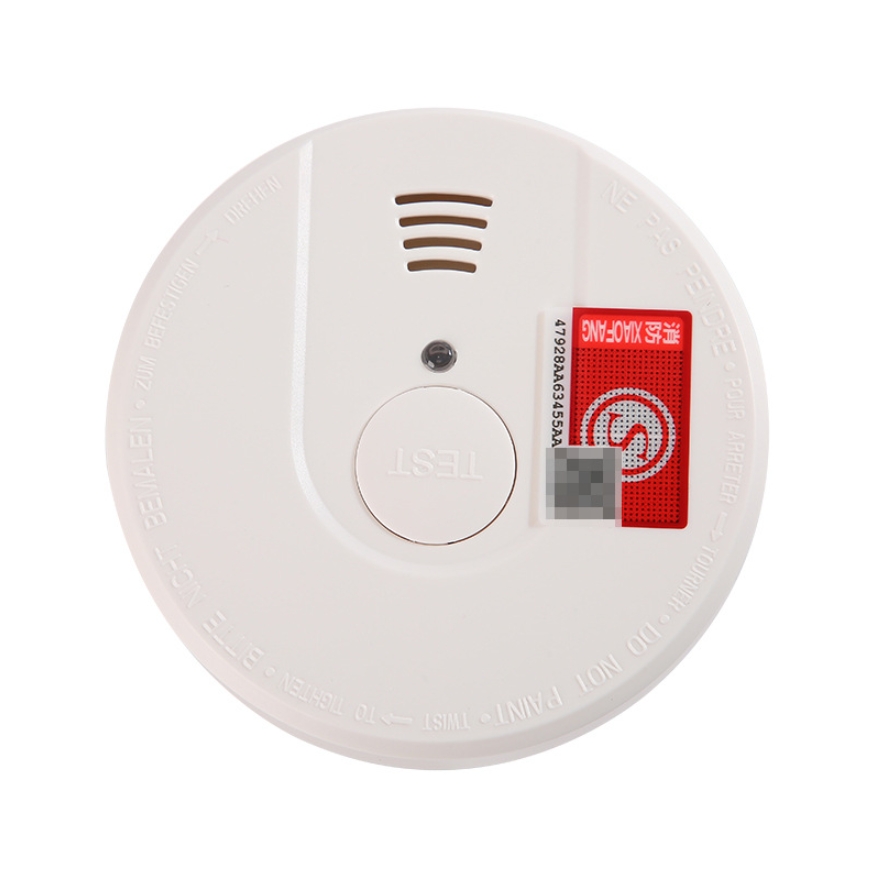
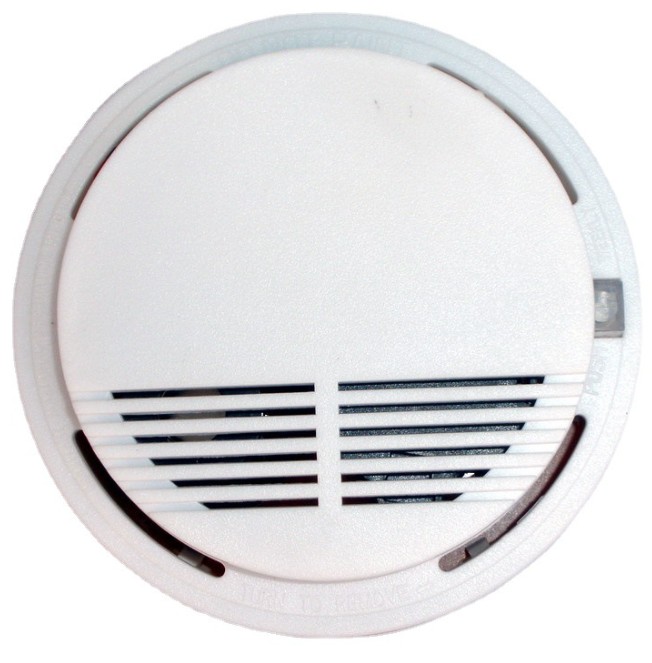


Comprehensive Sourcing Guide
Home Automation Smoke Detector Supplier Concentration and Factory Types
Suppliers offering Home Automation Smoke Detector products in these results cluster in two Chinese provinces: Guangdong and Zhejiang. Guangdong listings lean toward trading companies and distributors whose main products span electronic components, temperature controllers, auto parts, sensors and wireless controllers, with smoke alarms listed as single items at low minimum order quantities and short lead times. Zhejiang listings lean toward combined manufacturer-traders whose main products are smoke detectors, wireless online smoke alarms, carbon monoxide alarms, gas alarms and power meters — a tighter product focus that usually signals dedicated production lines for detection devices.
When your own search returns different names, identify clusters the same way rather than assuming one: look at the Place of Origin attribute on individual listings, the company type label (trading company, distributor, manufacturer, or combined), and whether the main products list reads like a fire-safety catalogue or a general electronics catalogue. Both patterns matter for a Home Automation Smoke Detector purchase. A specialist manufacturer is more likely to hold system certifications such as ISO9001:2015 and ISO14001:2015, offer ODM and OEM capacity, and support customization fields on listings. A trader offers breadth and low trial-order barriers. Neither is inherently better; the right choice depends on whether you need custom firmware and enclosure design or fast, small pilot quantities of standard photoelectric alarm units.
How to Verify Home Automation Smoke Detector Suppliers
Verification starts with the credentials a profile actually displays, not with assumptions. In the observed results, one Zhejiang supplier carries ISO9001:2015 and ISO14001:2015 system certifications plus third-party verification, while another supplier of addressable and conventional fire alarm systems displays an ISO9001:2015 certificate. Treat these as claims to confirm: ask for the certificate number and scope, and check that the scope covers detection devices rather than unrelated product lines. Some listings also show product-level certificates such as CE, CE EN 50291 for carbon monoxide alarms, or CE EN 14604 for smoke alarms — request the actual test reports behind those marks for the exact model you intend to buy.
Second, verify capability claims against the listing details themselves. Attributes like "Customization: Available", electro-optical (photoelectric) working principle, wireless signal transmission, and stated alarm volume of at least 90 dB within one meter are checkable: ask the supplier to demonstrate each in a sample. Request the model numbers cited on listings, confirm the declared place of origin, and ask whether the brand name shown ("Original brand" in one listing, blank in another) applies to your order. If response time is displayed — some suppliers show averages of two hours, others around seventeen to eighteen hours — test it with a technical question and compare the real reply against the advertised figure. Finally, for any claim not displayed, such as escrow coverage or establishment year, ask directly and record the answer in writing before ordering.
What to Compare Across Home Automation Smoke Detector Suppliers
Build a comparison table using the dimensions visible on supplier profiles: location, company type, main products, response time, lead time, minimum order quantity, certifications, and whether establishment year or escrow payment is shown. Do not assume every supplier displays every field — several results omit establishment year entirely, so mark gaps as "verify" rather than penalizing them. Where lead times appear, they differ sharply in the observed data: some Guangdong traders show around three days while Zhejiang manufacturers show roughly 23 to 30 days, a difference that reshapes your reorder calendar.
Compare product-side fields just as rigorously. Minimum order quantities in these results range from 5 pieces for an independent smoke alarm listed as a single item to 5,000 pieces for a carbon monoxide alarm, with other units at 2,000 to 3,000 pieces. Price ranges vary from under one dollar to around three dollars per unit, but treat displayed prices as anchors, not quotes — one listing shows an identical min and max, another spans a wide band from one to ten dollars. Weight specification depth too: some listings publish dimensions (67x47mm, 85x39mm, 101x34mm), power supply (DC3V or DC9V), material (ABS), packing format, and alarm volume, while others say only "please contact us". A supplier whose listings answer most questions before you ask usually responds faster on custom requests as well.
Common Home Automation Smoke Detector Sourcing Risks
The most common risk is certification mismatch. A Home Automation Smoke Detector sold into regulated markets typically needs a smoke alarm certificate such as EN 14604, and listings in these results show that mark on some models but not all — one Guangdong listing displays no product certificate at all, only "please contact us". Ordering an uncertified variant for a market that requires EN 14604 or an equivalent can strand your inventory at customs. A related risk is model confusion: several listings in the same catalogue share similar model codes (for example, KD-125A, KD-125B, KD-127D, KD-122LA) with different sizes, power supplies and certificates, so confirm the exact model in your purchase contract.
Second, watch for specification ambiguity on smart features. Many listings describe "wireless" transmission without stating the protocol, frequency, or how the detector integrates with a home automation hub — one carbon monoxide alarm listing specifies wireless active-mode transmission but nothing about app compatibility. Confirm battery inclusion too: one listing is explicitly "without battery" while others state DC3V or DC9V power, and battery rules affect shipping. Other recurring risks include displayed prices that shift once customization is requested, minimum order quantities that change between the listing and the quotation, and long response times on manufacturer profiles (roughly seventeen to eighteen hours shown in some cases) that slow down sampling. Mitigate each risk with a written specification sheet and a signed sample approval before mass production.
Home Automation Smoke Detector Regional Sourcing and Logistics
The two sourcing regions in these results — Guangdong and Zhejiang — imply different logistics profiles. Guangdong suppliers sit near major southern export ports and, in the observed data, show short lead times of around three days with small single-item minimum orders, which suits air freight, trial orders, and rapid replacement cycles for a Home Automation Smoke Detector line. Zhejiang suppliers show longer lead times of roughly 23 to 30 days, consistent with made-to-order production, and their listings mention export cartons, gift boxes and double blister packing — packaging choices that matter for retail-ready shipments and container planning.
Plan logistics around what the listings declare and verify the rest. Confirm the declared place of origin on each product (listings here show Guangdong, China, Zhejiang, and a generic "China"), because origin affects documentation and, in some markets, tariff treatment. Ask each supplier which incoterms they quote, whether they consolidate mixed models — a combined supplier offering smoke, CO and gas alarms can fill one container with complementary detection products — and what their packing units are per carton. Battery-inclusive units may be subject to dangerous-goods handling rules, so confirm battery type and shipping classification before booking. If your product requires batteries added at destination, note which listings ship without them. For reorders, a supplier's displayed lead time is a planning anchor: build your safety stock around the longer figure, not the shorter one.
Home Automation Smoke Detector Commercial Terms and Order Planning
Structure commercial terms around the verified data points, not optimistic assumptions. Start with a paid sample of the exact model, referencing the model number and certificate shown on the listing — for example, a unit certified to EN 14604 or EN 50291 — and test it against your home automation hub before committing. Then scale orders to the displayed minimums: these results show minimums from 5 pieces up to 5,000 pieces depending on supplier and product, so match your first production order to the smallest quantity that reaches an acceptable unit price. Where a price range is displayed (for instance, roughly 2.8 to 3.4 dollars on one smoke alarm, or one to ten dollars on another), ask what drives the spread — quantity, certificate version, or customization — before comparing quotes.
On payment and terms, check whether escrow or secure payment is offered and displayed; if it is not shown, ask and get the answer in writing, since this field is absent from several observed profiles. Agree on lead time in the contract using the supplier's displayed figure as a floor, not a promise: three-day and thirty-day lead times in these results suggest very different production models. Confirm ODM, OEM and own-brand capacity in writing if you need custom branding, since one Zhejiang supplier lists all three but others show no such field. Finally, plan reorders with buffer: for a Home Automation Smoke Detector program, place the next order before current stock reaches your safety level, using the longest verified lead time across your shortlist as the planning baseline.
Word count check: sections approximately 231+228+230+229+230+226 ≈ 1374 words, within 1350–1450.
FAQs
What is the typical MOQ for home automation smoke detectors?
Minimum order quantities vary widely by supplier and product type. Listings in the current results range from as low as 5 pieces for basic independent smoke alarms to 2,000 or 3,000 pieces for wireless alarm detectors, and up to 5,000 pieces for carbon monoxide alarms. Confirm the MOQ for the exact model before requesting a quote.
How much do smoke detectors from these suppliers cost?
Unit prices depend on the model, certification level and features. Listed ranges in the current results include roughly $2.82 to $3.35 for independent smoke detectors, $1.00 to $10.00 for wireless alarm smoke detectors, and about $2.50 for a home security alarm detector. Request updated quotations because prices change with order volume and configuration.
What certifications should a Home Automation Smoke Detector have?
Look for CE marking under EN 14604 for photoelectric smoke alarms, EN 50291 for carbon monoxide alarms, and RoHS compliance for materials. Some suppliers in the current results also hold ISO9001:2015 and ISO14001:2015 quality system certificates. Always ask for copies of current certificates and verify certificate numbers directly with the issuing body before ordering.
What lead times can buyers expect for smoke detector orders?
Lead times in the current supplier results range from about 3 days for fast-moving trading companies to roughly 23 to 30 days for larger manufacturers with broader product lines. Actual production time depends on order size, customization requirements and certification needs. Confirm the lead time for your specific quantity and any OEM or ODM customization before placing the order.
How quickly do these suppliers respond to inquiries?
Response times in the current results range from around 2 hours for some Guangdong trading companies to roughly 17 hours for larger Zhejiang-based manufacturers. Response speed often reflects the supplier type, with trading companies typically answering faster. Send a detailed inquiry listing quantities, certifications and delivery terms so replies include usable quotations.
Which regions in China produce these smoke detectors?
The suppliers in the current results are located mainly in Guangdong and Zhejiang provinces. Guangdong suppliers focus on electronic components and independent smoke alarms, while Zhejiang suppliers offer wireless smoke alarms, carbon monoxide alarms and gas detectors. Region can affect shipping access and product specialization, so compare offers from both areas before deciding.
Can suppliers provide ODM or OEM smoke detector services?
Yes, at least one verified supplier in the current results advertises ODM, OEM and own-brand capabilities, and several product listings state that customization is available. Customization may cover housing color, packaging, wireless protocols and logo printing. Expect higher MOQs and longer lead times for customized units, so confirm both in writing before finalizing your order.
What features do home automation smoke detectors typically include?
Common features in the current listings include photoelectric sensing, wireless signal transmission, alarm volume of at least 90 dB within one meter, DC battery power and indoor application design. Some models add remote LED indicators, sound and light alerts or GSM alarm system compatibility. Match features to your home automation protocol and local fire safety requirements.