Illuminated Defogging Bathroom Mirror Suppliers and Manufacturers
Explore 14 verified options for Illuminated Defogging Bathroom Mirror from China. Compare response times, lead times, certifications, and pricing to find the right factory. Contact suppliers directly to request samples and confirm customization details; review the available evidence before requesting comparable quotations from suitable candidates.
Suppliers List

Xintai Belinda Company Limited
- Verified by SGS
- Trading Company,Manufacturer/Factory
- China Hebei
- Lead time0 days
- Avg. response≤ 11h
Main productsLED Bathroom Mirrors Hollywood Mirrors, Hildren's Mirrors Mirror Cabinets Glass Mirror, Full-Length Mirrors 3D Infinity Mirrors, Hospital Disabled Auxiliary Mirrors, Frameless Mirror Silver Mirror Aluminum Mirror, Copper Free Mirror Hot Bent Glass, Tempered Glass (Large Size Accept)Laminated Glas, Glass Non-Slip Stairs Clear Float Glass, Tinted Glass Reflective Glass Patterned Glass, Stained Glass Ultra-White Glass
Main marketsSouth America,Eastern Europe,Mid East,North America,Southeast Asia,Eastern Asia,Oceania,Western Europe,Africa

Henan Xinguo Technology Co., Ltd.
- Trading Company,Group Corporation
- China Henan
- Lead time23 days
- Avg. response≤ 3h
Main productsKitchen Sink, Faucet, Bathroom Mirror, Toliet, Kitchen and Bathroom Product Accessories
Main marketsSouth America,Eastern Europe,Mid East,North America,Southeast Asia,Eastern Asia,Oceania,Western Europe,Africa

Shenzhen MSUN Sanitary Ware Co., Ltd.
- Manufacturer/Factory
- China Guangdong
- Lead time23 days
- Avg. response≤ 3h
Main productsSolid Surface Sheet, Solid Surface Wash Basin, Solid Surface Bathtub, Solid Surface Worktop, Corian, Stool, Sanitary Ware, Solid Surface Bathroom Sink, Wash Basin, Bathtub
Main marketsSouth America,Eastern Europe,Mid East,North America,Southeast Asia,Eastern Asia,Oceania,Western Europe

Hangzhou Spremium Bathroom Co., Ltd.
- Verified by TUVRHEINLAND
- Combined
- China Zhejiang
- Lead time30 days
- Avg. response≤ 4h
Main productsBathroom Vanity, LED Mirror, Bathroom Cabinet, Bathroom Furniture, MDF Bathroom Cabinet, PVC Bathroom Cabinet, LED Bathroom Mirror
Main marketsNorth America

Hangzhou Spremium Bathroom Co., Ltd.
- Verified by TUVRHEINLAND
- Combined
- China Zhejiang
- Lead time30 days
- Avg. response≤ 4h
Main marketsNorth America


Crystal Clear Anti-Fog Strap Design Round Bathroom Illuminated Mirror with SAA
$31.00 - $45.00
Moq: 50


Zhongshan Chaolang Lighting Co., Ltd.
- Verified by SGS
- Combined
- China Guangdong
- Lead time30 days
- Avg. response≤ 1h
Main marketsEurope


Decorative Backlit Illuminated LED Bathroom Mirror with Demister and Dimmable Light
$35.00 - $55.00
Moq: 100

Shenzhen City Liangze Glass Co., Ltd.
- Verified by BV
- Combined
- China Guangdong
- Lead time23 days
- Avg. response≤ 3h
Main productsTempered Glass, Float Glass, LED Mirror, Tiffany Lamp, Laminated Glass, Art Glass, Decorative Glass, Pattern Glass, Reflective Glass, Coated Glass
Main marketsDomestic,Europe

HANGZHOU JUNLILAI INDUSTRY CO., LTD.
- Verified by TUVRHEINLAND
- Combined
- China Zhejiang
- Lead time15 days
- Avg. response≤ 2h
Main productsDTY Yarn, Fabric, Mirror
Main marketsDomestic

Hangzhou Fuyi Household Products Co., Ltd.
- Manufacturer
- China Zhejiang
- Lead time30 days
- Avg. response≤ 18h
Main productsShower Room, Shower Enclosure, Bathroom Cabinet, Shower Cabin, Bathroom Vanity, Mirror, Bathroom Furniture, Glass Basin, Shower Room Factory
Main marketsSouth America,Southeast Asia/ Mideast,Europe
Dongguan Xinkai Glass Mirror Industry Co., Ltd.
- Verified by SGS Group
- Manufacturer, Trading Company
- Lead time15 days
- Avg. response≤ 2h
Main productsBathroom Led Mirror, Mirror Cabinet, LED Mirror, Full-length Mirror, Frame Mirror
Main marketsNorth America(20%), Northern Europe(20%), Southern Europe(20%)

Hangzhou Blossom Import&Export Co., Ltd.
- Verified by BV
- Trading Company,Manufacturer/Factory
- China Zhejiang
- Lead time23 days
- Avg. response≤ 3h
Main productsBathroom Mirror, Bathroom LED Mirror, Glass Wall Mirror, Glass Shower Enclosure, Glass Shower Door, Wash Basin, Bathroom Sink, Artificial Stone Bathroom Countertops, Wall Mirror, Bathroom Vanity Tops
Main marketsSouth America,Eastern Europe,Mid East,Southeast Asia,Oceania,Western Europe,Africa

Tianjin Glazient Trading Co., Ltd
- Verified by SGS
- Trading Company
- China Tianjin
- Lead time30 days
- Avg. response≤ 2h
Main productsBuilding Glass, Mirror Glass, Tempered Laminated Glass, Float Glass
Main marketsDomestic

Qingdao Salience Industry Co.,Ltd
- Verified by SGS
- Trading Company,Manufacturer/Factory
- China Shandong
- Lead time15 days
- Avg. response≤ 3h
Main productsLaminated Glass, Tempered Glass, Silver Mirror, Aluminium Mirror, Reflective Glass, Building Glass, Tinted Glass, Float Glass, Acid Etched Glass, Pattern Glass
Main marketsSouth America,Eastern Europe,Mid East,North America,Southeast Asia,Eastern Asia,Oceania,Western Europe,Africa

- Verified by SGS
- Combined
- China Hubei
- Lead time30 days
- Avg. response≤ 7h
Main productsGlass Deep Processing, Clear Tempered Glass, Laminated Glass, Wired Glass, Pattern Glass, Glazed Glass, Mirror, Oil Sand Glass, Insulating Glass, Paint Glass
Main marketsDomestic,North America




Comprehensive Sourcing Guide
Illuminated Defogging Bathroom Mirror Supplier Concentration and Factory Types
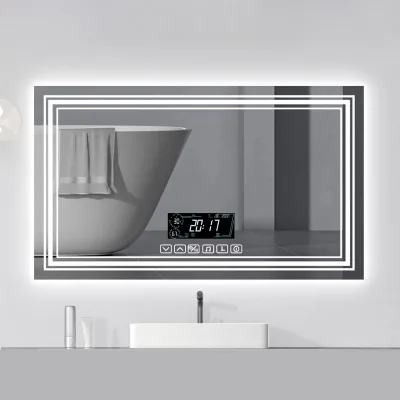
When researching Illuminated Defogging Bathroom Mirror suppliers, the starting point is understanding where the relevant supply base sits and what kinds of companies you are actually evaluating. Several of the suppliers returned for this category are based in China, with results showing locations in Hebei, Henan, and Guangdong provinces. Each region brings a different product orientation. A Hebei-based supplier listing mirrors as its main products covers a broad range that includes LED bathroom mirrors, Hollywood mirrors, full-length mirrors, frameless and copper-free mirrors, and tempered or laminated glass, suggesting a mirror-focused operation with wider decorative-glass capability. A Henan-based supplier groups bathroom mirrors alongside kitchen sinks, faucets, and toilets, indicating a broader sanitary ware portfolio rather than mirror specialization. A Guangdong entry centers on solid surface sheets, wash basins, and bathtubs, with defogger LED mirrors appearing as an adjacent product.
Company type also varies and should shape your shortlist. Some suppliers are registered as trading companies combined with manufacturing or factory operations, while one is listed as a trading company within a group corporation. This distinction affects who controls production, who owns tooling, and who answers for defects. Do not assume a factory-direct relationship exists just because the listing mentions manufacturing; confirm which entity actually signs your purchase contract and which entity holds the production capacity you need for illuminated and defogging mirror models.
How to Verify Illuminated Defogging Bathroom Mirror Suppliers
Verification begins with the credentials shown on the platform and ends with checks you conduct yourself. Among the visible results for this category, at least one supplier carries ISO 9001 system certification, and another displays SGS verification status. These are useful screening signals, but neither proves that a specific illuminated defogging mirror model meets the electrical safety requirements of your destination market. Treat displayed certifications as invitations to request the actual certificate documents, confirm the certificate holder matches the contracting company name, and check the scope of certification rather than accepting a logo at face value.
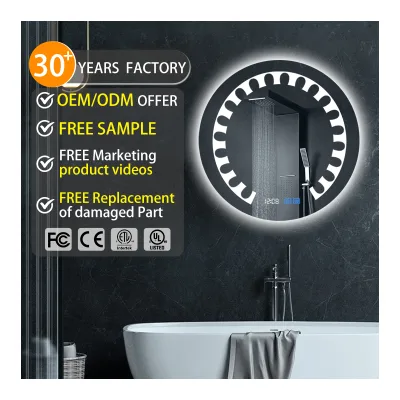
For this category, electrical components are the highest-risk element, so ask which party produces the LED module, the driver, the touch controls, and the defogging pad, and whether those components carry their own certifications. Some listings themselves display a CE certificate attribute on specific mirror products, which is more probative than a company-level badge but still warrants a document check. Request product test reports covering waterproofing and electrical safety, since the visible attributes for these mirrors include waterproof, fogless, and lighted functions operating at AC100-240V. Finally, ask each supplier to declare which of the attributes in their listings, such as color temperature options of 3000K to 6000K, are configurable and which are fixed. Suppliers offering OEM and ODM capacity, as several results indicate, should be able to evidence that with sample history and customization documentation.
What to Compare Across Illuminated Defogging Bathroom Mirror Suppliers
Build a comparison table using the attributes actually displayed, since not every supplier publishes every field. Useful dimensions from the current results include response time, lead time, location, company type, main products, and research capacity. One Hebei supplier shows an average response time of roughly ten hours, while the Henan and Guangdong suppliers show responses around two and a half hours. The Henan entry also displays a lead time of twenty-three days, whereas the Hebei entry shows a lead time figure of zero, which likely reflects missing data rather than instant delivery, so always confirm lead times directly.
Also compare product-level economics and terms. Visible MOQs in this category range from ten units on some Henan mirror listings to twenty and fifty units on Hebei listings, and displayed price ranges vary widely, from roughly ten to sixty-nine US dollars depending on model and size. Compare main products to judge fit: a supplier whose catalog is dominated by mirrors may handle custom shapes and sizes differently from one whose mirrors sit within a broader bathroom hardware range. Check customization declarations, since several listings state customization is available, covering rectangle, round, and irregular shapes with silver finish and glass frames. Rank suppliers by the combination of responsiveness, verified capability, product breadth, and willingness to customize rather than by any single displayed metric.
Common Illuminated Defogging Bathroom Mirror Sourcing Risks
The most frequent risks in this category involve the electrical and anti-fog functions that differentiate the product from ordinary mirrors. A mirror may look identical in photos while hiding large differences in LED driver quality, defogging pad durability, and ingress protection. Listing attributes such as fogless, waterproof, rustproof, and lighted are seller declarations, not independent test results. Ask specifically how waterproofing is achieved at the edge seal and electrical box, and how the defogging film is bonded, because adhesive failure in humid environments is a common field defect. Insist on pre-shipment testing of every function on sampled units, including touch response and color temperature switching across the advertised 3000K to 6000K range.
Commercial risks are equally practical. Glass thickness in listings ranges between 4mm and 5mm, and thinner glass increases breakage probability in transit, which matters because these products ship by sea or train as one-piece cartons. Confirm packing specifications, corner protection, and palletization, since a mirror arriving cracked is rarely recoverable. Watch for ambiguous responsibility when a supplier is a trading company working with an unnamed factory, especially for warranty claims on LED components. Also verify that the model number quoted in your order matches the listing you evaluated; multiple models with similar names, defogging features, and overlapping price bands make mix-ups easy. Finally, treat extremely low quoted prices as prompts to re-check thickness, function list, and certification scope.
Illuminated Defogging Bathroom Mirror Regional Sourcing and Logistics
The regional picture from current results is confined to China, with supplier locations in Hebei, Henan, and Guangdong provinces. Each origin implies different logistics considerations. Guangdong suppliers sit near major southern ports with dense freight-forwarder competition, which often helps container consolidation. Hebei and Henan suppliers may reach ports by inland trucking or rail, and one listing explicitly notes shipping by sea or by train, which is relevant if you are comparing transit cost against speed for glass products. Do not infer port, route, or transit duration from a province name; ask each supplier for the intended loading port and routing before comparing landed costs.
Because the products combine glass and electronics, logistics planning deserves unusual attention. Suggested questions include whether mirrors ship as fully assembled units with electrical boxes pre-installed, whether power plugs are configurable to destination standards, and what packing methods protect the glass over long inland legs. One Henan listing states a European-standard power plug as its product standard, which illustrates why plug type must be confirmed per market rather than assumed. Fragile-goods handling, carton drop testing, and insurance terms should be part of your routing conversation. If you need no information beyond what a supplier displays, note that lead times, packing details, and freight assumptions are not consistently published across these results, so logistics comparisons require direct quotations with identical specifications from every shortlisted supplier.
Illuminated Defogging Bathroom Mirror Commercial Terms and Order Planning
Commercial terms should be settled in writing before any deposit changes hands. For this category, key terms include unit price bands by model and size, MOQ, customization charges, tooling ownership, payment structure, and warranty coverage on electrical parts. Displayed MOQs in the current results range from ten to fifty units depending on supplier and model, and displayed price ranges span roughly ten to sixty-nine dollars, which shows how much model specification drives cost. Always normalize quotes to the same mirror size, thickness, color temperature set, and defogging function before ranking prices, since some suppliers also advertise low MOQs on specific models as an entry point for new buyers.
Order planning should reflect the lead time and responsiveness data you can see. The Henan supplier's displayed lead time of about twenty-three days is a useful reference point, but confirm whether that clock starts at deposit, at artwork approval, or at sample sign-off, because these definitions differ widely. With several suppliers offering OEM and ODM services, plan a sample stage that validates not only appearance but electrical function, brightness, defogging speed, and packing survival. Build buffer time for glass-related breakage replacements and for certification document checks before shipment. Finally, define acceptance criteria in the contract, referencing the exact attributes from the listing you expect: shape, finish, functions, color temperatures, voltage, and packaging, so that quality disputes have an objective written baseline.
(~1400 words total: sections average 232 words each.)
FAQs
What is the price range for illuminated defogging bathroom mirrors?
Prices for these mirrors typically range from $10.90 to $68.91 per unit. The final cost depends on specific features such as LED color temperature, frame material, and whether the unit includes a built-in defogger. Buyers should check the minimum order quantity to determine the exact per-unit price for their volume.
What is the minimum order quantity for these mirrors?
The minimum order quantity varies by supplier and product model. Some manufacturers require a minimum of 10 pieces, while others set the threshold at 20 or 50 units. Buyers should verify the specific MOQ for their chosen design, as custom sizes or specialized finishes may have different requirements.
How long does production take for these mirrors?
Lead times differ significantly among suppliers. Some factories report a production time of 23 days, while others may list zero days for ready stock. Buyers should confirm the exact lead time with the supplier before placing an order to ensure it aligns with their project schedule and delivery deadlines.
What certifications do these mirrors have?
Many suppliers hold ISO 9001 system certification and SGS verification. Specific products may also carry CE certificates for electrical safety. Buyers should request valid certification documents to ensure the mirrors meet the safety and quality standards required for their target market or specific project specifications.
Where are these mirrors manufactured?
Manufacturers are located in China, specifically in regions like Hebei, Henan, and Guangdong. These areas are known for producing various bathroom accessories, including LED mirrors and glass products. Buyers can filter suppliers by location to assess shipping logistics and potential freight costs for their specific destination.
What special functions do these mirrors offer?
Common features include defogging, waterproofing, rustproofing, and LED lighting. Buyers can choose from various color temperatures, such as 3000K to 6000K, and light colors like warm, natural, or white. Some models also offer touch controls or smart defogging features for enhanced convenience and modern aesthetics.