IP68 Submersible Water Level Transmitter Suppliers and Manufacturers
Source 17 verified suppliers for IP68 Submersible Water Level Transmitter units. Compare key dimensions including lead times, MOQs, response speeds, and certifications like ISO9001:2015. Review product specs and request quotes directly from manufacturers in China; review the available evidence before requesting comparable quotations from suitable candidates.
Suppliers List

Xi'an Lonn M&E Equipment Co., Ltd.
- Verified by TUVRHEINLAND
- Combined
- China Shaanxi
- Lead time30 days
- Avg. response≤ 4h
Main productsClamp Meter, Laser Distance Meter, Coating Thickness Gauge, Gas Analyzer, Mass Flowmeter, Digital Food Thermometer, Hygrometer Thermometer, Wireless Bluetooth Thermometer, Weather Station, pH Meter
Main marketsEurope,North America


IP68 Submersible Water Depth Level Sensors 30m Stainless Steel 4-20mA Level Transmitter
$36.00 - $39.00
MOQ: 10 Pieces

Nanjing Hangjia Electronic Technology Co., Ltd.
- Verified by TUVRHEINLAND
- Combined
- China Jiangsu
- Lead time15 days
- Avg. response≤ 3h
Main productsPressure Sensor, Pressure Switch, Water Level Sensor, Flow Meter, Differential Pressure Sensor, Pressure Transmitter, Flow Switch, Magnetic Flow Meter, Level Transmitter, Temperature Transmitter
Main marketsSouth America,Africa,Southeast Asia/ Mideast,East Asia(Japan/ South Korea),Domestic,Europe,Australia,North America


4~20mA 0~5V IP68 Flange Protective Integrated Submersible Level Transmitter
$280.00 - $350.00
MOQ: 5 Pieces


rigid type Submersible Liquid Level Transmitter with site display flow water suitable
$65.00 - $80.00
MOQ: 2 Pieces

Sample Customization Diameter 16mm Water Level Meter Submersible Pressure Transmitter
$70.00 - $85.00
MOQ: 1 Pieces

IP68 pressure transmitter liquid level measure rivers lakes water level sensor
$50.00 - $60.00
MOQ: 1 Pieces

Meokon Sensor Technology (Shanghai) Co., Ltd.
- Manufacturer
- China Shanghai
- Lead time15 days
- Avg. response≤ 3h
Main productsDigital Pressure Gauge, Digital Pressure Controller, Digital Pressure Switch, Digital Electric Contact Pressure Gauge, Temperature and Humidity Table, Pressure Transmitters, Pressure Sensor, Lever Sensor
Main marketsSouth America,Southeast Asia/ Mideast,East Asia(Japan/ South Korea),Domestic,Europe,Australia,North America


IP68 Immersible Pressure Level Pressure Transmitter 10m Range 24vwater Level Sensor
$28.99 - $49.00
MOQ: 1 Pieces


BAOJI XINGYUTENG MEASURE AND CONTROL INSTRUMENTS CO., LTD.
- Verified by BV
- Manufacturer/Factory
- China Shaanxi
- Lead time15 days
- Avg. response≤ 5h
Main productsPressure Transmitter, Level Transmitter, Temperature Transmitter, Flow Switch, Pressure Sensor, Flow Meter, Pressure Switch, Temperature Switch, Temperature Sensor, Sensor
Main marketsSouth America,Eastern Europe,Mid East,North America,Southeast Asia,Eastern Asia,Oceania,Western Europe,Africa

IP68 Submersible Level Transmitter Water Liquid Tank Level Transmitter Sensor
$26.00 - $29.00
MOQ: 10 Pieces

$26.00 - $29.00
MOQ: 100 Pieces

Submersible Liquid Level Transmitter 0-100m 4-20mA Output Liquid Level Transmitter
$26.00 - $30.00
MOQ: 100 Pieces

Shandong Renke Control Technology Co., Ltd.
- Verified by CTI
- Combined
- China Shandong
- Lead time23 days
- Avg. response≤ 7h
Main productsSoil Sensor, Wind Sensor, Weather Station
Main marketsSoutheast Asia/ Mideast,East Asia(Japan/ South Korea),Domestic,Europe,Australia,North America

Renke 0-5m Range Liquid Level Measurement Instrument Submersible Water Level Transmitter
$46.00 - $84.00
MOQ: 1 Pieces

Smart Water Depth Sensor River Well Pool Submersible Liquid Level Transmitter
$46.00 - $84.00
MOQ: 1 Pieces


Wenzhou Bingo Imp. & Exp. Co., Ltd.
- Verified by TUVRHEINLAND
- Trading Company,Manufacturer/Factory
- China Zhejiang
- Lead time23 days
- Avg. response≤ 7h
Main productsPressure Switch, Pressure Gauge, Pressure Sensor, Float Switch, Water Meter, Flow Sensor, Flow Switch, Flow Meter, Gas Boiler Accessories, Heat Exchanger
Main marketsSouth America,Eastern Europe,Mid East,North America,Southeast Asia,Eastern Asia,Oceania,Western Europe,Africa


Submersible Liquid Level Transmitter 10m Smart Water Level Sensor Pressure Sensor
$80.00 - $90.00
MOQ: 10 Pieces

Liquid Level Sensor Submersible Transmitter Water Level Sensor RS485 Signal Output
$80.00 - $90.00
MOQ: 10 Pieces

Shenzhen Toprie Electronics Co., Ltd.
- Verified by SGS
- Manufacturer
- China Guangdong
- Lead time15 days
- Avg. response≤ 6h
Main productsPressure Sensor, Power Meter, Sensor, Temperature Sensor, Level Transmitter, Paperless Recorder, Iiot Gateway, Data Logger, Data Acquisition Module, Liquid Level Sensor
Main marketsEurope,North America

Huaibei Huadian Automation Technology Co., Ltd.
- Verified by TUVRHEINLAND
- Combined
- China Anhui
- Lead time15 days
- Avg. response≤ 2h
Main productsLevel Transmitter, Flow Meter, Pressure Transmitter, Temperature Transmitter, Signal Isolator, Current Transducer
Main marketsOthers(foreignTradeCapacity.exportBusinessCapacityMarketOther),Southeast Asia/ Mideast,North America

Water Height Sensor Level Transmitter Submersible Water Level Sensor Ground Water Level Sensor
$30.00 - $500.00
MOQ: 1 Pieces

Level Sensor Level Tank Indicator Water Level Transmitter River Water Level Sensor
$30.00 - $500.00
MOQ: 1 Pieces

Level Sensor Water Level Tank Indicator Water Tank Monitor Continuous Level Transmitter
$30.00 - $500.00
MOQ: 1 Pieces

Water Level Sensor Level Transmitter Water Tank Level Meter Multiple Water Tank Level Indicator
$30.00 - $500.00
MOQ: 1 Pieces

Level Sensor Sensor in Water Tank Water Level Detection Sensor Level Transmitter for Water Tank
$30.00 - $500.00
MOQ: 1 Pieces

Baoji Hengtong Electronics Co., Ltd.
- Verified by SGS
- Combined
- China Shaanxi
- Lead time15 days
- Avg. response≤ 4h
Main productsPressure Sensor, Pressure Transmitter, Oil Level Transmitter, Water Level Transmitter, Liquid Level Transmitter, Sewage Sensor, Pressure Controller Switch, Digital LCD Pressure Gauge, Intelligent Digital Display, Differential Pressure Transmitter
Main marketsAfrica,Southeast Asia/ Mideast,East Asia(Japan/ South Korea),North America

IP68 Submersible Water Level Sensor for Deep Well Pressure Sensor Transmitter
$38.00 - $42.00
MOQ: 1 Pieces

IP68 Input Type Transmitter Anti-corrosive Liquid Level Sensor Transmitter Depth Water Level Sensor
$42.00 - $50.00
MOQ: 1 Pieces


Anhui Qidian Automation Technology Co., Ltd.
- Verified by BV
- Trading Company,Manufacturer/Factory
- China Anhui
- Lead time15 days
- Avg. response≤ 5h
Main productsPressure Transmitter, Level Transmitter, Pressure Gauge, Pressure Sensor, Current Transducer, Volatge Transducer, Signal Isolator, Intrinsic Safety Barrier, Level Sensor, Ultrasonic Level Meter
Main marketsSouth America,Eastern Europe,Mid East,North America,Southeast Asia,Eastern Asia,Oceania,Western Europe,Africa

IP68 Submersible Liquid Level Sensor Level Transmitter for Fuel Oil Diesel Deep Well Ground Water
$30.00 - $35.00
MOQ: 1 Pieces

$29.00 - $37.00
MOQ: 1 Pieces

Submersible Water Level Transmitter 0-5m with 4-20mA 0-10V and RS485 Output
$26.00 - $35.00
MOQ: 1 Pieces

Submersible Liquid Level Transmitter 5m 10m with 4-20mA 0-10V and RS485 Output
$26.00 - $35.00
MOQ: 1 Pieces

- Verified by SGS
- Manufacturer/Factory
- China Shaanxi
- Lead time0 days
- Avg. response≤ 11h
Main productsPressure Sensor, Pressure Transmitter, Level Measurement, Pressure Transducer, Water Level Sensor, Water Level Meter, Ultrasonic Level Sensor, Radar Level Sensor, Fuel Level Sensor, Flow Meter


Liquid Level Transmitter Water Tank Pressure Transmitter Sensor Liquid Level Sensor
$360.00 - $419.00
MOQ: 1 Pieces

Anhui Hechuang Intelligent Manufacturing Co. Ltd
- Verified by SGS
- Combined
- China Anhui
- Lead time15 days
- Avg. response≤ 1h
Main productsDifferential Pressure Transmitter, Pressure Transmitter, Temperature Transmitter, Electromagnetic Flowmeter, Magnetic Level Gauge, Bimetallic Thermometer, Differential Pressure Switch, Sensor, Float Level Gauge, Vortex Flowmeter
Main marketsDomestic

Holykell Technology Company Limited
- Verified by BV
- Combined
- China Hunan
- Lead time15 days
- Avg. response≤ 4h
Main productsLevel Sensor, Flow Meter, Pressure Sensor
Main marketsSoutheast Asia/ Mideast,Europe,North America


Customized Factory Submersible Water Tank Level Transmitter with Display
$160.00 - $245.00
MOQ: 1 Pieces

Xi'an Yunyi Instrument Co., Ltd.
- Verified by TUVRHEINLAND
- Combined
- China Shaanxi
- Lead time15 days
- Avg. response≤ 4h
Main productsPressure Transmitter, Pressure Gauge, Temperature Products, Level Meter, Flow Meter, Pressure Calibrator, Piston Dead Weight Teste, Density Meter, Analysis Instrument, Load Cell
Main marketsSouth America,Africa,Southeast Asia/ Mideast,Europe

Water Level Meter Price 0 10V Water Level Sensor Water Level Sensor Submersible
$110.20
MOQ: 25 Pieces

Huaibei Huadian Automation Technology Co., Ltd.
- Manufacturer, Trading Company
- Anhui, China
- Lead time3 days
- Avg. response≤ 3h
Main productsSignal Isolator,Pressure Transmitter,Liquid Level Transmitter,Flow Meter
Main marketsSoutheast Asia(40.00%), South America(20.00%), Southern Europe(10.00%), Northern Europe(10.00%), Western Europe(10.00%), Eastern Europe(10.00%)

Hefei Siko Instruments Co., Ltd.
- Trading Company,Manufacturer/Factory
- China Anhui
- Lead time23 days
- Avg. response≤ 4h
Main productsGear Flow Meter, Electromagnetic Flow Meter, Ultrasonic Flow Meter, Vortex Flow Meter, Turbine Flow Meter, Pressure Sensor, Temperature Sensor, Water Level Sensor, Current Transducer, Voltage Transducer
Main marketsSouth America,Eastern Europe,Mid East,North America,Southeast Asia,Eastern Asia,Oceania,Western Europe,Africa

0-50m Depth 60m Cable Submersible Dual Level Temperature Transmitter for Groundwater
$70.00 - $90.00
MOQ: 2 Pieces


Hunan Leading Science & Technology Development Co., Ltd.
- Verified by TUVRHEINLAND
- Trading Company,Manufacturer/Factory,Other
- China Hunan
- Lead time23 days
- Avg. response≤ 6h
Main productsPump Control Box, Pump Controller, Pump Control Panel, Water Pump Control Box, Pump Control System, Water Pump Control, Level Control, Pump Pressure Control, Pump Starter, Pump Protection Box
Main marketsSouth America,Eastern Europe,Mid East,North America,Southeast Asia,Eastern Asia,Oceania,Western Europe,Africa


Level Transmitter Deep Well Level Measurement
MOQ: 50 Pieces


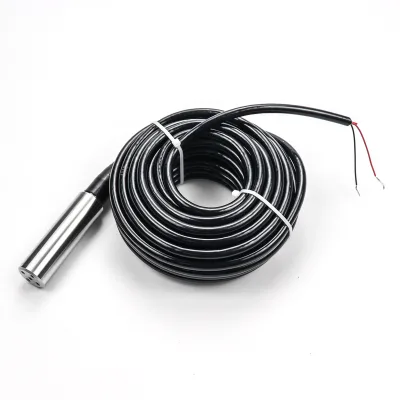
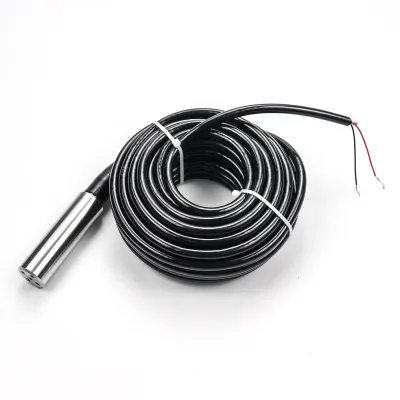
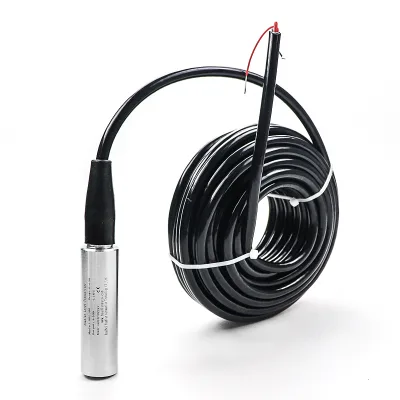
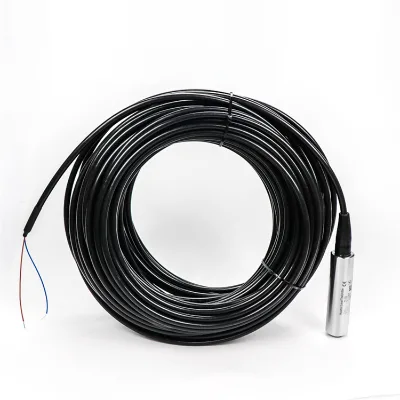
Comprehensive Sourcing Guide
IP68 Submersible Water Level Transmitter Supplier Concentration and Factory Types
Current data indicates a concentration of manufacturing activity in specific Chinese provinces, with verified results showing facilities located in Shaanxi and Jiangsu. These regions host combined company types that offer both Original Design Manufacturing and Original Equipment Manufacturing capabilities alongside their own branded products. The presence of these combined entities suggests a supply chain structure where factories may also function as trading partners, offering a broader range of product lines that include pressure sensors, flow meters, and various testing instruments beyond just level transmitters. Buyers should note that while some suppliers list extensive product portfolios, the core competency for submersible sensors often resides within these specific industrial clusters.
When assessing factory types, it is critical to distinguish between pure manufacturers and combined entities that may source from third parties. The available facts confirm that some suppliers possess ODM and OEM capacities, which implies they can customize the internal structure or external casing of the IP68 Submersible Water Level Transmitter to meet specific project requirements. However, the absence of a universal system certification across all results means that not every facility has undergone the same rigorous third-party audit. Buyers must verify if the specific factory unit handling their order holds the necessary ISO9001:2015 certification or other relevant quality management standards before committing to a large-scale production run.
How to Verify IP68 Submersible Water Level Transmitter Suppliers
Verification of supplier credibility relies heavily on checking for specific third-party validation marks and response metrics. In the current dataset, one supplier is explicitly marked as verified by TUVRHEINLAND, a significant indicator of operational reliability and quality assurance. This verification status should be a primary filter for buyers, as it confirms that the entity has passed independent scrutiny regarding their business practices and product capabilities. Conversely, other suppliers in the results show a system certification of NIL, which does not necessarily imply a lack of quality but requires the buyer to request alternative proof of their manufacturing standards and quality control processes before proceeding.
Beyond certification, the speed of communication serves as a tangible metric for supplier responsiveness and operational efficiency. The observed response times vary, with some suppliers demonstrating a rapid average response of approximately 2.08 hours, while others show a slightly slower average of 3.83 hours. A faster response time often correlates with a more active sales team and a streamlined internal process for handling inquiries and technical specifications. Buyers should prioritize suppliers who consistently demonstrate quick turnaround on initial communications, as this behavior often predicts how the supplier will handle urgent production issues or technical troubleshooting during the lifecycle of the order.
What to Compare Across IP68 Submersible Water Level Transmitter Suppliers
Comparing suppliers requires a detailed analysis of their technical specifications, pricing structures, and minimum order quantities. The product evidence reveals a wide range of accuracy grades, from 0.1% to 0.5%F.S., and varying pressure ranges suitable for different depths, such as 01...1000mH2O or 01...200mH2O. Buyers must match these technical parameters to their specific application needs, ensuring the selected transmitter can withstand the required process temperature, which ranges from -20℃ to 80℃ or even -40℃ to 100℃ depending on the model. Additionally, the output signal types, including 4-20mADC and 0~5VDC, must align with the buyer's existing control systems to avoid costly integration issues.
Pricing and order volume constraints are equally critical factors in the comparison process. The data shows price points ranging from approximately $36 to $350 per unit, with minimum order quantities varying significantly from 1 piece to 10 pieces. Some suppliers offer a low MOQ of 1, which is advantageous for prototyping or small-scale projects, while others require a batch of 5 or 10 units. Buyers should calculate the total cost of ownership, including the impact of the MOQ on inventory holding costs, rather than focusing solely on the unit price. Furthermore, the availability of customization options, such as specific thread types or cable lengths, should be confirmed, as this flexibility can be a decisive factor when standard models do not fit the installation environment.
Common IP68 Submersible Water Level Transmitter Sourcing Risks
One significant risk involves the discrepancy between advertised certifications and actual product compliance. While some product attributes list CE, UL, and RoHS certifications, other entries show only CE or no system certification at all. This inconsistency creates a risk that the specific batch delivered may not meet the regulatory requirements of the buyer's target market. Buyers must explicitly request the test reports for the specific model number they intend to purchase, rather than accepting generic certification claims that may apply to a different product line or a previous version of the device.
Another risk pertains to the long-term stability and warranty terms associated with the equipment. The observed data indicates a warranty period of 1 Year for some models, while others highlight a long-term stability of 0.2%FS/year. If a project requires high reliability over several years, relying solely on a one-year warranty without understanding the drift characteristics of the sensor could lead to premature failure and data inaccuracy. Buyers should verify the specific stability claims and ensure that the supplier provides a clear protocol for calibration and maintenance, as the harsh environments where these transmitters operate can accelerate wear and tear if the materials are not of the highest grade.
IP68 Submersible Water Level Transmitter Regional Sourcing and Logistics
The geographic location of the supplier directly influences lead times and shipping logistics. Current facts indicate lead times of 15 days for some suppliers and 30 days for others, reflecting differences in production capacity and inventory management. Suppliers located in Jiangsu and Shaanxi may have varying access to ports and logistics networks, which can affect the speed of delivery to international destinations. Buyers should factor these lead times into their production schedules, ensuring that the 15-day or 30-day window aligns with their project deadlines to avoid delays in the overall supply chain.
Packaging and standard dimensions also play a role in logistics planning and cost estimation. The product evidence specifies packing methods such as PP Bag and Carton or standard cartons with dimensions like 81215cm. These details are essential for calculating freight costs, especially for air freight where volume and weight are critical. Buyers should confirm the exact packaging dimensions and weight for their specific order quantity to optimize container loading and reduce shipping expenses. Additionally, understanding the origin of the product, confirmed as China in the data, helps in anticipating any potential customs duties or import regulations that may apply in the buyer's country.
IP68 Submersible Water Level Transmitter Commercial Terms and Order Planning
Commercial terms regarding customization and payment security are vital for successful order planning. The data confirms that customization is available across multiple product listings, allowing buyers to tailor the transmitter to specific needs such as unique thread types or specialized pressure ranges. However, buyers must clarify the lead time implications of custom orders, as these often extend beyond the standard 15 to 30-day window. It is also necessary to verify if the supplier offers escrow services or other payment protection mechanisms to safeguard the financial transaction, ensuring that funds are only released once the goods meet the agreed-upon specifications and quality standards.
Order planning must also account for the specific model numbers and their associated attributes to prevent procurement errors. With models like LONN-1LX, HPM410W, and HPM4116, each having distinct pressure ranges, accuracy grades, and output signals, a clear specification sheet is mandatory before placing an order. Buyers should cross-reference the technical data provided in the product attributes with their engineering requirements to ensure compatibility. Furthermore, confirming the supply voltage, such as 24VDC, and the working temperature range is essential to prevent operational failures once the equipment is installed in the field, ensuring a smooth transition from procurement to deployment.
FAQs
What is the price range for IP68 submersible water level transmitters?
Prices for these transmitters typically range from 28 to 85 dollars per unit depending on the specific model and accuracy requirements. Some basic models start at 28 dollars while specialized units with higher precision can reach up to 85 dollars. Buyers should verify exact pricing based on their required pressure range and output signal type.
What are the minimum order quantities for these sensors?
Minimum order quantities vary significantly between suppliers, ranging from one unit to ten units per order. Some vendors accept single unit purchases for testing purposes, while others require a batch of ten or more. Buyers must check specific supplier listings to confirm the exact MOQ applicable to their selected product model.
How long does it take to receive these transmitters after ordering?
Lead times for delivery generally range from fifteen to thirty days depending on the supplier location and production schedule. Suppliers in Jiangsu often offer faster turnaround times around fifteen days, while those in Shaanxi may require up to thirty days. Buyers should confirm the specific lead time with the vendor before finalizing the purchase.
What certifications do these IP68 sensors typically hold?
Many of these transmitters carry CE, UL, and RoHS certifications to ensure compliance with international safety and environmental standards. Some suppliers also hold ISO9001:2015 system certifications for their manufacturing processes. Buyers should verify the specific certification documents provided by the supplier to ensure they meet their local regulatory requirements.
What accuracy levels are available for these water level sensors?
Accuracy grades for these sensors typically range from 0.1 percent to 0.5 percent of full scale depending on the model. High precision models can achieve 0.1 percent accuracy, while standard industrial units often offer 0.5 percent accuracy. Buyers should select the accuracy grade that matches their specific application requirements for liquid level measurement.
Can these transmitters be customized for specific applications?
Yes, customization is available for many models to meet specific pressure ranges, output signals, or structural requirements. Suppliers offer options for custom cable lengths, specific thread types, and tailored measuring mediums. Buyers should contact the supplier directly to discuss their unique customization needs and confirm availability for their specific project.
What is the warranty period for these submersible sensors?
The standard warranty period for these transmitters is typically one year from the date of purchase. This warranty covers manufacturing defects and ensures the product functions as specified under normal operating conditions. Buyers should review the specific warranty terms provided by the supplier to understand coverage details and claim procedures.