Thermostatic Microplate Shaker Suppliers and Manufacturers
Compare 26 verified suppliers of Thermostatic Microplate Shaker based on location, lead time, response time, and certifications. Review product specifications like temperature range and speed to find the right fit. Contact suppliers directly to request quotes and verify details; review the available evidence before requesting comparable quotations from suitable candidates.
Suppliers List

Nanjing Long Medical Technology Co., Ltd.
- Verified by TUVRHEINLAND
- Trading Company
- China Jiangsu
- Lead time15 days
- Avg. response≤ 3h
Main productsUltrasound Equipment, Laboratory Machine, Medical X-ray Machine, Operation Room Equipment, Dental Equipment, Autoclave Sterilizer, Disposable Material, Veterinary Equipment, Ophthalmic Equipment, Gynaecology & Neonatal Equipment
Main marketsAfrica,Others(foreignTradeCapacity.exportBusinessCapacityMarketOther),Southeast Asia/ Mideast,Europe,North America


$300.00 - $500.00
MOQ: 1 set


Laboratory Shaking Incubator Constant Temperature Desktop Thermostatic Shaker with 250ml 500ml 25ml
$1500.00 - $3000.00
MOQ: 1 set
ZHENGZHOU LABONE INSTRUMENT CO., LTD.
- Verified by TUVRHEINLAND
- Trading Company
- China Henan
- Lead time15 days
- Avg. response≤ 1h
Main productsLaboratory Equipment, Lab Instrument, Lab Device, Lab Centrifuge, Microscope, Water Quality Tester, Spray Dryer, Freeze Dryer, Glass Reactor, Rotary Evaporator
Main marketsAfrica,Southeast Asia/ Mideast,Australia,North America

Lab Thermostatic Microplate Shaker with Oscillation 2 Plates Ms300 Shaker for Microplates
$217.00 - $483.00
MOQ: 1 Sets

2 Plates Auto Intelligent Lab Equipment Ts200 Thermo Shaker for Microplates
$403.00 - $897.00
MOQ: 1 Sets

Microplate Shaking Machine Laboratory Equipment Tsc10 Thermo Shaker with Cooling
$806.00 - $1793.00
MOQ: 1 Sets

4 Plates Digital Display Laboratory Orbital Ts300 Thermo Shaker for Microplates
$608.00 - $1352.00
MOQ: 1 Sets

Heating Samples Lab 6 Deep Well Plates Ts400 Thermo Shaker for Microplates
$962.00 - $2138.00
MOQ: 1 Sets

Biobase Biodustry (Shandong) Co., Ltd.
- Verified by BV
- Combined
- China Shandong
- Lead time15 days
- Avg. response≤ 4h
Main productsLaminar Flow Cabinet, Fume Hood, Biosafety Cabinet, Clean Bench, Fume Cupboard, Safety Cabinet, Laminar Airflow, Laboratory Equipments, Autoclave, Centrifuge
Main marketsEurope

Henan Aoda Instrument Equipment Co.,Ltd
- Verified by BV
- Trading Company,Manufacturer/Factory,Group Corporation
- China Henan
- Lead time15 days
- Avg. response≤ 2h
Main productsFood Freeze Dryer, Glass Reactor, Rotary Evaporator, Planetary Ball Mill, Kjeldahl Nitrogen Analyzer, Soxhlet Fat Analyzer, Crude Fiber Analyzer, Gluten Tester, Karl Fischer Titrator, Multiparameter Water Quality Meter
Main marketsSouth America,Eastern Europe,Mid East,North America,Southeast Asia,Eastern Asia,Oceania,Western Europe,Africa


Aoda ATS400 6 Standard Microplates Deep Well Plates Supported Thermo Microplates Shaker
$1000.00 - $1300.00
MOQ: 1 Sets

Laboratory Large Capacity 310L LCD Screen Convolution Three Layer Thermostatic Shaker
$7200.00 - $10000.00
MOQ: 1 Sets

- Verified by CTI
- Trading Company
- China Jiangsu
- Lead time15 days
- Avg. response≤ 15h
Main productsClinical Lab Equipment, Rehabilitation Equipment, Surgical Equipment, Medical Furniture, Medical Scales, X-ray Machine, Medical Disposables, Oxygen Concentrator, Medical Equipment, Medical Consumables
Main marketsSouth America,Africa,Southeast Asia/ Mideast,Europe,Australia

Hunan Michael Laboratory Instrument Co.,Ltd.
- Verified by TUVRHEINLAND
- Combined
- China Hunan
- Lead time15 days
- Avg. response≤ 6h
Main productsCentrifuge
Main marketsSouth America,Africa,Southeast Asia/ Mideast,Europe,North America


Multipurpose Thermostatic Digital Microtube Microplate Shaker Laboratory Oscillate Mixer
$428.00 - $468.00
MOQ: 1 Pieces



Zhengzhou Bioda Instrument Co., Ltd.
- Trading Company
- Henan, China
- Lead time20 days
- Avg. response≤ 1h
Main productsGlass Reactor,Rotary Evaporator,Water Analyzer,Agricultural Equipment,Centrifuge
Main marketsNorth America(30.00%), Southeast Asia(20.00%), Western Europe(15.00%), Africa(15.00%), South America(15.00%), Mid East(5.00%)
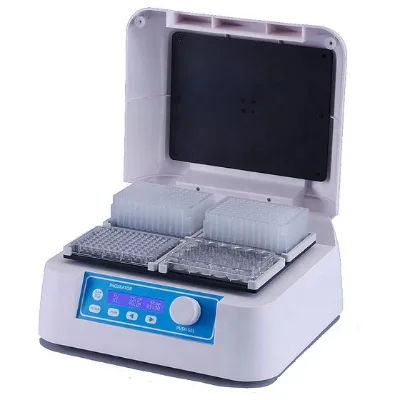
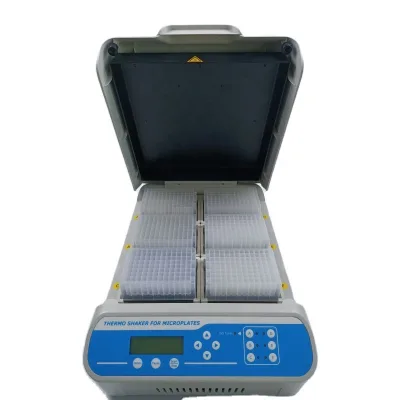
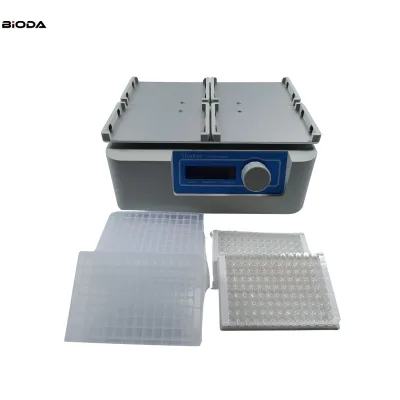
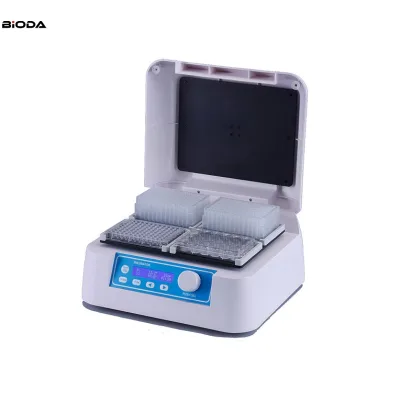
Microplate Incubator Heating Shaker for Elisa Plate Tissue Culture Plate
$1228.00 - $1500.00
MOQ: 1 Minimum
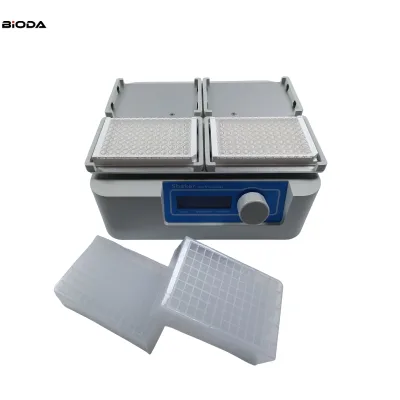
$434.45 - $530.32
MOQ: 1 Minimum
Prosperity Biotech (shandong) Co., Ltd.
- Verified by SGS Group
- Trading Company
- Lead time20 days
- Avg. response≤ 2h
Main productsIncubator, Oven, Centrifuge, Autoclave, Fume Hood
Main marketsSouth America(15%), Eastern Europe(12%), North America(10%)
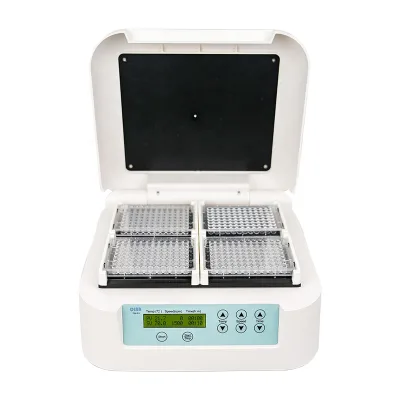
Laboratory Thermostatic Equipment Microplate Incubator Heating Shaker
$400.00 - $600.00
MOQ: 1 Minimum
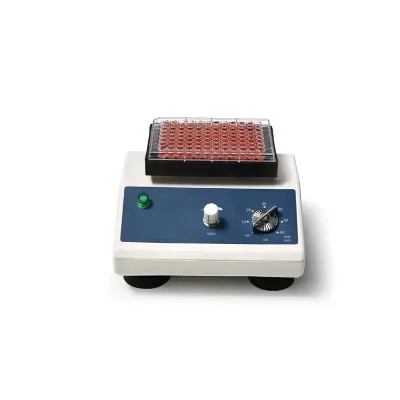
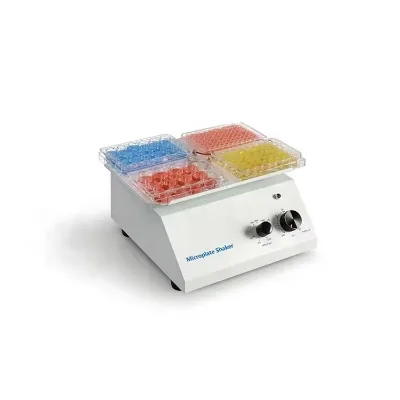
Microplate Shaker for Lab 200-2800rpm 0-15min Timer Max 6 Pcs Microplate SK-201C
$71.59 - $92.04
MOQ: 5 Minimum

Jiangsu Jinyi Instrument Technology Company Limited
- Manufacturer/Factory
- China Jiangsu
- Lead time23 days
- Avg. response≤ 12h
Main productsElectronic Spirometer, Laboratory Centrifuge, Thermostatic Incubator Drying Oven, Testtube Heater, Votex Mixer, Speed-Adjustable Shaker, Thermostatic Shaker, Water/Oil Bath, Electric Stirrer, Hot Plate
Main marketsSouth America,Eastern Europe,Mid East,North America,Southeast Asia,Eastern Asia,Oceania,Western Europe,Africa


Jymix-1500 Micro-Plate Shaker, Dogital Display Laboratory Shaker for Micro Plate
$520.00
MOQ: 1 Pieces


Pioway Medical Lab Equipment Co., Ltd.
- Trading Company
- China Jiangsu
- Lead time15 days
- Avg. response≤ 7h
Main productsHematology Analyzer, Chemistry Analyzer, Electrolyte Analyzer, Ultrasound Scanner, X-ray Machine, Patient Monitor, ECG Machine, Hospital Bed, Microscope, Centrifuge
Main marketsSouth America,Africa,Southeast Asia/ Mideast,North America

Nanjing AMIS Medical Technology Co., Ltd.
- Trading Company,Manufacturer/Factory,Other
- China Jiangsu
- Lead time15 days
- Avg. response≤ 3h
Main productsUltrasound Scanner, ECG Machine, Patient Monitor, Laboratory Analyzer, Infant Incubator, X Ray Machine, Health Beauty, Pathology Products, Autoclave Sterilizer, Dental Chair
Main marketsSouth America,Eastern Europe,Mid East,North America,Southeast Asia,Eastern Asia,Oceania,Western Europe,Africa

- Verified by BV
- Trading Company,Manufacturer/Factory,Group Corporation
- China Henan
- Lead time15 days
- Avg. response≤ 3h
Main productsLaboratory Instrument, Rotary Evaporator, Glass Reactor, Life Science Instruments, Agricultural Instruments, Chemical Analysis Equipments, Thermal Cycler PCR, Petroleum Instruments, Drug Testing Equipment, Physical Testing Instruments
Main marketsSouth America,Eastern Europe,Mid East,North America,Southeast Asia,Eastern Asia,Oceania,Western Europe,Africa

Zhengzhou Wollen Instrument Equipment Co., Ltd.
- Verified by TUVRHEINLAND
- Trading Company
- China Henan
- Lead time15 days
- Avg. response≤ 5h
Main productsRotary Evaporator, Rotovap, Glass Reactor, Chiller, Incubator, Vacuum Pump, Drying Oven, Molecular Distillation, CO2; Extraction, Freeze Dryers
Main marketsSouth America,Africa,Southeast Asia/ Mideast,Europe,Australia,North America


Laboratory 96-Well Microplate Thermo Shaker with Four Microporous Mini Plates
$250.00 - $850.00
MOQ: 1 Set


Yangzhou Kindsway Biotech Co., Ltd.
- Trading Company,Manufacturer/Factory
- China Jiangsu
- Lead time15 days
- Avg. response≤ 5h
Main productsVentilator, X-ray, Ultrasound, C-Arm, Slippers, Dr System, Cr System, Test Kit, Medical Equipment, Ambulance
Main marketsSouth America,Eastern Europe,Mid East,North America,Southeast Asia,Eastern Asia,Oceania,Western Europe,Africa

FOSHAN CONCERN MEDICAL EQUIPMENT CO.,LTD.
- Manufacturer/Factory
- China Guangdong
- Lead time15 days
- Avg. response≤ 8h
Main productsOperation Equipment, Lab Equipment, Veterinary Equipment, Ultrasound, X-ray Room Equipment, Dental Equipment, Sterilization Equipment, Mortuary Equipment, Hospital Furniture, Gynecology & Obstetrics Equipment
Main marketsSouth America,Mid East,North America,Southeast Asia,Eastern Asia,Oceania,Africa

- Verified by BV
- Combined
- China Shandong
- Lead time15 days
- Avg. response≤ 4h
Main productsRefrigeration Equipment, Autoclave, Chemistry Analyzer
Main marketsSouth America,Africa,Southeast Asia/ Mideast,Europe,Australia,North America

Biobase Thermostatic Microplate Shaker with Oscillation Bk-Ms300 for Lab
$400.00 - $800.00
MOQ: 1 Pieces

Biobase Microplate Shaker with Incubation and Real-Time Display for Lab
$200.00 - $500.00
MOQ: 1 Pieces


- Verified by BV
- Combined
- China Shandong
- Lead time30 days
- Avg. response≤ 4h
Main productsLaboratory Equipment, Medical Device, Biochemistry Analyzer, Autoclave, Biological Safety Cabinet, Laminar Flow Cabint, Fume Hood, Centrifuge, Oven, Incubator
Main marketsSouth America,Africa,Southeast Asia/ Mideast,East Asia(Japan/ South Korea),Europe,Australia,North America

Biobase Automatic Preheating Multipurpose Thermostatic Microplate Incubator Shaker
$500.00 - $850.00
MOQ: 1 unit

Biobase China Microplate Shaker Bk-Ms300 200-1350rpm Shaking Speed Thermo Shaker
$560.00
MOQ: 1 Pieces

Biobase China Multipurpose Thermostatic Digital Microtube Microplate Shaker Bk-Ms300
$500.00 - $850.00
MOQ: 1 unit


- Verified by SGS
- Combined
- China Sichuan
- Lead time30 days
- Avg. response≤ 7h
Main productsUltrasound Machine, Fetal Doppler, ECG, Aed, Handheld Ultrasound, Hospital Bed, Oxygen Concentrator, Ventilator, Glucometer, Monitor
Main marketsSoutheast Asia/ Mideast,Domestic
- Trading Company
- Shandong, China
- Lead time7 days
- Avg. response≤ 2h
Main productsChemistry Analyzer,Laminar Flow Cabinet,Autoclave,Refrigerator,Microscope
Main marketsSoutheast Asia(13.00%), Africa(13.00%), South America(12.00%), Western Europe(12.00%), Mid East(10.00%), Central America(7.00%), South Asia(6.00%), Domestic Market(5.00%), Northern Europe(5.00%), North America(5.00%), Oceania(4.00%), Eastern Europe(4.00%), Southern Europe(2.00%), Eastern Asia(2.00%)
Hangzhou Allsheng Instruments Co., Ltd.
- Manufacturer
- Zhejiang, China
- Lead time10 days
- Avg. response≤ 2h
Main productsAutomatic Nucleic Acid Extraction System,Automated NGS Library Preparation Workstation,Laboratory Instrument,Life Science Detection Product,Molecular POCT Detection
Main marketsEastern Asia(20.00%), North America(20.00%), South America(15.00%), Northern Europe(10.00%), South Asia(5.00%), Southern Europe(5.00%), Southeast Asia(5.00%), Central America(5.00%), Western Europe(5.00%), Eastern Europe(5.00%), Africa(5.00%)
Henan Junmu Medical Equipment Co., Ltd.
- Verified by TUVRHEINLAND
- Trading Company
- China Henan
- Lead time15 days
- Avg. response≤ 3h
Main marketsEast Asia(Japan/ South Korea)

- Verified by BV
- Combined
- China Jiangsu
- Lead time15 days
- Avg. response≤ 3h
Main productsOven, Incubator, Baby Incubator, Vacuum Oven, Biological Safety Cabinet, Cooling Incubator, CO2 Incubator, Orbital Shaker, Clean Bench, Vacuum Pump
Main marketsSouth America,Africa,Southeast Asia/ Mideast,Europe,North America
- Trading Company
- Shandong, China
- Lead time20 days
- Avg. response≤ 2h
Main productsLaboratory Equipment,Autoclave,Freezer and Refrigerator,Centrifuge,Spectrophotometer
Main marketsAfrica(25.00%), South America(23.00%), Eastern Asia(15.00%), Mid East(12.00%), Eastern Europe(12.00%), Southeast Asia(6.00%), Oceania(2.00%), South Asia(1.00%), Southern Europe(1.00%), Northern Europe(1.00%), Central America(1.00%), Western Europe(1.00%)

Faithful lnstrument (Hebei) Co., Ltd.
- Verified by BV
- Combined
- China Hebei
- Lead time15 days
- Avg. response≤ 7h
Main productsIncubator, Magnetic Stirrer, Drying Oven, Heating Mantle, Water Bath, Laminar Flow Cabinet, Stainless Steel Water Still, Disintegrator, Furnace, Vortex Mixer
Main marketsSouth America,Africa,Southeast Asia/ Mideast,Europe,Australia,North America

Guangzhou Happycare Medical Equipment Co., Ltd.
- Verified by SGS
- Manufacturer/Factory
- China Guangdong
- Lead time15 days
- Avg. response≤ 6h
Main productsUltrasound Scanner, Sperm Analyzer, Microscope, X Ray Machine and Accessories, Hospital Equipment, Hematology Analyzer, Animal Insemination Equipment, Chemistry Analyzer, Ent Endoscope, Cr System
Main marketsSouth America,Eastern Europe,Mid East,North America,Southeast Asia,Eastern Asia,Oceania,Western Europe,Africa


Hc-B052 Factory Supply Microplate Oscillator Laboratory Micro Electric Oscillator Shaker
$20.00 - $130.00
MOQ: 1 Pieces
Hangzhou Boyn Instrument Co., Ltd.
- Verified by SGS Group
- Trading Company
- Lead time10 days
- Avg. response≤ 2h
Main productsuv vis spectrophotometer, centrifuge, ultra low temperature freezer, balance, magnetic stirrer
Main marketsSouth America(40%), Southeast Asia(20%), Eastern Asia(20%)


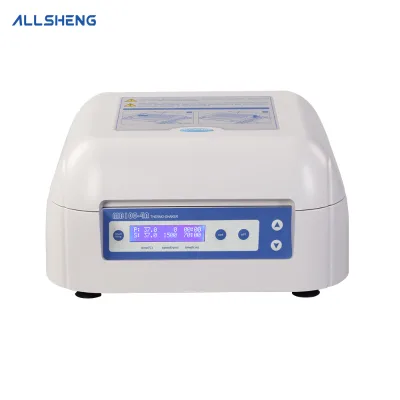
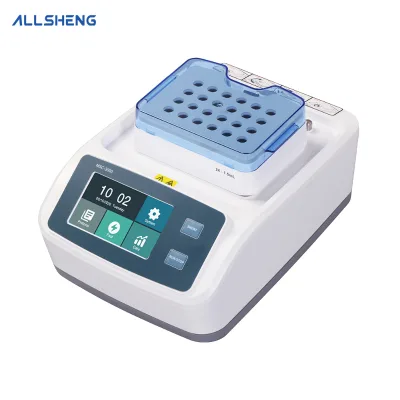


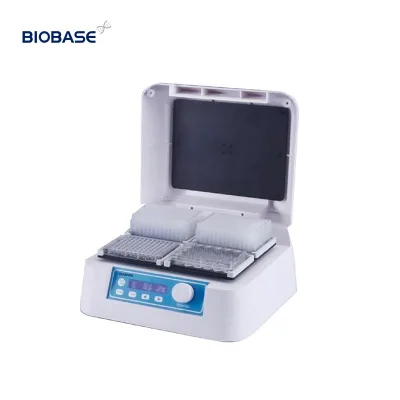
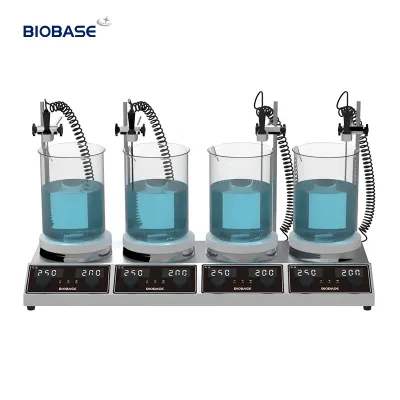


Comprehensive Sourcing Guide
Thermostatic Microplate Shaker Supplier Concentration and Factory Types
Current data indicates a concentration of suppliers in China Jiangsu and China Henan, specifically Zhengzhou, for this equipment category. These regions host a mix of trading companies and manufacturers offering diverse product lines that include ultrasound equipment, laboratory machines, and various sterilization devices. The presence of these specific locations suggests established industrial clusters where supply chains for medical and laboratory instruments are already developed. Buyers should prioritize verifying the physical address and operational scope of any supplier claiming to originate from these areas to ensure they are dealing with a legitimate entity rather than a reseller with no direct factory access.
The supplier landscape includes entities classified as trading companies alongside those with ODM, OEM, and own brand capabilities. This distinction is critical because trading companies may aggregate products from multiple factories, whereas those with direct manufacturing capacity can offer more customized solutions for specific temperature ranges or shaking orbits. Some suppliers list main products ranging from dental equipment to veterinary devices, indicating a broad portfolio that may or may not reflect deep specialization in microplate shakers. Buyers must confirm whether the specific model they require is a core product or a secondary item in the supplier's catalog to assess the depth of technical support available.
How to Verify Thermostatic Microplate Shaker Suppliers
Verification processes should begin with checking for third-party audit reports, as some suppliers display TUVRHEINLAND verification status. This external validation provides a baseline of confidence regarding the company's business license and operational history, though it does not guarantee product quality for every specific item. Buyers should request the full audit report to understand the scope of the verification, ensuring it covers the specific manufacturing facilities where the thermostatic microplate shakers are produced. Relying solely on a badge without reviewing the underlying documentation can lead to misunderstandings about the supplier's actual capabilities and compliance standards.
System certifications such as CE and ISO are frequently listed in product attributes, but these must be cross-referenced with the specific model numbers provided. For instance, some listings explicitly state CE certification for portable structures, while others may only claim general system certifications without specific product linkage. Buyers should ask for valid certificate numbers and verify their authenticity with the issuing body before proceeding with large orders. Additionally, response times vary significantly, with some suppliers showing a response time of 0.69 hours while others take nearly three hours, which can impact the speed of technical clarification and negotiation.
What to Compare Across Thermostatic Microplate Shaker Suppliers
When comparing suppliers, lead times and minimum order quantities (MOQ) are primary differentiators that affect inventory planning and cash flow. Available data shows lead times of 15 days for certain orders, while MOQs can be as low as one unit for some models, allowing for small-scale testing. However, other suppliers may have higher thresholds or longer production windows depending on the customization level required. Buyers should create a comparison matrix that includes these logistical metrics alongside response times to identify which suppliers can meet their specific delivery schedules without compromising on order volume requirements.
Product specifications and pricing structures also require detailed comparison to ensure value alignment. Prices for similar devices range from approximately 217 to 3000 units of currency, driven by features like temperature accuracy, speed ranges, and display types. Some models offer precise temperature control with accuracy within ±0.5°C, while others provide broader ranges suitable for different applications. Buyers must evaluate whether the price difference correlates with tangible performance benefits, such as heating time from room temperature to 80°C or the ability to handle multiple plates simultaneously. Ignoring these technical nuances in favor of the lowest price can result in equipment that fails to meet laboratory standards.
Common Thermostatic Microplate Shaker Sourcing Risks
One significant risk involves the discrepancy between claimed certifications and actual product compliance, particularly when suppliers list broad categories like "Others" for system certification. While specific products may display CE marks, the overall company certification status might be vague or unverified, creating potential liability issues for importers. Buyers should demand proof of certification for the exact batch of goods being purchased, rather than accepting generic claims that apply to the company's entire portfolio. This diligence is essential to avoid customs delays or rejection of goods in markets with strict regulatory requirements for medical and laboratory equipment.
Another risk stems from the variability in product attributes and the potential for miscommunication regarding customization options. Some listings indicate that customization is available, while others specify non-customized structures, leading to confusion about what can be modified. If a buyer requires specific dimensions, voltage inputs, or unique mixing orbits, relying on a supplier who lists "Non-Customized" as a default attribute can result in receiving equipment that does not fit their workflow. Clear, written confirmation of all custom requirements before payment is necessary to prevent disputes and ensure the final product matches the intended application in the laboratory or hospital setting.
Thermostatic Microplate Shaker Regional Sourcing and Logistics
Sourcing from China Jiangsu and China Henan offers logistical advantages due to established export infrastructure, but buyers must account for regional shipping nuances. Suppliers in these locations typically use standard export packaging, which is designed to protect sensitive electronic components during transit. However, the distance from the factory to the port and the specific logistics partners used can influence the final delivery timeline and cost. Buyers should request detailed shipping terms, including Incoterms, to understand who is responsible for freight charges, insurance, and customs clearance at the destination port.
Response times and communication efficiency are also tied to regional operations, with some suppliers demonstrating faster engagement than others. A supplier with a response time of under one hour may be better positioned to handle urgent logistics changes or last-minute specification adjustments. Conversely, slower response times can delay the resolution of shipping issues or the confirmation of packaging details. Buyers should factor these communication metrics into their logistics planning, ensuring they have a reliable point of contact who can coordinate effectively with freight forwarders to minimize delays and ensure the equipment arrives in optimal condition.
Thermostatic Microplate Shaker Commercial Terms and Order Planning
Commercial terms regarding payment and order planning must be scrutinized to align with the buyer's financial strategy and risk tolerance. While some suppliers offer low MOQs of one unit, facilitating initial trials, larger orders may trigger different pricing tiers or require escrow services for protection. Buyers should clarify the payment schedule, deposit requirements, and the conditions under which refunds or replacements are processed. Understanding these terms is vital for managing cash flow, especially when dealing with international transactions where currency fluctuations and banking delays can impact the overall cost of the procurement.
Order planning should also consider the technical specifications and the potential need for future expansion or replacement parts. Suppliers offering ODM and OEM capabilities can support long-term growth by providing customized solutions or spare parts that are compatible with the initial purchase. Buyers should inquire about the availability of technical support, warranty periods, and the lead time for restocking critical components. By integrating these commercial and technical factors into a comprehensive order plan, buyers can ensure a sustainable supply chain that supports their laboratory operations without unexpected interruptions or costly downtime.
FAQs
What is the typical lead time for thermostatic microplate shakers?
The typical lead time for these devices is 15 days based on current supplier data. Buyers should confirm specific delivery schedules with the trading company before placing orders. This timeframe applies to standard models shipped from Jiangsu, China.
What is the minimum order quantity for these lab shakers?
The minimum order quantity is 1 unit for most listed products. This allows buyers to purchase single units for testing or small-scale laboratory needs. Verify if bulk pricing applies when ordering larger quantities from the supplier.
Are these shakers available with CE or ISO certifications?
Yes, some models carry CE certification while others hold both ISO and CE marks. Specific product listings indicate these compliance standards for laboratory and hospital applications. Always check the product attributes section to confirm the exact certification for your required model.
What is the price range for a digital microplate shaker?
Prices range from 300 to 3000 depending on the specific model and features. Basic units start around 300 while advanced reciprocating shakers can reach 3000. The exact cost depends on the temperature range, speed capabilities, and customization options selected.
How quickly do suppliers typically respond to inquiries?
Response times vary between 0.69 and 2.79 hours for active suppliers. Faster response rates are observed for certain vendors in the Henan region. Buyers should expect a reply within a few hours during business days for urgent sourcing needs.
Can these shakers be customized for specific laboratory needs?
Customization is available for many models, including specific branding and functional adjustments. Some listings explicitly state that customization is available while others offer non-customized standard units. Contact the supplier to confirm if your specific requirements can be met.
Where are these thermostatic shakers manufactured?
Manufacturing locations include Jiangsu and Henan provinces in China. Specific product attributes list origins such as Jiangsu or Zhengzhou, Henan. Buyers should verify the exact production site for each model to ensure it meets their logistical or compliance preferences.