Mechanical Fashion Wrist Watch Suppliers and Manufacturers
Source 14 verified suppliers for Mechanical Fashion Wrist Watch products. Compare key dimensions including location, lead time, MOQ, response time, and certifications. Review specific product attributes and pricing to identify suitable partners for your sourcing needs; review the available evidence before requesting comparable quotations from suitable candidates.
Suppliers List

Shijiazhuang Dongcang Trading Co., Ltd.
- Verified by SGS
- Trading Company,Manufacturer/Factory
- China Hebei
- Lead time15 days
- Avg. response≤ 11h
Main productsHandbag, Shoulder Bag, Shoes, Clothes, Jewelry, Swimwear, Sunglasses
Main marketsSouth America,Eastern Europe,Mid East,North America,Southeast Asia,Eastern Asia,Oceania,Western Europe,Africa

Jinjiang Jiaxing Import and Export Co., Ltd.
- Verified by CTI
- Manufacturer/Factory
- China Fujian
- Lead time120 days
- Avg. response≤ 1h
Main productsShoes, Slipper, Clothes, Promotion Gifts, Silicone Products, Outdoor Sports Products, Bags, Fashion Accessories, Consumer Electronics
Main marketsSouth America,Eastern Europe,Mid East,North America,Southeast Asia,Eastern Asia,Oceania,Western Europe,Africa

Xiamen Dongyun Import and Export Co., Ltd.
- Verified by SGS
- Trading Company
- China Fujian
- Lead time15 days
- Avg. response≤ 8h
Main marketsEurope,North America

Luxury Fashion Business S19 Custom Own Stainless Steel Brand Wrist Watch Mechanical Watches
$72.00 - $94.00
MOQ: 2 Pieces

Custom Brand Watch High Quality Fashionable Blue Leather Strap Fashion Wrist Watch
$122.00 - $147.00
MOQ: 2 Pieces

Popular Design Automatic Stainless Steel Mechanical Watch Automatic Mechanical Watch for Women
$32.00 - $51.00
MOQ: 2 Pieces

Automatic Watch for Men Hollow Mechanical Waterproof Fashionable and Luxurious Men's Wristwatch
$223.00 - $252.00
MOQ: 2 Pieces


Jinjiang Jiaxing Supply Management Co., Ltd.
- Verified by TUVRHEINLAND
- Trading Company
- China Fujian
- Lead time30 days
- Avg. response≤ 1h
Main productsEVA Clogs, Flip Flop, Shoe Charms, Shopping Bags, Wristbands, Gifts, Promotional Gifts, Slipper, Sport Cap, Ball
Main marketsNorth America

Foshan Zhongchuang Import and Export Trading Co., Ltd.
- Verified by SGS
- Trading Company
- China Guangdong
- Lead time15 days
- Avg. response≤ 4h
Main marketsSoutheast Asia/ Mideast,Europe,North America


Luxury Automatic Mechanical Watch Equipped with 7.8mm Super Clone Men's Watch
$75.00 - $750.00
MOQ: 1 Pieces

Shantou Love Summer Technology Co., Ltd.
- Verified by BV
- Trading Company
- China Fujian
- Lead time15 days
- Avg. response≤ 3h
Main productsWatch, Shoes, Bag, Costume
Main marketsSouth America,Africa,Southeast Asia/ Mideast,East Asia(Japan/ South Korea),Europe,Australia,North America

Foshan Bolanshi Trading Co., Ltd
- Verified by SGS
- Trading Company
- China Guangdong
- Lead time15 days
- Avg. response≤ 2h
Main marketsDomestic


$80.00 - $580.00
MOQ: 1 Pieces

$80.00 - $620.00
MOQ: 1 Pieces


Xiamen City Tongan District Jian Shu Qi Long Trading Firm (Individual Business)
- Verified by SGS
- Trading Company
- China Fujian
- Lead time15 days
- Avg. response≤ 15h
Main productsWatch, Shoe, Bag
Main marketsSoutheast Asia/ Mideast,Europe,North America


Luxurious Mechanical Wristwatch - High-End Custom Men's Fashion Brand Watch
$60.00 - $358.00
MOQ: 1 Pieces
- Trading Company
- China Fujian
- Lead time0 days
- Avg. response≤ 16h
Main productsLuxury Watch, Luxury Bags, Luxury Shoes, Designer Watch

Luxury Designer Men's Automatic Mechanical Watch Classic Casual Wristwatch
$360.00 - $380.00
MOQ: 2 Pieces

Foshan Nanhai Yuexian Dental Trading Co., Ltd. (Individual Business)
- Verified by BV
- Trading Company
- China Guangdong
- Lead time30 days
- Avg. response≤ 3h
Main productsWatch, Bag, Handbag, Crossbody Bag, Mechanical Watch, Clothes, Pants, Shoe
Main marketsSoutheast Asia/ Mideast,Europe,Australia,North America

Luxury Automatic Mechanical Watch Super Clone Waterproof Fashion Business Watch
$39.00 - $599.00
MOQ: 1 Pieces

Top Clone Luxury Automatic Mechanical Watch Luxury Business Customized Watch
$59.00 - $777.00
MOQ: 1 Pieces

Luxury Super Reproduction Automatic Mechanical Watch Customized 18K Watch
$88.00 - $680.00
MOQ: 1 Pieces

Mechanic Replicated Automatic Mechanical Super Clone Men's Luxury Mechanical Watch
$80.00 - $880.00
MOQ: 1 Pieces


Kang Jinghong Department Store
- Trading Company
- China Fujian
- Lead time0 days
- Avg. response≤ 11h
Main productsShoes, Bags, Watch, Jewelry, Sunglasses, Hat, Clothing (Down Jackets Hoodies T-Shirts), I Have Logo

Luxury Menwatch Sports Watches Automatic Mechanical Movement Watch 41mm Sapphire Crystal Fine
$39.90 - $399.00
MOQ: 1 Pieces

Luxury Mechanical Watches Original Designer Watches High Quality Watches
$39.90 - $399.00
MOQ: 1 Pieces

Multi-Function Mechanical Watch, High-End Luxury Design, Suitable for Collection and Business Travel
$39.90 - $399.00
MOQ: 1 Pieces
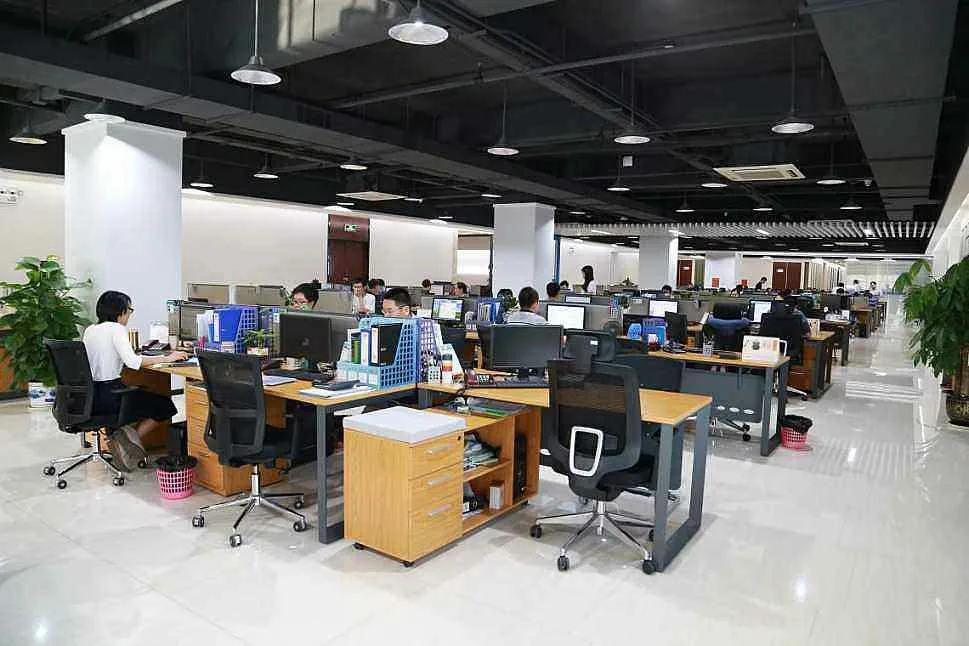
Guangzhou Geni Watch Co., Ltd.
- Manufacturer, Trading Company
- Guangdong, China
- Lead time3 days
- Avg. response≤ 7h
Main productsMechanical watch,Quartz watch,Wrist watch
Main marketsSoutheast Asia(20.00%), North America(20.00%), Northern Europe(10.00%), Central America(10.00%), Mid East(10.00%), Eastern Europe(10.00%)

- Manufacturer/Factory
- China Guangdong
- Lead time45 days
- Avg. response≤ 8h
Main productsLaptop Charging Cart, Charging Locker, Digital Podium, TV Stand, Metal Cabinet Rack, Charging Station, Charging Tower, Traning Chair, Traning Desk, Church Podium
Main marketsSouth America,Eastern Europe,Mid East,North America,Southeast Asia,Eastern Asia,Oceania,Western Europe,Africa

High Quality Brand Luxury Fashion Luxury Other Wrist Watch Women Luxury for Ladies
$1.99 - $3.99
MOQ: 2 Pieces


Foshan Jiemaohui International Trade Co., Ltd.
- Verified by SGS
- Trading Company
- China Guangdong
- Lead time15 days
- Avg. response≤ 4h
Main productsAnalog Watch
Main marketsSoutheast Asia/ Mideast,East Asia(Japan/ South Korea),Europe,North America

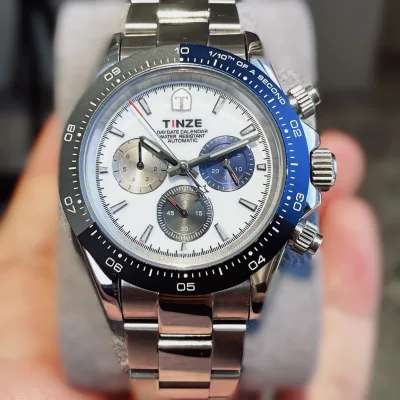
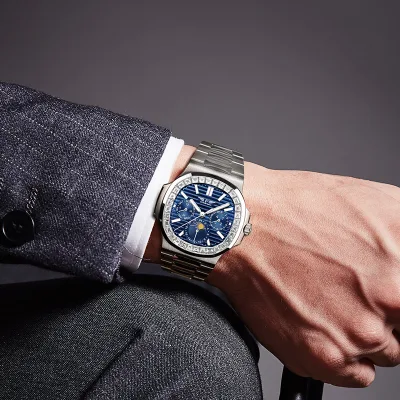
Men's Mechanical Watch 1: 1 Super Clone Quality Silicone Strap Fashion Watch
$125.00 - $385.00
MOQ: 1 Pieces


Comprehensive Sourcing Guide
Mechanical Fashion Wrist Watch Supplier Concentration and Factory Types
When sourcing Mechanical Fashion Wrist Watch products, buyers will encounter suppliers based in several Chinese provinces, with results in this category showing origin in Hebei and Fujian. These provincial clusters matter because they shape what a supplier can do in-house. A Hebei-based listing in this search set identifies itself as both a trading company and a manufacturer/factory, with main products spanning handbags, shoulder bags, shoes, clothes, jewelry, swimwear and sunglasses alongside watches. That breadth signals an accessories-oriented operation where watches sit inside a wider fashion portfolio, which can help buyers consolidating mixed-category orders but may mean watch assembly is one line among many.
Fujian-based results in this category describe themselves as manufacturer/factory operations, also carrying broad main-product lists that include shoes, slippers, clothes, promotion gifts, silicone products, bags and consumer electronics. Buyers should treat company type labels as a starting hypothesis rather than proof: a "manufacturer/factory" listing may still subcontract movements, cases or straps, while a "trading company" may operate its own assembly line for certain models. The practical step is to ask which processes—movement fitting, casing, dial printing, strap production, quality control—happen on site and which are outsourced. For mechanical movements specifically, ask whether automatic movements are sourced from established movement suppliers and whether the factory performs regulation and water-resistance testing internally, since these steps determine final quality more than the label on the company profile.
How to Verify Mechanical Fashion Wrist Watch Suppliers
Verification for Mechanical Fashion Wrist Watch sourcing should combine platform signals with direct checks. In the current results, some suppliers display third-party verification marks such as SGS or CTI, and at least one shows an ISO 9001 system certification. These are meaningful but narrow: a quality-management certificate says little about whether a specific watch model passes drop tests, movement accuracy checks or salt-water exposure. Ask for the certificate's scope, validity dates and the certified entity name, then confirm the entity matches the company you are contracting with, since group structures sometimes differ from the exporting entity.
Beyond documents, request product-level evidence. Listings in this category show attributes such as stainless steel cases and bands, sapphire surface material on some models, and stated waterproof ratings ranging from 30 m to 50 m on quartz and digital items. Ask the supplier to identify which of these attributes apply to the specific mechanical model you intend to order, and request test reports for water resistance and movement accuracy rather than accepting catalog text. Sample evaluation remains the strongest verification: order production-intent samples, check the movement functions under real wear, and time daily drift over a week. Also verify responsiveness as an operational signal—response times in the current results range from under one hour to nearly eleven hours, and a supplier's communication speed during sampling usually predicts its behavior during production problems.
What to Compare Across Mechanical Fashion Wrist Watch Suppliers
Build a comparison table with the dimensions suppliers actually display. Lead time varies widely in this category: one Hebei result shows a 15-day lead time while a Fujian manufacturer shows 120 days, a difference that likely reflects product complexity or order structure rather than pure efficiency. MOQ also spreads across a broad range, from single-piece minimums on some mechanical watch listings, to 500-piece and 1,000-piece minimums on quartz and sport models, to a 10,000-piece requirement on a chronograph listing. Match these numbers to your distribution model before shortlisting, because a supplier willing to ship one piece may not scale economically for volume.
Compare response speed, capability labels and product fit as well. Response times in the current results span roughly 0.13 to 10.98 hours, which affects how quickly problems get resolved mid-production. Capability labels such as OEM, ODM and own-brand capacity indicate whether a supplier can execute your designs or only modify existing ones—one trading-company result lists ODM only, while manufacturer listings list OEM and ODM. Also compare main-product alignment: a supplier whose catalog centers on watches and jewelry will likely understand watch-specific quality issues better than one where watches are a side category. Finally, compare the mechanical watch models themselves—case size (41 mm appears in listings), movement type, band material and customization availability—so your shortlist reflects actual product match, not just profile claims.
Common Mechanical Fashion Wrist Watch Sourcing Risks
The most frequent risk in this category is over-reading listing attributes. A product marked waterproof at 30 m or 50 m may refer to a different model than the one quoted, and mechanical watches are generally more vulnerable to moisture ingress than the quartz and digital items in these same catalogs. Similarly, "stainless steel" may describe the case but not the band, and "sapphire" surface material appears on only some listings—confirm glass type for your exact SKU. Mixed-movement catalogs also create confusion: some listings labeled as watches are actually quartz, digital or ion-type products, so verify movement type in writing before payment.
Operational risks follow from capability mismatches. A trading company with ODM-only capability may struggle to implement engineering changes you request after sampling, and a broad accessories supplier may deprioritize a small watch order when handbag or swimwear production fills capacity. Lead-time risk is real where published figures reach 120 days; long timelines leave little slack for remakes if a shipment fails inspection. Another risk is MOQ pressure: single-piece minimums suit sampling but the step up to 500, 1,000 or 10,000 pieces for certain models can trap buyers into oversized first orders. Mitigate by negotiating tiered quantities, staging payments against inspection milestones, and specifying packing—some listings state only polybag packing or express-box packing, which is inadequate retail packaging for mechanical watches unless upgraded contractually.
Mechanical Fashion Wrist Watch Regional Sourcing and Logistics
Regional context in this category comes from the two provinces with evidence in current results: Hebei and Fujian. Hebei-based suppliers in this search sit close to northern China's accessories and light-industry manufacturing base, and the one shown here combines trading and manufacturing roles with a short 15-day lead time on its listing—useful for buyers testing designs quickly. Fujian-based manufacturers sit within a coastal province known for footwear, apparel and consumer-goods export infrastructure, which supports consolidated container shipments when your order mixes watches with bags, shoes or promotion gifts. Port proximity in coastal Fujian generally simplifies export booking, though you should confirm which port the supplier actually ships from rather than assuming.
Logistics planning should account for the very different lead times displayed in this category. Where a supplier quotes 15 days, air freight and courier shipments remain viable even for mid-size orders; where a quote reaches 120 days, plan sea freight and align purchase orders with seasonal retail windows well in advance. Packing specifications matter for mechanical watches in transit: listings here reference express boxes and polybags, neither of which protects movements from shock in container shipping, so specify inner boxes with movement securing and drop-tested outer cartons. Also confirm Incoterms and whether the supplier handles export clearance directly—trading companies often do, while some factories route export through an agent, which affects documentation accuracy for your customs entry.
Mechanical Fashion Wrist Watch Commercial Terms and Order Planning
Commercial terms for Mechanical Fashion Wrist Watch orders should be structured around the price and MOQ evidence visible in this category. Quoted price ranges here run from about 6.80 to 9.00 USD on quartz and chronograph items, 10.79 on sport analog models, 30.20 on a leather quartz design, and 10.00 to 65.00 on mechanical watches with single-piece minimums—so price scales sharply with movement type, materials and order size. Negotiate with these reference points but insist on itemized quotes separating movement cost, case and band materials, packaging and freight, because a low headline price often hides upgraded-movement or sapphire-glass surcharges revealed only after sampling.
Order planning should sequence commitments carefully. Start with samples at the lowest available MOQ—some mechanical listings permit one piece—then move to a pilot run sized between the 500-piece and 1,000-piece minimums shown on comparable models before committing to larger volumes. Tie payment milestones to inspections: deposit after sample approval, balance after pre-shipment inspection covering movement function, water-resistance spot checks and packaging. Where long 120-day lead times apply, use deposits to reserve production slots and lock price validity in writing, since material costs can shift across such timelines. Finally, document customization scope—listings here show customization available on most models, including logo and design changes—and record agreed specifications, model numbers and packing standards in the contract so that the goods shipped match what was sampled rather than a catalog approximation.
(The complete article contains approximately 1,390 words across six sections.)
FAQs
What is the price range for mechanical fashion wrist watches?
Prices for mechanical fashion wrist watches typically range from $10 to $65 per unit. This range covers various styles including automatic and luxury designs. Buyers can find options starting at a minimum order quantity of one unit, allowing for flexible procurement strategies without large upfront inventory commitments.
What certifications are available for these watches?
Suppliers offer watches with ISO 9001 system certification and product certifications including CCC, CE, and RoHS. These credentials ensure compliance with international quality and safety standards. Buyers should verify specific certification documents for each product model to confirm suitability for their target market regulations.
What are the typical lead times for orders?
Lead times vary significantly by supplier, ranging from 15 days to 120 days. Faster turnaround options are available from certain manufacturers, while others require longer production periods. Buyers should confirm exact delivery schedules with suppliers before placing orders to align with their inventory planning needs.
What materials are used in these watches?
Common materials include stainless steel for bands and cases, with some models featuring glass or sapphire surfaces. Displays may be analog or AMOLED. Buyers can choose from various styles, including round or square cases, ensuring the material selection matches the desired aesthetic and durability requirements for their brand.
What is the minimum order quantity for these watches?
Minimum order quantities vary widely, starting from just one unit for some suppliers up to 10,000 units for others. Many manufacturers offer low MOQs of 500 or 1,000 units. Buyers should check specific product listings to determine the exact MOQ applicable to their desired watch model and customization needs.
Where are these watches manufactured?
These watches are primarily manufactured in China, with suppliers located in regions such as Hebei and Fujian. Buyers can source from both trading companies and direct manufacturers. The origin ensures access to established supply chains and competitive pricing for bulk orders of mechanical and quartz timepieces.