Medical Cart Suppliers and Manufacturers in China
Explore 17 verified options for Medical Cart suppliers and manufacturers offering operation lamps, hospital beds, and trolleys. Compare response times, lead times, certifications, and prices to find the right partner. Contact suppliers directly to request quotes; review the available evidence before requesting comparable quotations from suitable candidates.
Suppliers List
Shanghai Keling International Trading Co., Ltd.
- Manufacturer, Trading Company
- Shanghai, China
- Lead time25 days
- Avg. response≤ 5h
Main productsOperation Lamp,Operation Table,Suction Machine,Surgical Pendant,Hospital Bed
Main marketsSoutheast Asia(30.00%), Africa(30.00%), South America(30.00%), Eastern Europe(5.00%), Mid East(5.00%)
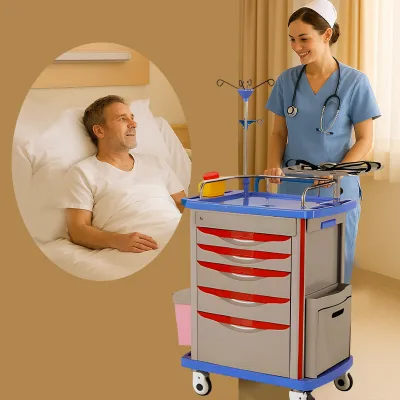
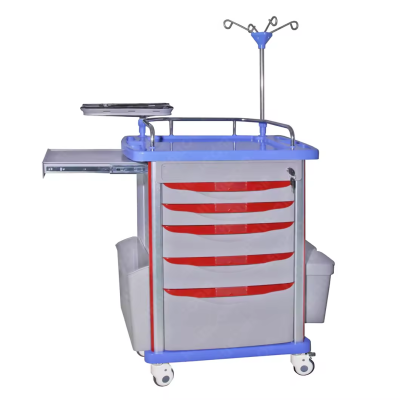
$170.00

Better Medical Technology Co., Ltd.
- Verified by TUVRHEINLAND
- Combined
- China Guangdong
- Lead time60 days
- Avg. response≤ 5h
Main productsHospital Bed, Stretcher, Delivery Bed, Examination Couch, Hospital Furniture, Medical Trolley, Ward Equipment, Wheelchair, Walker, Walking Sticks
Main marketsAfrica,Domestic

Novalion Medical Instrument Co., Ltd.
- Verified by SGS
- Trading Company
- China Jiangsu
- Lead time15 days
- Avg. response≤ 6h
Main productsWheelchair, Hospital Bed, Operating Table, Commode Chair, Medical Trolley, Stretcher, Walker, Electric Wheelchair, Wheel Chair, Medical Bed
Main marketsSouth America,Africa,Southeast Asia/ Mideast,Domestic

Beijing Jingdong Technology(Laoting) Co., Ltd.
- Verified by TUVRHEINLAND
- Combined
- China Hebei
- Lead time45 days
- Avg. response≤ 9h
Main productsHospital Electric Bed, Hospital Trolley, Medicine Storage Trolley, Cssd, Hosptial Manual Bed, Medicine Storage Cabinet, Medicine Storage Rack, Pediactric Bed, Workstation Trolley, Complementary Furniture
Main marketsAfrica,East Asia(Japan/ South Korea),Domestic,Europe,Australia,North America


Rolling Healthcare Pediatric Hospital Instrument Medical Cart for Surgical Dressing
$133.00 - $216.00
MOQ: 1 Pieces


- Verified by TUVRHEINLAND
- Manufacturer/Factory
- China Anhui
- Lead time23 days
- Avg. response≤ 3h
Main productsInfusion Pump, Anesthesia Machine, Stainless Steel Cages, Medical Ventilator, Patient Monitor, Surgical Operation Table, Hospital Bed, Hospital Furniture, Surgical Lamp, Patient Incubator
Main marketsSouth America,Eastern Europe,Mid East,North America,Southeast Asia,Eastern Asia,Oceania,Western Europe,Africa

Guangdong Bossay Medical Appliance Co., Ltd.
- Combined
- China Guangdong
- Lead time30 days
- Avg. response≤ 14h
Main productsHospital Bed, Children Bed, Operation Bed, Hospital Trolley, Beside Cabinet, Hospital Cabinet, Nursing Cart Series, Medical Cabinet, Washing Basin, Wheelchair
Main marketsAfrica,East Asia(Japan/ South Korea),Europe,Australia,North America


Rolling Medical Cart Hospital Cart Medical with Drawers Medical Supply
$240.00 - $250.00
MOQ: 10 Pieces


TOPMOST MEDICAL TECHNOLOGY CO.,LTD.
- Verified by BV
- Combined
- China Guangdong
- Lead time30 days
- Avg. response≤ 12h
Main productsMedical Bed, Transfer Chair, Home Care Bed, Wheelchair, Dianaysis Chair, Transfer Strecher, Children Hospital Bed, Hospital Bedside Cabinet, Hospital Trolley, Hospital Cabinet
Main marketsSoutheast Asia/ Mideast


Hospital Clinic ABS Medicine Emergency Anesthesia Medical Trolley Nursing Cart with Castors
$425.00 - $455.00
MOQ: 10 Sets


Shanghai Pinxing Medical Equipment Co., Ltd.
- Verified by TUVRHEINLAND
- Combined
- China Shanghai
- Lead time15 days
- Avg. response≤ 6h
Main productsMobile Field Hospital, Medical Bed, Carbon Fiber Medical Equipment, ICU Bed, Mobile Operation Room, Emergency Rescue Equipment, Field Operation Lamp, Accessories for Medical Bed, Mobile Surgical Lamp, Portable Sink
Main marketsSoutheast Asia/ Mideast,Europe,North America

Jiangsu Wansheng Precision Sheet Metal Co., Ltd.
- Verified by TUVRHEINLAND
- Combined
- China Jiangsu
- Lead time30 days
- Avg. response≤ 1h
Main productsSheet Metal Working
Main marketsDomestic


Factory Outlet Treatment Medical Instrument Cart for Medical Instrument
$368.00 - $390.00
MOQ: 1 Pieces


Excellent Quality Wear Resistant Medical Emergency Cart for Drug Distribution
$1230.00 - $1300.00
MOQ: 1 Pieces

Nanjing Poweam Medical Co., Ltd.
- Manufacturer/Factory
- China Jiangsu
- Lead time15 days
- Avg. response≤ 22h
Main productsUltrasound Scanner, Color Doppler, X-ray Film, X-ray Film Processor, ECG, Microplate Reader, Ivd Analyzer, Medical Furniture, Slit Lamp Microscope, Oxygen Concentrator
Main marketsSouth America,Eastern Europe,Mid East,North America,Southeast Asia,Eastern Asia,Oceania,Western Europe,Africa


Hospital Medical Luxury Treatment Cart
MOQ: 5 Pieces

- Verified by TUVRHEINLAND
- Trading Company,Manufacturer/Factory
- China Anhui
- Lead time0 days
- Avg. response≤ 7h
Main productsOperating Table, Operation Light, Hospital Bed, Medical Pendant, Medical Trolley, Medical Chair, Medical Cabinet, Veterinary Products, X-ray Machine, Hospital Furnitures
Main marketsSouth America,Eastern Europe,Mid East,North America,Southeast Asia,Eastern Asia,Oceania,Western Europe,Africa

Hebei Webian Medical Instrument Trading Co., Ltd.
- Verified by TUVRHEINLAND
- Trading Company
- China Hebei
- Lead time15 days
- Avg. response≤ 4h
Main productsMedical Bed, Nursing Bed, Electric Bed, Wheelchair and Walking Aids, Other Hospital Furniture and Accessories, Bed Accessories
Main marketsSouth America,Africa,Southeast Asia/ Mideast,East Asia(Japan/ South Korea)


Hospital Cart Emergency Trolley Medical Clinic Medicine Trolley Crash Cart
$165.90 - $189.90
MOQ: 5 Pieces
Hengshui Haoshen Medical Instrument Co., Ltd.
- Verified by SGS
- Combined
- China Hebei
- Lead time15 days
- Avg. response≤ 2h
Main productsHospital Bed, Outpatient Bed, Operating Table, Bedside Table, Wheelchair, Walking Aid, Hospital Furniture, Medical Consumables, Clinic Equipment, Surgical Instruments
Main marketsOthers(foreignTradeCapacity.exportBusinessCapacityMarketOther),Southeast Asia/ Mideast

Shandong Clearsight International Trade Co, . Ltd
- Verified by SGS
- Trading Company
- China Shandong
- Lead time15 days
- Avg. response≤ 3h
Main marketsDomestic

Anti-Rust Medical Cart with Universal Wheels for Animal Clinic Medical Service
$169.00 - $186.00
MOQ: 2 Pieces

Stainless Steel Medical Cart for Veterinary Clinic Instrument Storage and Transport
$165.00 - $181.00
MOQ: 2 Pieces

Zhongshan Chaoyang Medical Technology Co., Ltd.
- Verified by CTI
- Manufacturer/Factory
- China Guangdong
- Lead time23 days
- Avg. response≤ 2h
Main productsTreatment Table, Oxygen Concentrator, Tilt Table, Traction Table, Hospital Bed, Operation Table, Medical Trolley, Baby Cot, Gynecology Bed, Stainless Steel Product
Main marketsSouth America,Eastern Europe,Mid East,North America,Southeast Asia,Eastern Asia,Oceania,Western Europe,Africa

Haian Limo Electronic Technology Co., Ltd.
- Verified by CTI
- Combined
- China Jiangsu
- Lead time30 days
- Avg. response≤ 4h
Main productsTablet Holder, TV Holder, Computer Holder, Medical Cart, Medical Trolley, Dental Cart, All-in-One Computer Workstation
Main marketsSouth America,Others(foreignTradeCapacity.exportBusinessCapacityMarketOther),Southeast Asia/ Mideast,Domestic,Europe,North America


Versatile Lightweight Mobile Medical Cart for Healthcare Professionals
$133.00 - $170.00
MOQ: 2 Pieces


Huichao Medical (Lianyungang) Co., Ltd
- Verified by TUVRHEINLAND
- Trading Company
- China Jiangsu
- Lead time15 days
- Avg. response≤ 11h
Main productsPregnancy Test, Infectious Test Kit, Drug Test Kit, Tumor Market
Main marketsSoutheast Asia/ Mideast

Durable ABS Plastic Hospital Furniture Mobile Medicine Cart with Wheels for Emergency Use
$185.00 - $230.00
MOQ: 5 Pieces


Comprehensive Sourcing Guide
Medical Cart Supplier Concentration and Factory Types
When sourcing medical carts, understanding where production is concentrated helps buyers shortlist efficiently. Supplier listings in this category frequently identify Shanghai, China as a place of origin, with manufacturers there listing products such as hospital trolleys, emergency carts, and multi-function nursing carts alongside operation lamps, operation tables, suction machines, and hospital beds. Guangdong, China also appears as a supplier location, with companies whose main product lines include hospital beds, stretchers, delivery beds, examination couches, ward equipment, wheelchairs, and walking aids in addition to medical trolleys. These regional signals suggest that Medical Cart production in China is clustered in provinces with established hospital furniture ecosystems, where trolley fabrication draws on shared supply chains for ABS molding, casters, drawer slides, and powder-coated steel.
Factory types in this category vary considerably. Some suppliers are listed as manufacturers, while others combine manufacturing with trading operations, and a third group operates primarily as trading companies. Manufacturer-type suppliers often list core products spanning the full hospital furniture range, which can indicate in-house fabrication of trolleys, beds, and cabinets. Combined suppliers may advertise ODM, OEM, and own-brand capabilities, giving buyers both customized and catalog options. Trading companies, by contrast, may aggregate products from multiple factories, offering wider assortment but less direct control over production. Buyers should identify which type a prospective supplier belongs to before requesting quotations, because factory type shapes pricing, customization depth, quality accountability, and how directly production issues can be resolved.
How to Verify Medical Cart Suppliers
Verification should begin with the credentials a supplier displays on its profile. Some Medical Cart suppliers list system certifications such as ISO9001:2015, and at least one supplier in this category shows third-party verification from TUVRHEINLAND. These signals indicate a willingness to undergo external auditing, but buyers should not assume every supplier holds equivalent credentials. Certification status, verification marks, and establishment years vary across listings, and some profiles may not display them at all. When evidence is missing, ask the supplier directly for certificate copies, scope statements, and the certification body's details, then confirm validity with the issuing organization where possible.
Product-level evidence offers another verification path. Detailed listings that specify material, dimensions, model numbers, packing sizes, and origin—such as ABS construction, stated standard and packing dimensions, and a declared Chinese place of origin—suggest a supplier with genuine product knowledge. Vague listings with generic descriptions warrant extra scrutiny. For medical carts specifically, request material safety documentation for ABS components, caster load ratings, and any applicable regulatory compliance evidence for the destination market. Also verify manufacturing capability claims by asking for factory photos, production videos, or a third-party audit report. Finally, check after-sales commitments: some listings declare online technical support and one-year warranty terms, and a supplier's willingness to put warranty scope in writing is a practical indicator of reliability that costs nothing to request upfront.
What to Compare Across Medical Cart Suppliers
Once verified suppliers are shortlisted, compare them on the operational dimensions their listings disclose. Lead time is one of the most consequential variables: quotes in this category range from roughly 25 days to 60 days at supplier level, and individual product listings sometimes state delivery windows of 30 to 45 days. Response time also varies, with displayed averages around 4 to 5 hours, which affects how quickly quotation clarifications, drawing revisions, and production questions get resolved. MOQs differ sharply between suppliers—one listing shows 50 sets while another shows as few as 5 pieces or even 1 piece for certain carts—so match MOQ requirements to your actual order volume rather than assuming category norms.
Compare main product ranges as well. A supplier whose core products center on hospital beds, trolleys, and ward equipment will likely understand hospital furniture requirements more deeply than one listing carts as a sideline. Price ranges are another useful filter: examples in this category span from roughly 140 to 170 dollars for basic trolleys up to 550 to 740 dollars for multi-function nursing and medication carts, reflecting differences in size, drawer count, and features. Also compare customization offerings—several listings state that color, size, width, material, and load capacity are customizable and that OEM is available—and weigh warranty terms, with one-year warranties and online technical support appearing in some listings. Remember that not every supplier displays every attribute, so request missing data directly.
Common Medical Cart Sourcing Risks
The most frequent risk in this category is specification ambiguity. Many Medical Cart listings describe size, width, material, and load capacity as "customized," which means the quoted price may only reflect a baseline configuration. Buyers who order without locking down exact dimensions, drawer configurations, rail systems, and caster specifications often receive products that differ from their expectations. Related to this is the risk of conflating listing prices with final costs: displayed ranges such as 140 to 170 dollars or 551 to 667 dollars apply to specific models, and accessories, packaging, or freight can materially change landed cost.
Quality inconsistency is another concern, particularly with combined manufacturer-trader suppliers whose production may be split across lines. Because medical carts carry loads daily and endure frequent cleaning, weak ABS formulations, substandard casters, or poorly fitted drawer slides cause failures that only appear in service. Buyers should insist on pre-shipment inspection, checking weld points, caster swivel function, drawer alignment, and surface finish. Warranty enforcement is a third risk: a stated one-year warranty and online technical support are only valuable if claim procedures, spare parts availability, and response commitments are documented before order confirmation. Finally, MOQ mismatch creates inventory risk—committing to 50 sets to reach a lower unit price can tie up capital in slow-moving stock, while choosing a 5-piece MOQ supplier may mean accepting a higher per-unit cost. Confirm every stated attribute in the purchase contract.
Medical Cart Regional Sourcing and Logistics
Regional sourcing decisions in this category should be anchored in the location data suppliers actually display. Suppliers listing Shanghai, China as their place of origin, and others based in Guangdong, China, both sit in provinces with dense medical device and hospital furniture manufacturing ecosystems. Shanghai-based suppliers in the available evidence list hospital furniture products including emergency trolleys with declared origins in Shanghai, while Guangdong-based suppliers cover hospital beds, stretchers, wheelchairs, and trolleys. Proximity to ports in both regions generally supports containerized export, but buyers should not assume identical freight terms from every supplier; confirm the shipping port, Incoterms accepted, and whether the supplier handles export documentation directly.
Logistics planning should account for the lead times observed in this category: supplier-level figures of 25 and 60 days, and product-level delivery windows of 30 to 45 days, mean total procurement timelines including production, inspection, and ocean transit will commonly exceed two months. Medical carts are bulky relative to their value, so container utilization matters—one listed packing dimension of 610 by 560 by 1150 millimeters, and another of 790 by 530 by 1030 millimeters, can be used to calculate units per container. Ask suppliers to confirm packaging dimensions and whether flat-pack or assembled shipping is offered, since assembled units consume far more volume. For urgent needs, clarify whether partial shipment is possible before the balance completes, and confirm who books freight when terms are EXW or FOB.
Medical Cart Commercial Terms and Order Planning
Commercial terms should be negotiated with the specific figures disclosed in supplier listings as a starting reference. MOQs in this category range from 1 piece on some listings to 10 pieces and 50 sets on others, and pricing examples run from roughly 140 to 170 dollars for basic trolleys, 235 to 255 dollars for ABS drug carts, and 551 to 736 dollars for medication, nursing, and anaesthesia carts. Use these ranges to sanity-check quotations rather than treating any single number as a benchmark, because configuration differences—drawer count, size, accessories—justify wide variation. Payment structure, currency, and price validity periods should be confirmed in writing, and buyers should verify whether quoted prices include packaging suitable for export.
Order planning benefits from the delivery commitments visible in listings: 30 to 45 day product-level windows and supplier-level lead times of 25 to 60 days. Build a schedule that reserves time for deposit confirmation, pre-production sample approval where customization applies, production, third-party inspection, and booking. For customized orders—where listings state color, size, material, and load capacity can be tailored—approve drawings and a physical sample before mass production to avoid rework. Confirm warranty terms, listed as one year with online technical support on some products, are transferred into the contract, and clarify spare parts supply for casters, drawers, and locks. Finally, plan reorder cycles around the same lead times, holding safety stock sized to the longer end of the observed 60-day range.
Total word count: approximately 1390 words across six sections, each within the 225-235 word limit.
FAQs
What is the typical MOQ for medical carts from Chinese suppliers?
Minimum order quantities for medical carts generally range from a single pilot unit up to 50 sets depending on the model and supplier type. ABS drug delivery carts are often listed with MOQs of 5 to 10 pieces, while some emergency trolley listings specify 50 sets. Confirm the exact MOQ for your chosen model before requesting a quotation.
How long does production and delivery of a Medical Cart usually take?
Lead times vary widely by supplier and order size. Some ABS Medical Cart listings state delivery of 30 to 45 days after order confirmation, while general supplier lead times on the platform range from around 25 days to 60 days. Customized colors, sizes, or configurations can extend production, so ask for a written lead-time commitment with your order.
What materials are most medical hospital carts made from?
Most hospital carts in these listings are made from ABS plastic, which is valued for easy cleaning and corrosion resistance in clinical environments. Some trolleys are built with steel frames combined with ABS panels. Material is frequently offered as a customized option, so you can specify requirements when negotiating, but verify the final material specification in your purchase contract.
Can I order customized medical carts with my own branding?
Yes, many listed medical carts support customization and OEM service. Buyers can typically customize size, width, color, load capacity, and material, and some suppliers offer ODM, OEM, and their own brand options. Model numbers and configurations differ per product, so request a specification sheet confirming which customization options apply to the exact cart model you intend to order.
What price range should I expect for hospital ABS carts?
Listed prices vary by cart type and configuration. ABS drug carts are shown from roughly 235 to 255 dollars, medical carts from 551 to 667 dollars, nursing carts from 608 to 736 dollars, and anaesthesia carts from 630 to 680 dollars. One medical trolley is listed at 170 dollars. Treat these as indicative and request current quotations.
What warranty and after-sale support do these medical carts include?
Most listed medical carts carry a one-year warranty, and some listings state online technical support as the after-sale service. Warranty terms can differ between suppliers and models, and coverage details such as parts versus labor are usually not specified in listings. Ask the supplier to confirm the warranty scope, exclusions, and support channels in writing before you order.
Where are the Medical Cart suppliers on this page located?
The suppliers shown are based in China, with locations including Shanghai and Guangdong. Several operate as manufacturers, some as combined manufacturer and trading companies. Location affects shipping costs and transit time to your port, so confirm the dispatch point, the nearest port, and freight responsibilities when you request quotations from individual suppliers.
How quickly do these suppliers respond to buyer inquiries?
Average response times recorded for suppliers on this page range from about 4.4 to 5 hours, though individual response speed can vary by time of day and workload. Prepare a clear specification list covering model, quantity, customization, and destination so your first message receives an accurate quotation instead of clarifying questions.