Natural Carnelian Tumbled Stone Palm Suppliers and Manufacturers
Find 12 verified sources for Natural Carnelian Tumbled Stone Palm with options for customization and varied lead times. Compare response times, MOQs, and origins like Jiangsu or Madagascar before requesting quotes; review the available evidence before requesting comparable quotations from suitable candidates.
Updated
Suppliers List
Donghai Mingtian Jewelry Co., Ltd.
- Verified by Intertek
- Manufacturer, Trading Company
- Lead time20 days
- Avg. response≤ 5h
Main productsCrystal Ball, Crystal Pillar, Crystal Skull
Main marketsNorth America(50%), South America(30%), Eastern Europe(20%)
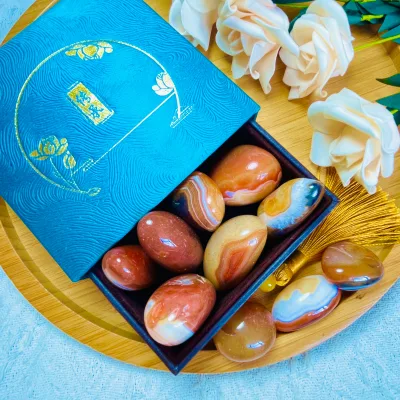
Wholesale Natural Crystal Crafts Polished Stones Carnelian Tumbled Stone Palm for Sale
$12.3892 - $16.5194
MOQ: 1 kilograms
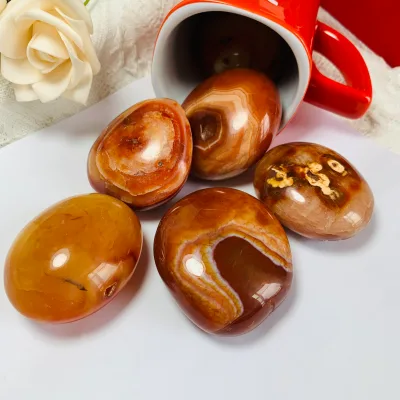
Hot-sale Price Crystal Polished Palms Healing Stones Carnelian Palm for Power Decoration
$13.3113 - $16.3832
MOQ: 1 kilograms
Donghai Kindfull Crystal Product Co., Ltd.
- Manufacturer, Trading Company
- Lead time旺季: "1 - 20":9,"> 20":"To be negotiated", 淡季: "1 - 20":9,"> 20":"To be negotiated"
- Avg. response≤ 2h
Main productsCarving/Crystal Points/Crystal Palm/Crystal Sphere/Beauty Tools
Donghai Jiusi Jewelry Co., Ltd.
- Trading Company
- Jiangsu, China
- Lead time7 days
- Avg. response≤ 2h
Main productscrystal pendant,crystal sphere,crystal rocks,crystal heart,crystal bracelet
Main marketsNorth America(30.00%), Northern Europe(10.00%), Western Europe(10.00%), Southern Europe(10.00%), Africa(10.00%), Southeast Asia(10.00%), Eastern Europe(10.00%), South Asia(5.00%), Oceania(5.00%)

- Trading Company,Manufacturer/Factory
- China Guangdong
- Lead time23 days
- Avg. response≤ 8h
Main productsGemstone, Jewelry, Gemstone Jewelry, Loose Gemstone Beads, Jewelry Rings, Jewelry Set, Jewellery Earrings, Pendant, Created Emerald, Cubic Zirconia
Main marketsSouth America,Eastern Europe,North America,Western Europe

Donghai Xian Ying Lai Jewelry Co., Ltd.
- Manufacturer, Trading Company
- Jiangsu, China
- Lead time20 days
- Avg. response≤ 23h
Main productsCrystal Points; Crystal Spheres; Crystal Skulls; Crystal Carving Products; Crystal Tumble Stones
Main marketsNorth America(40.00%), Oceania(20.00%), Western Europe(10.00%), Southern Europe(10.00%), Eastern Europe(10.00%), South Asia(1.00%), Eastern Asia(1.00%), South America(1.00%), Central America(1.00%), Northern Europe(1.00%), Africa(1.00%), Mid East(1.00%), Southeast Asia(1.00%)
Donghai County Goucai Jewelry Co., Ltd.
- Trading Company
- Jiangsu, China
- Lead time3 days
- Avg. response≤ 1h
Main productscrystal points,crystal balls,crystal bowls,crystal towers,crystal stones
Main marketsNorth America(45.00%), Eastern Europe(15.00%), South Asia(10.00%), Northern Europe(10.00%), Southeast Asia(10.00%), South America(10.00%)
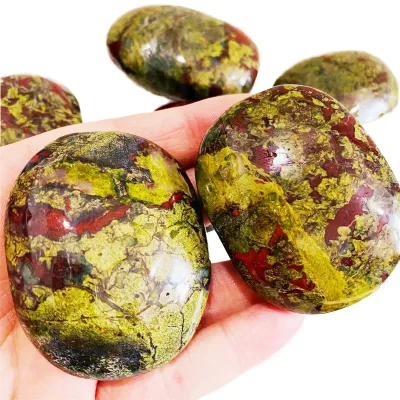
Wholesale Natural Gemstone Tumbles Polished Ellipses Dragon Blood Stone Crystal Palm
$23.6481 - $25.705
MOQ: 10 kilograms
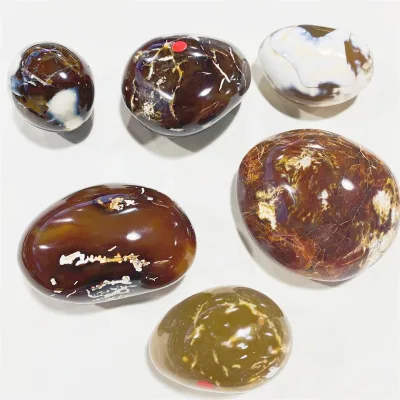
Wholesale Natural Flower Agate Worry Pocket Stone Polished Healing Crystal Palm Stone
$22.6047 - $25.687
MOQ: 10 kilograms
Donghai County Dongqing Crystal Products Co., Ltd.
- Manufacturer, Trading Company
- Jiangsu, China
- Lead time15 days
- Avg. response≤ 2h
Main productsCrystal Crafts,crystal ball,crystaltower,skull,agate
Main marketsNorth America(50.00%), Oceania(22.00%), Southeast Asia(7.00%), Domestic Market(4.00%), Eastern Europe(3.00%), South America(3.00%), Central America(2.00%), Western Europe(2.00%), South Asia(2.00%), Mid East(2.00%), Northern Europe(1.00%), Eastern Asia(1.00%), Southern Europe(1.00%)
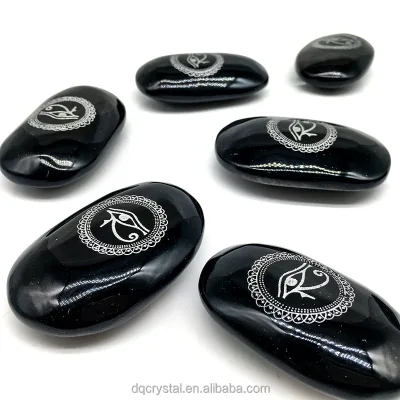
$30.8247 - $35.9609
MOQ: 1 kilograms
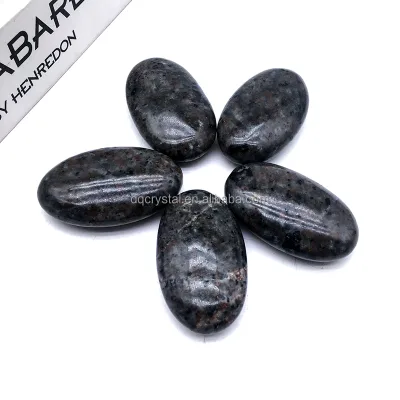
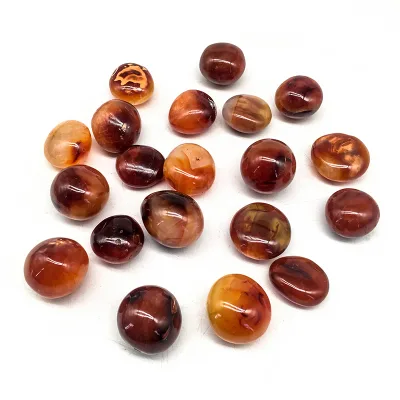

Xiamen Amore Gift Solutions Co., Ltd.
- Verified by BV
- Trading Company
- China Fujian
- Lead time30 days
- Avg. response≤ 7h
Main productsCrystals, Gemstones, Crystal Skulls, Crystal Animals
Main marketsEast Asia(Japan/ South Korea),North America


Wholesale Bulk Healing Crystal Palm Stone Natural Amethyst Palms for Home Decoration
$50.00 - $60.00
MOQ: 1 kg


Zhejiang Chenyi Manufacturing Co., Ltd.
- Verified by SGS Group
- Trading Company
- Lead time3 days
- Avg. response≤ 7h
Main productsCrystal Craft, Water Fountain, Crystal Drinkware, Crystal Decoration, Packaging & Printing
Main marketsNorth America(40%), Oceania(15%), South America(10%)
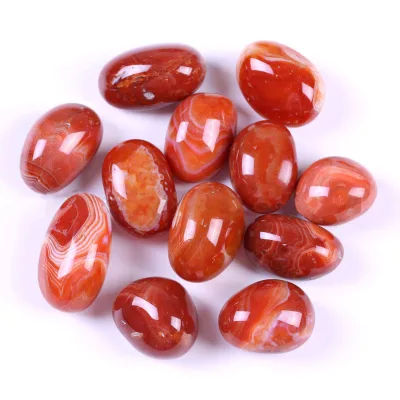
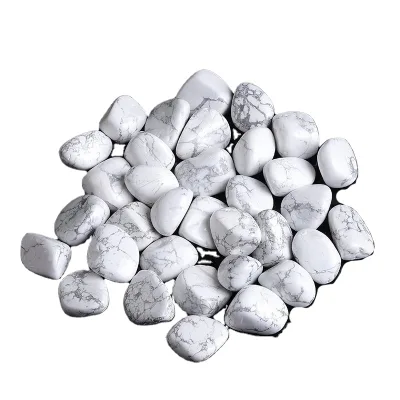
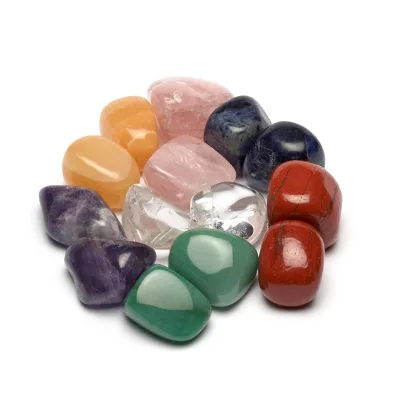
$5.5374 - $233.779
MOQ: 1 Minimum
Donghai County Bozhiluan Jewelry Co., Ltd.
- Trading Company
- JiangSu, China
- Lead time0 days
- Avg. response≤ 2h
Main productscrystal point,crystal sphere,crystal carving,minerals,rough
Main marketsSouth America(30.00%), Northern Europe(30.00%), South Asia(20.00%), North America(20.00%)
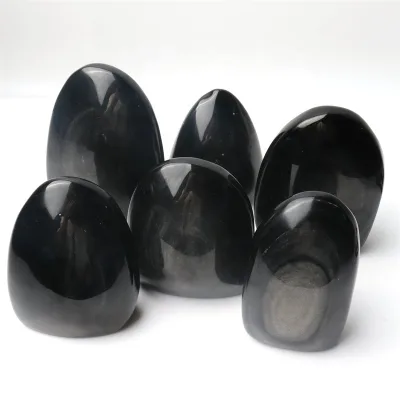
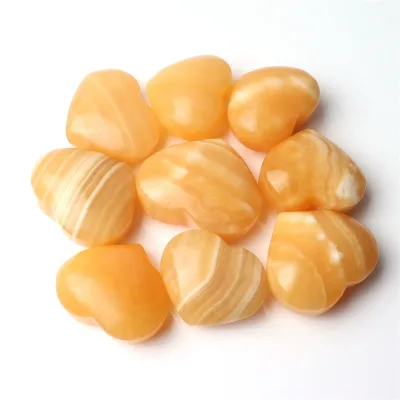
Wholesale natural crystal heart yellow calcite banded heart palm stone for decor
$16.00 - $22.00
MOQ: 1
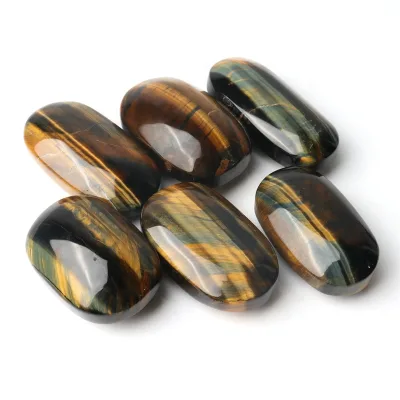
Whosale Natural Polished Crystal Palm Large Tumble Massage Blue Tiger Eye Palm Stone
$35.00 - $36.00
MOQ: 2
Donghai County Boheng Crystal Jewelry Co., Ltd.
- Verified by SGS Group
- Manufacturer, Trading Company
- Lead time3 days
- Avg. response≤ 2h
Main productsCrystal Water Bottle; Crystal Smoking Pipes; Crystal Point/Crystal Gravel/Crystal Ball
Main marketsNorth America(60%), Oceania(15%), Southeast Asia(10%)
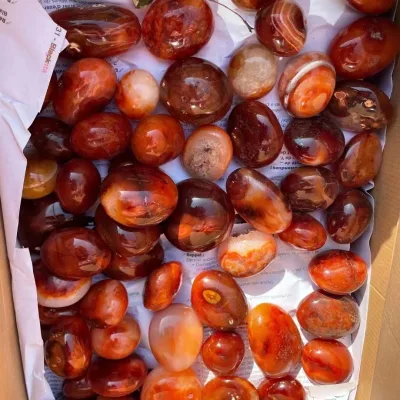
Wholesale Polished Crystal Palms Stones Carnelian Palm Stone for Home Decoration
$12.00 - $15.00
MOQ: 10
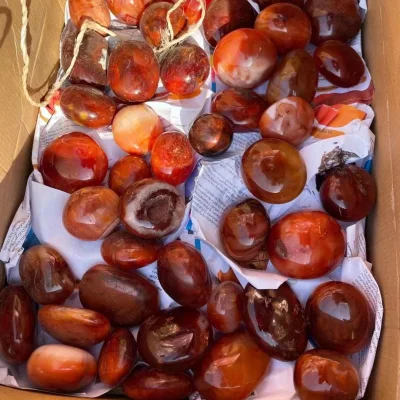
$12.3053 - $15.3802
MOQ: 2 kilograms
Dongguan Huiying Art&crafts Co., Ltd.
- Manufacturer, Trading Company
- Guangdong, China
- Lead time20 days
- Avg. response≤ 5h
Main productsgifts,crafts,skin care products,face rollers,gua sha massagers
Main marketsWestern Europe(25.00%), North America(25.00%), Northern Europe(10.00%), Oceania(10.00%), Mid East(5.00%), Eastern Europe(5.00%), Central America(5.00%), Southeast Asia(3.00%), Eastern Asia(3.00%), South Asia(2.00%), Southern Europe(2.00%), South America(2.00%), Africa(2.00%), Domestic Market(1.00%)
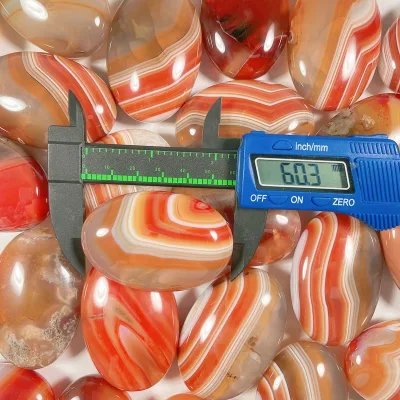
$2.50 - $8.00
MOQ: 100 Minimum
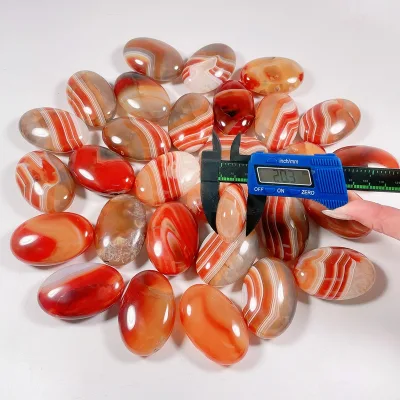
HY Wholesale Price Natural Crystals Carnelian Healing Stone Palm Stone for Decoration
$2.50 - $8.00
MOQ: 100 Minimum


Comprehensive Sourcing Guide
Natural Carnelian Tumbled Stone Palm Supplier Concentration and Factory Types
Sourcing data for this category shows a clear concentration pattern: several suppliers of carnelian tumbled stones and palm-shaped polished pieces list their place of origin as Jiangsu, China, which functions as the identifiable cluster for this product family in the current results. Buyers should treat Jiangsu as the primary region where polished carnelian palms, tumbled stones and related crystal crafts are produced and stocked. One listed product in this category also reports Madagascar as its place of origin, a reminder that raw material sourcing and finishing locations can differ, so material origin and processing location should be confirmed separately in any inquiry.
Supplier types in these results split between manufacturers and trading companies, and both matter for different buying situations. Manufacturers in this category typically list main products such as crystal balls, pillars, skulls, points, spheres and carving work, which signals in-house polishing and carving capability suited to palm-shaped stones. Trading companies list broader crystal assortments including pendants, bracelets, hearts and rough rocks, which can help buyers consolidate mixed crystal orders in one shipment. When shortlisting, match supplier type to your need: direct factories for custom shaping and repeat volume, trading companies for variety and smaller mixed orders. Verify the claimed type by asking for photos of polishing and carving equipment, workshop videos, and references to specific product lines rather than relying on a single label alone.
How to Verify Natural Carnelian Tumbled Stone Palm Suppliers
Verification should start with the credentials actually displayed in supplier results, then move to checks the buyer performs directly. In this category, one supplier shows third-party verification by Intertek, which is a meaningful signal because an independent inspection body has reviewed the company profile. Not every listed supplier carries such verification, so buyers should record which suppliers hold third-party badges and which do not, then weight diligence effort accordingly. Company type claims, whether manufacturer or trading company, should be cross-checked with business licenses and workshop evidence, because a supplier self-describing as a manufacturer may actually sub-contract carving and polishing.
Beyond profile badges, request category-specific evidence before committing. Ask each shortlisted supplier for recent photographs and videos of carnelian palms and tumbled stones from current production batches, including close-ups of surface polish and natural inclusions, since natural stone appearance varies between batches. Confirm the supplier can supply the specific forms you need; the results show main products ranging from palm stones and carvings to spheres, points and beauty tools, so product breadth tells you where a supplier's real strength lies. Test responsiveness with a concrete technical question, such as size tolerance for a two-to-six-centimeter palm stone, and compare reply speed against the displayed response-time figures. Finally, verify stated place of origin for the stone itself, because one listed carnelian product originates in Madagascar while others are finished in Jiangsu, China, and that difference affects cost, consistency and the story you can tell your own customers.
What to Compare Across Natural Carnelian Tumbled Stone Palm Suppliers
Build a comparison matrix using the attributes suppliers actually display, and leave blanks where data is missing rather than assuming a value. In current results, response times vary noticeably, with one supplier showing about five hours or the equivalent unit and another showing two, which directly affects how quickly you can iterate on samples and resolve quality questions. Lead times also differ: one supplier reports seven days, another reports roughly nine days for orders up to twenty units with longer volumes negotiated, and another shows around twenty days. For seasonal gift and decoration demand, these gaps determine whether a supplier can meet your launch windows.
Compare the remaining dimensions in a second pass. Minimum order quantities in this category are commonly expressed in weight, with listed products showing one kilogram and two kilogram MOQs, and one product showing a minimum of a single item, which matters for testing demand before scaling. Main product lines signal specialization: suppliers listing carvings, points, palms and spheres sit closer to your core need than those focused on pendants or bracelets. Customization capability should also be compared; one supplier advertises light customization, customized on demand, graphic processing and sample processing, and product listings mention customized logos, so check which suppliers accept branding on packaging or labels. Finally, compare supplier type, location, verification status and any escrow or payment protections shown, noting that these labels are not uniformly displayed and must be collected supplier by supplier during inquiry rounds.
Common Natural Carnelian Tumbled Stone Palm Sourcing Risks
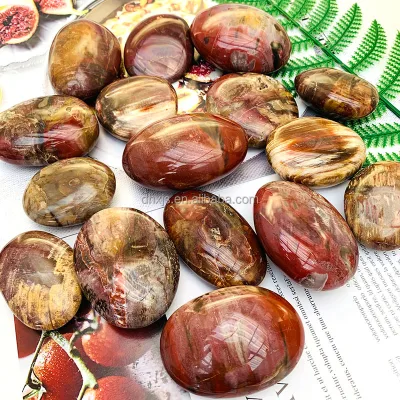
The most frequent risk in this category is material inconsistency. Carnelian is a natural stone, and listed product attributes show natural colors with sizes stated as ranges, such as two to three centimeters or two to six centimeters, and per-piece weights of roughly eight to twenty-two grams. This means color saturation, banding and inclusion patterns will vary between batches even from the same supplier. Without approved physical samples and agreed tolerance ranges, buyers frequently receive lots that are lighter in color or smaller in average size than expected. One listed product even names red agate alongside carnelian, which underscores how the boundary between similar stones is loosely used in listings and must be pinned down in writing.
Logistics and communication risks follow closely behind. Package specifications in the results are small, with single packages around ten by ten by ten or fifteen by ten by ten centimeters and gross weights near one to one and a half kilograms, so fragile polished pieces are vulnerable to chipping if a supplier uses inadequate cushioning despite promising safe packaging. Lead-time figures that look attractive, such as seven or nine days, may apply only to stock items or small quantities, with longer volumes negotiated case by case, creating risk if you assume them for a large order. Trading company intermediaries can add a layer between you and the polishing workshop, slowing defect feedback. Finally, assume nothing about certifications, test reports or material origin beyond what a supplier documents; ask for confirmation before relying on any claim.
Natural Carnelian Tumbled Stone Palm Regional Sourcing and Logistics
The current supplier results support a focused regional strategy. Multiple carnelian palm and tumbled stone products report Jiangsu, China as their place of origin, making it the region where buyers should concentrate inquiries, sample requests and, where feasible, factory visits. One supplier's products list Madagascar as the stone origin, which suggests that rough material may flow from African sources into Chinese polishing hubs, or that some sellers ship material directly from source regions. Buyers should ask each supplier to state both where the rough carnelian is sourced and where polishing occurs, because the two answers shape cost, lead time and quality control options.
Logistics planning should reflect the small, heavy, fragile nature of this category. Product listings show express channels including DHL, UPS, FedEx and TNT, which suit sample shipments and small wholesale lots measured in kilograms rather than container loads. With single package sizes around ten to fifteen centimeters per side and gross weights of one to one and a half kilograms, air express is practical for trial orders, while consolidated sea or air freight becomes relevant only at larger volumes. For buyers located outside China, Jiangsu's position within established Chinese export infrastructure supports straightforward shipping arrangements, though buyers should confirm which incoterms each supplier offers and who arranges freight. Schedule sample shipments first, inspect packing quality on arrival, and only then scale order sizes using the supplier's demonstrated packaging and dispatch performance.
Natural Carnelian Tumbled Stone Palm Commercial Terms and Order Planning
Commercial terms in this category are visible enough to plan around. Listed prices for carnelian palms and tumbled stones span roughly eleven to eighteen dollars and a half per unit depending on the product, size range and finish, so treat per-kilogram and per-piece quotes as different units and normalize them before comparing suppliers. MOQs are modest: one kilogram appears in multiple listings, two kilograms in another, and one item minimum on a single product, which makes trial orders affordable. Payment flexibility also shows in the data, with one supplier accepting PayPal, credit card, Western Union and telegraphic transfer, giving smaller buyers low-friction entry points for first orders.
Order planning should sequence commitments against demonstrated performance. Start with a sample or minimum-weight order to judge color, polish and packing quality, then step up volumes while negotiating unit prices against the quoted ranges. Confirm lead times in writing for your specific quantity, because displayed figures of seven, nine or twenty days may be stock-based, seasonal, or subject to negotiation above threshold quantities; one supplier explicitly differentiates peak and off-season terms. Agree on defect allowances for natural stone, replacement procedures for transit damage, and whether customized logos or packaging add cost or lead time. Record response-time performance during negotiations and use it to forecast post-order communication quality. Reorder planning should lock in stock availability ahead of holiday decoration demand, when carving and polishing capacity across the cluster tightens and quoted lead times may lengthen.
(Word count: approximately 1,382)
FAQs
What is the typical lead time for natural carnelian palm orders?
Lead times generally range from 7 to 20 days depending on order volume and season. During peak seasons, production may take up to 20 days, while off-peak periods allow for faster turnaround. Buyers should confirm specific timelines with suppliers to ensure timely delivery for their projects.
What is the minimum order quantity for carnelian tumbled stones?
Minimum order quantities typically start at 1 kg or 2 kg per batch. Some suppliers accept orders as low as 1 kg, while others require a minimum of 2 kg. Buyers should verify the specific MOQ with the supplier to ensure it aligns with their purchasing volume.
Where are natural carnelian palms typically manufactured?
Most carnelian palms originate from Jiangsu, China, or Madagascar. Suppliers in these regions offer polished stones with varying sizes and shapes. Buyers can choose based on origin preference, as both locations provide high-quality natural crystal products suitable for decoration and gifting purposes.
What is the price range for wholesale carnelian palms?
Prices for wholesale carnelian palms typically range from $11.00 to $18.50 per unit. The cost varies based on size, material quality, and customization options. Buyers should request detailed quotes to understand the final price, including shipping and any additional customization fees.
Do suppliers offer customized logos on carnelian palms?
Yes, many suppliers offer customized logo options for carnelian palms. Buyers can request personalized branding to enhance product appeal. This service is ideal for corporate gifts or special events. Buyers should confirm customization details and any additional costs with the supplier before placing an order.
What shipping methods are available for carnelian stone orders?
Common shipping methods include DHL, UPS, FedEx, and TNT. These carriers ensure safe and timely delivery of fragile crystal products. Buyers should discuss shipping costs and delivery times with suppliers to select the most suitable option for their location and urgency requirements.
Are natural carnelian palms verified by third-party agencies?
Some suppliers are verified by Intertek, ensuring product quality and reliability. Buyers can look for verified badges to confirm supplier credibility. This verification adds trust to the sourcing process, helping buyers make informed decisions when purchasing natural carnelian palms for their business needs.