Pneumatic Lipstick Filling Machine Suppliers and Manufacturers
Source 13 verified suppliers for Pneumatic Lipstick Filling Machine equipment in China. Compare key dimensions including ISO 9001 certification, response times, and pricing ranges from $600 to $11,000. Review detailed specifications and request quotes directly from factories and trading companies.
Suppliers List

Henan Xuanhua Machinery Co., Ltd.
- Trading Company,Manufacturer/Factory
- China Henan
- Lead time23 days
- Avg. response≤ 6h
Main productsWater Well Drilling Rig, Drilling Rig, Automatic Filling Machine, Shotcrete Machine, Rebar Bender, Rebar Cutter, Tamping Rammer, Compactor Plate, Road Cutter, Food Processing Machine
Main marketsSouth America,Eastern Europe,Mid East,North America,Southeast Asia,Eastern Asia,Oceania,Western Europe,Africa

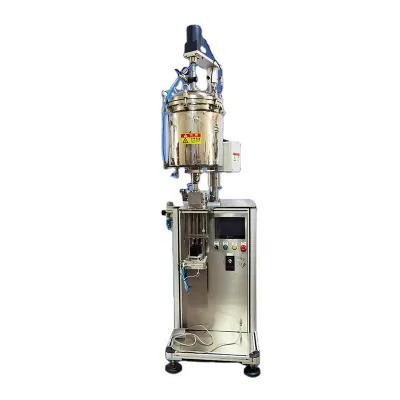
Semi Auto Lipstick Filling Machine Pneumatic Lipstick Heat Filling Machine
$600.00 - $1100.00
MOQ: 1 Pieces

Manual Cosmetic Bottle Filling Machine Lipstick Mixing Machine Lip Balm Filling Machine
$600.00 - $1100.00
MOQ: 1 Pieces

Guangzhou Change Machinery Co., Ltd.
- Verified by TUVRHEINLAND
- Trading Company,Manufacturer/Factory
- China Guangdong
- Lead time23 days
- Avg. response≤ 6h
Main productsFilling Machines, Packing Machines, Labeling Machines, Foods Machinery, Cosmetics Machiniery, Daily Chemicals Machinery, Capping Machine, Mixing Tank, Filling and Sealing Machine, Tube Filling and Sealing Machine
Main marketsSouth America,Eastern Europe,Mid East,North America,Southeast Asia,Oceania,Africa


MOQ: 1 set

Guangzhou Cosmati Technology Co., Ltd
- Verified by TUVRHEINLAND
- Trading Company
- China Guangdong
- Lead time23 days
- Avg. response≤ 2h
Main productsVacuum Emulsifying Mixer, Liquid Washing Homogenizing Mixer, Liquid Soap Mixer Machine, Perfume Filling Machine, Dry Powder Mixing Machine, Color Cosmetic Making Machine, Filling Capping Labeling Machine, Lab Homogenizer, Mixing Tank, Cream Making Machine
Main marketsSoutheast Asia/ Mideast,Europe,North America


Lip Balm Filler Lip Gloss Production Line Manual Lipstick Filling Machine
$1100.00 - $1300.00
MOQ: 1 Pieces


Guangzhou Jingyijin Machinery Equipment Co., Ltd.
- Verified by CTI
- Combined
- China Guangdong
- Lead time30 days
- Avg. response≤ 13h
Main productsCosmetic Making Machine, Cosmetic, Lipstick
Main marketsOthers(foreignTradeCapacity.exportBusinessCapacityMarketOther),Southeast Asia/ Mideast,Domestic,Europe

- Verified by BV
- Trading Company
- China Hebei
- Lead time30 days
- Avg. response≤ 3h
Main productsElbow Machine, Induction Pipe Bending Machine, Tee Machine, Seamless Elbow, Pipe Expanding Machine, Hydraulic Press, GOST Elbow, Tee
Main marketsSouth America,Africa,Southeast Asia/ Mideast,East Asia(Japan/ South Korea),Europe,North America


Automatic Efficient Cream Lipstick Gloss Filler Heating Cosmetics Makeup Filling Machine
$4000.00 - $5000.00
MOQ: 1 Pieces


Guangzhou Silian Machinery Co., Ltd.
- Verified by CTI
- Combined
- China Guangdong
- Lead time30 days
- Avg. response≤ 3h
Main marketsAfrica,Southeast Asia/ Mideast,East Asia(Japan/ South Korea),Domestic,Europe,Australia,North America

$12000.00 - $12777.00
MOQ: 1 sets


Cosmetic Machine Lipstick Packaging Machine Automatic Lip Balm Filling Machine
$12000.00 - $12777.00
MOQ: 1 sets

Semi Automatic Lipstick Single Barrel Filling Machine for Lipstick & Lip Gloss Liquid
$33495.00 - $34888.00
MOQ: 1 sets

Guangzhou Ailusi Machinery Co., Ltd.
- Verified by SGS Group
- Trading Company
- Lead time30 days
- Avg. response≤ 4h
Main productsVacuum Emulsifying Mixer, RO Water Treatment, Liquid Washing Homogenizer Mixer, Filling Machine, Labeling Machine
Main marketsDomestic Market(30%), North America(18%), Oceania(12%)

Guangzhou Youde Machinery Co., Ltd
- Verified by BV
- Combined
- China Guangdong
- Lead time30 days
- Avg. response≤ 11h
Main productsMixing Tank, Vacuum Emulsifying Mixer, Water Equipment Machine, Filling Machine, Perfume Making Machine
Main marketsSoutheast Asia/ Mideast,Europe,Australia,North America

Semi Automatic Lipstick Filler Lip Balm Making Machine Lipstick Filling Machine
$3000.00
MOQ: 1 Pieces


Foshan Henwi Technology Co., Ltd
- Verified by SGS
- Combined
- China Guangdong
- Lead time30 days
- Avg. response≤ 3h
Main productsVacuum Emulsifying Mixer, Homogenizing Mixer, RO Water Treatment, Filling Machine, Packing Machine, Perfume Making Machine, Toothpaste Making Machine, Lipstick Making Machine, Cosmetics Lab Equipment
Main marketsNorth America


Automatic Lipstick Filler Lip Balm Making Machine Cosmetics Lip Liquid Filling Machine
$13000.00
MOQ: 1 Pieces


Guangzhou Hone Machinery Co., Ltd.
- Verified by BV
- Trading Company,Manufacturer/Factory
- China Guangdong
- Lead time38 days
- Avg. response≤ 1h
Main productsVacuum Emulsifying Mixer, Vacuum Homogenizer Mixer, Mixing Tank, Liquid Homogenizer Mixer, Shampoo Making Machine, Vacuum Cream Mixer, Filling Machine, Capping Machine, Labeling Machine, Filling and Sealing Machine
Main marketsSouth America,Eastern Europe,Mid East,North America,Southeast Asia,Eastern Asia,Oceania,Western Europe,Africa

Hone Automatic Cosmetics Makeup Filling Equipment Liquid Filler Lipstick Lip Gloss Filling Machine
$12000.00 - $15000.00
MOQ: 1 Pieces

Honemix Automatic Lipstick Filling Machine Lip Gloss Filling Equipment
$12000.00 - $15000.00
MOQ: 1 Pieces


Guangzhou Ailusi Machinery Co., Ltd.
- Verified by TUVRHEINLAND
- Trading Company
- China Guangdong
- Lead time30 days
- Avg. response≤ 4h
Main productsVacuum Emulsifying Mixer, RO Water Treatment, Homogenizing Mixer, Filling Machine, Capping Machine, Labeling Machine, Tube Filling and Sealing Machine, Packing Machine, Printing Machine, Toothpaste Machinery
Main marketsOthers(foreignTradeCapacity.exportBusinessCapacityMarketOther)


$1800.00 - $2500.00
MOQ: 1 Pieces


Shanghai Paixie Packing Machinery Co., Ltd.
- Verified by BV
- Combined
- China Shanghai
- Lead time23 days
- Avg. response≤ 2h
Main productsPacking Machine, Liquid Filling Machine, Vape Equipment, Packaging Machine, Olive Oil Machine, Box Packing Machine, Wrapping Machine, Labeling Machine, Capping Machine, Filling Machine
Main marketsNorth America


Automatic Liquid Lipstick, Matte Lip Gloss & Mascara Filling Machine for Cosmetics
$4000.00 - $16000.00
MOQ: 1 Pieces

Pneumatic Driven Filler Machine Filling Machinery Cosmetic Filling Machine
$13000.00 - $19000.00
MOQ: 1 Pieces


Guangzhou Beyer Machinery Equipment Company Limited
- Manufacturer
- Guangdong, China
- Lead time25 days
- Avg. response≤ 1h
Main productscolor cosmetic machine,vacuum emulsifying machine,liquid washing mixer,cream filling line,cosmetic powder pulverizer
Main marketsSoutheast Asia(12.00%), Western Europe(11.00%), Southern Europe(10.00%), Northern Europe(9.00%), Mid East(9.00%), South America(9.00%), North America(9.00%), Central America(8.00%), Africa(8.00%), South Asia(5.00%), Eastern Asia(5.00%), Eastern Europe(3.00%), Domestic Market(2.00%)


Comprehensive Sourcing Guide
Pneumatic Lipstick Filling Machine Supplier Concentration and Factory Types
Current data indicates that suppliers offering pneumatic lipstick filling machines are concentrated in specific Chinese provinces, with verified results showing presence in Henan and Guangdong. These regions host a mix of trading companies and manufacturers, suggesting that buyers may encounter both direct factory sources and intermediaries within the same supply chain. The observed product range includes specialized equipment like semi-automatic and automatic filling machines, alongside broader industrial machinery such as road cutters and food processing units. This diversity implies that some suppliers operate as general machinery traders rather than niche cosmetic equipment specialists.
When evaluating the factory type, buyers should note that some entities list themselves as manufacturers while others identify strictly as trading companies. The presence of OEM and ODM capabilities is confirmed for several suppliers, indicating flexibility in customizing machinery for specific production needs. However, the absence of specific establishment years in the provided facts means buyers cannot verify the longevity of these operations based solely on current data. It is essential to distinguish between a factory with its own production lines and a trading company that aggregates products from various sources. This distinction directly impacts quality control, lead time reliability, and the ability to troubleshoot technical issues during the manufacturing process.
How to Verify Pneumatic Lipstick Filling Machine Suppliers
Verification of supplier credentials requires checking for specific system certifications that align with international safety and quality standards. Available data confirms that some suppliers hold ISO 9001 and OHSAS/OHSMS 18001 certifications, while others possess ISO 9001 and GMP certifications. These documents are critical indicators of a supplier's commitment to quality management and occupational health safety. Buyers must request current copies of these certificates to ensure they are valid and not expired. The presence of third-party verification, such as TÜV Rheinland, adds an additional layer of trust, though this specific verification status was only observed for a subset of the results.
Beyond certifications, buyers should assess the supplier's response time and product evidence to gauge operational reliability. The observed response times vary, with some suppliers showing a response metric around 1.64 while others are closer to 5.76. A faster response time often correlates with better communication channels and more active sales teams. Additionally, detailed product attributes like filling principles, dosing devices, and automatic grades provide concrete evidence of technical capability. Buyers should verify that the specific pneumatic features described in the product data match their production requirements. If a supplier cannot provide detailed technical specifications or if the product evidence is vague, it may indicate a lack of direct manufacturing involvement or insufficient product knowledge.
What to Compare Across Pneumatic Lipstick Filling Machine Suppliers
Comparing suppliers requires a systematic evaluation of key commercial and operational dimensions, including lead times, minimum order quantities, and pricing structures. The data shows a wide range in pricing, with some units listed between 600 and 1100, while others are priced significantly higher at 11,000. This disparity likely reflects differences in automation levels, capacity, and customization options. Buyers must also note the minimum order quantity, which is listed as 1 for some items, allowing for smaller initial investments. However, lead times vary, with some suppliers indicating a delivery time of 23 days while others claim 3 working days for specific models.
In addition to price and time, buyers should compare the technical specifications and customization capabilities offered by each supplier. The product evidence highlights various configurations, such as single-head versus multi-head filling valves, and different automatic grades ranging from manual to fully automatic. Some suppliers offer customization for dosing devices and packaging materials, which is crucial for adapting to different bottle sizes and product viscosities. The capacity of the machines, measured in bottles per minute, also varies significantly, with some units capable of 20-30 bpm. Buyers should create a comparison matrix that includes these technical parameters alongside the commercial terms to ensure they select a machine that fits both their budget and production volume requirements.
Common Pneumatic Lipstick Filling Machine Sourcing Risks
One significant risk in sourcing pneumatic lipstick filling machines is the potential mismatch between the supplier's claimed capabilities and their actual product offerings. The data reveals that some suppliers list a broad range of main products, including drilling rigs and road cutters, alongside cosmetic filling machines. This broad portfolio suggests that the supplier may not be a specialized manufacturer of cosmetic equipment, potentially leading to gaps in technical support or after-sales service. Buyers should be cautious of suppliers who do not clearly distinguish between their core competencies and peripheral product lines, as this can affect the reliability of the machinery and the availability of spare parts.
Another risk involves the variability in product standards and packaging details provided in the search results. While some entries specify exact dimensions and packing standards, others lack this level of detail. Inconsistent product attributes, such as differing filling principles or power consumption ratings, can lead to confusion regarding the machine's suitability for specific applications. Furthermore, the absence of establishment years in the data makes it difficult to assess the supplier's long-term stability and experience. Buyers should verify the consistency of product descriptions and request detailed technical drawings to ensure that the machine meets their specific operational needs before committing to an order.
Pneumatic Lipstick Filling Machine Regional Sourcing and Logistics
Regional sourcing strategies should focus on the verified locations of suppliers, which currently include Henan and Guangdong in China. These regions are known for their manufacturing clusters, but buyers must confirm the specific factory location for each supplier to understand the logistics implications. The origin of the products is listed as China or specific cities like Guangzhou, which can influence shipping costs and transit times. Buyers should consider the proximity of the supplier to major ports to minimize inland transportation costs and reduce the risk of delays. Additionally, the packaging standards, such as wooden cases or standard export wooden cases, play a crucial role in protecting the machinery during international transit.
Logistics planning must also account for the specific dimensions and weight of the machines, as these factors affect shipping container utilization and freight charges. The product evidence provides dimensions for some models, such as 12008002080mm, which are essential for calculating freight costs. Buyers should verify the gross weight and packing dimensions for all potential suppliers to ensure accurate shipping quotes. Furthermore, the delivery time estimates, ranging from 3 working days to 23 days, should be factored into the overall supply chain timeline. Buyers should coordinate with logistics providers early to secure space on vessels and ensure that the machinery arrives on schedule, especially if the production line is time-sensitive.
Pneumatic Lipstick Filling Machine Commercial Terms and Order Planning
Commercial terms for pneumatic lipstick filling machines vary significantly based on the supplier's pricing structure and order volume. The observed price range spans from 600 to 11,000, indicating that buyers must carefully evaluate the total cost of ownership, including shipping, taxes, and installation. Some suppliers offer a minimum order quantity of 1, which allows for flexible purchasing, while others may have higher thresholds. Buyers should negotiate clear payment terms and ensure that the price includes all necessary components, such as the dosing device, filling valve heads, and control systems. It is also important to verify if the price covers customization costs, as some suppliers list customization as available but do not specify the associated fees.
Order planning should include a detailed review of the guarantee and after-sales support provided by the supplier. The data indicates that some suppliers offer a one-year guarantee, which is a standard expectation for industrial machinery. Buyers should confirm the scope of this warranty, including what parts and labor are covered, and whether it extends to international locations. Additionally, the response time of the supplier, which ranges from 1.64 to 5.76, should be considered when planning for potential maintenance or troubleshooting needs. A supplier with a faster response time may be better equipped to handle urgent issues, minimizing downtime. Buyers should also plan for the delivery time, ensuring that the machine arrives well before the intended production start date to allow for installation and testing.
FAQs
What is the price range for pneumatic lipstick filling machines?
Prices for these machines typically range from $600 to $1,100 for basic manual or semi-automatic models. Higher-end automatic units with multi-head configurations can cost around $11,000. The final price depends on the filling principle, valve head count, and whether the machine includes heating or stirring features for specific cosmetic materials.
What certifications do suppliers of these machines hold?
Many manufacturers hold ISO 9001 system certification to ensure quality management standards. Some suppliers also possess OHSAS 18001 or OHSMS 18001 for occupational health and safety. Additionally, certain factories are verified by TÜV Rheinland and hold GMP certification, which is critical for cosmetic machinery compliance and safety standards.
How fast do suppliers respond to inquiries?
Response times vary among suppliers, generally ranging from 1.64 to 5.76 hours. Faster response rates are often associated with specialized trading companies or factories with dedicated sales teams. Buyers should expect replies within a few hours during business days, ensuring timely communication regarding technical specifications and pricing negotiations.
What is the typical lead time for delivery?
Standard lead times for these machines are approximately 23 days from order confirmation. Some suppliers offer faster delivery options, with certain models available within 3 working days. The actual time depends on the machine's complexity, customization requirements, and current production capacity. Buyers should confirm specific timelines before placing orders.
What is the minimum order quantity for these machines?
The minimum order quantity is often just one unit, allowing buyers to purchase single machines for testing or small-scale production. This low MOQ makes it accessible for startups or small cosmetic brands. However, bulk orders may qualify for better pricing or customized packaging solutions depending on the supplier's policies.
Where are these machines manufactured?
These machines are primarily manufactured in China, with key production hubs in Henan and Guangdong provinces. Specific cities like Guangzhou are known for producing advanced cosmetic filling equipment. Buyers can source from both trading companies and direct manufacturers located in these industrial regions, ensuring access to a wide variety of models.
What filling principles are used in these machines?
Common filling principles include pressure-based systems for paste materials and negative pressure for precise dosing. Some machines use piston pumps or plunger dosing devices for liquid and semi-liquid cosmetics. The choice of principle depends on the material viscosity, with rotary or linear structures offering different speeds and accuracy levels for various packaging needs.