Heating Pallet Strapping Machine Suppliers and Manufacturers
Explore 20 verified options for Heating Pallet Strapping Machine solutions from China Zhejiang and Shandong. Compare response times, lead times, certifications, and product specifications to find the right fit. Contact suppliers directly to request quotes and verify customization capabilities; review the available evidence before requesting comparable quotations from suitable candidates.
Suppliers List

Wenzhou Kingsun Machinery Industrial Co., Ltd.
- Trading Company,Manufacturer/Factory
- China Zhejiang
- Lead time38 days
- Avg. response≤ 23h
Main productsPrinting Machinery, Slitting Machine, Paper Sheeter Machine, Folder Gluer Machine, Rotoravure Printing Machine, Automatic Case Maker, Thermal Laminating Machine, Automatic Die Cutter, Label Die Cutting Machine, Packing Machine
Main marketsSouth America,Eastern Europe,Mid East,North America,Southeast Asia,Eastern Asia,Oceania,Western Europe,Africa

Qingdao Ausense Packing Equipment Co., Ltd.
- Verified by BV
- Combined
- China Shandong
- Lead time30 days
- Avg. response≤ 3h
Main productsStrapping Machine, Pallet Stretch Wrapper, Shrink Machine, Vacuum Packing Machine, Carton Sealer, Case Erector, Banding Machine, Palletizer, Carton Packer, Band Sealer
Main marketsSouth America,Africa,Southeast Asia/ Mideast,East Asia(Japan/ South Korea),Europe,Australia,North America

Automatic Packing Line Pressure Type Pallet Strapping Machine Wrapping Machine
$8900.00 - $15000.00
MOQ: 1 set

Automatic Pallet Wrapping and Strapping Machine Combined Pallet Packing Machine
$8000.00 - $13000.00
MOQ: 1 Pieces


Fully Automatic Pallet Strapping Machine &Rotary Wrapping Machine for Pallet
$13000.00 - $15000.00
MOQ: 1 Pieces

Ausim Automation Technology (Shanghai) Co., Ltd.
- Trading Company,Manufacturer/Factory
- China Shanghai
- Lead time0 days
- Avg. response≤ 3h
Main productsOrbital Wrapping Machine, Wrapping Machine, Carton Erector, Carton Sealer, Shrink Wrapping Machine, Conveyor, Palletizer, Case Packing Machine
Main marketsSouth America,Eastern Europe,Mid East,North America,Southeast Asia,Eastern Asia,Oceania,Western Europe,Africa
Qingdao Ausense Packing Equipment Co., Ltd.
- Verified by Intertek
- Manufacturer, Trading Company
- Lead time20 days
- Avg. response≤ 2h
Main productsPalletizer, Strapping Machine , Pallet Wrapping Machine, Case Packer, Wrapping Machine
Main marketsNorth America(25%), Southeast Asia(20%), Mid East(15%)
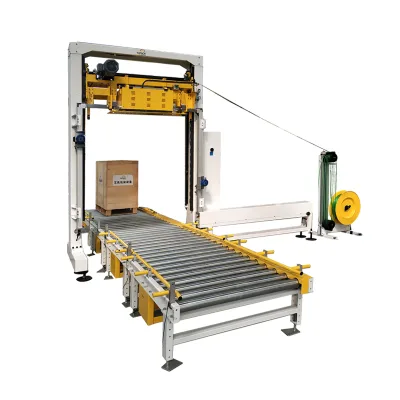
Automatic PET Belt Pallet Strapper Pallet Strapping Machine with Top Plate
$9500.00 - $10500.00

Dg Jingduan Packaging Technology Co., LTD
- Verified by SGS
- Trading Company,Manufacturer/Factory
- China Guangdong
- Lead time15 days
- Avg. response≤ 2h
Main productsStrapping Machine, Pallet Strapping Machine, Battery-Powered Strapping Tool, Strapping Tool, Electric Strapping Tool, Pallet Threading Tools, Pallet Strapper, Friction-Weld Battery Sealing Tool , Pallet Threader, Pallet Strap Feeder
Main marketsSouth America,Eastern Europe,Mid East,North America,Southeast Asia,Eastern Asia,Oceania,Western Europe,Africa

Xi'an Brictec Engineering Co., Ltd.
- Verified by BV
- Combined
- China Shaanxi
- Lead time60 days
- Avg. response≤ 3h
Main productsBrick Making Machine, Tunnel Kiln, Red Brick Making Machine, Clay Brick Making Industry, Fully Automatic Brick Making Machine, Clay Bricks Making Plant, Bricks Production Line, Brick Kiln, Coal Burner, Brick Oven
Main marketsAfrica,Southeast Asia/ Mideast,Europe

Superpack (Guangzhou) Intelligent Machine Co., Ltd.
- Verified by TUVRHEINLAND
- Trading Company,Manufacturer/Factory
- China Guangdong
- Lead time23 days
- Avg. response≤ 11h
Main productsAutomatic Packing Machine, Pallet Wrapping Machine, Cutting and Sealing Shrink Machine, Carton Sealing Machine, Vacuum Sealer Machine, Labelling Machine, Flow Packing Machine, Carton Unpacking Machine, Carton Strapping Machine, Collaborative Palletizer Machine
Main marketsSouth America,Eastern Europe,Mid East,North America,Southeast Asia,Eastern Asia,Oceania,Western Europe,Africa


Automatic Pallet Wrapping Machine Stretch Wrapper, Pallet Stretch Wrapping Machine
$800.00 - $1999.00
MOQ: 1 Pieces

Suzhou Jiajun Packing Machinery Co., Ltd.
- Verified by TUVRHEINLAND
- Manufacturer/Factory
- China Jiangsu
- Lead time45 days
- Avg. response≤ 9h
Main productsPallet Wrapping Machine, Packaging Machine, Pallet Wrap Machine, Stretch Wrapping Machine, Pallet Wrapper, Stretch Wrapper, Pallet Stretch Wrapping Machine, Carton Sealing Machine, Case Sealer, Carton Erector
Main marketsSouth America,Eastern Europe,Mid East,North America,Southeast Asia,Eastern Asia,Oceania,Western Europe,Africa
Shandong Gojon Precision Technology Co., Ltd
- Verified by SGS
- Trading Company,Manufacturer/Factory,Group Corporation
- China Shandong
- Lead time45 days
- Avg. response≤ 4h
Main productsWhole Factory Conveyor System, Cardboard Conveyor System, Paper Roll Conveyor System, Single Facer Laminating Line, High Speed Auto Laminator, Automatic Strapping and Wrapping Line, Automatic Palletizer, Production Management System, Carton Box Making Machine, Spare Parts of Corrugated Box Machine
Main marketsSouth America,Eastern Europe,Mid East,North America,Southeast Asia,Oceania,Western Europe,Africa

Strapping Machine Pallet Wrapping Machineshrink Strapping Wrapping Machine
$1000.00 - $50000.00
MOQ: 1 Pieces

$1000.00 - $50000.00
MOQ: 1 Pieces


Qingdao Youchuang Packaging Equipment Co., Ltd.
- Combined
- China Shandong
- Lead time30 days
- Avg. response≤ 5h
Main productsShrink Wrapper, Strapper, Pallet Wrapper, Vacuum Package Machine, Carton Erector, Case Sealer, Conveyor
Main marketsSouth America,Africa,Southeast Asia/ Mideast,East Asia(Japan/ South Korea),Domestic,Europe,Australia,North America


High Speed Automatic Corrugated Box Strapper Banding Strapping Machine
$1400.00 - $1500.00
MOQ: 1 Pieces


Shaanxi Zhikun Electromechanical Technology Co., Ltd.
- Verified by SGS
- Trading Company
- China Shaanxi
- Lead time38 days
- Avg. response≤ 1h
Main productsStrapping Machine, Bunding Machine, Tying Machine, Wire Tying Machine, OPP Film Straps, PP Belt, Tying Cord, Banding Machine, Strapping Tool, Twist
Main marketsSouth America,Eastern Europe,Mid East,North America,Southeast Asia,Eastern Asia,Oceania,Western Europe,Africa

Advanced Semi-Automatic Pallet Strapping Machine for Efficient Packaging
$335.00 - $379.00
MOQ: 1 Pieces

NANTONG HUABO TECHNOLOGY CO.,LTD
- Verified by SGS
- Trading Company
- China Jiangsu
- Lead time30 days
- Avg. response≤ 3h
Main productsPackaging Production Line, Strapping Machine, Vacuum Packaging Machine, Stretch Wrapping Machine, Sealing Machine, Filling Machine, Carton Erector
Main marketsSouth America,Africa,Southeast Asia/ Mideast,East Asia(Japan/ South Korea),Domestic,Europe,Australia,North America
Cangzhou Depai International Trade Co., Ltd.
- Verified by BV
- Combined
- China Hebei
- Lead time30 days
- Avg. response≤ 5h
Main productsFlexo Printing Machine, Corrugated Board Production Line, Folder Gluer Machine, Die Cutting Machine
Main marketsSouth America,Europe,North America

Shanghai Kesi Packaging Machinery Co., Ltd.
- Trading Company,Manufacturer/Factory
- China Shanghai
- Lead time38 days
- Avg. response≤ 17h
Main productsFilling Machine, Labeling Machine, Capping Machine, Liquid Filling Machine, Filling Line, Sealing Machine, Packaging Machine, Folding Machine, Coding Machine, Labeling Machinery
Main marketsSouth America,Eastern Europe,Mid East,North America,Southeast Asia,Eastern Asia,Western Europe,Africa
Dongguang Runyang International Trading Co., Ltd.
- Verified by SGS
- Trading Company
- China Hebei
- Lead time30 days
- Avg. response≤ 1h
Main productsCarton Machine, Plastic Packaging Bag, Packaging Machinery, Corrugated Cardboard Production Line, Cardboard Printer Slotter Die Cutter Machine, Carton Folder Gluer Stitcher Machine, Cardboard Fluter / Film Laminating Machine, Corrugated Machinery, Hardboard Production Line, Corrugated Carton Production Line
Main marketsNorth America
Hainan Huili Packaging Products Co.,Ltd.
- Verified by SGS
- Trading Company
- China Hainan
- Lead time15 days
- Avg. response≤ 3h
Main productsPP Strapping Tape, Pet Plastic Steel Belt, PE Stretch Film, Packing Machine, Transparent Tape, Plastic Raw Materials, Packaging Materials, Fiber Strapping, Packing Buckle
Main marketsEurope


High-Speed Packaging Machine with Automatic Strapping Technology for Efficiency
$550.00 - $1650.00
MOQ: 1

Packaging Machinery 5mm Advanced Electric Heating Automatic Packaging Machine
$1050.00 - $1650.00
MOQ: 1

Ruian Huadong Packing Machinery Co., Ltd.
- Verified by TUVRHEINLAND
- Combined
- China Zhejiang
- Lead time30 days
- Avg. response≤ 2h
Main productsWrapping Machine, Food Packing Machine, Shrink Packaging Machine, Packing Machine, Shrink Packing Machine, Packaging Machine, Shrink Wrapper, Shrink Wrapping Machine, Pharmaceutical Machine, Shrink Wrap Machine
Main marketsSouth America,Domestic

Automatic Magazine Shrink Wrap Machine Heat Shrink Packaging Machine Heat Shrink Wrapping Machine
$6000.00 - $8000.00
MOQ: 1 Sets

$11000.00 - $13000.00
MOQ: 1 Sets

Automatic Packing Machine Packaging Machine Heat Shrink Packaging Machine Wrapping Machine
$9000.00 - $11000.00
MOQ: 1 Sets

Automatic Heat Shrink Film Wrapping Machine Heat Shrink Packaging Machine Shrink Machine
$9000.00 - $11000.00
MOQ: 1 Sets

$6000.00 - $8000.00
MOQ: 1 Sets


Hangzhou Royall Import & Export Co., Ltd.
- Verified by TUVRHEINLAND
- Trading Company
- China Zhejiang
- Lead time30 days
- Avg. response≤ 11h
Main productsCorrugated Paperboard Machinery, Printing Machine, Folder Gluer Machine, Paper Sheeter, Paper, Single Facer, Mask Making Machine, China Export Agent
Main marketsEurope

Dongguan Xinsheng Hardware Machinery Co., Ltd.
- Verified by BV
- Manufacturer/Factory
- China Guangdong
- Lead time45 days
- Avg. response≤ 16h
Main productsBuckle Making Machine, Ring Making Machine, Bucket Handle Making Machine, Hook Making Machine, Paint Roller Handle Making Machine, Wire Forming Machine, Stapping Buckle Machine, CNC Wire Bending Machine, Spring Machine
Main marketsSouth America,Eastern Europe,Mid East,North America,Southeast Asia,Eastern Asia,Oceania,Western Europe,Africa

High-Speed Automatic Strapping Machine for Optimal Packaging Efficiency
$10950.00 - $12500.00
MOQ: 1 Pieces

High-Speed Strapping Machine for Quick and Reliable Packaging Solutions
$13000.00 - $15050.00
MOQ: 1 Pieces
Tengyi Intelligent Equipment (Dongguan) Co., Ltd.
- Verified by BV
- Manufacturer
- China Guangdong
- Lead time15 days
- Avg. response≤ 12h
Main productsAutomatic Sealing Machine
Main marketsDomestic


Heat Shrink Film Automatic Packaging Machine Parcel up Automatic Packaging Equipment
$5700.00 - $5850.00
MOQ: 1 Pieces


Comprehensive Sourcing Guide
Heating Pallet Strapping Machine Supplier Concentration and Factory Types
Current data indicates a concentration of manufacturing activity in China, specifically within the Zhejiang and Shandong provinces. Suppliers in these regions list diverse portfolios that include printing machinery, slitting machines, and various packaging solutions alongside strapping equipment. The company types observed range from trading companies to manufacturers and factories, with some entities operating as combined entities offering both trading and manufacturing capabilities. This mix suggests that buyers may encounter different levels of direct factory involvement depending on the specific supplier profile.
When evaluating the factory type, it is crucial to distinguish between pure manufacturers and trading companies, as this impacts customization capabilities and direct communication. Some suppliers explicitly state OEM and ODM capacities, while others focus on trading. The presence of ISO 9001 certification in certain profiles provides a baseline for quality management systems, though not all suppliers display this credential. Buyers should verify if the supplier claims to be a manufacturer by checking for specific production details rather than relying solely on the company type label provided in the search results.
How to Verify Heating Pallet Strapping Machine Suppliers
Verification begins with checking for third-party audit badges, as some suppliers in the current results display BV verification status while others show no such verification. The absence of a certification badge does not automatically disqualify a supplier, but it requires deeper due diligence. Buyers should request copies of valid ISO 9001 certificates if the supplier claims this standard, noting that some profiles list "NIL" for system certification. It is essential to confirm that any claimed certifications are current and cover the specific manufacturing facilities producing the heating pallet strapping machines.
Response time is another critical metric for assessing supplier reliability and engagement levels. The observed data shows response times varying significantly, with some suppliers responding in approximately two hours while others take over twenty-two hours. A faster response time often correlates with better communication channels and a more active sales team, which is vital for resolving technical queries about heating mechanisms or strapping modes. Buyers should test the responsiveness of potential suppliers before committing to an order, ensuring that the communication flow remains efficient throughout the negotiation and production phases.
What to Compare Across Heating Pallet Strapping Machine Suppliers
Comparing suppliers requires a detailed analysis of lead times, which currently range from thirty to thirty-eight days for production and delivery. These timelines can vary based on the specific model, such as semi-automatic or fully automatic units, and the complexity of the customization requested. Buyers must align their project schedules with these lead times to avoid delays, especially when ordering custom configurations like specific strapping materials or automatic grades. It is important to confirm if the quoted lead time includes shipping or if it covers only the manufacturing period.
Minimum Order Quantities (MOQ) and pricing structures also differ across the supplier base. Some listings indicate an MOQ of one unit with prices starting around $1,250, while others may have higher thresholds or different pricing tiers for bulk orders. The price range for specific models can extend significantly, with some fully automatic heat shrink packaging machines listed at much higher price points. Buyers should compare the total cost of ownership, including the cost of the machine, shipping, and any potential customization fees, to ensure the selected supplier offers the best value for their specific operational needs.
Common Heating Pallet Strapping Machine Sourcing Risks
One significant risk involves the discrepancy between claimed capabilities and actual production capacity. While some suppliers list OEM and ODM services, others may lack the specific technical expertise required for heating-based strapping mechanisms. The absence of detailed product attributes or unclear specifications regarding the heating mode can lead to receiving equipment that does not meet performance expectations. Buyers should request detailed technical drawings and specifications to verify that the machine's heating system matches the intended application, such as sealing plastic straps or shrink films.
Another risk is the variability in product standards and packaging methods. The observed data shows different packing standards, ranging from cartons to export wooden cases, which can affect the safety of the equipment during transit. If a supplier does not specify a robust packing method, the machine may arrive damaged, leading to additional costs and delays. Additionally, the lack of standardized testing results or specific performance metrics for the heating element can make it difficult to assess the machine's durability and efficiency before purchase.
Heating Pallet Strapping Machine Regional Sourcing and Logistics
Sourcing from China, particularly from Zhejiang and Shandong, offers access to a mature industrial ecosystem but introduces specific logistical considerations. The distance from these manufacturing hubs to international ports can impact shipping costs and transit times. Buyers should calculate the total landed cost, including freight, insurance, and customs duties, as these factors can significantly alter the final price of the equipment. Understanding the specific port of loading for each supplier is essential for accurate logistics planning and cost estimation.
Logistics planning must also account for the physical dimensions of the machinery, which vary by model. For instance, some machines have standard dimensions around 1400mm by 630mm, while others may be larger, requiring specialized shipping containers. Buyers should verify the exact dimensions and weight of the equipment to ensure it fits within their shipping constraints and warehouse space. Coordinating with a freight forwarder who has experience with heavy industrial machinery from these specific regions can help mitigate risks associated with handling and transportation.
Heating Pallet Strapping Machine Commercial Terms and Order Planning
Commercial terms regarding payment and escrow are critical for securing the transaction. While some platforms offer escrow services to protect buyer funds, the availability of this feature depends on the specific supplier and the platform used. Buyers should confirm if the supplier accepts secure payment methods and understand the terms for partial payments or deposits. It is advisable to negotiate clear terms for milestones, such as payment upon completion of production or upon successful inspection, to minimize financial risk.
Order planning should include a detailed timeline for customization, production, and delivery. Given the lead times observed, buyers need to factor in the time required for design approval, especially if customization is requested. The availability of samples is another factor to consider, as some suppliers do not support sample orders, which can complicate the verification process. Buyers should plan their inventory and production schedules to accommodate these timelines, ensuring that the heating pallet strapping machines are ready when needed for their operations.
FAQs
Where are heating pallet strapping machines located?
Suppliers offering these machines are located in China Zhejiang and China Shandong. Buyers should verify specific factory addresses and shipping routes before placing orders to ensure accurate delivery timelines and logistics planning for their operations.
What is the typical lead time for these machines?
The observed lead times range from 30 to 38 days depending on the supplier. Buyers must confirm the exact production schedule with the vendor, as this duration affects inventory planning and project deadlines for industrial packaging needs.
Do suppliers offer customization for strapping machines?
Yes, customization is available for many models including specific strapping modes and automatic grades. Buyers should request detailed specifications for their unique application needs, such as cosmetics or beverage packaging, to ensure the machine fits their production line.
What certifications do these suppliers hold?
Some suppliers hold ISO 9001 system certification, while others may not list specific certifications. Buyers need to verify current certification status directly with the manufacturer to ensure compliance with international quality standards and safety requirements for their facility.
What is the minimum order quantity for these machines?
The minimum order quantity is 1 unit for certain models like the Pallet Strapping Machine. Buyers can purchase single units for testing or small-scale operations, but bulk orders may offer different pricing tiers or shipping benefits from the supplier.
How fast do suppliers typically respond to inquiries?
Response times vary, with some suppliers responding in approximately 2 hours and others taking over 22 hours. Buyers should prioritize suppliers with faster response times to ensure timely communication regarding technical details and order processing for their projects.
What is the price range for automatic strapping machines?
Prices range from 1250 to 9800 depending on the model and automation level. Buyers should compare specific product attributes like automatic grade and strapping material to understand the cost differences between semi-automatic and fully automatic heating strapping solutions.