Smile Face Multi-Language Feedback Kiosk Suppliers and Manufacturers
Source 27 verified suppliers for Smile Face Multi-Language Feedback Kiosk units. Compare grounded dimensions including ISO 9001 certification, China Guangdong location, and response times. Review product specs and request quotes directly; review the available evidence before requesting comparable quotations from suitable candidates.
Suppliers List

- Verified by TUVRHEINLAND
- Manufacturer/Factory
- China Guangdong
- Lead time23 days
- Avg. response≤ 2h
Main productsLCD Digital Signage, LED Digital Display, LED Screen Display, 3D LED Display, LED Rental Display, Lamp Pole LED Display, Shelf LED Display, LED Poster Display, LCD Poster Diusplay, Lamp Pole Banner Bracket
Main marketsSouth America,Eastern Europe,Mid East,Eastern Asia,Africa

Advertising 2-Face Information 60inch Interactive Display Digital Touch Screen Kiosk
$699.00 - $1699.00
MOQ: 1 Pieces

Advertising Information 4K Interactive LCD Digital Display Touch Screen Kiosk
$399.00 - $999.00
MOQ: 1 Pieces

Advertising Information Commercial Interactive Touch LCD Digital Display Screen Kiosk
$399.00 - $999.00
MOQ: 1 Pieces

Business Centre LCD Digital Signage Touch Screen Display Interactive Information Kiosk
$499.00 - $1399.00
MOQ: 1 Pieces

Shenzhen Zhongkemei Digital Technology Co., Ltd
- Verified by SGS
- Combined
- China Guangdong
- Lead time15 days
- Avg. response≤ 4h
Main productsTouch Screen Kiosks, Self Service Kiosks, Payment Kiosks, Touch Table, Smart Touch Screen Table, Inquire Kiosk, Advertising Display, Face Recognition Device, Touch Screen All in One PC, Digital Signage Player
Main marketsAfrica,Southeast Asia/ Mideast,East Asia(Japan/ South Korea),Domestic,Europe,Australia,North America

21.5 Inch Touch Screen Hotel Check in Kiosk Multi Language Support Kiosk
$600.00 - $629.00
MOQ: 1 Sets


- Verified by TUVRHEINLAND
- Trading Company,Manufacturer/Factory
- China Guangdong
- Lead time23 days
- Avg. response≤ 4h
Main productsTablet, All in One PC, Laptops, Mini PC, Rugged Tablet, Interactive Whiteboard, Industrial Tablet PC, Koisk
Main marketsSouth America,Eastern Europe,Mid East,North America,Southeast Asia,Eastern Asia,Oceania,Western Europe,Africa

Shanghai Senke Electronic Technology Co., Ltd.
- Verified by SGS
- Combined
- China Shanghai
- Lead time30 days
- Avg. response≤ 10h
Main productsAll in One PC, Digital Signage, LCD Monitor, Industrial Panel PC, Outdoor Digital Signage, LCD Video Wall, Touch Screen Kiosk, Digital Interactive Whiteboard, LCD Transparent Showcase, LCD Digital Shelf Display
Main marketsSoutheast Asia/ Mideast,Domestic,Europe
Shenzhen Hongnuo Zhuanxian Technology Co., Ltd.
- Verified by Intertek
- Manufacturer, Trading Company
- Lead time0 days
- Avg. response≤ 2h
Main productsDigital Signage, Outdoor Digital Signage, Window Display, Magic Mirror, Stretch Screen
Main marketsDomestic Market(50%), North America(10%), Southeast Asia(10%)
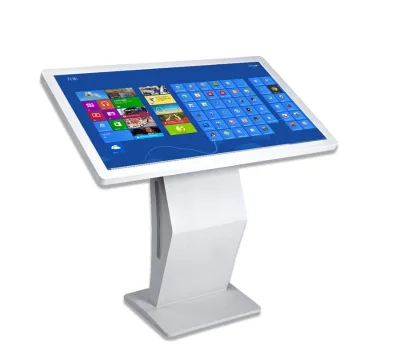
$342.00 - $360.00
MOQ: 1 pieces
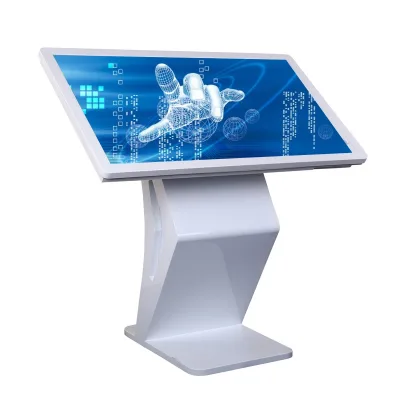
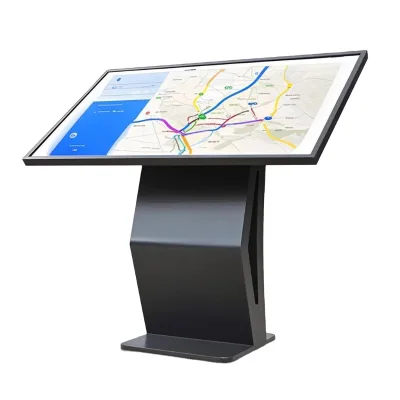
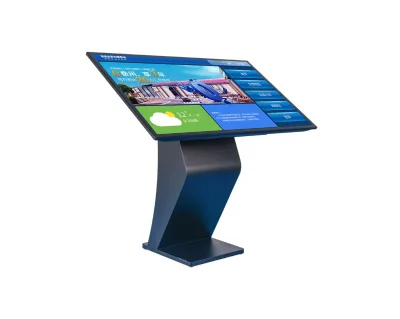

Shenzhen Optim Technology Co., Ltd.
- Manufacturer/Factory
- China Guangdong
- Lead time23 days
- Avg. response≤ 3h
Main productsDigital Signage, Interactive Flat Panel, Kiosk, Monitor, Touch Screen, All in One PC, Industrial PC, LED Screen, 3D Holographic Display, Android Tablet
Main marketsSouth America,Eastern Europe,Mid East,North America,Southeast Asia,Eastern Asia,Oceania,Western Europe,Africa

- Combined
- China Guangdong
- Lead time15 days
- Avg. response≤ 18h
Main productsMetal Keyboard, Stainless Steel Keyboard, Industrial Keyboard, Silicone Keyboard, Medical Keyboard, Metal Keypad, Metal Trackball, Tablet Stand, Android Kiosk, Touchscreen Kiosk
Main marketsSouth America,Africa,Southeast Asia/ Mideast,East Asia(Japan/ South Korea),Europe,Australia,North America

Shenzhen Letine Technology Co., Ltd.
- Verified by CTI
- Combined
- China Guangdong
- Lead time15 days
- Avg. response≤ 4h
Main productsPC Monitor, Advertising Player, Demo Server, Gaming Monitor, Rugged Tablet, Ai Solution, Graphics Card, Motherboard
Main marketsSouth America,Africa,Southeast Asia/ Mideast,Europe,Australia,North America


Elegant High-Tech Kiosks for Interactive Advertising and Customer Engagement
$299.00 - $499.00
MOQ: 1 Pieces

Self Luminous Ai Digital Human Interactive Smart Reception Kiosk Display
$669.00 - $1299.00
MOQ: 1 Pieces
Guangzhou Xishida Information Technology Co., Ltd.
- Verified by CTI
- Combined
- China Guangdong
- Lead time45 days
- Avg. response≤ 3h
Main productsSelf Service Kiosk Touch Screen Kiosk
Main marketsSoutheast Asia/ Mideast,Domestic,Europe,North America

Innovative Interactive Touch Screen Kiosk for Enhanced Digital Engagement
$1980.00 - $2380.00
MOQ: 1 pieces

Facial Recognition and Touchscreen Manufacturing Self-Service Payment Kiosk
$780.00 - $980.00
MOQ: 1 pieces


Interactive Touch Screen Self Service Payment Kiosk Payment Self Service Kiosk
$780.00 - $980.00
MOQ: 1 pieces

55 Inch 65Inch 75 Inch 85inch AI Real-time Interaction Generative AI AI Virtual Human Kiosk
$1180.00 - $1580.00
MOQ: 1 pieces


- Verified by SGS
- Manufacturer/Factory
- China Guangdong
- Lead time15 days
- Avg. response≤ 9h
Main productsPOS System, POS Terminal, POS Hardware, Point of Sale, Cash Drawer, Kiosk
Main marketsSouth America,Eastern Europe,Mid East,North America,Southeast Asia,Eastern Asia,Oceania,Western Europe,Africa

Shenzhen Grandtop Electronics Co., Ltd.
- Trading Company,Manufacturer/Factory
- China Guangdong
- Lead time30 days
- Avg. response≤ 14h
Main productsPCB Assembly, Robotic Control PCB Assembly, Industrial Control PCBA, Medical PCBA, Financial PCBA, Contract Manufacturer, Automatic Control PCB Assembly, OEM &ODM PCBA, Turnkey Service PCBA, One Stop PCB Assembly
Main marketsSouth America,Eastern Europe,Mid East,North America,Southeast Asia,Eastern Asia,Western Europe,Africa


Self-Service Information Hotel Check in Touchscreen Payment Interactive Kiosk
$599.00 - $1799.00
MOQ: 1 Pieces


Guangzhou Hushida Electronic Co., Ltd.
- Verified by SGS Group
- Trading Company
- Lead time20 days
- Avg. response≤ 4h
Main productsIndoor LCD Digital Signage, Outdoor Advertising Kiosk, Interactive Whiteboards, Live Streaming Machine, Digital Photo Frame
Main marketsEastern Asia(13%), North America(12%), Western Europe(11%)
Shenzhen Eaglash Tech Co., Ltd.
- Verified by BV
- Combined
- China Guangdong
- Lead time23 days
- Avg. response≤ 2h
Main productsSelf Service Kiosk
Main marketsDomestic
Guangdong Mingjinkang Technology Co., Ltd.
- Verified by TUVRHEINLAND
- Combined
- China Guangdong
- Lead time15 days
- Avg. response≤ 2h
Main marketsSoutheast Asia/ Mideast,East Asia(Japan/ South Korea),Europe,North America

Interactive Touchscreen Digital Information Self-Service Kiosk for Modern Spaces
$543.00 - $583.00
MOQ: 1 Pieces


Guangzhou Zhuoyue Youxian Electronic Equipment Co., Ltd.
- Verified by Intertek
- Manufacturer, Trading Company
- Lead time15 days
- Avg. response≤ 1h
Main productsInteractive Smart Whiteboard, Digital Signage Display, Touch Screen Kiosk, Advertising Display, Information Inquiry Kiosk
Main marketsDomestic Market(34%), North America(30%), Mid East(27%)
Foshan Rui Guan Xing Electronic Co., Ltd.
- Verified by SGS
- Combined
- China Guangdong
- Lead time15 days
- Avg. response≤ 7h
Main productsAll in One PC, Monitor, All in One Computer, Tablet PC, Laptop, Desktop Computer, LCD Monitor, Touch Monitor, Touch PC, Touch Screen Panel
Main marketsDomestic

Dual-Customer Screen Business Kiosk with Keyboard and Mouse Accessories
$180.00 - $189.00
MOQ: 1 Pieces

Dual-Customer Screen Aio with NFC-Enabled Business Features and Accessories
$180.00 - $189.00
MOQ: 1 Pieces

Hongxi Technology (Guangzhou) Co., Ltd.
- Verified by BV
- Trading Company
- China Guangdong
- Lead time30 days
- Avg. response≤ 3h
Main productsSmart TV, Interactive Whiteboard, Advertising Equipment, Video Wall, Full Colour LED, Touch Screen Kiosk, Advertising Media Displayer, Curved TV, OLED TV
Main marketsAustralia
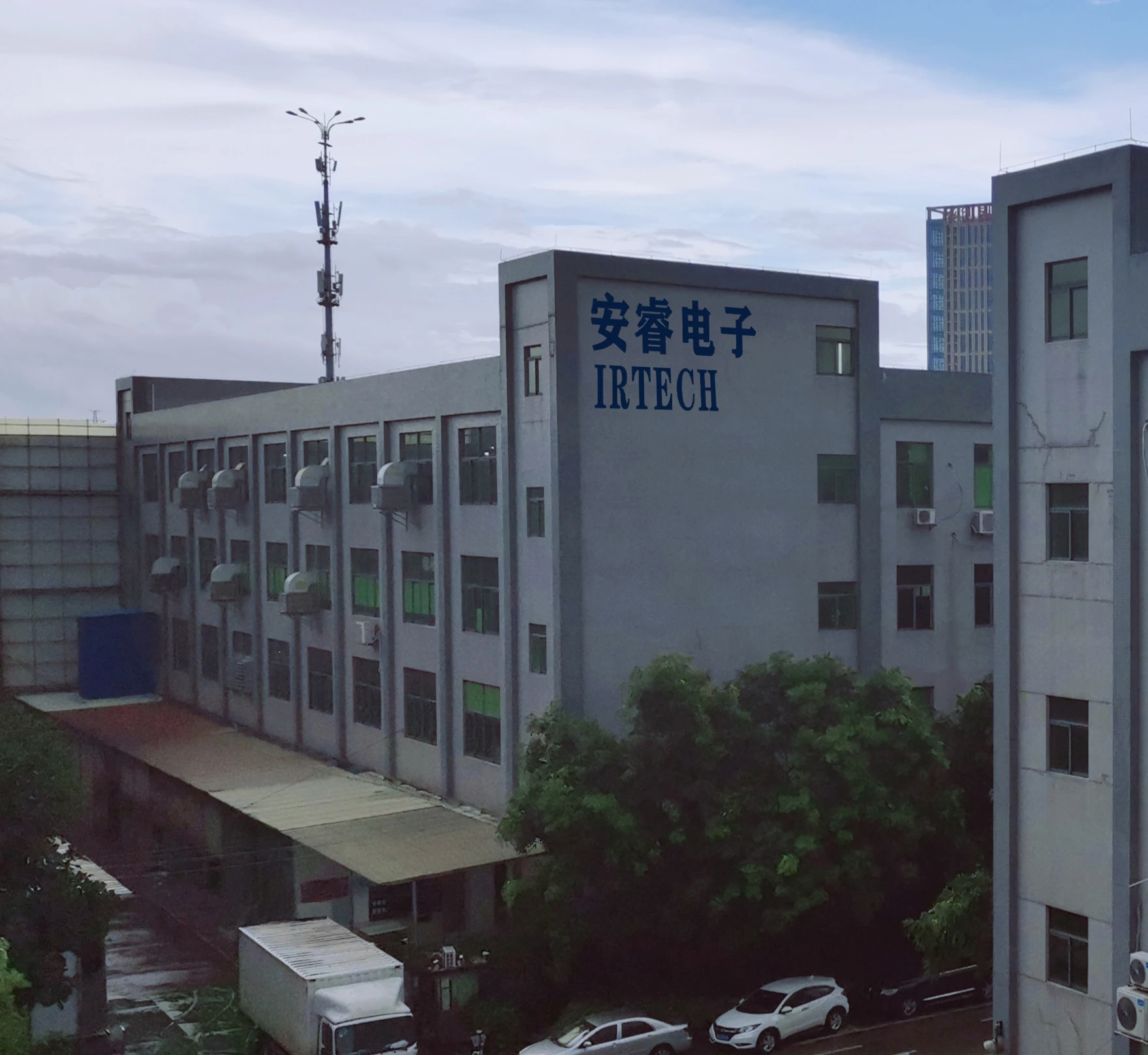
Guangzhou Ideal Running Technology Co., Ltd.
- Manufacturer
- Guangdong, China
- Lead time10 days
- Avg. response≤ 9h
Main productsqueue management system,queue calling system,digital signage,LCD display,touch screen machine
Main marketsDomestic Market(35.00%), North America(15.00%), Western Europe(10.00%), Eastern Europe(8.00%), Northern Europe(5.00%), Mid East(5.00%), Central America(5.00%), Southern Europe(5.00%), South America(3.00%), South Asia(3.00%), Southeast Asia(3.00%), Eastern Asia(1.00%), Oceania(1.00%), Africa(1.00%)
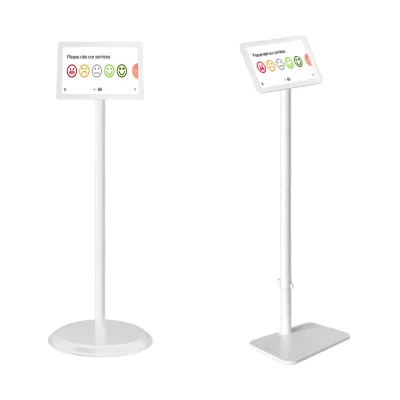
$169.44 - $179.71
MOQ: 1 units
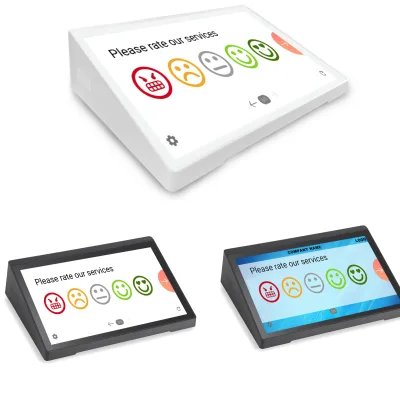
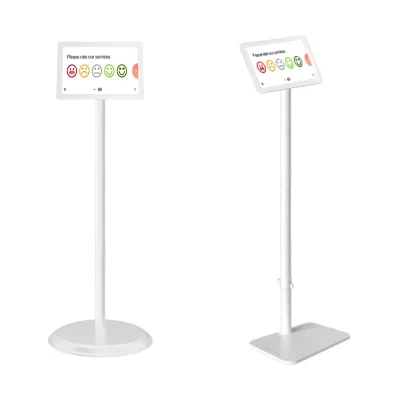
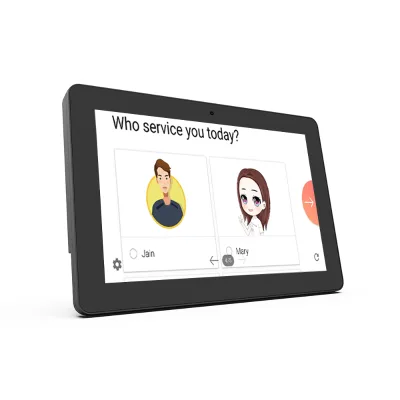
Desktop Touch Screen Interactive Digital Signage Horizontal Customer Feedback Evaluator
$130.65 - $141.02
MOQ: 1 units
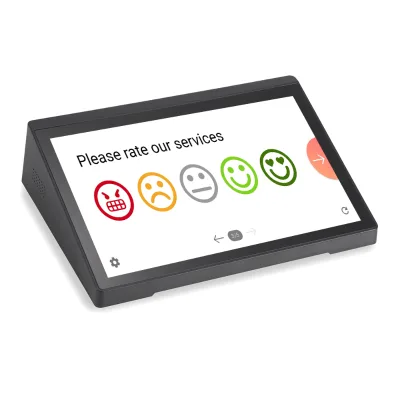
Shenzhen Starview Tech Co., Ltd.
- Verified by BV
- Manufacturer/Factory
- China Guangdong
- Lead time15 days
- Avg. response≤ 10h
Main productsSelf Ordering Kiosk, Smart Touch Table, Digital Signage, Outdoor Display, Window Shop Display, LED Screens
Main marketsSouth America,Eastern Europe,Mid East,North America,Southeast Asia,Eastern Asia,Oceania,Western Europe,Africa

$299.00 - $599.00
MOQ: 1 Pieces

K Style 32'' 43" 55" Touch Screen Android Digital Signage Self Service Information Kiosk
$299.00 - $599.00
MOQ: 1 Pieces

Shenzhen Easco Smart Equipment Co., Ltd.
- Verified by TUVRHEINLAND
- Combined
- China Guangdong
- Lead time15 days
- Avg. response≤ 2h
Main productsTurnstile Gate, Biometric Device, Car Barrier Gate, Automatic Door Opener, License Plate Recognition Device, Face Recognition Attendance, Speed Gate, Facial Recognition Turnstile, Tripod Turnstile, Full Height Turnstile
Main marketsSouth America,Southeast Asia/ Mideast,East Asia(Japan/ South Korea),Europe,North America

$210.00 - $240.00
MOQ: 2 Sets

$219.00 - $299.00
MOQ: 2 Pieces

$219.00 - $299.00
MOQ: 2 Pieces

Shenzhen Jia Cheng Electric Co., Ltd.
- Verified by SGS
- Combined
- China Guangdong
- Lead time15 days
- Avg. response≤ 9h
Main productsIndustrial Wire Harness, Automatic Wire Harness, Medical Wire Harness, Electrical Cabinet-Group, PCBA-Group, Mechanical Fabrication-Group, Smart POS Terminal-Group, Table POS, Ice Maker-Group, Kiosk-Group
Main marketsDomestic,Europe,Australia,North America
Shenzhen Insovision Technology Co., Ltd.
- Manufacturer
- Lead time旺季: "1 - 200":60,"> 200":"To be negotiated", 淡季: "1 - 200":60,"> 200":"To be negotiated"
- Avg. response≤ 2h
Main productspayment kiosk,digital signage,digital calendar,LED Display,Oled Transparent Screen

Shenzhen Layson Optoelectronics Co., Ltd.
- Verified by TUVRHEINLAND
- Trading Company,Manufacturer/Factory
- China Guangdong
- Lead time0 days
- Avg. response≤ 3h
Main productsTouch Screen Kiosk, Advertising Player, Digital Signage, Outdoor Advertising Player, Magic Mirror Glass Display, Transparent LCD, Touch Table, Monitor
Main marketsSouth America,Eastern Europe,Mid East,North America,Southeast Asia,Eastern Asia,Oceania,Western Europe,Africa

13.3 Inch Magic Mirror LCD Monitor Self Service Bill Payment Touch Screen Kiosk
$100.00 - $2000.00
MOQ: 1 Pieces


13.3 Inch Magic Mirror LCD Monitor Self Service Touch Panel Screen Kiosk
$100.00 - $2000.00
MOQ: 1 Pieces
Hangzhou Huitong Kiosk Co., Ltd.
- Manufacturer
- Zhejiang, China
- Lead time0 days
- Avg. response≤ 7h
Main productsSelf Service Terminal,payment kiosk
Main marketsDomestic Market(55.00%), South America(10.00%), Mid East(10.00%), Southeast Asia(5.00%), Southern Europe(5.00%), Northern Europe(5.00%), Western Europe(5.00%), Eastern Europe(5.00%)

- Trading Company,Manufacturer/Factory,Group Corporation
- China Guangdong
- Lead time15 days
- Avg. response≤ 16h
Main productsPCBA/PCB Assembly, Cable/Wire Harness Assemb, Sheet Metal Fabrication, Kiosk Machine OEM/ODM, Order Machine OEM/ODM, Product Assembly, LED Industrial Lights
Main marketsSouth America,Eastern Europe,Mid East,North America,Southeast Asia,Eastern Asia,Oceania,Western Europe,Africa
Shenzhen Electron Technology Co., Ltd.
- Manufacturer, Trading Company
- Lead time旺季: "1 - 100":7,"> 100":"To be negotiated", 淡季: "1 - 100":7,"> 100":"To be negotiated"
- Avg. response≤ 4h
Main productsDigital Signage, Advertising Display, Smart TV, Tablet PC, Android Tablet

iMGS Smart Glass Technologies(Fujian)Co., Ltd.
- Verified by TUVRHEINLAND
- Combined
- China Fujian
- Lead time15 days
- Avg. response≤ 1h
Main productsAdvertising Machine, LCD Display, LCD Screen, Traditional Screen, Touch Screen, LED Screen, Kiosk, Digital Signage, Smart TV
Main marketsDomestic

Mirror Screen 32 Inch 43 Inch 55 Inch 65 Inch Kiosk Display Digital Signage
$150.00 - $267.00
MOQ: 1 Pieces

16.4 Inch -49.5 Inch Touch Interactive Digital Signage Kiosk Display Digital Signage
$150.00 - $279.00
MOQ: 1 Pieces


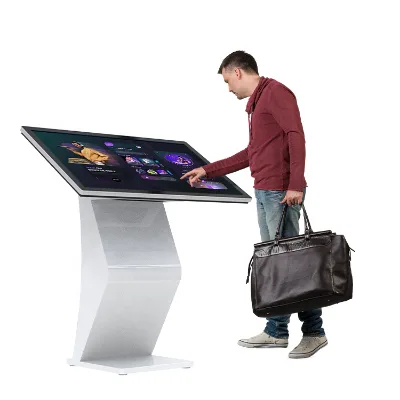


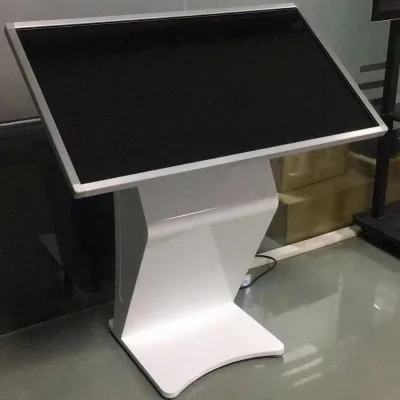
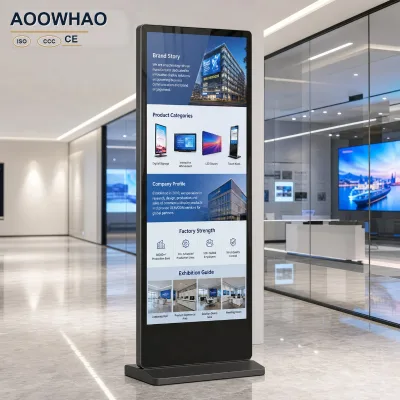


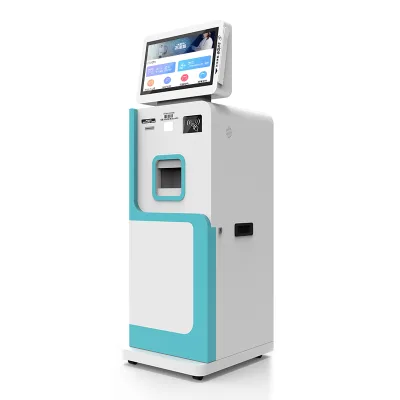



Comprehensive Sourcing Guide
Smile Face Multi-Language Feedback Kiosk Supplier Concentration and Factory Types
When sourcing a Smile Face Multi-Language Feedback Kiosk, the first structural question is where the supply base actually sits. Supplier-result data in this category consistently points to Guangdong, China, as the manufacturing location, which places these kiosks within the province's well-established electronics and commercial display ecosystem. That concentration matters because it affects component availability, customization depth, and shipping consolidation. If your own search results do not surface a named region, do not guess; instead, filter by disclosed location fields, compare where multiple listed suppliers overlap geographically, and treat that overlap as your working cluster definition before requesting quotations.
The supplier population splits into distinguishable company types. Some listings identify themselves as Manufacturer/Factory operations, while others show a Combined profile covering both manufacturing and trading activity. Factory-type listings in this category typically advertise main products such as touch screen kiosks, self-service kiosks, payment kiosks, advertising displays, and digital signage, which confirms genuine category adjacency. Manufacturer-type suppliers frequently list OEM and ODM capability, sometimes alongside their own brand, which is directly relevant if you need custom branding, multilingual software skins, or the smile-face rating interface adapted to your workflow. Combined-type suppliers may broaden the range but can add a layer between you and the production line. Establish early which type you are speaking with, because it determines who controls tooling, software customization, and after-sales parts.
How to Verify Smile Face Multi-Language Feedback Kiosk Suppliers
Verification should start with third-party credentials that are actually displayed on the listing rather than claimed in conversation. In this category, some suppliers carry ISO 9001 system certification, and verification badges from bodies such as TÜV Rheinland or SGS appear on supplier profiles. These are meaningful signals of audited quality systems and independently confirmed company status, but they are not universal; another supplier in the same results may hold different or additional certificates, such as ISO9001:2015. Ask each candidate to state exactly which certificates are current and to what scope they apply, and never assume one supplier's credentials transfer across the category.
Beyond certificates, verify operational substance. Request the factory address and confirm it matches the disclosed location, ask whether production is in-house or partially outsourced, and request a video walkthrough of the kiosk assembly line, particularly the screen integration and touch-panel calibration stages. For a feedback kiosk specifically, verify that the multilingual interface is genuinely configurable — ask which languages the current firmware supports, whether language packs are pre-installed or custom-loaded, and who owns the UI source code after delivery. Check response behavior as a live test: response-time fields on profiles in this category range widely, from roughly one hour to over three and a half, so message several suppliers with the same technical question and compare both speed and the accuracy of their answers. A supplier that answers precisely about touch technology and enclosure materials is more credible than one that answers only about price.
What to Compare Across Smile Face Multi-Language Feedback Kiosk Suppliers
Build a comparison table using the dimensions that supplier profiles actually disclose. Lead time is one of the most useful: results in this category show a disclosed lead time of around 23 days for kiosk-type products, which gives you a benchmark, but you should not assume every supplier matches it. MOQ is another disclosed field — some kiosk listings show a minimum order of one unit — which matters greatly if you are piloting a feedback program across a few sites before scaling. Record each supplier's stated MOQ, lead time, and response time separately, and flag any supplier that refuses to put these numbers in writing.
Compare product scope and customization depth next. Main-product lists in this category range from narrow kiosk specialists to broader digital signage portfolios, and a supplier whose core products already include touch screen kiosks and interactive displays is more likely to have mature engineering for your requirement. Product-level attributes worth comparing include screen size class, touch type (capacitive, resistive, or infrared), operating system (Windows or Android), installation format, enclosure materials such as aluminum alloy frames with tempered glass, and available interfaces. Several listings in this category mark customization as available and list OEM/ODM capability, so compare whether customization covers hardware only or also the multilingual software layer and the smile-face feedback UI. Finally, compare price ranges disclosed on comparable interactive kiosk listings as a sanity check on quotations, while remembering that configuration changes invalidate list prices.
Common Smile Face Multi-Language Feedback Kiosk Sourcing Risks
The most frequent risk is credential confusion. A supplier may display an ISO 9001 certificate that covers general manufacturing but not the software development behind your multilingual interface, or a verification badge that confirms company registration but says nothing about product safety testing. Treat system certifications and product certifications as separate questions, and ask for test documentation specific to the finished kiosk — electrical safety, touch-panel durability, and screen performance — rather than accepting a factory-level certificate as product proof. Another common failure is scope drift: a buyer orders a demo unit, approves it, and then receives production units with a different screen grade, touch panel, or enclosure finish because nothing in the contract pinned the bill of materials.
Software is the second major risk area for this specific product. The smile-face feedback function and multi-language support are often firmware features, and a supplier may deliver hardware that works but a locked interface you cannot re-language or re-skin without paying engineering fees. Agree in writing which languages ship pre-installed, how new languages are added, and whether you receive source files or at least configuration access. Also watch logistics-driven risks: kiosks are large, semi-fragile goods, and inadequate packing — several listings specify carton packing — can lead to cracked tempered glass or damaged screens in transit. Confirm packing method, palletization, and who bears loss at each stage before the goods leave the factory, not after a claim arises.
Smile Face Multi-Language Feedback Kiosk Regional Sourcing and Logistics
With disclosed supplier locations concentrated in Guangdong, China, logistics planning has a clear anchor. Guangdong's port and air-freight infrastructure means kiosk shipments can move in full containers, consolidated loads, or, for samples and small pilots, by express air at a cost premium that scales badly with size. Since interactive kiosks typically carry 50- to 60-inch class screens in vertical floor-standing enclosures, dimensional weight is the dominant cost driver; get quoted shipping on actual packed dimensions, not on product weight alone. Ask whether the supplier routinely exports to your market and which Incoterms they usually operate under, because a factory experienced in your lane will quote more realistically.
Lead time interacts directly with region. A disclosed lead time around 23 days in this category is a production-window figure; add inland transport to port, sailing or flying time, customs clearance, and inland delivery on your side, and your true door-to-door timeline may run substantially longer. Plan buffer time for the multilingual software load and factory inspection before dispatch, since a failed inspection at origin costs weeks. If your search returns suppliers without a disclosed region, request location confirmation early and weigh suppliers in established display-manufacturing provinces more heavily, because component supply chains — screens, touch panels, mainboards — cluster around those regions. Consolidating multiple kiosk orders from the same region into one shipment is often the single largest landed-cost saving available to a buyer in this category.
Smile Face Multi-Language Feedback Kiosk Commercial Terms and Order Planning
Structure commercial terms around verified, written numbers. Use the disclosed benchmarks from this category — lead times in the region of 23 days, MOQs as low as one unit on some kiosk listings, and disclosed price ranges on comparable interactive kiosks spanning several hundred to over a thousand US dollars — as reference points when evaluating quotations, not as commitments. Ask every candidate for a written quotation that states unit price by configuration, MOQ, lead time from deposit, payment split, warranty duration, and what the warranty covers for screens, touch panels, and the software layer. A refusal to itemize is itself a comparison data point.
Order in stages suited to a feedback-kiosk deployment. Start with a sample or small pilot batch — feasible when MOQ is one — to validate the smile-face interface, language switching, and network reporting in a real location before committing to volume. Tie the balance payment to pre-shipment inspection, and specify acceptance criteria: screen resolution and brightness, touch accuracy, enclosure finish, and confirmation that every contracted language loads and renders correctly. Confirm whether the supplier offers OEM/ODM services under contract and who holds the design files afterward. Finally, plan reorders at contract time: agree on lead-time guarantees for repeat orders and price-validity windows, because kiosk component prices, especially screens, move with market conditions and a reorder price agreed only verbally will rarely survive six months.
Word count check: sections ~231+229+231+227+228+232 ≈ 1378 words. Within range.
FAQs
What applications suit a Smile Face Multi-Language Feedback Kiosk?
These kiosks suit shopping malls, hospitals, airports, hotels, restaurants, banks, metro and train stations, and public buildings where visitors rate service. A multi language interface lets international customers leave feedback in their own language, while the smile face scale makes rating fast without typing. Wall-mounted or vertical floor-standing designs fit reception counters, lobbies, and exit corridors.
Which touch screen technologies are available on feedback kiosks?
Listed kiosks use capacitive, resistive, and infrared touch technologies depending on the model. Capacitive screens offer smooth multi-touch response for interactive surveys, resistive panels work with gloves and styluses, and infrared frames support larger displays. Confirm which technology the supplier uses for your chosen model, since touch type affects feel, durability, and suitability for high-traffic public environments.
What operating systems do these interactive kiosks run?
Available models run either Android or Windows. Android units are common for network-connected advertising and feedback players with remote content management, while Windows units support desktop survey software and USB interfaces. Choose the OS based on your feedback software: if you already use a specific survey platform, verify its compatibility with the supplier's OS before ordering samples.
Can feedback kiosks be customized for my branding and language set?
Yes, customization is available on the listed interactive kiosk models. Typical options include custom bezel colors, branded stickers or logos, screen size changes, and preloaded multi language menus for the smile face interface. Discuss your required languages, artwork files, and housing finish with suppliers early, and request a mockup or sample to confirm the branding quality before bulk production.
What is the typical lead time for a feedback kiosk order?
Lead times in the current listings are around 23 days from order confirmation. Sample orders may ship faster, while large customized orders with branding and multi language software can take longer. Ask each supplier to confirm lead time in writing for your specific configuration, including customization work, quality inspection, and any extra time needed for export shipping to your port.
What is the minimum order quantity for interactive kiosks?
Some listed models have a minimum order quantity of one unit, which lets you test a sample before committing to volume. Single-unit MOQs are common on digital signage platforms, but customized multi language configurations may carry different terms or higher pricing. Confirm MOQ and unit price for your exact specification, and budget for spare units in public installations.
Where are these kiosk suppliers located and what standards apply?
The listed suppliers are manufacturers based in Guangdong, China, a major hub for digital signage and display manufacturing. Several hold ISO 9001 quality management certification and third-party verification from TUV Rheinland or SGS. Location affects shipping routes and lead times, so confirm the exact city, export experience to your market, and certification documents relevant to your region's electrical standards.
How quickly do these suppliers respond to buyer inquiries?
Response times in the current listings range from about one hour to under four hours on business days. Fast response matters when coordinating customization, screen specifications, and multi language software details. Send a detailed first inquiry covering your application, screen size, OS, language requirements, and target quantity, then compare response quality, not just speed, when shortlisting manufacturers.