Stop Light LED Tail Lamp Suppliers and Manufacturers
Browse 15 suppliers of Stop Light LED Tail Lamp products and compare grounded details such as E-mark and CCC certifications, 12V and 24V voltage options, waterproof LED construction, MOQ levels and lead times. Shortlist candidates and request quotes with your specifications.
Suppliers List

K-Lite (Shanghai) Industrial Co., Ltd.
- Verified by TUVRHEINLAND
- Trading Company
- China Shanghai
- Lead time30 days
- Avg. response≤ 6h
Main productsReflector, Motorcycle LED Lamps, Road Markers, Vehicle Lamps, Trailer LED Lamps, Pedestrian Reflector, Light Guide Strip, Road Stud, Auto Parts, Headlamp
Main marketsSoutheast Asia/ Mideast,East Asia(Japan/ South Korea)

Shenzhen Hongrun Vehicle Parts Co., Ltd.
- Verified by SGS
- Trading Company
- China Guangdong
- Lead time30 days
- Avg. response≤ 25h
Main productsLED Trailer Light, Trailer LED Lamp, Excavator Part, Trailer Spare Part, Air Bag and Air Spring, Volvo Truck Part, Scania Truck Part, Daf Truck Part, Excavator Undercarriage Part, Bulldozer Part
Main marketsSoutheast Asia/ Mideast,Australia

Guangzhou Fdn Autolighting Company Limited.
- Verified by SGS
- Manufacturer/Factory
- China Guangdong
- Lead time0 days
- Avg. response≤ 2h
Main productsLED COB Work Lights, LED COB Work Pods, LED COB Light Bars, LED COB Tail Lights, LED COB Signal Lights/Warning Lights, LED COB Interior Lights, LED Headlights, LED Motorcycle Lights, LED Fog/Driving Lights, LED Strip Lights/Decaroation Lights


24V LED Tail Light Rear Lamp Universal Fit Stop Light Turn Signal Back Light Truck Light Flash Light
$1.50 - $2.00
MOQ: 100 Pieces

$1.50 - $2.00
MOQ: 100 Pieces


Guangzhou B-King Auto Electronics Limited
- Verified by TUVRHEINLAND
- Trading Company
- China Guangdong
- Lead time15 days
- Avg. response≤ 10h
Main productsLED Headlight, LED Headlight Bulb, Auto Lights, Car Lights, HID, Car Camera, LED Work Light, Turn Signal Light, LED Fog Light
Main marketsSouth America


Universal LED Tail Lamp with Flowing Turn Signal Running and Brake Function
$6.00 - $10.00
MOQ: 1 Pieces


Ningbo Beilun Bonsen Auto Electron Co., Ltd.
- Verified by BV
- Trading Company,Manufacturer/Factory
- China Zhejiang
- Lead time38 days
- Avg. response≤ 7h
Main productsLED Trail Tail Lights, LED Headlights Bulb, Car Wash Machine, Low Pressure Die Casting Machine, Laptop Stand, Seasoning Meat Syringe, Stainless Steel Heating Manifold, Brazed Plate Heat Exchanger
Main marketsSouth America,Eastern Europe,Mid East,North America,Southeast Asia,Eastern Asia,Oceania,Western Europe,Africa
- Verified by SGS
- Trading Company
- China Zhejiang
- Lead time15 days
- Avg. response≤ 19h
Main productsCar Mat, Car Air Freshener, Car Seat Cover, Steering Wheel Cover, Car Phone Holder, Car Roof Tent, Car Sunshade, Jerry Can
Main marketsEurope,Australia

Factory Price Car LED High Brightness Turn Signal Tail Light Rear Stoplight
$2.51 - $2.82
MOQ: 400 Pieces


Factory Price 20 * 47mm Decoding LED High-Power Steering Brake Tail Lights
$4.40 - $4.95
MOQ: 300 Pieces

Qingdao Phillaya International Trading CO.,LTD
- Verified by SGS
- Trading Company
- China Shandong
- Lead time15 days
- Avg. response≤ 13h
Main productsTrailer Accessory, Trailer Axle, Trailer Part, Trailer SKD/SKD, Truck Parts, Trailer Suspension, Trailer Landing Gear, Trailer Body, Trailer Spare Parts
Main marketsAfrica
Guangzhou Bisitai Auto Accessories Co., Ltd.
- Manufacturer
- Guangdong, China
- Lead time30 days
- Avg. response≤ 14h
Main products4x4 Fender Flares,4x4 Roof trays,4x4 Grilles,4x4 Bumpers,Pickup Trucks Accessories
Main marketsNorth America(80.00%), Northern Europe(10.00%), Mid East(10.00%)

Shanghai Anma Industry Co., Ltd.
- Trading Company
- China Shanghai
- Lead time30 days
- Avg. response≤ 5h
Main productsCar Accessories, Car Spare Parts, Car Tools, Car Interior Accessories, Car Exterior Accessories, Car Electrical Accessories, Car Lights, Car Mirror, Car Emergency Kits, Car Care Products
Main marketsSouth America,Others(foreignTradeCapacity.exportBusinessCapacityMarketOther),Southeast Asia/ Mideast,Europe,North America
Guangzhou Hongbao Automobile Accessories Co., Ltd.
- Verified by TüVRheinland
- Manufacturer, Trading Company
- Lead time10 days
- Avg. response≤ 2h
Main productsSteering Wheel Cover, Car Mats, Car Sunshade, Neck Pillow And Square Pillow, Car Seat Cover
Main marketsMid East(30%), North America(20%), South America(10%)
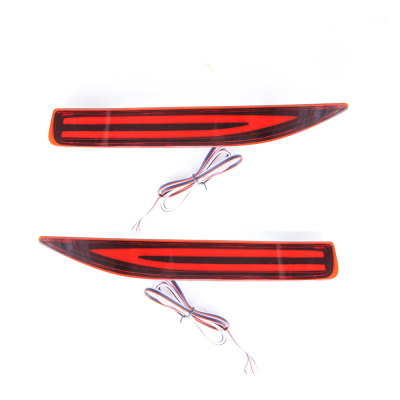
LED Tail Lights Indicator Rear Brake Light Rear Bumper Reflector Tail Lamps
$18.37 - $19.83
MOQ: 20 sets
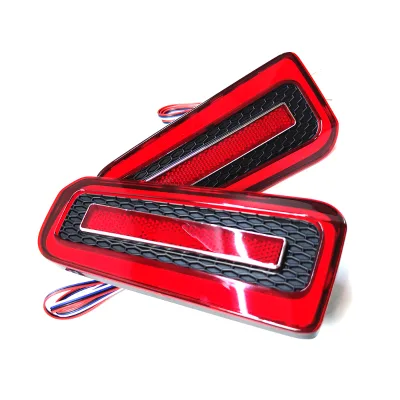

Shanghai Huaqi Industrial Co., Ltd.
- Verified by TUVRHEINLAND
- Trading Company
- China Shanghai
- Lead time15 days
- Avg. response≤ 6h
Main productsCar Mats, Seat Cover, Car Cover, Wiper Blade, Air Compressor, Steering Wheel Cover, Car Lock, Baby Mirror, Car Jack, Racing Seat
Main marketsSouth America,Africa,Southeast Asia/ Mideast,Europe,Australia,North America

Ningbo Langyan International Trade Co., Ltd.
- Trading Company
- China Zhejiang
- Lead time30 days
- Avg. response≤ 6h
Main productsAuto Motorcycle and Trailer Parts, Tools&Hardware, Outdoors&Promotion Items, Toys, Stationery, Daily Use, Arts & Crafts
Main marketsSouth America,Southeast Asia/ Mideast,Europe,Australia,North America

Changzhou Super Auto Parts Co., Ltd.
- Verified by CTI
- Combined
- China Jiangsu
- Lead time30 days
- Avg. response≤ 5h
Main productsAuto Lamp, Auto Mirror, Auto Parts, Bus Lamp, Bus Mirror, Bus Parts, Truck Light, Truck Mirror, Truck Parts, Bus Light
Main marketsSouth America,Southeast Asia/ Mideast,Europe,Australia

Nanjing Jinshuo Technology Co., Ltd.
- Verified by TUVRHEINLAND
- Trading Company,Manufacturer/Factory
- China Jiangsu
- Lead time15 days
- Avg. response≤ 2h
Main productsLED Whips, LED Light Bar, LED Work Light, LED Headlight, LED Neon Rope, LED Strip Light, LED Module, Auto Parts
Main marketsSouth America,Eastern Europe,Mid East,North America,Southeast Asia,Oceania,Western Europe,Africa

DC12/24V White Amber Red Combination Tail Light LED Reverse/Running/Turn Signal/Brake Light
$2.50 - $9.90
MOQ: 10 Pieces

Hangzhou lizhong shengteng Auto Parts Co., Ltd.
- Verified by TUVRHEINLAND
- Trading Company
- China Zhejiang
- Lead time23 days
- Avg. response≤ 8h
Main productsAuto Bumper, Auto Rear Bumper Cover, Auto Rear Mirror, Auto Hood, Auto Head Lamp, Auto Cooling Fan Cover, Auto Radiator
Main marketsSouth America,Eastern Europe,Mid East,North America,Southeast Asia,Eastern Asia,Western Europe




Comprehensive Sourcing Guide
Stop Light LED Tail Lamp Supplier Concentration and Factory Types
When you search for a Stop Light LED Tail Lamp, the supplier pool you see is typically concentrated in eastern China, with one prominent listing based in Shanghai and others in Guangdong province in the south. The Shanghai-based company in these results is a trading company rather than a manufacturer, listing products that originate from Zhenjiang, and it carries an ISO9001:2015 system certification with TUV Rheinland verification. The Guangdong entry lists LED trailer lights among excavator parts, trailer spare parts, and truck components for Volvo, Scania, and DAF, holds SGS verification, and advertises OEM capability. This mix is common: lighting listings often come from trading companies that aggregate factory output across several industrial regions.
Because the displayed results only prove these two locations, do not assume every Stop Light LED Tail Lamp supplier sits in a known cluster. Where evidence is missing, identify clusters yourself by checking each supplier's registered address, the product origin field on individual listings (here shown as Zhenjiang or Shenzhen, Guangdong), and whether the company type is manufacturer or trading company. Trading companies can still be useful for mixed trailer-parts orders, but factories usually offer better unit prices and deeper control over photometric consistency. Ask directly whether the LED lamp is produced in-house or sourced, and request the actual production address. Confirm company type independently, since a listing label is not proof of factory ownership.
How to Verify Stop Light LED Tail Lamp Suppliers
Start with the platform-verified evidence already visible in the results. The Shanghai trading company shows TUV Rheinland verification and an ISO9001:2015 certificate; the Guangdong supplier shows SGS verification. Treat these as screening signals, not final proof. Ask each supplier for the actual ISO9001:2015 certificate number and validity dates, and confirm the certification scope covers automotive lighting assembly, not just general trading. Verification badges tell you an auditing body visited the company; they do not tell you the audit score, the production lines inspected, or whether the audited entity is the one actually building your lamps.
Next, verify product-level compliance. The listed Stop Light LED Tail Lamp products carry CCC and E-mark certifications, with one Guangdong bar lamp stating E-mark certification and ECE and SAE standards. Request copies of the specific E-mark approval documents for the exact model you intend to buy, not a generic certificate covering a different lamp. Cross-check the model number, so an approval for one tail lamp is not silently applied to another. Also confirm the operating voltage stated on the listing (12V or 24V in these results) matches your vehicle fleet, since a 24V truck lamp will fail on a 12V system. Finally, test responsiveness before committing: the Shanghai listing reports a response time of roughly six hours while the Guangdong listing reports around twenty-five hours, a meaningful difference when you need rapid answers during sampling or a quality dispute.
What to Compare Across Stop Light LED Tail Lamp Suppliers
Build a comparison sheet using the attributes suppliers actually display, without assuming all of them publish the same data. Useful dimensions here include lead time, MOQ, response speed, location, verification body, company type, main products, and customization availability. From the current results: the Shanghai trading company shows a 30-day lead time and about a six-hour response time, while the Guangdong supplier shows roughly a 25-hour response time and OEM capability. One listed truck tail lamp starts at an MOQ of 10 pieces, another semi-trailer lamp at 200, a round tail lamp at 100, and a heavy-truck E-mark lamp at 500. Where a supplier displays no value for an attribute, leave the cell blank and ask; never assume parity.
Beyond the labels, compare product-level specifics visible in listings: certification (CCC and E-mark across most listed items), waterproof resistance, packaging format, unit dimensions, LED quantity where stated (one heavy-truck lamp lists 20 LEDs), shell material such as ABS and PMMA, and price ranges that span roughly 3.15 to 10.00 US dollars per unit depending on model. Main-product breadth matters too: a supplier listing only lamps is different from one combining LED trailer lights with excavator and truck spare parts, which affects where your order sits in their priorities. Score each supplier on evidence quality, not just on favorable numbers.
Common Stop Light LED Tail Lamp Sourcing Risks
The most frequent risk in this category is certification mismatch. Listings show CCC and E-mark markings, but markings on a product page are not approvals on file. Suppliers may display a legitimate E-mark certificate for one lamp family and apply the same visual claim to models that were never tested. Always demand the approval document matching the exact model number and verify the approval holder's name. A second risk is buying from a trading company without knowing the factory. The Shanghai listing is explicitly a trading company with products originating in Zhenjiang, so your quality leverage depends entirely on the factory behind the listing, which is not identified in the results.
Third, watch voltage and application mismatches. These listings mix 12V motorcycle lamps, 12V truck lamps, and 24V truck and trailer lamps; ordering the wrong voltage is an expensive, avoidable error. Fourth, MOQ assumptions: displayed minimums range from 10 to 500 pieces in these results alone, and assuming a low trial quantity applies across the catalog will stall your order. Fifth, response-speed risk: a supplier answering in about six hours versus one at roughly 25 hours behaves very differently during a defect investigation. Finally, beware of durability claims you cannot verify, such as a stated 30,000-hour lamp life; ask for the test basis or run your own accelerated aging and waterproof checks before scaling volume.
Stop Light LED Tail Lamp Regional Sourcing and Logistics
The verified location facts here point to two regions: Shanghai in eastern China and Guangdong province in the south, with individual product origins listed as Zhenjiang and Shenzhen, Guangdong. Shanghai offers dense freight-forwarding capacity and frequent sailings, which suits consolidated trailer-parts shipments. Guangdong's Shenzhen is a major electronics and lighting manufacturing zone with strong component availability, useful if your lamp design requires custom PCB or LED sourcing. Zhenjiang, listed as the origin of several Shanghai-company products, is in Jiangsu province, part of the Yangtze Delta industrial belt. Use these facts to plan, but confirm each order's actual ship-from address, because a Shanghai-registered trading company may ship from a factory hundreds of kilometers away.
Logistics planning should account for the displayed 30-day lead time on one supplier listing as a baseline, then add sampling time, certification checks, and inland transit to port. For a Stop Light LED Tail Lamp order, carton packing is the stated norm, with one listing specifying a carton standard of 43.5 by 23.5 by 35 centimeters and another using box packing; request a packing plan and calculate your container fill early. Ask which port the goods actually leave from, whether FOB terms are offered from that port, and how waterproof packaging protects lamps during sea transit. For mixed orders combining lamps with heavier trailer or truck parts, confirm the lamps are packed separately to avoid lens damage.
Stop Light LED Tail Lamp Commercial Terms and Order Planning
Structure your first order to control cash exposure while generating real quality data. Given displayed MOQs ranging from 10 to 500 pieces on listed Stop Light LED Tail Lamp models, a sensible plan is a small pilot order at the lowest permitted quantity on your chosen model, followed by a scaled order only after inspection. Use the displayed price ranges as anchors: listed lamps span roughly 3.15 to 3.50, 5.00 to 5.15, 5.50 to 5.57, 6.00 to 6.50, and up to 10.00 US dollars, but treat every figure as a starting point for negotiation and reconfirm the price against your exact model, quantity, and customization level, since all these listings state customization is available.
On terms, align payment structure with supplier verification: with a TUV Rheinland-verified trading company holding ISO9001:2015 and an SGS-verified Guangdong supplier, standard deposit-plus-balance terms are reasonable, but consider escrow or third-party inspection for the first transaction regardless. Plan against the 30-day lead time shown on one listing, adding buffer for the certification document checks described earlier. Agree in writing on packaging (carton or box packed, as listed), neutral or custom labeling, warranty handling for failed lamps, and the acceptance standards, referencing E-mark and CCC requirements where applicable. Set response-time expectations too, since a supplier documented at roughly six hours versus 25 hours will shape how quickly claims and revisions move. Confirm all commercial terms in a signed proforma invoice before production starts.
Word count check: each section was drafted to the 225-235 range and the total falls within 1350-1450 words.
FAQs
What is a typical MOQ for LED stop tail lamps from suppliers?
Minimum order quantities vary widely by product model. Some trading suppliers list MOQs as low as 10 pieces for truck and trailer tail lights, while multifunctional lamps may require 100 to 200 pieces and heavy truck combination lamps up to 500 pieces. Confirm the MOQ for your specific model before requesting quotes, since lower MOQs often carry higher unit prices.
What certifications should LED tail stop lamps have for export?
Most listings on this page show CCC and E-mark certification, and some trailer lamps carry SAE and ECE approvals. E-mark approval is generally required for road-legal use in European markets, while CCC applies in China. Always request the actual certificate documents and verify the approval number matches the lamp model before placing an order.
What voltages are available for LED stop tail lamps?
Listed products include both 12V and 24V options. The 12V versions typically suit motorcycles, light trucks and pickups, while 24V lamps are common for heavy trucks, semi trailers and commercial fleets. Check your vehicle's electrical system before ordering, and note that some suppliers list the same lamp body in multiple voltage variants on request.
Are LED tail lamps waterproof enough for trailer use?
Yes, the products listed specify waterproof resistance, and trailer lamps face constant spray, mud and pressure washing. Materials include LED lenses with ABS or PMMA housings on some models. Ask the supplier about the ingress protection rating and sealing method, and consider requesting a sample to test under real operating conditions before committing to volume.
What are typical prices and lead times for these LED tail lamps?
Unit prices on this page range from roughly 3 to 10 US dollars depending on the model, function count and order quantity. One Shanghai-based trading supplier lists a 30-day lead time. Lead times can extend for customized or high-volume orders, so confirm the production schedule and shipping terms in writing before confirming your purchase order.
Can I get customized LED stop tail lamps with my own branding?
Yes, customization is marked as available on the listed products, and several suppliers state OEM capability or neutral packing that accepts customer requirements. Customization may affect MOQ, unit price and lead time, particularly for private labels or modified lens colors. Discuss artwork, packaging and certification implications early, since customized lamps may need re-approval for E-mark compliance.