Swivel Slaughter Hanging Hook Suppliers and Manufacturers
Explore 19 verified suppliers offering swivel slaughter hanging hooks with customizable models and automatic features. Compare response times, lead times, certifications, and pricing to select the right partner for your slaughtering line needs today; review the available evidence before requesting comparable quotations from suitable candidates.
Suppliers List

Zhucheng Changhe Machinery Technology Co., Ltd.
- Verified by SGS
- Combined
- China Shandong
- Lead time30 days
- Avg. response≤ 3h
Main productsSlaughtering Equipment
Main marketsDomestic

Stainless Steel Chicken Slaughter Hook Slaughterhouse Hooks Hanging Hook
$25.00 - $50.00
MOQ: 1 Pieces


Slaughterhouse Rolling Meat Hanging Trolley Hooks/Sheep Slaughtering Equipment Hooks for Meat
$25.00 - $50.00
MOQ: 1 Pieces

Stainless Steel Slaughtering Hook Hook for Hanging Pigs, Cattle and Sheep
$25.00 - $50.00
MOQ: 1 Pieces


Stainless Steel Slaughtering Hook, Suitable for Cattle, Sheep, and Pig Slaughtering Lines
$25.00 - $50.00
MOQ: 1 Pieces

- Verified by SGS
- Manufacturer/Factory
- China Shandong
- Lead time0 days
- Avg. response≤ 2h
Main productsRigging Hardware, Shackles, Wire Rope Clips, Thimbles, Snap Hook, Carabiners, Swivels, Hooks, Marine Hardware, Swivel Snap Hook
Main marketsSouth America,Eastern Europe,North America,Southeast Asia,Eastern Asia,Oceania,Western Europe,Africa


Heavy Duty Stainless Steel Swivel Meat Hook for Butcher, Bacon, Ham, and Carcass Hanging
$4.30 - $4.50
MOQ: 100 Pieces


High Quality Heavy Duty Stainless Steel Butcher Swivel Double Food Hanging/Fish Meat Hook
$3.62 - $3.76
MOQ: 100 Pieces
Zhenbang (Guangdong) Machinery Technology Co., Ltd.
- Verified by TUVRHEINLAND
- Combined
- China Guangdong
- Lead time30 days
- Avg. response≤ 10h
Main productsSlaughtering Equipment, Meat Processing Equipment, Poultry Slaughter Line, Conveying Line, Cattle Slaughter Line, Pig Slaughter Line, Sheep Slaughter Line, Plucking Machine, Chicken Cleaning Machine, Cattle Equipment
Main marketsSoutheast Asia/ Mideast


Carcass Hanging Hook Butchers Hanging Meat Rails Pig Carcass 304 Stainless Steel Hanging Hook
$500.00 - $4800.00
MOQ: 1 Sets

Chicken-Hanging-Hook Chicken Deboning Hook Chicken Slaughterhouse Hanging Hook
Contact supplier
MOQ: 100 Pieces

Chicken Evisceration Hook Eviscerating Shackle Hanging Hook and Rail Catcher Hook Slaughter Hooks
Contact supplier
MOQ: 100 Pieces

Beef Slaughtering Hook Lowering Rolling Hook Slaughter Sheep Slaughtering Hooks
Contact supplier
MOQ: 100 Pieces

Contact supplier
MOQ: 100 Pieces
Foshan Nanhai Qili Hardware And Spring Products Factory
- Manufacturer, Distributor/Wholesaler, Other
- Guangdong, China
- Lead time0 days
- Avg. response≤ 2h
Main productsSpring hardware,Constant Force Spring,Flat Wire Spring,Torsion Spring,Irregular Spring
Main marketsSouth Asia(10.00%), Eastern Europe(10.00%), North America(10.00%)

- Combined
- China Zhejiang
- Lead time30 days
- Avg. response≤ 11h
Main productsButcher Knife, Meat Grinder Knife, Commercial Kitchen Knives, Slaughtering Knives, Butchery Supply Knives Tools, Meat Mincer Knives Blades
Main marketsSouth America,Africa,Southeast Asia/ Mideast,East Asia(Japan/ South Korea),Domestic,Europe,Australia,North America
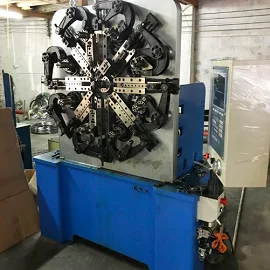
Jieyang Jianyang Hardware Factory
- Manufacturer, Trading Company
- Guangdong, China
- Lead time15 days
- Avg. response≤ 1h
Main productsStainless Steel Pegs,Sock Hangers,Trouser Racks,Clothes hanger,Stainless steel hooks
Main marketsDomestic Market(30.00%), Oceania(30.00%), North America(20.00%), Western Europe(8.00%), Northern Europe(7.00%), Eastern Europe(3.00%), Southern Europe(2.00%)

Dongguan Bosin Hardware Co., Ltd.
- Trading Company
- China Guangdong
- Lead time15 days
- Avg. response≤ 2h
Main productsKey Ring, Snap Hooks, Ball Chain, Carabiner, Metal Clips, Metal Rings, Metal Buckle, Stainless Steel Chains, Key Chain, Bottle Opener
Main marketsEurope,North America

Linyi City Yuantong Hardware Rigging Co., Ltd.
- Verified by TUVRHEINLAND
- Combined
- China Shandong
- Lead time15 days
- Avg. response≤ 5h
Main productsGalvanized Chain, Link Chain, Weld Chain, Iron Chain, Common Chain, DIN766 Short Link Chain, Galvanzied Link Chain, Long Link Chain, Medium Chain, DIN5685A Short Link Chain
Main marketsSouth America,Southeast Asia/ Mideast,East Asia(Japan/ South Korea)

Dongguan Weihui Hardware Spring Products Co., Ltd.
- Verified by CTI
- Combined
- China Guangdong
- Lead time30 days
- Avg. response≤ 7h
Main productsSpiral Springs, Tension Springs, Compression Springs, Trampoline Springs, Auger Feeder for Poultry, Torsion Spring, Spring Clips
Main marketsSouth America,East Asia(Japan/ South Korea),Europe

Qingdao Raniche Machinery Technology Co., Ltd.
- Manufacturer
- China Shandong
- Lead time60 days
- Avg. response≤ 8h
Main productsSlaughtering Equipment
Main marketsAfrica,Southeast Asia/ Mideast

Chicken Hanging Hook for Chicken Killing Line / Poultry Slaughter Machine Accessory
$10000.00 - $90000.00
MOQ: 1 Sets

Poultry Slaughtering Hook for Chicken Carcass Processing (chicken hanger)
$10000.00 - $90000.00
MOQ: 1 Pieces


Contact supplier
MOQ: 1 Sets

Yantai Guocheng Metal Products Co., Ltd
- Verified by TUVRHEINLAND
- Manufacturer/Factory
- China Shandong
- Lead time90 days
- Avg. response≤ 1h
Main productsStructural Steel Fabrication, Pressure Vessels, Weldments Structure Steel, Idlers, Transmission Shaft, Roller, Bottom Skid, Bracket, Riveting and Welding Parts, Sandblasting and Painting Parts
Main marketsNorth America,Southeast Asia,Eastern Asia,Western Europe

Stainless Steel Duck Hook - Chicken Hook for Slaughtering and Butchering
$9.00 - $15.00
MOQ: 20 Pieces


Best Seller Poultry Slaughtering Machinery Hooks Chicken Poultry Slaughter/Hook/Slaughter Hook
$9.90 - $15.90
MOQ: 500 Pieces


Dongguan Yibecs Mechinery & Equipment Co., Ltd.
- Verified by SGS
- Manufacturer
- China Guangdong
- Lead time15 days
- Avg. response≤ 13h
Main productsPolyester Lanyard, Dog Hook, Lanyard Accessories, Lanyard Heat Transfer Machine, Lanyard Ultrsonic Welding Machine
Main marketsEurope,North America


High Quality Metal Buckle Spring Metal Hooks Buckle Swivel Clip Snap Hook
$0.05 - $0.06
MOQ: 1000 Pieces

Hot Selling Trigger Snap Lanyard Accessories Swivel Hooks Lobster Hook Metal Hook
$0.03 - $0.03
MOQ: 1000 Pieces


Qingdao H-Ding Rigging Co., Ltd.
- Verified by TUVRHEINLAND
- Trading Company,Manufacturer/Factory
- China Shandong
- Lead time45 days
- Avg. response≤ 4h
Main productsShackle, Rigging, Hook, Wire Rope Clips, Chain, Nuts, Bolts, Turnbuckle, Stainless Steel, Load Binder
Main marketsSouth America,Eastern Europe,Mid East,North America,Southeast Asia,Eastern Asia,Oceania,Western Europe

High Quality Stainless Steel 304/316 Scissor Snap Hook Carabiner Lobster Claw Swivel Snap Hook
$0.10 - $1.00
MOQ: 1 Pieces


- Manufacturer/Factory
- China Jiangsu
- Lead time23 days
- Avg. response≤ 2h
Main productsRoller Chain, Conveyor Chain, Welded Link Chain, Forged Parts, Sprocket /Gear/ Bushing, Scraper Chain, Chain Conveyor, Transmission Spare Parts, Overhead Conveyor, Conveyor System
Main marketsSouth America,Eastern Europe,Mid East,North America,Southeast Asia,Eastern Asia,Oceania,Western Europe,Africa


Hot Zinc Dipped Hanger and Stainless Steel Slide Hook for Slaughter House
Contact supplier
MOQ: 10 Pieces


Qingdao Haosail Machinery Co., Ltd
- Verified by TUVRHEINLAND
- Combined
- China Shandong
- Lead time15 days
- Avg. response≤ 2h
Main productsMarine Mooring Products, Chain and Fittings, Mooring Rope, Marine Aquaculture Cages, Fishing Nets, Lifting and Rigging Hardware, Anchors and Sinkers, Pearl Nets, Shackles, Fishing Cages
Main marketsSouth America,Southeast Asia/ Mideast,Australia

LINYI ORIENT SUN MACHINERY CO.,LTD
- Trading Company
- SHANDONG, China
- Lead time30 days
- Avg. response≤ 9h
Main productsMEAT GRINDER,BONE SAW MACHINE,SAUSAGE STUFFER,MEAT GRINDER KNIFE AND PLATES,BONE SAW BLADES
Main marketsSouth America(20.00%), North America(15.00%), Southeast Asia(15.00%), Eastern Europe(15.00%), Mid East(15.00%), Africa(10.00%), Oceania(5.00%), Central America(5.00%)

Zhucheng Haoze Machinery Co., Ltd
- Verified by SGS
- Combined
- China Shandong
- Lead time30 days
- Avg. response≤ 3h
Main productsSlaughter Line(Chicken/Duck/Goose/Quail), Screw Chiller, Chicken Plucker Machine, Scalding Machine, Cage Washing Machine, Poultry Slaughtering Equipment, Chicken Claw Processing Line, Force Spray Machine, Segmentation Machine, Small Size Slaughtering Line
Main marketsEast Asia(Japan/ South Korea),Domestic


Stainless Steel Safe and Durable Poultry Hooks in Various Models for Slaughtering
$3.50 - $4.00
MOQ: 1 Pieces


Changshu Slaughterhouse Equipment Co., Ltd.
- Combined
- China Jiangsu
- Lead time45 days
- Avg. response≤ 6h
Main productsSlaughtering Equipment, Slaughterhouse Equipment, Meat Processing Equipment
Main marketsAfrica,Southeast Asia/ Mideast,Domestic,Europe

Shandong Licheng Link Chain Co., Ltd.
- Verified by TUVRHEINLAND
- Trading Company
- China Shandong
- Lead time15 days
- Avg. response≤ 7h
Main productsLink Chain, Shackle, Wire Rope Clips, Hook, Turnbuckle, Wire Rope, Aluminum Sleeves, Thimble, Eye Bolt, Anchor Chain
Main marketsSouth America,East Asia(Japan/ South Korea),Europe
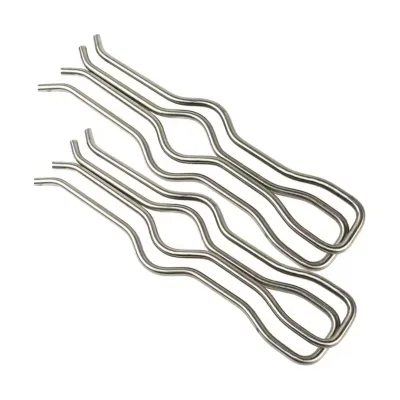
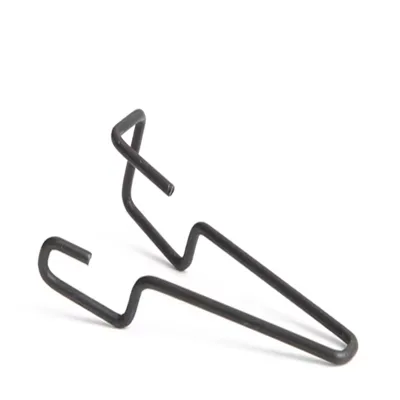


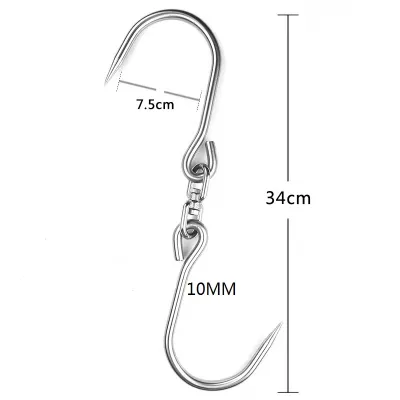




Comprehensive Sourcing Guide
Swivel Slaughter Hanging Hook Supplier Concentration and Factory Types
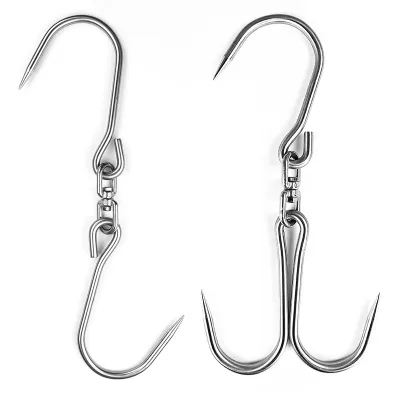
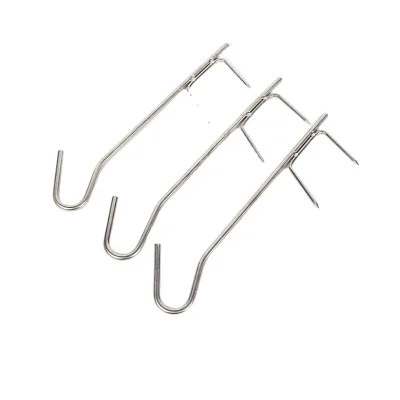
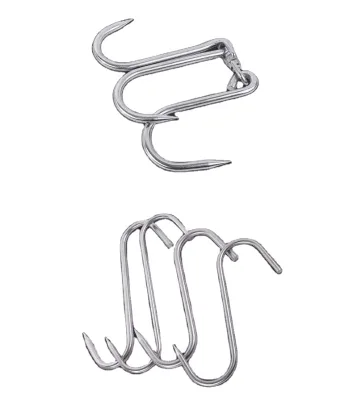
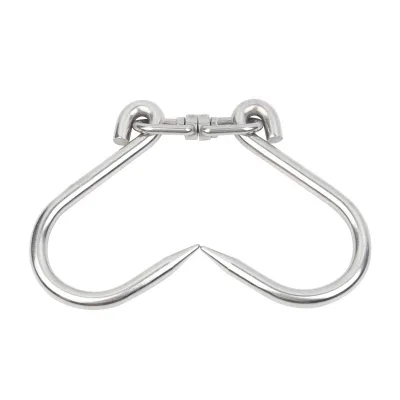
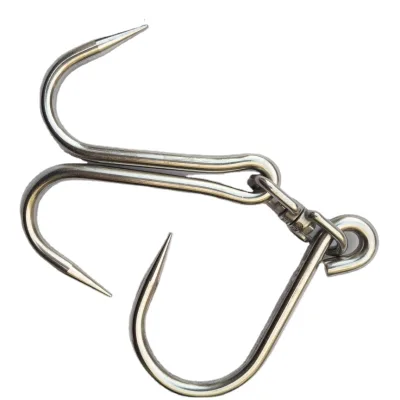
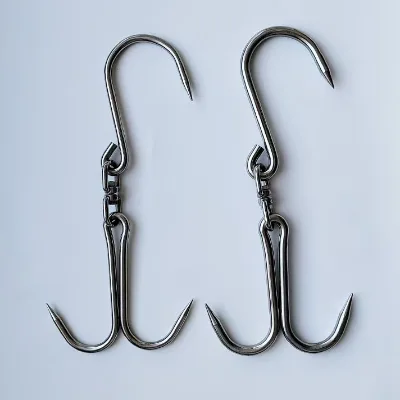
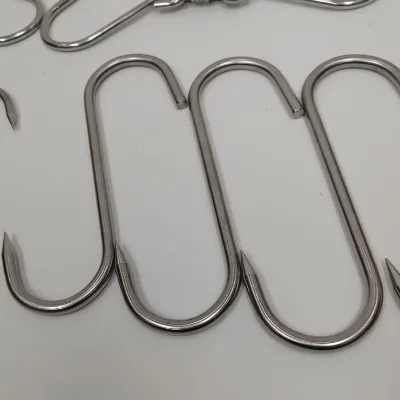
The supplier results for this category point to Shandong, China as a clearly evidenced sourcing location, with listings describing slaughterhouse hooks, hanging trolley hooks, and swivel meat hooks originating from that province. Buyers should therefore treat Shandong as a genuine cluster for slaughtering equipment and rigging-style hardware, both of which overlap in this product space. One set of suppliers in the results specializes in slaughtering equipment for chicken, duck, goose, pig, cattle, and sheep applications, while another set focuses on rigging hardware including shackles, snap hooks, carabiners, and swivel snap hooks. This overlap matters because a Swivel Slaughter Hanging Hook can come from either an abattoir-line specialist or a forging and rigging factory.
The company types shown also differ meaningfully. Some results are labeled as combined companies, which typically combine manufacturing with trading functions, while others are identified as manufacturer or factory operations. Manufacturer or factory suppliers in this category offer OEM and ODM capability, which suggests in-house tooling and the ability to modify hook dimensions, materials, or swivel designs. Combined suppliers may source hooks alongside a broader slaughtering-line accessory catalog. When you shortlist, note which type each listing displays, because factory-direct sourcing usually gives you better control over material grade and weld quality, whereas combined suppliers may consolidate a full line of slaughter equipment plus hooks in one order.
How to Verify Swivel Slaughter Hanging Hook Suppliers
Verification for this category should start with third-party verification badges shown on the listing. The results include at least one supplier verified by SGS, which is an independent inspection credential and a stronger signal than self-declared claims. Another supplier displays system certifications including ISO 9000 and GMP, which indicate a documented quality management system and, in the case of GMP, hygiene-oriented production practices relevant to food-contact hardware. If a listing shows none of these badges, ask the supplier directly for a quality management certificate and material test documentation, and verify the certificate number with the issuing body before committing.
Beyond badges, confirm the supplier's actual production capability rather than the catalog breadth. A manufacturer or factory label is more reassuring than an unknown company type, but you should still request evidence such as photos or video of forging, casting, or welding lines, and sample swivel rotation tests to confirm smooth operation under load. Because these hooks carry carcass weight on overhead rails, ask whether the supplier can provide load-rating documentation and stainless steel grade confirmation, since at least one result specifies 304 stainless steel explicitly while others state only stainless steel generically. Request physical samples before bulk orders, test them in your line conditions, and check whether the supplier's stated customization capability covers size, logo lasering, and surface finish as some listings advertise.
What to Compare Across Swivel Slaughter Hanging Hook Suppliers
Build a comparison table using the attributes actually displayed on each listing, remembering that not every supplier shows every field. Useful dimensions include lead time, minimum order quantity, average response time, location, company type, verification status, and main products. In the current results, response times range roughly from about 1.3 hours to about 2.9 hours, which is a meaningful spread when you are iterating on specifications across several candidates. Lead times shown range from a listing indicating 30 days to one showing no displayed lead time at all, so treat missing values as questions to ask rather than advantages to assume.
MOQs also differ sharply between supplier types in this category. Slaughter equipment specialists in the results list MOQs as low as one piece on individual hook models, with prices spanning roughly $25 to $50 per unit, while rigging hardware factories quote in the range of about $2 to $4.50 per hook but with MOQs around 100 pieces. That difference in unit price likely reflects different constructions, scales, and product families, so compare like with like: request the same specification, material grade, and dimensions from each supplier before comparing quotes. Also compare engineering support, since ODM and OEM capability determines whether a supplier can adjust hook curvature, swivel diameter, or packaging to your abattoir line.
Common Swivel Slaughter Hanging Hook Sourcing Risks
The most common risk in this category is material ambiguity. Some listings specify 304 stainless steel, while many others state only stainless steel without a grade. For hooks exposed to washdown environments, blood, and cleaning chemicals, the difference between 304 and unspecified or lower grades can mean corrosion failure within months. Mitigate this by writing the grade into the purchase contract, requesting material certificates for each batch, and conducting salt spray or spot-etching checks on received goods. Another risk is unverified load capacity: a swivel hook hanging carcasses fails dangerously if the swivel pin or weld is undersized, so insist on rated load data and destructive testing on samples.
Supplier-side risks include misrepresenting company type. A combined company may present itself as a full manufacturer when it actually outsources hooks from a nearby forge, which lengthens your defect-resolution path. Also watch for listings where the displayed price range is broad, such as the $25 to $50 spread in these results, because that often signals model variants bundled under one listing rather than a stable unit price. Hidden costs appear frequently: quotes may exclude packaging upgrades, laser logo marking, or swivel-function testing. Finally, be cautious when a lead time field is empty or when a supplier advertises very fast responses but slow written quotations, since inconsistency here often predicts production-stage communication problems.
Swivel Slaughter Hanging Hook Regional Sourcing and Logistics
Shandong is the evidenced location across these supplier results, appearing both as a declared supplier location and as a stated place of origin on individual products. This matters for logistics planning: sourcing both your slaughter equipment accessories and your rigging-style swivel hooks from one province can consolidate shipments, reduce inland freight, and simplify container planning. If you source outside this region, ask suppliers where production actually occurs, because a trading desk in one city may ship from a factory in another, affecting pickup costs and inspection scheduling.
On logistics mechanics, note the packaging differences visible in the results. Slaughtering equipment suppliers pack hooks in wooden boxes, which suits export freight and protects finished surfaces, while rigging factories use small boxes plus cartons and pallets or plain cartons. Wooden packaging for export generally requires heat treatment or fumigation certification depending on destination regulations, so confirm this with your forwarder early. Product dimensions matter too: listings show sizes such as M12 by 300mm or 330mm and weights around 0.4 to 0.8 kilograms per hook, so you can calculate per-carton weights and pallet loads accurately from listing data before shipping. Whether a supplier offers OEM or ODM, including logo lasering as some listings indicate, also affects whether you need marking equipment verification on arrival. Always confirm the actual dispatch date after deposit rather than relying solely on displayed lead time fields.
Swivel Slaughter Hanging Hook Commercial Terms and Order Planning
Order planning should combine the sample stage, a trial production run, and a scaled repeat order. Because some listings here show an MOQ of one piece, you can legitimately order single sample units from slaughtering-equipment suppliers to test in your line, but from rigging factories expect the roughly 100-piece MOQ shown in the results, so budget samples accordingly or negotiate a sample-and-return allowance against your first bulk order. When quoting, ask for a price breakdown covering unit cost, packaging, marking, and testing, since displayed ranges like $3.07 to $3.21 or $4.30 to $4.50 suggest tight bands that may shift with volume or finish.
On payment and risk terms, use staged payments tied to milestones such as deposit, production completion, and pre-shipment inspection, and consider escrow or trade-assurance-style protection where the platform offers it, since results note escrow availability as a comparison dimension on some listings. Confirm what the displayed lead time covers: one listing shows 30 days, another shows no value, and one product lists a production cycle of 7 to 15 days, so clarify whether quoted times include sampling, finishing, and container loading. Plan reorders around your abattoir's hook attrition rate, keep a documented specification sheet with grade, dimensions, and swivel torque requirements, and lock pricing for a defined validity period to protect against raw material movement.
Word count check: Section 1: 231 | Section 2: 232 | Section 3: 232 | Section 4: 233 | Section 5: 233 | Section 6: 231 | Total: 1392 words.
FAQs
What materials are commonly used for swivel slaughter hanging hooks?
Most swivel slaughter hanging hooks are made from stainless steel, including 304 stainless steel, for corrosion resistance and hygiene in wet slaughterhouse environments. Polished surfaces are common for easier cleaning. Buyers should confirm the specific grade, surface finish, and load rating with each supplier before ordering, since material specifications vary between products and production lines.
Which animals can these slaughter hanging hooks be used for?
Listed hooks cover chicken, duck, goose, pig, cattle, and sheep applications, so one hook type can serve poultry and red-meat lines. Suitability depends on hook size, weight capacity, and rail system. Always check the stated application range and dimensions against your slaughter line requirements before purchasing, and request samples to confirm fit.
Can swivel slaughter hanging hooks be customized?
Yes, customization is listed as available on many hook listings, and OEM or ODM capability appears among supplier capacities. Buyers can typically request sizes, logos, or packaging adjustments. Provide drawings or samples early, confirm customization affects price and lead time, and agree on approval samples before mass production begins to avoid rework.
What is the typical price range for slaughter hanging hooks?
Observed listings range widely: stainless steel S-hooks and swivel hooks appear around roughly 2 to 5 US dollars per piece, while specialized slaughtering hooks list between about 25 and 50 US dollars. Prices depend on material, size, swivel design, and order volume. Request itemized quotations and confirm what is included, such as packing and customization.
What minimum order quantity should buyers expect?
Minimum order quantities vary by product type. Some specialized slaughtering hooks list an MOQ of one piece, which suits trial orders and spare-part purchases, while stainless steel rigging-style hooks may have an MOQ around 100 pieces. Confirm the exact MOQ per model before negotiating, as customized versions often carry higher minimums.
How long does production and delivery usually take?
Listed lead times include around 30 days for some slaughtering equipment suppliers, and one hook product states a production cycle of 7 to 15 days. Actual timing depends on order size, customization, and shipping method. Ask each supplier for a written production schedule and confirm whether the quoted lead time covers packing and dispatch.
How are slaughter hooks typically packed for export?
Common packing methods in the listings include wooden boxes for slaughtering hooks and small boxes plus cartons on pallets for stainless steel S-hooks. Wooden boxes protect swivel mechanisms during long transit. Confirm packing style, carton markings, and gross weight with the supplier, and request photos of finished packaging before goods leave the factory.
How quickly do these hook suppliers usually respond to inquiries?
Recorded average response times among listed suppliers range from about 1.3 to 3 hours, so most inquiries receive replies within the same working day. Response speed can vary with time zone and workload. Send detailed requirements including material, size, quantity, and destination market to get accurate quotations on the first reply.