Trowel Sponge Float Suppliers and Manufacturers for Construction
Browse 10 Trowel Sponge Float suppliers and compare grounded dimensions such as location, MOQ, lead time, response speed, customization options and verification status. Listings span sponge, rubber and EVA foam floats in common 4x12 inch and 5x12 inch sizes. Shortlist candidates and request free samples before committing to an order.
Suppliers List

Shandong Best Import and Export Co., Ltd.
- Verified by SGS
- Trading Company
- China Shandong
- Lead time30 days
- Avg. response≤ 8h
Main productsPlastering Trowel, Hammer, Axe, Carpenter Pencil, Wrecking Bar, Bricklaying Trowel, Solar Panel, Other Hardware Tools
Main marketsSouth America,Africa,Southeast Asia/ Mideast,East Asia(Japan/ South Korea),Domestic,Europe,North America


Building Material Green Sponge Trowel Float with EVA Foam and Custom Logo
$1.00 - $1.30
MOQ: 1200 Pieces

Hipex Industrial Products Co., Ltd. Hunan
- Trading Company
- China Hunan
- Lead time23 days
- Avg. response≤ 25h
Main productsTools, Hand Tools, Architectural Hardware & Tools, Hardware & Tools, Decorating Tools
Main marketsSouth America,Others(foreignTradeCapacity.exportBusinessCapacityMarketOther),Europe

Changzhou Dengyue Polymer Group Co., Ltd.
- Verified by CTI
- Combined
- China Jiangsu
- Lead time15 days
- Avg. response≤ 4h
Main productsFoam, Sponge, Foam Rubber, EPDM, Cr, PVC, PU, Filter Foam, PE/EVA, NBR
Main marketsSouth America,Africa,Southeast Asia/ Mideast,East Asia(Japan/ South Korea),Domestic,Europe,Australia,North America


Sponge Float Trowel Handle Hand Trowels Practical for Grouting Caulking Concrete
$1.75 - $3.00
MOQ: 1000 Pieces


- Verified by BV
- Trading Company
- China Hunan
- Lead time23 days
- Avg. response≤ 7h
Main productsPaint Roller, Putty Knife, Caulking Gun, Paint Brush, Trowel, Bricklaying Trowel, Scraper, Float Trowel, Paint Mixer, Wallpaper Roller
Main marketsSouth America,Southeast Asia/ Mideast,Europe
- Manufacturer
- Zhejiang, China
- Lead time30 days
- Avg. response≤ 2h
Main productsSanding Block,Float Trowel,Hammers,Axes,Picks
Main marketsMid East(16.67%), Eastern Europe(16.67%), South America(16.67%), Eastern Asia(16.67%), Southeast Asia(16.60%), North America(16.00%)

- Verified by SGS
- Trading Company,Manufacturer/Factory
- China Zhejiang
- Lead time0 days
- Avg. response≤ 8h
Main productsTools, Car Equipments, Rubber Material, Auto Parts, Slipper, Construction Hand Tool, Garden Tools, Hardware Tools, Food Packing Material
Main marketsSouth America,Eastern Europe,Mid East,North America,Southeast Asia,Eastern Asia,Oceania,Western Europe,Africa

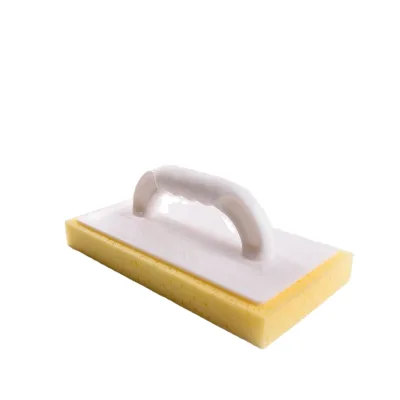
Plastic Rubber Plastering Sponge Foam Float Cleaning Grout Floats Trowel
$1.20 - $2.00
MOQ: 1000 Pieces


Factory Price Manufacturer Masonry Green Sponge Grout Floats Floats Trowel
$1.20 - $2.00
MOQ: 1000 Pieces

Hot Sell White Soft Concrete Plastic PU Rubber Foam Sponge Grout Floats Trowel
$1.20 - $2.00
MOQ: 1000 Pieces

$1.20 - $2.00
MOQ: 1000 Pieces

- Trading Company
- Hunan, China
- Lead time30 days
- Avg. response≤ 7h
Main productsTrowel, Paint Brush, Paint Roller, Foam Trowel, All Kinds of Hand Tools
Main marketsEastern Europe(50.00%), Southeast Asia(10.00%), Western Europe(7.00%), Oceania(5.00%), Africa(5.00%), Domestic Market(5.00%), Mid East(5.00%), Eastern Asia(3.00%), North America(3.00%), South America(3.00%), South Asia(1.00%), Southern Europe(1.00%), Central America(1.00%), Northern Europe(1.00%)
$1.35

Stepro Tools Group (Zhenjiang) Co., Ltd.
- Trading Company,Manufacturer/Factory
- China Jiangsu
- Lead time60 days
- Avg. response≤ 3h
Main productsBrushes, Rollers, Trowels, Scrapers, Diamond Cutting Blade, Electric Tools, Caulking Guns, Construction Materials, Machines, Other Painting Tools
Main marketsSouth America,Eastern Europe,North America,Western Europe,Africa

Zhangzhou Builder Hardware Co., Ltd.
- Verified by TUVRHEINLAND
- Combined
- China Fujian
- Lead time60 days
- Avg. response≤ 4h
Main productsConstruction Tools, Building Tools, Concrete Tools, Flooring, Trowel, Hardware, Magnesium, Placer, Float, Scraper
Main marketsSouth America,North America

Tongcheng Ruida Paint Tools Co., Ltd.
- Verified by SGS
- Combined
- China Anhui
- Lead time15 days
- Avg. response≤ 5h
Main marketsSouth America


Premium Green Coarse Sponge Float Trowel with Durable Handle for Tile Grouting
$0.20 - $1.50
MOQ: 1 Pieces

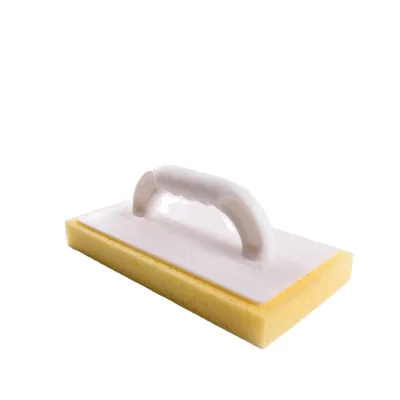
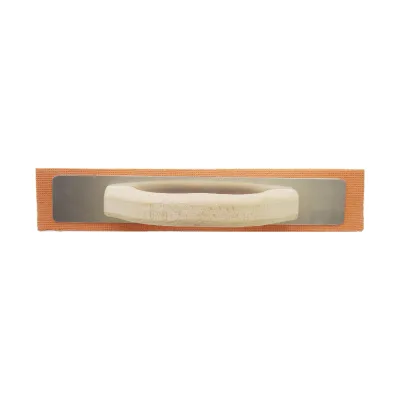
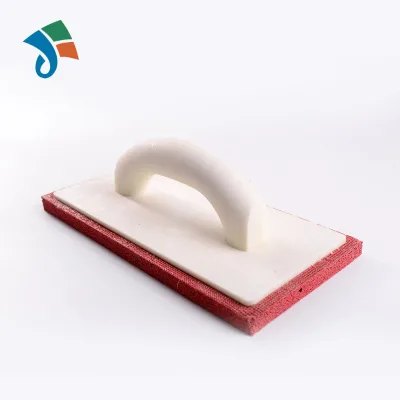
Professional Orange Rubber Sponge Float Trowel with White Plastic Handle for Plastering
$0.20 - $2.00
MOQ: 1 Pieces

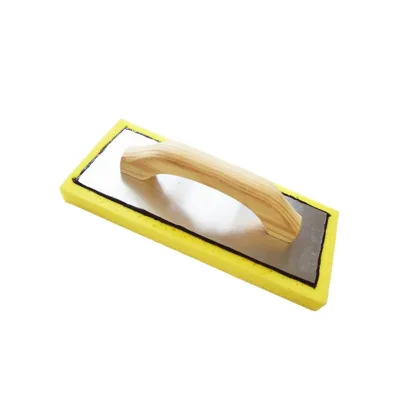
Durable Yellow Sponge Grout Float Trowel with Ergonomic Handle for Wall Finishing
$0.20 - $2.00
MOQ: 1 Pieces




Comprehensive Sourcing Guide
Trowel Sponge Float Supplier Concentration and Factory Types
When sourcing a Trowel Sponge Float, buyers encounter two broad supplier archetypes on B2B platforms: manufacturers that mold foam pads and assemble handles in-house, and trading companies that consolidate trowels with wider hardware catalogs such as hammers, axes, wrecking bars and bricklaying tools. A trading company profile listing plastering trowels alongside solar panels and carpenter pencils, for example, signals breadth rather than depth in this category. Neither type is inherently better; trading companies often simplify mixed-container loading, while focused producers may offer tighter control over foam density and bonding quality. The current search landscape includes suppliers based in Shandong and Hunan provinces, which gives buyers two regional starting points rather than a single dominant cluster.
Because platform search results change, buyers should not assume the suppliers visible today represent the full manufacturing base. To identify real clusters independently, cross-check where listed products were actually produced — one listed product records its origin as Guangdong even though the supplier profile shows Hunan — by asking each supplier for the producing factory's address and business license. Review whether the product range centers on plastering tools or merely includes them, and check for ODM and OEM capability, which appears on some profiles and indicates willingness to produce to your specification. Verifying that a supplier's main products genuinely include hand tools, rather than decoration or architectural hardware alone, helps separate credible float producers from resellers.
How to Verify Trowel Sponge Float Suppliers
Verification should begin with the platform's own signals, then move to documents you request directly. Some profiles carry third-party verification badges such as SGS, which confirms that basic company information has been audited, but this does not certify product quality. Check the company type field — one current listing identifies itself as a trading company — and treat that disclosure as useful context for deciding whom you are actually contracting with. Request the producing factory's name and location, a business license, and photos or videos of the foam molding and handle-assembly lines. For a bonded sponge float, the adhesive layer between foam and backing plate is the most common failure point, so ask specifically how lamination is performed and what happens if delamination occurs in the field.
Product-level evidence is easier to verify than claims. Current listings show concrete attributes you can test: blade materials described as foam sponge, rubber sponge or EVA foam; sizes such as 12"x4" and 5"x12"; thicknesses of 19mm, 2cm and 2.5cm; wooden or plastic handles; and aluminum plates on some models. Order free samples — at least one listing states samples are free — and stress-test the bond, foam recovery and handle fit. Compare the sample against the stated attributes exactly; if a listing claims a 19mm pad and the sample measures differently, treat that as a material red flag. Always confirm whether customization is genuinely available, since many listings state so but not all factories support custom logos in practice.
What to Compare Across Trowel Sponge Float Suppliers
Build a comparison sheet using the attributes platforms actually display, without assuming every supplier shows every field. Useful dimensions include lead time, MOQ, average response time, location, company type, main products, and whether ODM/OEM services are offered. Current results illustrate meaningful spread: one Shandong-based trading company lists a roughly 30-day lead time with a response time of about 7 hours, while a Hunan-based tools supplier shows a 23-day lead time but responds in roughly 24 hours. A faster reply does not guarantee faster production, so weight these figures according to your urgency: quick responses matter during sampling and dispute resolution, while lead time governs your replenishment calendar.
Also compare product-specific economics visible in the listings. One sponge float listing shows an MOQ of 1,200 pieces with unit prices of roughly $1.00–1.30, while another shows an MOQ of 2,000 pieces and a maximum price near $1.20, and a rubber sponge trowel lists an MOQ of 1,000 pieces with a much wider price band. Daily output is disclosed in some cases — one listing claims 2,000 pieces per day — which indicates whether a supplier can absorb large repeat orders. Compare packing details too, since listings vary between OPP bag plus carton and 50 pieces per carton, which affects your freight volume. Request quotes on identical specifications before judging price differences, because foam density and pad thickness changes can shift cost significantly.
Common Trowel Sponge Float Sourcing Risks
The most frequent quality risk in this category is pad failure: foam that delaminates from the aluminum or plastic plate, crumbles after a few days on wet cement, or is supplied in a lower density than sampled. Listings advertise different densities and colors — yellow, green, black — and buyers who do not specify density in writing often receive whatever stock the factory prefers. Handle quality is a second risk; wooden handles can crack or arrive with loose ferrules, while plastic handles vary widely in stiffness. Specified thickness also drifts in practice: a listing may state 19mm but ship 15mm equivalents, so measure every incoming batch against the agreed specification.
Commercial risks are just as real. Trading companies may requote after taking your order because their upstream factory's price moved, or may substitute a similar foam grade without notice. Origins can be confusing, as one product records a Guangdong origin despite a different provincial supplier address, which complicates consolidation and any factory audit you plan. Slow response times — some profiles show average responses approaching a day — can stall a sampling round or a claim. Finally, low stated prices are sometimes quoted at the thinnest pad or smallest size; a range of roughly $1.00 to $1.30 covers specific configurations, not all of them. Put foam grade, density, thickness, handle material and packing into the purchase contract, and refuse unsigned specification changes.
Trowel Sponge Float Regional Sourcing and Logistics
The verified location facts on current supplier profiles point to Shandong and Hunan provinces in China, so buyers can legitimately treat these as starting regions for inquiry. Shandong's listed supplier combines a trading-company model with a broad hardware catalog, while Hunan's profile centers on tools and decorating implements — a difference that affects how easily you can consolidate a container of mixed hand tools. Note, however, that one product records Guangdong as its production origin, a reminder that profile location and manufacturing location can differ. Always confirm the actual ship-from address, because inland origins such as Hunan may involve inland drayage to a coastal port before export.
Logistics planning for sponge floats is straightforward but detail-sensitive. These are lightweight, compressible goods, so container utilization depends heavily on packing format — listings show OPP bag plus carton and 50 pieces per carton arrangements, and carton dimensions should be requested before you calculate freight. Stacked cartons can compress foam pads, so specify stack height limits or palletization for long transits. Lead times disclosed on current profiles range from about 23 to 30 days, with one product-level listing stating 20 days for delivery; use the longer figure for planning and confirm whether it runs from deposit or from artwork approval when logos are customized. Ask which port the supplier routinely ships from and whether they handle export documentation directly, since a trading company and its underlying factory may differ on this point.
Trowel Sponge Float Commercial Terms and Order Planning
Order planning should start from the MOQ economics visible in this category. Current listings show minimums of roughly 1,000 to 2,000 pieces per model, so plan first orders near the minimum of your chosen supplier and reserve larger volumes for a second cycle after the sample approval and a small pilot shipment. Because several listings advertise free samples and custom logos, negotiate sampling terms explicitly: confirm whether the free sample applies to your customized specification or only to stock items, and who pays courier costs. When logos are custom, expect artwork confirmation to sit on the critical path ahead of the stated production lead time.
Commercial terms to lock in writing include unit price by exact specification, packing format, delivery deadline, payment split, and a remedy for pad or handle defects discovered after arrival. Ask whether the supplier supports platform escrow or trade assurance; some profiles display such mechanisms and some do not, so verify rather than assume. Distinguish supplier-level lead time from product-level delivery time — profiles show roughly 23 to 30 days while one listing states 20 days — and build your reorder point on the conservative figure. For repeat orders, request price validity of 60 to 90 days, since foam raw material pricing moves with petrochemical markets. Finally, confirm HS classification support; one listing cites HS 3926909090 for foam articles, and agreeing on classification early prevents customs disputes in your market.
FAQs
What are the typical lead times for sponge foam trowel orders?
Lead times for sponge foam trowel orders typically range from 20 to 30 days depending on the supplier. Some manufacturers offer a 20-day delivery window while others require up to 30 days for production and shipping. Buyers should confirm specific timelines before placing bulk orders to ensure timely project completion.
What is the minimum order quantity for sponge trowel floats?
The minimum order quantity for sponge trowel floats varies between 1000 and 2000 pieces per supplier. Some factories require a minimum of 1200 units while others set the threshold at 2000 pieces. Buyers must check individual supplier listings to verify the exact MOQ applicable to their specific product requirements.
Where are sponge foam trowel manufacturers primarily located?
Manufacturers of sponge foam trowels are primarily located in China, specifically in Shandong and Hunan provinces. Some suppliers also list their origin as Guangdong. These regions host trading companies and factories specializing in hand tools and building hardware for international export markets.
What customization options are available for sponge trowel floats?
Customization options for sponge trowel floats include custom logos, specific blade sizes, and varied handle materials. Suppliers offer custom sizes like 4x12 inches or 5x12 inches with wooden or plastic handles. Buyers can request different sponge densities and colors such as green, yellow, or red rubber foam for specific applications.
What is the price range for sponge foam trowel floats?
The price range for sponge foam trowel floats typically falls between 1.00 and 7.98 USD per unit. Specific models may cost between 1.00 and 1.30 USD while others range from 1.36 to 7.98 USD. Prices depend on factors like blade material, handle type, and order volume negotiated directly with the supplier.
How quickly do suppliers respond to inquiries about trowel floats?
Supplier response times for trowel float inquiries vary significantly, ranging from approximately 7 hours to 24 hours. Some trading companies respond within 7.26 hours while others may take up to 24.20 hours. Buyers should expect varying response speeds and may need to follow up to ensure timely communication regarding their orders.
What materials are used for the blades of sponge trowel floats?
Blades for sponge trowel floats are commonly made from foam sponge, rubber sponge, or EVA foam materials. Some products feature aluminum plates combined with green or yellow sponge pads. The blade thickness can vary from 1.1mm to 2.5cm depending on the specific model and intended use for plastering or drywall applications.