Tube Type Car Tent Suppliers and Manufacturers in China
Compare 19 verified Tube Type Car Tent suppliers based on location, lead times, certifications, and response times. Review product specifications like waterproof ratings and customization options before contacting factories directly; review the available evidence before requesting comparable quotations from suitable candidates.
Suppliers List

Weihai Zihe Intelligent Equipment Corp.
- Verified by BV
- Combined
- China Shandong
- Lead time60 days
- Avg. response≤ 5h
Main productsCamping Tent Trailer Travel Trailers, off-Road/Special Vehicles Modification, Caravan/Yacht/Finishing Boat, Pickup Truck Accessories, Motorhome, Travel Trailer, Camping Tent, Pickup Canopy, Offroad Caravan, Camper Trailer
Main marketsAustralia,North America

Shandong Pixingke Outdoor Products Co., Ltd.
- Verified by SGS
- Combined
- China Shandong
- Lead time15 days
- Avg. response≤ 3h
Main productsTent, Canopy Tent, Gazebo, Pop up Tent, Event Tent, Carpa, Toldo
Main marketsSouth America,Africa,Southeast Asia/ Mideast,East Asia(Japan/ South Korea),Domestic,Europe,Australia,North America
- Verified by SGS
- Trading Company
- China Zhejiang
- Lead time15 days
- Avg. response≤ 19h
Main productsCar Mat, Car Air Freshener, Car Seat Cover, Steering Wheel Cover, Car Phone Holder, Car Roof Tent, Car Sunshade, Jerry Can
Main marketsEurope,Australia


Hot Sale Car Traveling Outdoor Lightweight Thin Roof Tent Car Traveling
$295.86 - $308.31
MOQ: 3 Pieces

Qingdao Haylite Machinery Co., Ltd.
- Verified by BV
- Combined
- China Shandong
- Lead time30 days
- Avg. response≤ 23h
Main productsTool Cabinet, Exhibition Tent, Tire Changer, Camper Trailer, Auto Lift, Livestock Product, Trailer, Container Loading Ramp, Iron Gate, Tire
Main marketsAustralia,North America

- Verified by SGS
- Combined
- China Guangdong
- Lead time15 days
- Avg. response≤ 10h
Main productsTent, Party Tent, Marquee, Wedding Tent, Exhibition Tent, Warehouse Tent, Gazebo, Garden Gazebo, Wholesale Military Tent, Dome Tent
Main marketsSouth America,Southeast Asia/ Mideast,North America

Beijing Sunday Campers Co., Ltd.
- Verified by BV
- Trading Company
- China Beijing
- Lead time30 days
- Avg. response≤ 10h
Main productsRoof Top Tent, Vehicles Awning, Camping Trailer Tent, Camping Swag, Camping Tent, Camping Chair, Beach Tent, Fishing Tent, Sleeping Bag
Main marketsSouth America,Southeast Asia/ Mideast,East Asia(Japan/ South Korea),Europe,Australia,North America


Car Rooftop Tent Camping Outdoor Camping Tent Luxury New Type Rooftop Tent
$438.00 - $465.00
MOQ: 12 Pieces


Guangdong Liuchi Trading Co., Ltd.
- Trading Company
- China Guangdong
- Lead time15 days
- Avg. response≤ 2h
Main productsOutdoor Umbrella, Outdoor Parasol, Outdoor Roman Umbrella, Outdoor Furniture, Outdoor Sun Lounger, Outdoor Rattan Furniture, Patio Umbrella, Patio Parasol, Patio Furniture, Beach Furniture
Main marketsSoutheast Asia/ Mideast,Europe
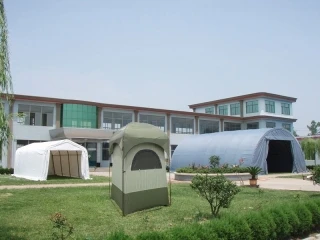
Qingdao Shenghe Steel Pipe Products Co., Ltd.
- Manufacturer, Trading Company
- Shandong, China
- Lead time20 days
- Avg. response≤ 2h
Main productsShelter,container shelter,car shelter,warehouse tent,livestock shelter
Main marketsDomestic Market(20.00%), Northern Europe(20.00%), North America(20.00%), Eastern Asia(15.00%), Eastern Europe(10.00%), Western Europe(10.00%), Southeast Asia(5.00%)

Liushen Sci Tech Innovation (Hunan) Co., Ltd.
- Verified by SGS
- Trading Company
- China Hunan
- Lead time23 days
- Avg. response≤ 5h
Main productsPickup Accessories, Outdoor Equipments, Auto Repar & Maintenance Tool, Outdoor Roof Camping Tent & Awning, Cargo Carrier & Roof Racks, Truck Camper Shell, Pickup Tray Canopy, Heavy Duty Roof Tool Storage Box, Truck Bumper, Tyre Inflator Gauge
Main marketsEast Asia(Japan/ South Korea)

Shanghai Remaco Industrial Co., Ltd.
- Verified by BV
- Manufacturer/Factory
- China Shanghai
- Lead time38 days
- Avg. response≤ 13h
Main productsOverlanding Gear, Overlanding Equipment, Overland Camping Gear, 4WD Touring, 4X4 Touring, 4X4 Camping, off Road Camping, off Road Adventure, Overland Adventure, 4X4 Adventure
Main marketsSouth America,Eastern Europe,North America
Qingdao Ventop Overland Co., Ltd.
- Verified by SGS
- Manufacturer/Factory
- China Shandong
- Lead time45 days
- Avg. response≤ 1h
Main productsRoof Top Tents, Vehicle Awnings, Canopies, Hard Shell Roof Top Tents, Soft Shell Roof Top Tents, Rooftop Tents, Aluminum Roof Top Tents
Main marketsSouth America,Eastern Europe,Mid East,North America,Southeast Asia,Eastern Asia,Oceania,Western Europe,Africa


Anti Condensation Inner Roof Top Tent for Coastal Humid Area Car Camping
$220.00 - $629.00
MOQ: 1 Pieces

Spacious Ventilated Car Tent Roof Top Tent for Cross Country SUV Camping
$240.00 - $744.00
MOQ: 1 Pieces


- Verified by Intertek
- Trading Company
- Lead time0 days
- Avg. response≤ 1h
Main productsRoof Top Tent, Car Awning
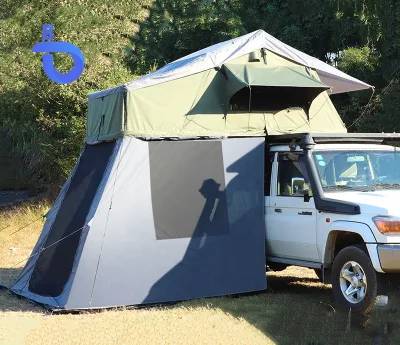
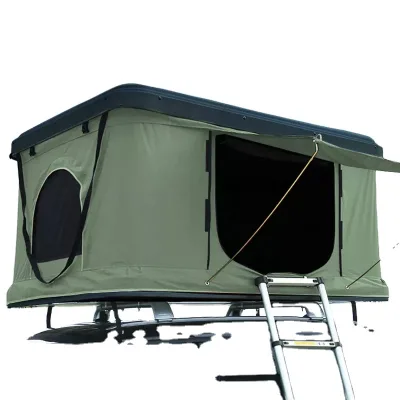
Roof Tent Top Hard Shell Hard Cover Car Roof Tent Pop up Tent
$363.77 - $535.82
- Verified by TUVRHEINLAND
- Trading Company
- China Zhejiang
- Lead time30 days
- Avg. response≤ 11h
Main productsSports and Outdoor
Main marketsSoutheast Asia/ Mideast,Europe
Cangzhou Onot Technology Co., Ltd.
- Verified by SGS
- Trading Company,Manufacturer/Factory
- China Hebei
- Lead time15 days
- Avg. response≤ 1h
Main productsMetal Processing Machinery Part, Sheet Metal Part, Custom Metal Fabrication, Garage, Grass Baler Machine
Main marketsSouth America,Eastern Europe,Mid East,North America,Southeast Asia,Eastern Asia,Oceania,Western Europe,Africa

- Verified by CTI
- Combined
- China Fujian
- Lead time30 days
- Avg. response≤ 5h
Main productsRoof Top Tent, Outdoor Tent, Camping Lantern, Solar Light, Car Tent
Main marketsSouth America,Southeast Asia/ Mideast,East Asia(Japan/ South Korea),Domestic,Europe,Australia,North America

Jinjiang Jiayi Supply Chain Management Co., Ltd.
- Verified by BV
- Trading Company
- China Fujian
- Lead time30 days
- Avg. response≤ 1h
Main productsGift, Shoe, Garment, Machine
Main marketsDomestic

Hebei New Sight Outdoor Products Co., Ltd.
- Verified by SGS
- Combined
- China Hebei
- Lead time23 days
- Avg. response≤ 6h
Main productspop up tent
Main marketsEurope

Outdoor Steel Frame Car Tent Folding Tent 10*10FT with Sidewall and Door
$31.50 - $39.60
MOQ: 100 Pieces


NINGBO XUSHENG LEISURE PRODUCTS CO., LTD.
- Trading Company
- China Zhejiang
- Lead time30 days
- Avg. response≤ 14h
Main productsBeach Chair, Patio Swing Chair, Garden Tools, Outdoor Furniture, Patio Umbrella, BBQ, Sun Lounger, Tent & Awning, Cast Aluminium Garden Furniture, Rattan Furniture
Main marketsSouth America,Africa,Southeast Asia/ Mideast,East Asia(Japan/ South Korea),Domestic,Europe,Australia,North America

Expomax ( China ) Exhibition Tent Co., Ltd.
- Verified by SGS
- Combined
- China Jiangsu
- Lead time15 days
- Avg. response≤ 3h
Main productsMarquee Tent, Clear Span Tent, Pagoda Tent, Arcum Tent
Main marketsOthers(foreignTradeCapacity.exportBusinessCapacityMarketOther),Domestic


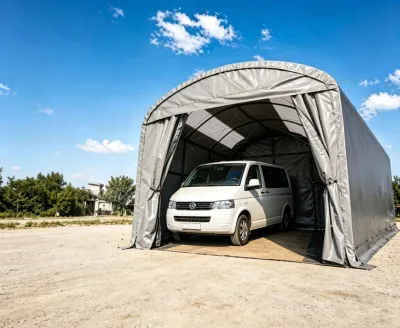
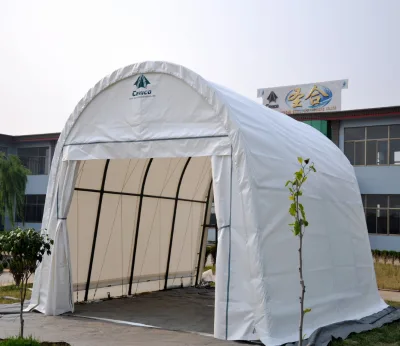


Comprehensive Sourcing Guide
Tube Type Car Tent Supplier Concentration and Factory Types
Buyers searching for Tube Type Car Tent suppliers will encounter a mix of manufacturer-backed operations and trading companies, often listed under adjacent categories such as camping tents, car rooftop tents, canopies, and vehicle shelters. Some listings trace to Shandong province, where companies describe themselves as combined manufacturers covering travel trailers, camper trailers, motorhomes, pickup accessories, and tents, with ODM and OEM capability. Others trace to Zhejiang province and operate as trading companies whose catalogs span car mats, seat covers, and car roof tents alongside the target product. This split matters because factory-direct suppliers typically control tooling and frame fabrication, while trading companies may aggregate output from multiple workshops under one catalog.
When no cluster data is displayed for a given listing, the buyer should identify concentration independently. A practical approach is to extract the origin field on individual product pages, note the province or city repeated across multiple Tube Type Car Tent listings, and then cross-check those locations against the supplier's stated main products. Listings in this category show product origins recorded simply as China or as specific cities such as Weihai, so treat origin fields as a screening signal rather than a verified factory address. Manufacturer-type profiles usually emphasize frame materials, pole structures, and customization options, whereas trading companies emphasize breadth of auto accessory lines. Neither type is inherently better; the deciding factor is whether the entity can demonstrate direct control over tube bending, fabric cutting, and final assembly.
How to Verify Tube Type Car Tent Suppliers
Verification should begin with the credentials actually displayed on a supplier profile rather than assumptions drawn from product photos. In current results, some profiles carry third-party verification badges such as BV or SGS, and some hold documented system certifications including ISO9001:2015 and, in one case, ISO14001:2015 alongside it. These signals indicate that a certification body has audited or assessed the business, but they do not confirm competence on tube type car tents specifically. The buyer should confirm which certified scope applies, ask for the certificate number and validity period, and check whether the certification covers manufacturing quality management rather than only trading activity.
The second layer of verification concerns production reality. Where a profile is labeled ODM and OEM capable, request evidence: engineering drawings of tube frame assemblies, fabric welding or stitching samples, and photos or video of the bending and sewing lines in operation. Where a listing is a combined manufacturer of trailers and vehicle accessories, ask whether the tent line shares the same facility or is outsourced. Response speed is another verifiable datum: profiles in this category display response times ranging from under three hours to nearly twenty-three hours, which the buyer can test directly by sending identical RFQs and timing replies. Finally, verify the legal entity name, business license, and whether the displayed location matches the shipping origin stated on the product page, since product origins are sometimes listed generically as China.
What to Compare Across Tube Type Car Tent Suppliers
Comparison should be built on the supplier-label dimensions that actually appear in search results, acknowledging that not every profile displays every attribute. Useful dimensions include lead time, minimum order quantity, response speed, verification status, certification, location, supplier type, and main products. In current results, displayed lead times range from fifteen days to sixty days, and MOQs vary dramatically by product line: single units for a shower-style camping tent, small multiples of two to three for hydraulic car tents, twenty units for an awning-style side tent, and fifty units for pop-up canopy products. Prices displayed span from roughly twenty-two to sixty dollars at the low end to several hundred dollars, and up to nearly fourteen hundred dollars for a hard-shell roof top tent.
Because these figures attach to specific products rather than to the Tube Type Car Tent itself, the buyer must request quotations on the exact specification before comparing. Build a comparison matrix capturing, per supplier: quoted unit price at target volume, quoted MOQ, stated production lead time, displayed response time, verification badge, certifications held, province, and whether the profile claims ODM or OEM capability. Weight customization and capacity fields too: several listings state customization available, logos customizable, capacity customizable, and materials such as polyester with flexible or aluminum alloy poles. Suppliers whose displayed attributes cluster around canopies, gazebos, and event tents may be reusing a platform across categories, so probe whether tube frame car tent production is a core line or a side listing before committing sample budget.
Common Tube Type Car Tent Sourcing Risks
The first cluster of risks involves spec mismatch. Tube type car tents depend on pole diameter, wall thickness, joint hardware, and fabric coating, yet displayed attributes often stop at broad labels such as "waterproof," "polyester," or "flexible poles, aluminium alloys." A buyer who orders from these labels alone risks receiving frames that flex under wind load or coatings that fail after limited exposure. A related risk is capacity misinterpretation: one listing shows capacity as customizable with a "≤" bound, and another ties capacity to a color field, which suggests attribute data is inconsistently maintained. Always convert marketing attributes into a signed specification sheet with tolerances.
The second cluster involves commercial and operational risks. Slow response times, with some profiles displaying nearly nineteen or twenty-three hours, can stretch a development cycle badly if the supplier is your only source. Lead times vary widely across displayed profiles, from fifteen to sixty days, and a sixty-day quoted lead time leaves little recovery margin if first-article inspection fails. MOQ structures also create risk in both directions: a one-piece MOQ invites under-testing before scaling, while a fifty-piece MOQ on a related canopy line locks capital into inventory before demand is proven. Finally, generic origin fields listed simply as "China" complicate logistics planning and duty classification. Mitigate by requiring named packaging specifications, checking packing formats such as carton or wooden package against freight costs, and confirming who bears rework costs for out-of-tolerance tube frames.
Tube Type Car Tent Regional Sourcing and Logistics
Region matters most where the displayed data actually supports it. Current results tie some suppliers to Shandong, where profiles combine tent manufacturing with camper trailers, motorhomes, and off-road caravans, suggesting an ecosystem familiar with vehicle-mounted structures and roof loads. Others tie to Zhejiang, where a trading company lists car roof tents among auto interior accessories, which may mean aggregation rather than fabrication. When a profile displays no region, treat that as an information gap to close during RFQ rather than an automatic disqualifier, and note that some product pages list origins only as "China" or name a city such as Weihai.
Logistics planning should reflect the physical realities of the category. Tube frame car tents are bulky relative to their weight, so packing format directly drives landed cost: displayed packing formats include individual cartons and, for a hard-shell roof top tent, wooden packages, which protect the shell but add volume and possible heat-treatment requirements for export. Confirm carton dimensions, stackability, and whether frames ship disassembled to reduce cubic volume. Quoted lead times in this category range from fifteen to sixty days, so build a schedule that includes sample transit, first-article approval, mass production, and inland transport to port. Ask which port the supplier habitually ships from, whether they handle export documentation, and how a province-level location translates into drayage time. Where the buyer is consolidating tents with auto accessories from the same region, request a combined packing plan early.
Tube Type Car Tent Commercial Terms and Order Planning
Order planning should start with a staged commercial structure matched to the MOQ patterns visible in the category. Because some listings allow single-unit or two-to-three-unit orders while related products demand twenty to fifty units, a sensible path is: buy one or two samples at quoted list price, run first-article inspection against your specification, then negotiate tiered pricing at a volume the supplier's MOQ actually supports. Displayed price ranges, from the low twenty-dollar range on canopy products to several hundred dollars or more on hard-shell roof models, show how widely pricing moves within vehicle tent categories, so never benchmark a tube frame quote against an unrelated product's number.
On terms, secure clarity before deposit: unit price at committed volume, tooling or mold charges for customized tube bends and logos, payment split, lead time from deposit to ex-factory, and packing format. Where a supplier advertises ODM and OEM capability, expect customization terms to be negotiable, but confirm in writing which customization elements — logo, capacity, dimensions, doors — carry cost premiums. Use escrow or platform-protected payment where offered, since displayed verification badges such as BV or SGS describe audits, not payment security. Reconcile the quoted lead time, which in this category ranges from fifteen to sixty days, against your launch calendar and add buffer for inspection. Finally, plan reorders around response times: a supplier answering in under three hours supports faster replenishment cycles than one averaging most of a day.
FAQs
What is the typical lead time for tube type car tents?
Lead times vary by supplier, with some offering 15 days and others requiring up to 60 days for production. Buyers should verify specific timelines based on order volume and customization needs before confirming any purchase agreement with a manufacturer.
Are tube type car tents available with custom branding options?
Yes, many manufacturers offer customization services including custom logos and specific material choices. Buyers can request tailored solutions for branding, ensuring the final product meets unique marketing requirements while maintaining structural integrity and waterproof standards.
What is the minimum order quantity for tube type car tents?
Minimum order quantities differ significantly among suppliers, ranging from single units to fifty pieces. Some vendors accept orders as low as one unit, while others require bulk purchases of fifty or more to qualify for standard pricing tiers.
Do tube type car tents come with ISO certifications?
Several suppliers hold ISO9001:2015 and ISO14001:2015 certifications for their manufacturing processes. Buyers should request proof of these system certifications to ensure quality management and environmental compliance standards are met during production and delivery phases.
How quickly do suppliers typically respond to inquiries?
Response times vary, with some suppliers replying within 2.5 hours and others taking up to 22 hours. Buyers should expect delays with certain vendors and prioritize contacting those with faster average response times for urgent sourcing needs.
Where are tube type car tents primarily manufactured?
Manufacturing is concentrated in China, specifically in regions like Shandong and Zhejiang provinces. Buyers should verify the specific origin of products to ensure alignment with logistics preferences and potential import regulations for their target markets.
What materials are used for Tube Type Car Tent frames?
Frames are commonly constructed using flexible poles and aluminum alloys for durability. Some heavy-duty models utilize power-coated steel tubes to support larger canopy structures while maintaining portability and resistance against harsh weather conditions.
Are tube type car tents waterproof and UV resistant?
Most products feature waterproof polyester materials and are designed to be anti-UV. Buyers should confirm specific waterproof ratings and material specifications to ensure the tent provides adequate protection during outdoor camping or vehicle storage applications.