UV Spectrum LED Grow Light Suppliers and Manufacturers
Compare 16 verified suppliers offering UV Spectrum LED Grow Light with varying lead times, certifications, and response speeds. Review their locations in China and product specifications to select the right partner for your needs; review the available evidence before requesting comparable quotations from suitable candidates.
Suppliers List

Shanghai Brother Medical Manufacturer Co., Ltd.
- Verified by CTI
- Manufacturer/Factory
- China Shanghai
- Lead time23 days
- Avg. response≤ 21h
Main productsWheelchair, Hearing Aid, Mobility Scooter, Commode Chair, Shower Chair, Crutch, Walking Stick
Main marketsSouth America,Eastern Europe,Mid East,North America,Southeast Asia,Eastern Asia,Oceania,Western Europe,Africa

Peony Lighting Technology Co., Ltd.
- Verified by BV
- Manufacturer/Factory
- China Guangdong
- Lead time15 days
- Avg. response≤ 4h
Main productsLED High Bay Light, LED Street Lighyt, LED Flood Light, LED Gas Station Light, LED Track Light, LED Down Light, LED Tri-Proof Light, LED Linear Light, LED Stadium Sports Light
Main marketsSouth America,Mid East,North America,Southeast Asia,Eastern Asia,Oceania,Western Europe,Africa

- Verified by TUVRHEINLAND
- Manufacturer/Factory
- China Zhejiang
- Lead time30 days
- Avg. response≤ 22h
Main productsLED Lamp, Reptile Heat Lamp, Incandescent Bulb, Infrared Lamp, Cable Wire, PVC Sticker
Main marketsEastern Europe,Mid East,North America,Eastern Asia,Oceania,Western Europe,Africa

Shenzhen Qizhi Optoelectronic Technology Co., Ltd.
- Verified by SGS
- Combined
- China Guangdong
- Lead time23 days
- Avg. response≤ 1h
Main productsLED, LED Chip, LED Components, SMD LED, LED Lights
Main marketsSoutheast Asia/ Mideast,East Asia(Japan/ South Korea),Domestic,Europe

Shenzhen Guangmai Electronics Co., Ltd.
- Combined
- China Guangdong
- Lead time15 days
- Avg. response≤ 12h
Main productsHigh Power LED, SMD LED, COB LED, LED Chip, LED Emitter
Main marketsSouth America,Africa,Southeast Asia/ Mideast,East Asia(Japan/ South Korea),Europe,Australia,North America

Wuxi Qiya Lighting and Electric Appliance Factory
- Verified by BV
- Combined
- China Jiangsu
- Lead time15 days
- Avg. response≤ 1h
Main productsBallast, Bulb, Lamp, Flood Light, High Bay Lighting, Outdoor Lighting, Magnetic Ballast
Main marketsSoutheast Asia/ Mideast

Anhui Tpack Import&Export Co., Ltd
- Verified by SGS
- Trading Company
- China Anhui
- Lead time30 days
- Avg. response≤ 3h
Main productsVertical Hydroponic, Greenhouse Glass, Dutch Bucket, Greenhouse PC-Board, Hydroponic Nft System, Greenhouse Film, Seedbed, Full Spectrum Grow Light, HVAC System, Grow Container
Main marketsNorth America

LED Grow Light Sale 120W Dimmable Lumiled Grow Light 500PCS Quantum LED Grow Light
$45.00 - $145.00
Moq: 1


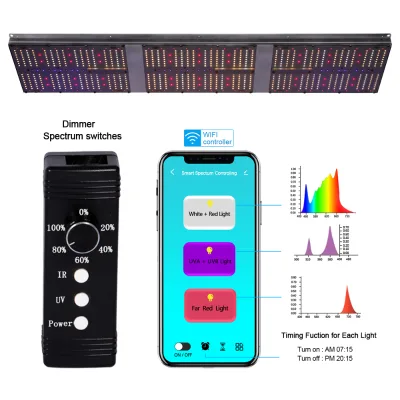
Full Spectrum Removable LED Grow Light with UV IR Control Indoor Plant Lamps 640W Grow Light
$119.00 - $149.00
Moq: 1


Dongguan Kangjuhong Photoelectric Technology Co., Ltd.
- Trading Company,Manufacturer/Factory
- China Guangdong
- Lead time23 days
- Avg. response≤ 7h
Main productsLED Light, Landscape Lighting, LED Spotlight, LED Downlight, Smart Light, LED Outdoor Light, Landscape Fixture, Step Light, Path Light, in-Ground Light
Main marketsEastern Europe,North America,Western Europe


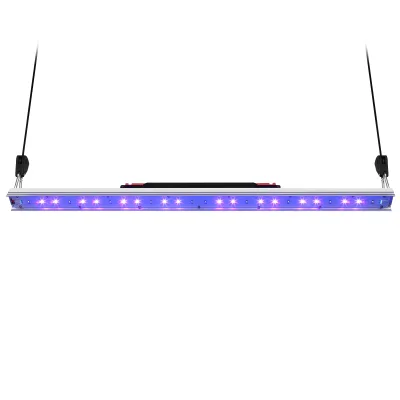
LED Waterproof Plant Growth Light 600W 800W Grow LED Light Full Spectrum LED Grow Light Bar
$190.00 - $240.00
Moq: 2


Yangzhou Besturn International Trade Co., Ltd.
- Verified by TUVRHEINLAND
- Trading Company
- China Jiangsu
- Lead time30 days
- Avg. response≤ 25h
Main productsLED Street Light, LED Panel Light, LED Down Light, LED Strip Light, LED Flood Light, LED Bulb, Solar Street Light, LED Grow Light, LED Parking Light, LED Ceiling Light
Main marketsSoutheast Asia/ Mideast

Hubei LiBaiChang Technology Co., Ltd.
- Verified by CTI
- Manufacturer/Factory
- China Hubei
- Lead time15 days
- Avg. response≤ 3h
Main productsSolar Home System, Outdoor Lighting, Emergency Products, Generators, Solar Panel, Commercial Lighting Light, Solar Inverter, Indoor Light, Solar Fan, Solar Insect Killer Light
Main marketsSouth America,Eastern Europe,Mid East,North America,Southeast Asia,Eastern Asia,Oceania,Western Europe,Africa

Desk Grow Lights for Indoor Plants Grow Light UV-IR Full Spectrum LED Grow Light
$45.22 - $355.99
Moq: 10


Shenzhen ATA Technology Co., Ltd.
- Manufacturer/Factory
- China Guangdong
- Lead time15 days
- Avg. response≤ 5h
Main productsLED Grow Light, LED Flexible Strip, UL LED Tube Light, UL LED Panel Light, LED Tri-Proof Light, UFO LED High Bay Light, LED Flood Light, LED Street Light, LED Controller, LED Power Supply
Main marketsSouth America,Eastern Europe,Mid East,North America,Southeast Asia,Eastern Asia,Oceania,Western Europe,Africa

- Verified by SGS
- Manufacturer/Factory,Group Corporation
- China Fujian
- Lead time30 days
- Avg. response≤ 20h
Main productsLED Grow Lights, Ec Tt Inline Fan, Double Ended 1000W Light Fixture, Digital Ballast 600W, LED 1000W Bar Fixture Grow Light, HPS/Mh Grow Light Bulbs, CMH315W Light Fixture, Wall Fan, LED Grow Light Quantum Board, LED Grow Light Gavita 1930e
Main marketsEastern Europe,North America,Western Europe

LED Grow Lights for Plants 720W PPE2.9umol/J UV/IR LED Grow Light for Plants
$120.00 - $122.00
Moq: 300

U-Light Quantum Board LED Grow Light 120W/240W/330W LED Plant Light Full Spectrum 3.0umol/J
$123.00 - $125.00
Moq: 100


Shenzhen BBier Lighting Co., Ltd.
- Verified by BV
- Combined
- China Guangdong
- Lead time15 days
- Avg. response≤ 6h
Main productsE40/E27 LED Corn Lights, E40/E27 LED Garden Lights, E40/E27 LED High Bay Lights, Parking Lot LED Retrofit Kits, LED Wall Pack Lights, LED Canopy Lights, LED Gas Station Lights, LED Shoebox Street Lights, 360deg LED Tube Lights, 210deg LED Tube Lights
Main marketsSouth America,Africa,Southeast Asia/ Mideast,East Asia(Japan/ South Korea),Europe,Australia,North America

Shenzhen Seny Technology Co., Ltd.
- Verified by TUVRHEINLAND
- Trading Company,Manufacturer/Factory
- China Guangdong
- Lead time23 days
- Avg. response≤ 2h
Main productsLED Screen Factory, LED Display Factory, LED Display Screen Factory, LED Video Wall Factory, LED Billboard Factory, LED Panel Factory, LED Display Board Factory, LED Sign Factory, Rental LED Display Factory, LED Grow Light Factory
Main marketsSouth America,Eastern Europe,Mid East,North America,Southeast Asia,Eastern Asia,Oceania,Western Europe,Africa

Full Spectrum 640W Adjustable Multi Bar LED Grow Light for Plant Growing Factory
$255.00 - $280.00
Moq: 1

Full Spectrum 300W Adjustable Multi Bar LED Grow Light for Plant Growing Factory
$234.00 - $236.00
Moq: 1

Tianjin Zhongyijian Technology Co., Ltd.
- Trading Company,Manufacturer/Factory,Group Corporation
- China Tianjin
- Lead time23 days
- Avg. response≤ 4h
Main productsLED Flashlight, LED Headlamp, Camping Light, Strip, Working Lamp, Bike Light, Indoor Light, Decoration Light, Outdoor Lighting, Custom Neon Sign
Main marketsSouth America,Eastern Europe,Mid East,North America,Southeast Asia,Eastern Asia,Oceania,Western Europe,Africa
- Verified by SGS Group
- Manufacturer, Trading Company
- Lead time10 days
- Avg. response≤ 3h
Main productsLED Grow Light, Outdoor Solar LED Light, Grow Tent, Ventilation Fan
Main marketsNorth America(30%), South America(20%), Eastern Europe(20%)


Comprehensive Sourcing Guide
UV Spectrum LED Grow Light Supplier Concentration and Factory Types
The current supplier landscape for UV spectrum LED grow lights reveals a concentration of manufacturing activity primarily within China, specifically in the provinces of Shanghai, Guangdong, and Zhejiang. These regions host a mix of manufacturer-factories and combined trading entities that specialize in lighting components and finished grow systems. In Shanghai, suppliers often list medical equipment alongside lighting, indicating a diversified industrial base that may leverage precision manufacturing for lighting applications. Guangdong-based factories frequently focus on high-power LED solutions, including high bay and street lighting, which suggests a robust supply chain for the electronic components required for grow lights. Zhejiang suppliers appear to offer a broader range of general lighting products, from incandescent bulbs to specialized grow lamps, often operating with OEM capabilities.
When assessing factory types, buyers should distinguish between pure manufacturers and combined entities. The available data indicates that some suppliers operate as manufacturers with their own brands, such as Brother Medical or Peony Lighting, while others function as combined entities offering OEM services without a distinct own brand. This distinction is critical because manufacturer-factories typically control the entire production process, from LED chip sourcing to final assembly, whereas combined entities may source components from multiple vendors. Buyers must verify if the supplier's main product list includes LED grow lights as a core offering rather than a peripheral item, as this often correlates with deeper technical expertise and more stable supply chains for UV spectrum specific requirements.
How to Verify UV Spectrum LED Grow Light Suppliers
Verification of UV Spectrum LED Grow Light suppliers requires a rigorous check of third-party audit results and system certifications to ensure operational legitimacy. The current data shows that suppliers have undergone verification by agencies such as CTI, BV, TÜV Rheinland, and SGS. These verifications provide a baseline of trust regarding the company's existence and operational compliance. Buyers should prioritize suppliers with these specific verification badges, as they indicate that an independent body has inspected the facility. Additionally, system certifications like ISO 9001, ISO 14001, and ISO 13485 are present in the records, signaling adherence to quality management and environmental standards. However, buyers must confirm that these certifications are current and specifically cover the manufacturing of LED grow lights, as some suppliers may hold certifications for unrelated product lines like medical devices.
Beyond certifications, buyers must scrutinize the specific product evidence provided to validate technical claims. For instance, product attributes such as IP ratings, LED chip types (e.g., Samsung, Epistar), and warranty periods are critical indicators of product quality. Some suppliers list detailed specifications like a 50,000-hour life span and specific emitting colors, which are essential for UV spectrum applications. Buyers should request test reports that match these claimed attributes, particularly regarding the UV output and spectral distribution. It is also vital to check if the supplier offers customization, as this often reflects a more mature R&D capability. Without direct access to these specific test results, buyers should treat all claims as unverified until confirmed through a formal audit or sample testing process.
What to Compare Across UV Spectrum LED Grow Light Suppliers
Comparing suppliers requires a systematic evaluation of operational metrics such as lead time, minimum order quantity (MOQ), and response speed to determine fit for specific project needs. The data indicates significant variation in lead times, ranging from 15 days to 30 days, which directly impacts inventory planning and time-to-market. Response times also differ, with some suppliers showing a response time of approximately 3 hours while others take over 20 hours. These metrics are crucial for buyers who need rapid prototyping or urgent restocking. Additionally, MOQs vary widely, with some suppliers requiring orders as low as 10 units while others mandate 500 units. Buyers must align these thresholds with their budget and storage capacity to avoid overstocking or incurring unnecessary minimum order costs.
Price and warranty terms are equally critical dimensions for comparison. The observed price range for LED grow lights spans from approximately $8 to over $500, depending on power output and specifications. Lower-priced options often come with shorter warranty periods, such as two years, while higher-power units may offer five-year warranties. Buyers should not assume that a lower price indicates better value; instead, they must calculate the total cost of ownership, including shipping and potential replacement costs. Furthermore, the availability of customization and the specific certifications listed for each product (e.g., CE, RoHS, UL) must be compared side-by-side. A supplier offering a lower price but lacking essential safety certifications poses a higher risk than one with a slightly higher price but comprehensive compliance documentation.
Common UV Spectrum LED Grow Light Sourcing Risks
One of the primary risks in sourcing UV spectrum LED grow lights is the potential mismatch between claimed product specifications and actual performance. Suppliers may list generic attributes like "Full Spectrum" without providing detailed spectral graphs or UV intensity data. This ambiguity can lead to purchasing lights that fail to meet the specific photoperiod or intensity requirements of the crops being grown. Buyers must be wary of suppliers who do not explicitly state the LED chip manufacturer or the specific UV wavelength output. Without this granular data, the risk of receiving substandard products that do not enhance plant growth is significant. It is essential to demand detailed technical datasheets that verify the spectral output before committing to a large order.
Another significant risk involves the reliability of the supply chain and the consistency of product quality over time. While some suppliers list certifications like ISO 9001, these do not guarantee that every batch of LED grow lights will meet the same quality standards. Variations in LED binning or assembly processes can lead to inconsistent light output or premature failure. Additionally, the lead time variability observed in the data suggests that production schedules may be unstable. Buyers should assess the supplier's capacity to handle volume spikes and their track record for on-time delivery. Relying on a single supplier without a backup plan can result in production delays if the primary source faces capacity constraints or quality issues.
UV Spectrum LED Grow Light Regional Sourcing and Logistics
Sourcing from China offers access to a dense network of lighting manufacturers, but logistics planning must account for regional differences in shipping and customs. The primary manufacturing hubs identified are Shanghai, Guangdong, and Zhejiang, each with distinct logistical advantages. Guangdong, known for its electronics industry, often provides faster access to ports and a mature supply chain for LED components. Shanghai offers a strategic location for international trade with well-developed infrastructure, while Zhejiang provides a cost-effective alternative for general lighting products. Buyers should consider the proximity of the factory to the port of loading, as this can significantly impact freight costs and transit times. Understanding the specific location of the supplier is essential for accurate freight estimation and delivery scheduling.
Logistics also involve navigating the complexities of international shipping regulations and packaging standards. The data indicates that products are typically packed in standard cartons or color boxes, with dimensions varying by model. Buyers must verify the packaging specifications to ensure they can handle the goods efficiently upon arrival. Additionally, the origin of the product, listed as China, means that import duties and taxes will apply based on the buyer's local regulations. It is crucial to calculate the landed cost, including freight, insurance, and duties, to avoid unexpected expenses. Buyers should also consider the lead time variability when planning their inventory, as delays in shipping from these regions can disrupt production schedules.
UV Spectrum LED Grow Light Commercial Terms and Order Planning
Commercial terms for UV spectrum LED grow lights vary significantly based on the supplier's capacity and the specific product configuration. The data shows that some suppliers offer OEM and ODM services, allowing for customization of branding and specifications, while others focus on standard products. Buyers must clarify the terms of customization, including any additional costs or minimum order requirements for custom orders. Warranty periods also differ, ranging from two to five years, which should be factored into the total cost of ownership. Buyers should negotiate clear terms regarding warranty claims, including who bears the cost of shipping for defective units and the timeline for replacements.
Order planning must also account for the payment terms and the use of escrow services to mitigate financial risk. While the data does not specify payment terms, buyers should insist on secure payment methods that protect both parties. Escrow services can ensure that funds are only released once the goods are verified to meet the agreed specifications. Additionally, buyers should plan for the MOQ constraints, which can range from 10 to 500 units. For smaller orders, buyers may need to consolidate shipments or negotiate with suppliers to lower the MOQ. Careful planning of the order volume and timing is essential to optimize cash flow and ensure that the inventory levels align with market demand.
FAQs
What certifications do the LED grow light suppliers hold?
Suppliers in this search hold multiple certifications including ISO 9001, ISO 13485, BSCI, and CE. Some manufacturers also possess RoHS, UL, and GMP approvals. Verify specific product certifications like CCC or Energy Star directly with the factory before placing orders.
What are the typical lead times for these LED grow lights?
Lead times vary by supplier location and order volume, ranging from 15 to 30 days. Factories in Guangdong often ship within 15 days, while those in Zhejiang may require up to 30 days. Confirm exact delivery schedules with your chosen manufacturer to ensure timely arrival.
What is the minimum order quantity for UV spectrum LED grow lights?
Minimum order quantities differ significantly across suppliers, starting as low as 10 units for high-power models. Some manufacturers require a minimum of 500 units for smaller wattage options. Always check the specific MOQ listed for the exact product model you intend to purchase.
Where are the manufacturers of these LED grow lights located?
Manufacturers are primarily located in China, with facilities in Shanghai, Guangdong, and Zhejiang provinces. These regions offer diverse supply chains for LED components and finished grow lights. Verify the specific factory address to assess logistics costs and shipping times for your region.
What warranty periods are offered for these LED grow light products?
Warranty periods typically range from 2 to 5 years depending on the product model and manufacturer. Some suppliers offer a 3-year warranty for standard units, while high-power models may include up to 5 years of coverage. Review the warranty terms carefully before finalizing your purchase agreement.
Do suppliers offer customization options for UV spectrum LED grow lights?
Yes, most manufacturers provide customization services including OEM and ODM capabilities. Customization is available for various specifications such as power, shape, and housing materials. Contact the supplier directly to discuss your specific requirements and confirm if they can meet your unique design needs.
What is the price range for full spectrum LED grow lights?
Prices vary widely based on wattage and features, ranging from 8 to 556 dollars per unit. Lower wattage models start around 8 dollars, while high-power 600W to 1000W units cost significantly more. Request a detailed quote based on your specific wattage and quantity requirements for accurate pricing.