Source 04217188 Pressure Sensor for Excavators, Forklifts, and Mining
Find 30 listings for the 04217188 Pressure Sensor suitable for excavators, forklifts, and mining machinery. Compare specifications including thread types, wiring configurations, and output signals from verified suppliers to ensure compatibility with Deutz engines and various industrial applications; compare the available evidence and request quotations based on your requirements.
Key considerations
Products List


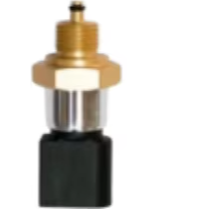


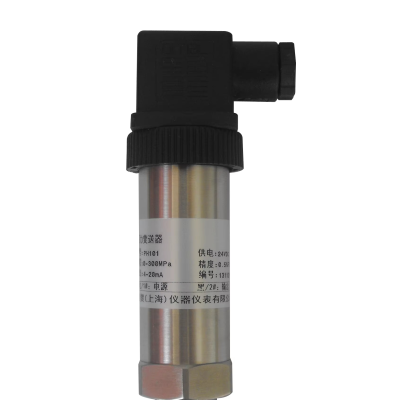

$3.50 - $4.00
MOQ: 10 Pieces


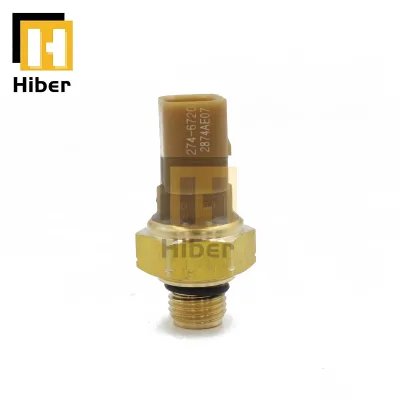




Comprehensive Sourcing Guide
04217188 Pressure Sensor Sourcing Guide
The 04217188 Pressure Sensor is a replacement part referenced in listings alongside Deutz diesel engine applications, and buyers sourcing it typically need to match both the part number and the mechanical fit to their engine or machinery platform. Because this identifier appears in product pages that also cover related models such as 04216645 and 01183692, the first purchasing decision is confirming which exact model number your equipment manual calls for before comparing offers. Ordering by description alone is a common source of returns in this category, since visually similar sensors can differ in thread type, wiring configuration, and output signal.
This guide is written for procurement teams, maintenance planners, and resellers who buy pressure sensors in single-unit or small-batch quantities. It organizes the sourcing process into scope verification, technical confirmation, documentation review, commercial negotiation, supplier screening, and long-term supply checks. The observed listing data behind this guide shows a wide price spread and minimum order quantities ranging from single pieces to one hundred units, which means your negotiation leverage and verification effort should scale with order size. Treat every listing attribute as a claim to be confirmed with the seller in writing.
Product Scope and Observed Listing Signals
Listings associated with this keyword cluster describe pressure sensors and transmitters for diesel engine and heavy machinery use, including applications named as scrapers, forklifts, loaders, mining machinery, and excavators. Origin data in the observed listings points to both Germany and China, suggesting a mix of original-equipment-style parts and aftermarket alternatives. Model numbers that appear alongside 04217188 include 04216645, 01183692, 01182841, 04216218, 21634021, 2848131, and 185246280, as well as Cummins-related references such as 4087991, 4921744, and 4921517 tied to ISX15, QSM11, and ISM11 engines. Buyers should not assume cross-compatibility across these numbers without documentation.
The observed price range spans from roughly 2.5 USD to over 955 USD, which is unusually wide and signals that the keyword returns heterogeneous products — from low-cost generic sensors to premium original or customized units. Minimum order quantities range from 1 to 100 pieces, so single-unit buyers can find low-commitment entries but should expect less favorable unit pricing. Packing is described in listings as carton or carton box, and one listing notes "genuine and new" packaging. Buyers should ask whether the quoted price covers a single sensor or a batch, and confirm which model number and origin the quoted item actually corresponds to.
Technical Specifications to Verify
Start with the electrical and mechanical interface. Observed listings for this category show both G and ZG thread types, four-wire and five-wire wiring configurations, and both analog and digital output signal types — meaning an incorrect match can fail at installation even when the part number looks correct. Verify thread size and sealing method against your engine port, confirm whether your harness expects a four-wire or five-wire connection, and check that the output type (analog or digital) matches what your controller reads. One listing cites weight of 0.02 kg and another 0.187 kg, a useful sanity check for distinguishing compact sensor heads from larger transmitter assemblies.
Next, confirm the sensing technology and medium compatibility. Listings in this group reference resistance strain gauge pressure sensors, inductive pressure sensors, ceramic production processes, and normal wirewound construction, with measuring media listed as gas, liquid, and steam. Each combination suits different duty conditions, so ask the seller which construction your quoted unit uses and whether it is rated for the medium in your application — a sensor built for gas may not tolerate steam or aggressive liquids. Also verify the Deutz engine fitment claimed in listings, specifically compatibility with engines such as TCD2013, BFM1015, and TCD3.6, by referencing your engine serial number.
Compliance and Safety Documentation
Observed listings cite ISO certification in one case and CE plus ISO in another, but certification claims on marketplace pages are frequently boilerplate rather than product-specific. Request the actual certificate number, issuing body, and scope, then confirm the certificate covers the model you are buying rather than the supplier's general quality system. Because pressure sensors feed safety-relevant readings into engine and machinery control systems, ask for a declaration of conformity applicable to your destination market, and keep it on file with the shipment record for audit purposes.
Material and construction documentation matters as much as certificates. One listing identifies copper as a material, another describes a metal housing with an IP rating entry left incomplete in the source data — which is precisely why buyers must demand the actual ingress protection figure in writing before ordering for outdoor, wet, or dusty machinery environments. Ask for dimensional drawings, thread specifications, and wiring diagrams, and for original-parts claims, request evidence of authenticity such as original packaging photos or traceable part markings. If a listing describes the item as customized, obtain the custom specification sheet separately from any standard datasheet so the two are not confused during incoming inspection.
Cost Drivers and Commercial Terms
The observed price range of 2.5 to 955.88 USD reflects several cost drivers you should isolate before comparing quotes. Original or genuine-marked parts command a premium over generic equivalents; customization — explicitly listed as available in this product group — adds engineering and setup cost; construction type (ceramic versus wirewound strain gauge, semiconductor versus mechanical structure) affects unit cost; and origin, with Germany-sourced versus China-sourced listings, shapes both price and logistics cost. Ask each supplier to itemize which of these factors their quote reflects so you are comparing like-for-like rather than a genuine part against an aftermarket one.
Commercial terms vary as widely as prices. Minimum order quantities in the observed listings run from 1 to 100 units, so negotiate MOQ down for a trial order before committing to volume, and use the trial's results to justify volume pricing. Confirm Incoterms, who bears freight and insurance, packing format (carton packing is cited in listings), and payment terms, especially for cross-border orders from a different origin than your own. For customized units, agree on approval procedures — first-article inspection or sample sign-off — before mass production, and put lead-time commitments and remedies for delay into the purchase order rather than relying on verbal assurances.
Supplier Qualification and Quality Control
Screen suppliers on evidence rather than storefront presentation. For this category, prioritize sellers who can state the exact model number, thread type, wiring configuration, and output signal in a written specification — vague listings that bundle many model numbers (as several observed listings do, citing multiple part numbers in one page) increase the risk of shipping errors. Check how long the supplier has sold this product family, whether they distinguish genuine from aftermarket stock, and whether they respond to technical questions with datasheets instead of marketing copy. A supplier unable to name the sensing technology or medium rating of their own product is a quality risk regardless of price.
Incoming inspection should be defined before the first order arrives. Verify part marking against the ordered number (04217188 or the agreed alternative), check physical dimensions and thread fit against a drawing, confirm wiring lead count and connector type, and where possible perform a functional check against a reference sensor on your engine or test rig. For batch purchases, agree on an acceptable quality limit and sampling plan in advance, and retain sealed samples from each lot. Record lot numbers and supplier responses to any defect so recurring problems are documented — this record becomes your strongest leverage in claims and in deciding whether to qualify a second source.
Long-Term Procurement Checks
Sustained supply of a specific part number depends on the supplier's sourcing chain, not just their current stock. Ask whether the 04217188 unit is available continuously or subject to original-manufacturer allocation, and whether the supplier holds safety stock or sources per order. Where a listing marks the item as customized, confirm that tooling, drawings, and process parameters are retained so repeat orders reproduce the approved configuration. For fleets running Deutz engines such as the TCD2013, BFM1015, or TCD3.6, consider framework agreements that fix pricing and specification for a defined period, protecting you from the kind of price volatility evident in the observed listing spread.
Build resilience by tracking performance data across suppliers and lots: return rates, functional failure rates from your maintenance system, and delivery reliability. Requalify suppliers periodically — repeat the incoming inspection rigor annually even when no defects have surfaced, because production sources and materials can change without notice. Keep a documented second source for critical machinery applications, qualified against the same specification, so a single supplier's stockout does not idle equipment. Finally, archive all certificates, drawings, and correspondence with each purchase record; when personnel change or a dispute arises years later, that archive determines whether you can prove what specification you originally bought and enforce it on repeat orders.
FAQs
What is the 04217188 Pressure Sensor used for?
The 04217188 Pressure Sensor is a pressure transmitter component used in heavy machinery applications such as scrapers, forklifts, loaders, and mining equipment. It is listed as a Deutz-branded part with model number 04217188, packed in a carton, and associated with Germany as the product origin. Buyers should confirm compatibility with their specific machine model before ordering.
Can the 04217188 Pressure Sensor be customized for my application?
Yes, customization is available for pressure sensors in this product listing, and some entries are explicitly marked as customized. Customized production is listed under a customized standard, while other units are non-customized standard components. Buyers needing special configurations should specify requirements such as thread type, wiring type, and measuring medium when contacting suppliers to confirm what can be produced.
Which measuring media are compatible with these pressure sensors?
The listing shows pressure sensors measuring three types of media: gas, liquid, and steam. The compatible medium depends on the specific model, so buyers should match the medium specification to their application before purchase. Confirming the medium with the supplier helps avoid mismatched installations, since a sensor rated for gas may not perform correctly in liquid or steam service.
What thread types are available for these pressure sensors?
Two thread types appear in the product data: G thread and ZG thread. The correct choice depends on the installation port of the equipment, so buyers should check their existing fitting before ordering. Since some sensors are customized, it may be possible to request a specific thread configuration, but this should be confirmed directly with the supplier for the exact model needed.
What output signal types do these pressure sensors support?
The product data lists both analog type and digital type output signals across the pressure sensor entries. Analog output is common for strain gauge and inductive pressure sensors used with control systems, while digital output suits equipment with digital monitoring. Buyers should verify the output type required by their machinery controller and confirm it matches the specific model number before ordering.
How is the 04217188 Pressure Sensor packaged and shipped?
The 04217188 Pressure Sensor is listed with carton packing, and related models use carton box packaging as well. One entry is described as genuine and new, indicating original parts. The weight is listed as 0.187kg for the 01183692 model, which keeps shipping costs low. Buyers should confirm the exact packaging condition and whether original packaging documentation is included with the shipment.
What certifications do these pressure sensor suppliers hold?
The product data shows ISO certification for one pressure transmitter entry, and another entry lists CE together with ISO certification. Certification coverage can vary by model and supplier, so buyers should request current certificate copies for the specific part number they intend to purchase. Verifying certification documents before ordering is a standard step in B2B sourcing for industrial pressure sensors.
Which diesel engines are these pressure sensors compatible with?
The listing mentions diesel engine compatibility with TCD2013 and BFM1015 engines for one model, and TCD3.6 for another. Compatibility is tied to specific part numbers, so buyers should match the sensor model to their engine series before purchase. Providing the engine model and original part number to the supplier is the most reliable way to confirm fitment.