Source Brake Shoe Lock Pin for Trucks, Buses, and Trailers
Compare 30 verified listings for the Brake Shoe Lock Pin from Chinese manufacturers. Buyers can evaluate specifications, pricing, and customization options for utility trucks, emergency tools, and brake system replacements with high-quality steel components available today; compare the available evidence and request quotations based on your requirements.
Key considerations
Products List


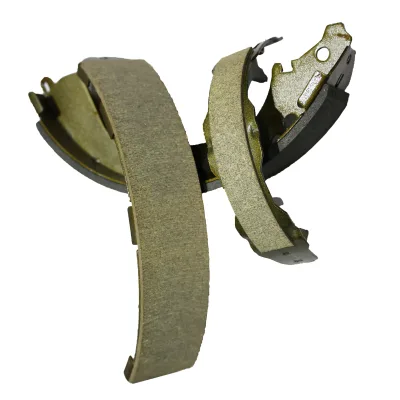


Comprehensive Sourcing Guide
Brake Shoe Lock Pin Sourcing Guide
Procurement professionals must first distinguish between generic body parts and specialized safety components when searching for brake shoe lock pins. The available market data indicates a mix of items labeled as "Brake Shoe Anchor Pin" and "Shoe Anchor Pin," often categorized under utility truck body parts or emergency repair kits. Buyers should verify that the specific item matches the functional requirement of a locking mechanism rather than a general structural fastener, as the listed attributes sometimes conflate distinct component types.
The observed product listings reveal significant variation in customization options and material specifications, ranging from standard steel constructions to powder-coated finishes designed for durability. While some entries suggest "Performance Enhancement" as a function, the primary application remains the replacement of worn components within the brake system of utility trucks. Sourcing teams must carefully cross-reference the listed model numbers, such as STA07-000006 or 3EC-30-11810, against their vehicle's technical manuals to ensure the lock pin fits the specific anchor pin geometry.
Product Scope and Observed Listing Signals
Buyers should analyze the diverse range of product attributes to identify genuine brake shoe lock pins amidst broader automotive repair listings. The data shows items described with specific installation positions, such as "Underneath," and materials like "Steel," which are critical for identifying the correct hardware. However, some listings also include unrelated items like digital tire gauges or water-fuel savers, requiring careful filtering to isolate the specific mechanical fastener needed for brake system maintenance.
Commercial signals in the listings indicate that many suppliers offer "Customization" and accept OEM requests, suggesting flexibility in production for specific vehicle models. The observed price range of 0.1 to 100 USD and MOQs varying from 1 to 5000 units reflect a market with both small-scale aftermarket needs and large industrial procurement requirements. Procurement teams must scrutinize the "Product Name" and "Part Type" fields to confirm the item is a functional brake component rather than a generic tool or accessory.
Technical Specifications to Verify
Technical verification begins with confirming the exact model number and standard compliance, as the data lists multiple identifiers like "STA07-000006" and "3EC-30-11810" alongside generic descriptions. Buyers must ensure the listed "Standard" or "Can Be Customized" attribute aligns with their fleet's specific engineering drawings, as the "Unstandard" designation in some listings may indicate non-compliant or generic parts unsuitable for critical safety applications.
Material integrity and finish quality are paramount for components subjected to high stress and friction within the brake system. The observed "Steel" material and "Powder Coated" finish suggest a focus on corrosion resistance, yet buyers must verify the specific alloy grade and coating thickness to prevent premature failure. Additionally, the "Condition" is listed as "New," but procurement teams should request physical samples to validate the "High Quality Performance" claim and ensure the "Installation Position" matches the vehicle's undercarriage requirements.
Compliance and Safety Documentation
Safety documentation is essential for brake components, yet the provided data presents a mix of certifications including "ISO" and "TSCylinder:Multi-cylinder," which may not directly apply to a simple lock pin. Buyers must request specific safety test reports and material safety data sheets to confirm the component meets the rigorous standards required for braking systems, rather than relying on generic certification labels that might refer to the supplier's broader product line.
Regulatory compliance also involves verifying the "OEM" status and "Aftermarket" classification to ensure the part is legally permissible for use in commercial vehicles. The "Non-Asbestos" attribute found in some listings is a positive indicator for environmental and health safety, but it must be explicitly linked to the Brake Shoe Lock Pin in question. Procurement teams should demand traceability documentation that links the "Place of Origin" and "Production Standard" to the specific batch of parts being purchased.
Cost Drivers and Commercial Terms
Cost structures for brake shoe lock pins are influenced by customization levels, material costs, and the complexity of the powder-coating process. The observed "EXW/Fob/CFR/CNF/CIF" pricing terms indicate that logistics costs can vary significantly depending on the chosen Incoterm, with the "Loading Port" of Qingdao Port, China, serving as a primary shipping origin. Buyers must calculate the total landed cost by factoring in freight, insurance, and potential tariffs, as the base price range of 0.1 to 100 USD does not include these variable expenses.
Minimum Order Quantities (MOQ) and lead times are critical commercial factors that impact inventory planning and cash flow. The data shows an MOQ of 1000 for some items, while others allow orders as low as 1 unit, creating a disparity in purchasing power and unit economics. Delivery times ranging from 15 to 30 days require careful scheduling to avoid production delays, and buyers should negotiate clear penalties for late delivery given the critical nature of brake system components.
Supplier Qualification and Quality Control
Supplier qualification requires a deep dive into the "Place of Origin" and "Update Method" to ensure reliable communication and consistent manufacturing practices. The listings mention origins in Cangzhou and Ruian, China, which are known industrial hubs, but buyers must verify the specific factory's capacity to maintain consistent quality across large batches. The "OEM Service: Accepted" attribute suggests flexibility, but it does not guarantee that the supplier has the necessary quality control infrastructure for safety-critical parts.
Quality control protocols must be established to validate the "High Quality Performance" claims and ensure the "Condition" remains "New" upon delivery. Buyers should implement a rigorous inspection process that checks for dimensional accuracy, finish integrity, and material strength, as the "Can Be Customized" option introduces variability that must be managed. Regular audits and sample testing are necessary to confirm that the "Packing Way," whether cartons or pallets, protects the components from damage during transit.
Long-Term Procurement Checks
Long-term procurement success depends on establishing a robust relationship with suppliers who can consistently meet evolving technical and regulatory requirements. The "Update Method: by Email" indicates a communication channel, but buyers should formalize this with regular quality reviews and performance scorecards to track supplier reliability over time. Continuous monitoring of the "Market" trends and "Vehicle Compatibility" ensures that the sourced parts remain relevant as vehicle fleets evolve and new models are introduced.
Sustainability and supply chain resilience are increasingly important factors in long-term sourcing strategies for automotive components. Buyers should assess the supplier's ability to maintain consistent "Delivery Time" and "MOQ" flexibility during market fluctuations, ensuring a steady supply of brake shoe lock pins. Regular re-evaluation of the "Standard" and "Certification" status helps maintain compliance with changing safety regulations, securing the operational continuity of the fleet's braking systems.
FAQs
What is the primary function of a brake shoe anchor pin?
The primary function is performance enhancement within the brake system. These steel components serve as critical replacement parts for utility trucks. They ensure proper alignment and stability of the brake shoes during operation. The design supports reliable braking performance and extends the lifespan of the assembly.
Can brake shoe anchor pins be customized for specific vehicles?
Yes, customization is available for these brake components. Buyers can request standard or custom model numbers to fit specific utility trucks. The size and specifications can be tailored to meet unique vehicle requirements. This flexibility ensures a precise fit and optimal performance for diverse applications.
What certifications are associated with these brake shoe pins?
These products hold ISO certification, ensuring adherence to quality standards. The manufacturing process follows strict guidelines to guarantee high-quality performance. Buyers can rely on these certifications for compliance and safety. The certified production methods support consistent quality across all supplied units.
How long is the delivery time for these brake parts?
The delivery time is typically within 30 days for standard orders. Some specific items may have a delivery date of 15 days. This timeframe allows for efficient processing and shipping from the origin. Buyers should confirm exact timelines based on their specific order quantity and specifications.
What is the minimum order quantity for these anchor pins?
The minimum order quantity is generally 1000 units for these brake components. This MOQ applies to standard customization requests. Buyers seeking smaller quantities should contact suppliers for alternative options. The bulk ordering model supports cost-effective sourcing for aftermarket and OEM needs.
Where are these brake shoe pins manufactured and shipped from?
These parts originate from China, specifically from locations like Cangzhou and Ruian. The loading port for shipping is Qingdao Port. This logistics setup ensures efficient export to global markets. Buyers can expect reliable shipping routes from these established industrial hubs.