Source 12 Valves Cylinder Head for Cars, Trucks, and Engines
Compare 21 listings for the 12 Valves Cylinder Head from verified suppliers. Buyers can review specifications, prices, and customization options for automotive and industrial applications.
Key considerations
Products List


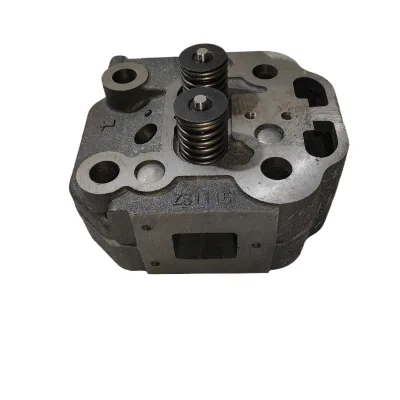


Cylinder Head Cylinder Liner Cylinder Block Various Engine Spare Parts
$999.00 - $99999.00
MOQ: 1 Pieces


Comprehensive Sourcing Guide
Strategic Sourcing Guide for 12-Valve Cylinder Heads
The procurement of a 12-valve cylinder head represents a critical decision in the maintenance and manufacturing of heavy-duty diesel engines. This component serves as the structural interface between the engine block and the combustion chamber, housing the intake and exhaust valves, spark plugs or glow plugs, and coolant passages. In the context of industrial machinery, agricultural equipment, and marine applications, the integrity of the cylinder head directly dictates engine efficiency, thermal management, and longevity. Buyers must navigate a complex supply chain where product attributes vary significantly between manufacturers, requiring a disciplined approach to specification verification and supplier evaluation.
Technical Specifications and Model Variability
When sourcing a 12-valve cylinder head, the primary technical challenge lies in the variability of model numbers and engine compatibility. The market contains a wide array of designations, ranging from specific OEM codes like VG1560040056 and Vg1560040058 to broader engine families such as 1115, S1115, and SDEC POWER Model 135. Furthermore, compatibility extends to major international brands including MAN, DAIHATSU, YANMAR, and KOMATSU, with specific references to models like the Komatsu-6D125. A 12-valve configuration typically implies a specific valve train architecture, often found in high-torque diesel applications, but the physical dimensions, port shapes, and bolt patterns are unique to each engine series.
Buyers must verify the exact model number against their engine's serial number rather than relying solely on the valve count. The material composition is another critical specification; while many units are constructed from cast iron or steel, the specific alloy and casting technique (such as "Casting" or "Technics") influence thermal expansion rates and durability. Some listings indicate a weight of 6.5 kg, while others suggest standard packaging weights of 10kg, 15kg, or 40kg, which may reflect the inclusion of gaskets or packaging materials rather than the net weight of the casting. The application scope is equally diverse, covering cars, trucks, motorbikes, boats, tractors, lawnmowers, and excavators. Consequently, a single cylinder head cannot be assumed to fit all 12-valve engines without rigorous cross-referencing of the engine type, which is predominantly diesel in this category.
Compliance, Certification, and Standard Verification
Navigating the regulatory landscape for cylinder heads requires careful attention to certifications and standards. The supply chain for these components often originates from regions in China, including Henan, Hebei, and Chongqing, as well as international hubs in Japan, Korea, and Australia. Buyers must scrutinize the certification status of the supplier, as some listings explicitly mention TSCE and ISO certifications, while others list CCC (China Compulsory Certification). However, it is important to note that not every product listing includes a machinery test report, which is often marked as "Not Available."
The concept of "Standard Component" versus "Non-Standard Component" is a vital distinction in compliance. Some cylinder heads are manufactured to standard specifications, while others are custom-made to meet specific customer needs. The "Standard" attribute in product data can refer to packaging standards (e.g., 1kg, 15kg, 40kg) or component classification. Buyers should verify if the product adheres to international quality grades, such as "OEM Grade," which suggests the part meets original equipment manufacturer tolerances. Additionally, the "Standard Package" or "Standard Specifications" mentioned in listings may refer to the packaging method (e.g., Wooden Box, Carton box Packing, or Ocean Freight) rather than the engineering standard of the part itself. Without explicit documentation of a machinery test report or specific ISO standard numbers, buyers should request third-party validation before finalizing large orders.
Cost Drivers and Pricing Dynamics
The pricing structure for 12-valve cylinder heads is influenced by a multitude of factors, including material costs, customization requirements, and logistics. The observed price range in the market spans from $1 to $99,999, a variance that reflects the difference between a single replacement part and a bulk industrial order or a specialized high-performance unit. The minimum order quantity (MOQ) also varies, with observed ranges from 1 to 100 units, allowing for both single-item purchases and bulk procurement.
Material composition is a primary cost driver; steel and cast iron cylinder heads generally command different price points based on the raw material market. Customization availability is another significant factor; while standard parts are typically more affordable, "Customized Packaging" or "Customized" engineering specifications will incur additional costs. Logistics also play a substantial role in the final landed cost. Options such as "Ocean Freight" or dispatch from ports like Chongqing, Shanghai, Shenzhen, and Guangzhou introduce variable shipping expenses depending on the destination and volume. Buyers should be aware that the "Supply Ability" of a supplier, such as 3000 pieces per month, can impact pricing stability during periods of high demand. It is essential to distinguish between the unit price and the total cost of ownership, which includes packaging, insurance, and potential customs duties.
Typical Applications and Operational Context
The versatility of the 12-valve cylinder head is evident in its broad application across various sectors. These components are integral to diesel engines used in heavy machinery, including excavators and tractors, as well as light-duty vehicles like cars and motorbikes. The specific engine types, such as the 1115 series or SDEC POWER Model 135, are often associated with agricultural and construction equipment where reliability is paramount. The "Application" field in product data lists a wide range of uses, from boats to lawn mowers, indicating that the same valve configuration can be adapted for different power outputs and operating conditions.
Understanding the operational context is crucial for selecting the right part. For instance, a cylinder head used in an excavator must withstand higher thermal loads and mechanical stress compared to one used in a lawnmower. The "Features" listed, such as "Easy to Operate," may refer to the installation process or the engine's performance characteristics rather than the part itself. Buyers should consider the environmental conditions in which the equipment operates; marine applications require corrosion-resistant materials, while heavy-duty truck applications demand high thermal stability. The "Keywords" associated with these parts, such as "Automotive Parts," reinforce their role in the broader transportation and machinery ecosystem.
Supplier Evaluation and Supply Chain Integrity
Evaluating suppliers for cylinder heads requires a focus on reliability, transparency, and production capacity. The origin of the product is a key indicator of supply chain integrity, with major manufacturing hubs in Henan, Hebei, and Chongqing in China. Buyers should verify the "Place of Origin" to ensure it aligns with their quality expectations and logistical requirements. The "Brand Name," such as WSEPO, may indicate a specific manufacturer, but buyers should also be prepared to encounter generic or "Neutral Packaging" options.
Supplier capabilities are often quantified by metrics like "Supply Ability," with some suppliers offering up to 3000 pieces per month. However, the availability of a "Machinery Test Report" is a critical differentiator; many listings indicate this report is "Not Available," which necessitates a more rigorous pre-shipment inspection by the buyer. The "Quality" attribute, often described as "OEM Grade," should be backed by verifiable documentation. Additionally, the "Port of Dispatch" options (Chongqing, Shanghai, Shenzhen, Guangzhou) provide flexibility in logistics but require coordination with freight forwarders. Buyers should prioritize suppliers who offer clear communication regarding their "Technics" (e.g., Casting) and "Standard Component" status to avoid receiving non-compliant parts.
Quality Control and Long-Term Procurement Considerations
Ensuring the quality of a 12-valve cylinder head involves a multi-stage verification process. The "Warranty" period is a significant indicator of supplier confidence, with observed ranges from 6 Months to 12 Months. A longer warranty period often correlates with higher manufacturing standards and better material selection. However, buyers must read the warranty terms carefully, as they may be limited to specific defects or exclude damage caused by improper installation.
For long-term procurement, consistency in product attributes is essential. The "Packaging Details," such as "Carton box Packing" or "Wooden Box," must be sufficient to protect the casting during transit, especially for international shipments via "Ocean Freight." The "Color" of the part, typically "Grey," is a standard visual indicator of cast iron or steel, but buyers should verify that the finish meets their specifications. The "Selling Units" being listed as "Single item" suggests that parts are available individually, but bulk orders may require negotiation on pricing and lead times.
| Attribute Category | Observed Variations | Verification Requirement |
|---|---|---|
| Material | Steel, Iron | Request material certification or chemical analysis report. |
| Warranty | 6 Months, 12 Months | Confirm coverage scope and claim process in writing. |
| Origin | China (Henan, Hebei, Chongqing), Japan, Korea | Verify factory audit reports if origin is critical. |
| Certification | TSCE, ISO, CCC | Request valid certificate copies; note "Not Available" status. |
| Packaging | Wooden Box, Carton, Standard Package | Ensure packaging meets shipping and storage requirements. |
| Standard | Standard, Non-Standard, Custom | Confirm if the part is an exact OEM replacement or modified. |
Buyers should also consider the "Key" attributes of the supply chain, such as the "Port of Dispatch" and "Lead Time," which are not explicitly listed but are implied by the logistics options. The "Specifications" being listed as "Std" or "Customized" requires a clear definition of tolerances. Finally, the "Application" list serves as a reminder that a part suitable for a tractor may not be ideal for a boat without specific corrosion protection. By maintaining a disciplined approach to these variables, buyers can secure high-quality 12-valve cylinder heads that ensure operational continuity and minimize downtime.
FAQs
What certifications are available for 12 valves cylinder heads?
Available certifications include TSCE, ISO, and CCC. Buyers must verify specific certificate copies as not all listings provide machinery test reports, and some products may lack these documents entirely.
Which materials are used to manufacture these cylinder heads?
Materials typically include steel and iron. The specific alloy and casting techniques influence thermal expansion and durability, so buyers should request material certifications to confirm the composition matches their engine requirements.
How long is the warranty period for these parts?
Warranty periods range from 6 months to 12 months depending on the supplier. Buyers should confirm the coverage scope and claim process in writing before purchasing to ensure protection against manufacturing defects.
Can buyers request customized packaging for these cylinder heads?
Yes, customization is available for packaging and specifications. Options include wooden boxes, carton boxes, or neutral packaging, allowing buyers to tailor logistics solutions to their specific shipping and storage needs.
What is the minimum order quantity for these parts?
The minimum order quantity ranges from 1 to 100 units. This flexibility allows for both single-item purchases and bulk procurement, though specific MOQs may vary by supplier and customization requirements.
Which locations are the primary origins for these products?
Primary origins include China regions like Henan, Hebei, and Chongqing, as well as Japan, Korea, and Australia. Buyers should verify the place of origin to ensure alignment with their quality expectations and logistical requirements.
How does the supply capacity affect availability?
Some suppliers offer a supply ability of 3000 pieces per month. This capacity impacts pricing stability during high demand, so buyers should coordinate with suppliers to ensure consistent supply for their operational needs.