Source 120 Degree Indoor WiFi Camera for home, office, and retail
Compare 30 listings for the 120 Degree Indoor WiFi Camera to find options with wireless technology, motion detection, and various resolutions. Buyers can review specifications like sensor type, IR distance, and certifications to select the right device for their needs.
Key considerations
Products List


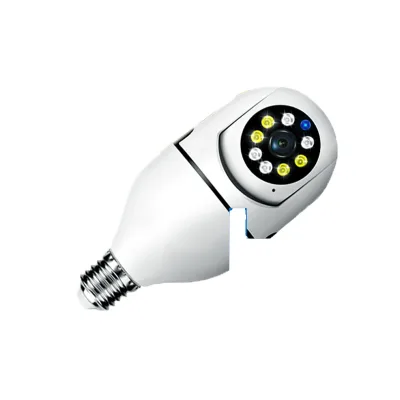
2MP High-Definition Indoor Wi-Fi Smart Security Camera with Night Vision
$12.45 - $13.45
MOQ: 10 Pieces




Comprehensive Sourcing Guide
Strategic Sourcing Guide for 120 Degree Indoor WiFi Cameras
The procurement of indoor wireless surveillance equipment requires a nuanced understanding of the intersection between optical geometry, wireless transmission protocols, and regulatory compliance. When sourcing a device described as a "120 Degree Indoor WiFi Camera," buyers must navigate a market where specifications often vary significantly between manufacturers. The core requirement of a 120-degree field of view implies a specific lens configuration designed to maximize coverage in confined spaces without sacrificing critical detail. This guide outlines the essential factors for evaluating potential suppliers, verifying technical claims, and ensuring long-term reliability for B2B procurement needs.
Optical Geometry and Sensor Architecture
The defining characteristic of a 120-degree camera is its wide-angle lens, which is critical for monitoring large indoor areas such as lobbies, warehouses, or open-plan offices from a single vantage point. In the context of the available product data, the optical system often utilizes specific lens configurations, such as the 3.6mm or 6mm lenses observed in similar indoor surveillance units. While a 3.6mm lens typically offers a wider field of view, the exact angle depends on the sensor size and the specific optical design. Buyers should verify that the listed field of view corresponds to the sensor type, as CCD and CMOS sensors behave differently in low-light and wide-angle scenarios.
The sensor technology is a primary determinant of image quality. The supply chain data indicates the presence of both CCD and CMOS sensors in the market. CMOS sensors are generally preferred for modern IP cameras due to their lower power consumption and higher integration capabilities, which are essential for wireless transmission. The observed sensor sizes, such as the 1/4 inch format, directly impact the light-gathering ability and the resulting image resolution. For a 120-degree application, the resolution must be sufficient to maintain clarity at the edges of the frame, where distortion is most likely to occur. The output resolution of 2560(H)X2048(V) observed in specific high-definition models suggests that buyers should look for at least this level of clarity to ensure that facial recognition or license plate reading remains viable across the wide angle.
Wireless Transmission and Video Processing Standards
Connectivity is the second pillar of the "WiFi" designation in the product keyword. The technology stack for these devices often relies on wireless transmission protocols, as noted in the product attributes. However, the reliability of the connection depends heavily on the video processing capabilities. The data highlights H.264 video compression as a standard feature for high-definition models. This compression standard is vital for reducing bandwidth usage while maintaining image quality, which is crucial for indoor WiFi networks that may be shared with other office equipment.
Dual streaming capabilities are another critical feature to verify. This allows the camera to send a high-resolution stream for recording and a lower-resolution stream for live monitoring, optimizing network performance. The effective distance of the wireless signal is also a key consideration. While some models in the market list effective distances ranging from 0-9 meters to 10-30 meters, the actual range in an indoor environment will be significantly affected by wall density, interference from other electronic devices, and the placement of the router. Buyers must ensure that the selected model supports the specific frequency bands required by their local infrastructure and that the antenna design supports stable connectivity in the intended physical layout.
Compliance, Certification, and Regulatory Standards
Navigating the regulatory landscape is non-negotiable for B2B procurement. The product data reveals a diverse array of certifications, including CE, FCC, RoHS, ISO9001, and ISO. For a device marketed as a "120 Degree Indoor WiFi Camera," the presence of FCC certification is particularly important if the device is intended for the North American market, as it verifies that the radio frequency emissions comply with federal regulations. Similarly, CE marking indicates conformity with health, safety, and environmental protection standards for the European Economic Area.
RoHS compliance ensures that the device does not contain hazardous substances, which is a standard requirement for electronics sold in many global markets. ISO9001 certification indicates that the manufacturer has a quality management system in place, which is a strong indicator of process consistency. However, buyers should not assume that every listed product possesses all these certifications. The data shows that some models carry CE and RoHS, while others include FCC and ISO9001. It is imperative to request specific certification documentation for the exact model number before placing an order. The absence of a specific certification in the general product description should not be interpreted as a lack of compliance, but rather as a need for explicit verification.
Cost Drivers and Pricing Variables
The pricing for indoor WiFi cameras is influenced by a complex matrix of factors, including sensor quality, lens specifications, and the complexity of the wireless module. The observed price range in the market spans from 1 to 53 USD, indicating a vast disparity in product tiers. This wide range suggests that the lower end of the spectrum may include basic models with limited features, while the higher end likely encompasses units with advanced features such as motion detection, infrared night vision, and higher resolution outputs.
The Minimum Order Quantity (MOQ) is another significant cost driver. The data indicates an MOQ range of 5 to 500 units. For small-scale deployments, a lower MOQ is preferable to minimize upfront capital expenditure. However, larger orders often unlock better unit pricing and more favorable shipping terms. Buyers should also consider the packaging requirements; some models come in gift boxes, while others use standard boxes. While packaging may seem cosmetic, it can impact the perceived value and the cost of logistics, especially for high-volume shipments. The origin of the product, often listed as Shenzhen, China, is a common hub for electronics manufacturing, which can influence lead times and shipping costs.
Typical Applications and Environmental Suitability
The application of a 120-degree indoor camera is versatile, ranging from advertising displays to security monitoring. The product data explicitly lists "Advertising" as a use case, suggesting that these cameras can be integrated into digital signage or interactive displays. However, the most common application is security. The wide field of view makes these cameras ideal for monitoring large indoor spaces where multiple entry points or blind spots are a concern.
Environmental factors must also be considered. While the device is designated for indoor use, some models feature waterproof or weatherproof ratings, which may be unnecessary for indoor applications but indicate a robust build quality. The operating temperature range of -10 to +60 degrees Celsius suggests that the hardware is designed to withstand a wide range of conditions, which is beneficial for unconditioned indoor spaces like warehouses or garages. Motion detection support is a standard feature in many models, enhancing the utility of the camera for security alerts. Buyers should verify if the motion detection algorithm is sensitive enough to distinguish between human movement and environmental factors like shifting light or air currents.
Supplier Evaluation and Quality Control Protocols
Selecting a reliable supplier requires a rigorous evaluation process that goes beyond the initial product listing. The data shows that customization is available for many products, which is a positive indicator of a flexible manufacturing capability. However, buyers must verify the supplier's ability to maintain consistency across custom orders. The presence of design software like Pro-E in the product attributes suggests that the manufacturer engages in detailed engineering, which is a positive sign for quality control.
Quality control should be a central part of the procurement strategy. Buyers should request test results for key performance indicators such as video compression efficiency, wireless signal stability, and lens distortion correction. The standard dimensions provided, such as 12512545mm or 333332.5mm, should be verified against the physical product to ensure that the unit will fit the intended mounting location. Installation methods, such as fixed installation, should be confirmed to ensure compatibility with the mounting surface. The use of specific standards like HASCO for components can also be a marker of high-quality manufacturing, though this should be verified on a case-by-case basis.
Long-Term Procurement and Maintenance Considerations
Sourcing is not a one-time transaction but a long-term relationship. Buyers should consider the availability of firmware updates, spare parts, and technical support. The use of standard interfaces like VGA and HDMI ensures compatibility with existing monitoring systems, which is crucial for long-term integration. The feature of remote control, whether included or optional, impacts the user experience and should be aligned with the operational needs of the end-user.
The production model numbers, such as IPC-04C, LP-03, and WDM-IP8605Q-W, serve as unique identifiers for specific configurations. Buyers should maintain a record of these model numbers to ensure consistency in future orders. The lead time, while not explicitly defined in the data, is a critical factor for supply chain planning. Buyers should establish clear communication channels with the supplier to manage expectations regarding production schedules and shipping timelines. By focusing on these long-term factors, buyers can ensure a stable and reliable supply of high-quality indoor WiFi cameras that meet their specific operational requirements.
FAQs
What certifications are available for 120 degree indoor wifi cameras?
Available certifications include CE, FCC, RoHS, ISO9001, and ISO. Buyers must verify specific model documentation as not every product carries all listed marks, and some models only show CE and RoHS while others include FCC.
Which sensor types are used in these indoor cameras?
Both CCD and CMOS sensors are observed in the market data. CMOS sensors are often preferred for IP cameras due to lower power consumption, while CCD sensors appear in specific models with 1/4 inch sensor sizes.
Can I find 120 degree indoor wifi cameras with remote control?
Some models feature a remote control while others do not. Buyers should check the specific product attribute for each model, as the availability of this feature varies significantly across different listings and configurations.
What is the effective distance range for these wireless cameras?
Effective distances range from 0-9 meters to 10-30 meters depending on the model. Actual indoor range will be affected by wall density and interference, so buyers should verify the specific distance rating for their intended layout.
How does H.264 compression affect video streaming quality?
H.264 compression reduces bandwidth usage while maintaining high-definition image quality. This is essential for wireless networks, and some models also support dual streaming to optimize performance between recording and live monitoring streams.
What are the typical MOQ values for these devices?
Minimum Order Quantities range from 5 to 500 units across different suppliers. Lower MOQs are preferable for small deployments, while larger orders may unlock better pricing and shipping terms from manufacturers in Shenzhen, China.
Which lens options are available for wide-angle indoor coverage?
Available lens options include 3.6mm and 6mm configurations. The 3.6mm lens typically offers a wider field of view, but buyers must verify the exact angle against the sensor size to ensure clarity at the frame edges.
What is the operating temperature range for these cameras?
The operating temperature range is typically -10 to +60 degrees Celsius with 10% to 90% relative humidity. This allows use in unconditioned indoor spaces like warehouses, though buyers should confirm specific ratings for their environment.