Source 13-in-1 Multifunction Electric Pressure Cooker for Home, Hotel, and Restaurant
Find and compare 24 listings for the 13-in-1 Multifunction Electric Pressure Cooker. Options range from 6L to 12L capacities with aluminum or stainless steel inner pots, featuring microcomputer or mechanical controls and power ratings between 800W and 1600W for various household and commercial needs.
Key considerations
Products List


Stainless Steel Electric Pressure Cooker with Multi Cooking Functions
$20.00 - $23.00
MOQ: 1000 Pieces

Touch-Controlled Multi Cooker: Electric Pressure Cooker for Quick Meals
$16.50 - $18.00
MOQ: 1000 Pieces

Electric Pressure Cooker 6 Qt Stainless Steel Multi Cooker Multi-Function Cooker
$16.50 - $18.00
MOQ: 1000 Pieces

Multi Cooker with Touch Control for Electric Pressure Cooking Convenience
$16.50 - $18.00
MOQ: 1000 Pieces

Touch Control Electric Pressure Cooker for Versatile Kitchen Cooking Needs
$16.50 - $18.00
MOQ: 1000 Pieces


Electric Pressure Cooker, Removable Cover, One-Touch Multi-Cook, Keep Warm.
$6.11 - $6.22
MOQ: 1000 Pieces

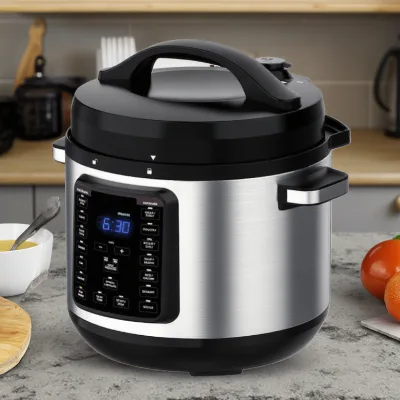
Comprehensive Sourcing Guide
13-in-1 Multifunction Electric Pressure Cooker Sourcing Guide
Sourcing a multi-function electric pressure cooker requires a careful balance between verifying technical capabilities and ensuring commercial viability. The market offers a wide array of models, ranging from basic mechanical units to advanced microcomputer-controlled devices with extensive preset programs. Buyers must navigate this landscape by focusing on specific product attributes that align with their target market’s needs, such as capacity, power consumption, and material quality. The observed product data indicates a diverse inventory with capacities ranging from 6L to 12L, and power ratings varying from 800W to 1600W, suggesting that a one-size-fits-all approach is ineffective for procurement.
This guide provides a structured approach to evaluating suppliers and products in this category. It emphasizes the importance of verifying technical specifications, understanding cost drivers, and ensuring compliance with safety standards. By focusing on evidence-based verification steps, buyers can mitigate risks associated with quality inconsistencies and supply chain disruptions. The following sections detail the critical factors that influence sourcing decisions, from initial product scope analysis to long-term supplier relationship management.
Product Scope and Observed Listing Signals
The current market landscape for electric pressure cookers is characterized by significant variation in product models and features. Observed listings include models such as ALY-H6, YS011, ALY-HP04, ALY-HP01, ALY-DP08, and Aly-K3, each with distinct specifications. For instance, the ALY-H6 model features a 6L capacity with aluminum alloy inner pot material and microcomputer control, while the YS011 model offers mechanical control and a 1000W power rating. This diversity highlights the need for buyers to clearly define their requirements before engaging with suppliers, as the term "13 in 1" may refer to different functional combinations depending on the manufacturer.
Applications for these appliances extend beyond household use to include hotels, garages, commercial settings, and offices, as indicated by the observed product attributes. The presence of features like LED displays, time presetting, and non-stick coatings suggests a focus on user convenience and ease of maintenance. However, buyers should be cautious of generic descriptions and verify the actual functionality of each model. The observed data also shows that some models are designed for specific voltage inputs, such as 220V, which is critical for ensuring compatibility with the target market’s electrical infrastructure.
Technical Specifications to Verify
When evaluating electric pressure cookers, buyers must prioritize the verification of core technical specifications to ensure product performance and safety. Key attributes to verify include the inner pot material, which can be aluminum alloy, stainless steel, or aluminum, as these materials affect heat distribution and durability. The power rating is another critical factor, with observed values ranging from 800W to 1600W, influencing cooking speed and energy efficiency. Additionally, the control type, whether microcomputer or mechanical, determines the level of automation and user interface complexity, which should align with the target customer’s preferences.
Capacity and working pressure are also essential specifications to confirm. Observed capacities range from 6L to 12L, with some models supporting a range of 4L to 8L. The working pressure, observed to be between 0-70kpa, impacts cooking efficiency and safety mechanisms. Buyers should request detailed technical datasheets that specify these parameters and verify them against industry standards. Furthermore, the presence of features like 24-hour presetting and multi-function cooking capabilities should be validated through product samples or detailed video demonstrations to ensure they function as advertised.
Compliance and Safety Documentation
Compliance with safety and electrical standards is non-negotiable for electric pressure cookers, given the high-pressure and high-temperature operating conditions. Buyers must ensure that suppliers provide relevant certification documents, such as CE, RoHS, or local safety marks, depending on the target market. Although specific certification statuses are not provided in the observed data, buyers should explicitly request proof of compliance with international safety standards, such as IEC 60335-2-15 for household and similar electrical appliances. This verification process helps mitigate risks associated with product liability and ensures that the appliances meet mandatory safety requirements.
In addition to electrical safety, buyers should verify the material safety of components, particularly the inner pot and non-stick coatings. The observed data mentions aluminum and stainless steel inner pots, but buyers should confirm that these materials are food-grade and free from harmful substances like PFOA. Documentation regarding material composition and testing results should be requested to ensure compliance with food safety regulations. Furthermore, buyers should inquire about the warranty terms, with observed warranties typically lasting one year, and clarify the scope of coverage, including free spare parts provision, to understand the after-sales support structure.
Cost Drivers and Commercial Terms
Understanding the cost drivers in the electric pressure cooker market is essential for effective budgeting and negotiation. Key factors influencing cost include the power rating, material quality, and control complexity. Models with higher power ratings, such as 1600W, and advanced microcomputer controls tend to be more expensive than basic mechanical models. The inner pot material also plays a significant role, with stainless steel options often commanding a premium over aluminum. Buyers should analyze these variables to determine the optimal balance between cost and performance for their specific market segment.
Commercial terms, including MOQ, lead times, and payment conditions, are critical components of the sourcing strategy. Observed MOQs range from 1 to 1000 units, offering flexibility for both small and large buyers. However, buyers should negotiate for favorable terms based on order volume and long-term partnership potential. Lead times and production capacity should be discussed to ensure timely delivery, especially during peak seasons. Additionally, buyers should clarify the packaging details, with observed packing in cartons, to assess logistics costs and ensure product protection during transit.
Supplier Qualification and Quality Control
Supplier qualification is a crucial step in mitigating sourcing risks and ensuring consistent product quality. Buyers should conduct thorough due diligence on potential suppliers, including verification of their business licenses, manufacturing capabilities, and quality management systems. The observed data indicates that suppliers are located in Guangdong, China, a major hub for appliance manufacturing, but buyers should still verify the specific factory conditions and production processes. Requesting factory audits or third-party inspection reports can provide valuable insights into the supplier’s operational standards and reliability.
Quality control measures should be established to monitor product consistency and compliance with specifications. Buyers should implement incoming quality inspections, in-process checks, and final random inspections to identify and address defects early in the production cycle. The observed data mentions features like non-stick coatings and LED displays, which are prone to quality variations, making rigorous testing essential. Buyers should also establish clear communication channels with suppliers to address any quality issues promptly and ensure continuous improvement in product quality.
Long-Term Procurement Checks
Long-term procurement success depends on building sustainable relationships with suppliers and continuously monitoring market trends. Buyers should establish regular performance reviews with suppliers to assess their adherence to quality, delivery, and service commitments. The observed data highlights the importance of after-sales support, with suppliers offering free spare parts, which should be evaluated for responsiveness and effectiveness. Buyers should also stay informed about technological advancements and regulatory changes in the electric pressure cooker market to adapt their sourcing strategies accordingly.
Furthermore, buyers should diversify their supplier base to reduce dependency on single sources and mitigate supply chain risks. Engaging with multiple suppliers can provide competitive pricing options and ensure continuity of supply in case of disruptions. Buyers should also invest in market research to understand evolving consumer preferences and product innovations, such as new multi-function capabilities or energy-efficient designs. By maintaining a proactive approach to supplier management and market analysis, buyers can secure a competitive advantage and drive long-term growth in the electric pressure cooker segment.
FAQs
What is the capacity range for these pressure cookers?
The available capacity ranges from 6 liters to 12 liters depending on the specific model selected. Some listings indicate support for sizes between 4 and 8 liters, while others explicitly state 6L or 12L options for different household needs.
Which control types are available for these electric cookers?
Both microcomputer control and mechanical control types are available in the current product listings. Buyers can choose between programmable digital interfaces or traditional mechanical knobs based on their preferred cooking interface and feature requirements.
Can I find models with aluminum alloy inner pots?
Yes, several models feature inner pots made from aluminum alloy or aluminum material with non-stick coatings. Some listings also mention stainless steel options, so buyers should verify the specific material composition for each model number before ordering.
What power ratings are offered for these multi-use cookers?
Power ratings vary across models, with observed values including 800W, 900W, 1000W, 1200W, 1300W, and 1600W. The specific wattage depends on the model and intended capacity, so checking the product specifications is necessary for accurate power planning.
Are customization options available for bulk orders?
Customization is available for these electric pressure cookers, allowing buyers to request specific modifications. However, some listings indicate that private mold services are not offered, so buyers should confirm the extent of customization capabilities with the supplier.
What warranty coverage is provided for these appliances?
A standard one-year warranty is provided for the electric pressure cookers listed in the catalog. This coverage typically applies to manufacturing defects, though specific terms may vary by supplier and should be confirmed during the procurement process.
Where are these pressure cookers manufactured?
The products originate from China, with specific manufacturing locations noted in Guangdong. Buyers sourcing these items should expect the place of origin to be within China when reviewing supplier details and shipping logistics.