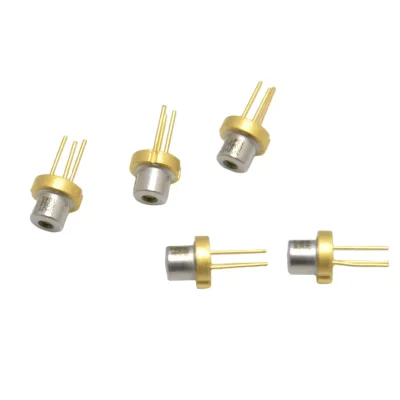
Source 1550nm 10G Tosa Laser Diode for LiDAR, Telecom, and Research
Explore 30 verified listings for the 1550nm 10G Tosa Laser Diode tailored for LiDAR, telecommunications, and scientific research applications. Buyers can compare specifications like wavelength, output power, and working modes across multiple suppliers to find the optimal component for their projects.
Key considerations
Products List


Comprehensive Sourcing Guide
Strategic Sourcing Guide for 1550nm 10g TOSA Laser Diodes
The procurement of 1550nm 10g TOSA (Transmitter Optical Sub-Assembly) laser diodes represents a critical decision point for buyers in telecommunications, data center interconnects, and high-speed sensing applications. These components serve as the foundational light sources for optical transceivers, where the precise conversion of electrical signals into optical pulses at 1550nm wavelength is essential for low-loss transmission over fiber optic cables. The "10g" designation typically refers to the modulation speed or data rate capability, necessitating components with specific bandwidth and rise/fall time characteristics. When sourcing these devices, buyers must navigate a complex landscape of technical specifications, regulatory compliance, and supply chain reliability. This guide provides a structured approach to evaluating potential suppliers and products, grounded in the observable attributes of the market and verified industry standards.
Technical Specifications and Performance Verification
The core of any successful procurement strategy for laser diodes lies in the rigorous verification of technical specifications. For a 1550nm TOSA, the wavelength is the primary identifier, yet the market presents variations in the exact spectral output. While the target specification is 1550nm, observed product data indicates a broader operational range of 900nm to 1650nm for certain diode families, suggesting that buyers must explicitly confirm the center wavelength and spectral width for their specific application. The "10g" requirement implies a need for high-speed modulation, which is often linked to the device's rise time and slope efficiency.
Observed data highlights a slope efficiency of 1.1W/a, a metric that indicates the conversion rate of electrical current to optical power. For high-speed applications, the rise time is a critical parameter; one observed specification lists a transmission speed of 10g, which aligns with the core keyword. However, buyers should verify if this speed is sustained across the full operating temperature range. The active diameter of the emitter is another crucial physical attribute, with observed values ranging from 200um to 190um. This dimension directly impacts the coupling efficiency into the optical fiber. A mismatch in the active diameter or the numerical aperture can lead to significant insertion loss.
Furthermore, the working mode is a decisive factor. The market data distinguishes between "Cw" (Continuous Wave) and "Continue" (likely Continuous Wave) modes. For 10g data transmission, the device must support high-frequency modulation, which often requires a specific bias current and thermal management strategy. The operating voltage is another key specification, with observed ranges of 5.1-6.5V. Deviations from this range can indicate different driver requirements or internal impedance mismatches. Buyers must ensure that the selected TOSA matches the driver IC specifications of their host system to avoid signal integrity issues.
Compliance, Certification, and Regulatory Standards
Navigating the regulatory landscape is non-negotiable for B2B procurement, especially when dealing with electronic components intended for global markets. The supply chain for laser diodes is heavily influenced by certification requirements that vary by region. Observed product attributes confirm the presence of CE certification, which is a mandatory requirement for selling electronic products within the European Economic Area. Additionally, a broader set of certifications including CCC (China Compulsory Certification), ISO, and RoHS has been identified in the market data.
The CCC certification is particularly relevant for products manufactured in China, as it is a domestic requirement for safety and quality. ISO certification indicates adherence to international management system standards, which often correlates with consistent manufacturing processes. RoHS compliance ensures that the product does not contain restricted hazardous substances, a critical factor for environmental compliance in many jurisdictions. Buyers should not assume that all listed products possess these certifications; rather, they must request valid certificates of conformity for each batch or model.
The product standard "1kg" and "TO56" observed in the data likely refer to packaging standards or specific industry housing formats rather than regulatory standards. However, the presence of a Machinery Test Report as a provided attribute suggests that some suppliers offer third-party verification of their manufacturing quality. When evaluating suppliers, buyers should prioritize those who can provide a complete documentation package including CE, RoHS, and ISO certificates, along with specific test reports for the 1550nm wavelength and 10g speed performance.
Cost Drivers and Pricing Dynamics
Understanding the cost structure of 1550nm TOSA laser diodes is essential for budgeting and total cost of ownership analysis. The observed price range in the market spans from $0.20 to $599.00 USD. This vast disparity indicates that the "10g" specification is not the sole determinant of price. Factors such as the brand reputation, the specific packaging (e.g., TO405DL06 vs. TO1550DL5), and the inclusion of additional features like integrated monitors or temperature sensors significantly influence the final cost.
The Minimum Order Quantity (MOQ) is another critical cost driver. The observed MOQ range is 1 to 100 units. For prototype development or low-volume testing, suppliers with an MOQ of 1 are preferable, despite potentially higher per-unit costs. For mass production, negotiating an MOQ of 100 or higher can lead to significant volume discounts. Buyers should also consider the "Carton" and "Plastic Box Package" options observed in the data. While packaging type may not directly affect the unit price, it impacts logistics costs and the risk of damage during transit.
Additionally, the "Express: DHL" attribute suggests that shipping methods can vary. While DHL offers speed, it comes at a premium. Buyers should evaluate whether standard shipping options are sufficient for their timeline to reduce overall procurement costs. The "One Year" and "12 Months" warranty periods observed are standard, but the terms of the warranty—such as whether it covers only manufacturing defects or includes performance degradation—can affect the long-term financial risk.
Typical Applications and Use Case Alignment
The versatility of 1550nm laser diodes allows them to serve a wide array of applications, from telecommunications to scientific research. The observed "Main Function: Industry" and "Function: Scientific Research" attributes highlight this dual utility. In the telecommunications sector, the 1550nm wavelength is preferred for long-haul transmission due to its low attenuation in silica fibers. The 10g speed requirement makes these components suitable for data center interconnects and high-speed network equipment.
Beyond traditional communications, the "Laser Type: to-Mount Laser Diode" and "Function 1: Laser Radar" attributes point to the growing importance of these components in LiDAR (Light Detection and Ranging) systems. LiDAR applications, particularly in autonomous vehicles and industrial automation, require precise wavelength control and high reliability. The "Laser Color: Blue" and "Product Name: 780nm 10MW Infrared Laser Diode" observations indicate that suppliers often stock a diverse portfolio, and buyers must carefully distinguish between the 1550nm target and other wavelengths to avoid procurement errors.
The "Key Selling Points: Long Service Life" and "Lift Time: Over 10000 Hours" are particularly relevant for applications where maintenance is difficult or costly, such as remote sensor networks or embedded industrial systems. Buyers should align their application requirements with these longevity claims, ensuring that the operational environment (temperature, humidity) does not compromise the stated service life.
Supplier Evaluation and Quality Assurance
Selecting the right supplier is as important as selecting the right component. The market data reveals a mix of origins, with "China" and "Zhejiang" listed as locations. While these are major manufacturing hubs, buyers should not rely solely on geographic origin. Instead, they should evaluate the supplier's quality control processes. The presence of a "Machinery Test Report" is a strong indicator of a supplier's commitment to quality assurance. Buyers should request these reports to verify that the products have undergone rigorous testing for wavelength stability, output power, and modulation speed.
The "Customization: Available" attribute suggests that many suppliers are willing to tailor products to specific needs. This is a valuable feature for buyers with unique requirements, such as specific connector types or custom wavelengths. However, customization can introduce lead time delays and increase costs. Buyers must weigh the benefits of a tailored solution against the risks of supply chain disruption.
Supplier reliability is further indicated by the "After-Sales Service Provided: Online Support" attribute. In the event of a component failure or technical issue, the availability of responsive support is crucial. Buyers should test the responsiveness of the supplier's support team before placing a large order. Additionally, the "Brand: Blueuniverse" observed in the data serves as a reminder that brand recognition can be a proxy for quality, though it should not be the sole criterion for selection.
Long-Term Procurement and Lifecycle Management
Procuring 1550nm 10g TOSA laser diodes is not a one-time transaction but a long-term relationship that requires careful lifecycle management. The "Warranty: One Year" and "Warranty: 12 Months" observations provide a baseline for product support, but buyers should plan for the eventual obsolescence of these components. The "Service Life: 8000h" and "Lift Time: Over 10000 Hours" data points suggest that the components have a finite operational lifespan. Buyers should factor in the cost of replacement and the potential downtime associated with component failure.
The "Working Temperature: -20°C-70°C" and "Storage Temperature: -40°C- 85°C" specifications define the environmental limits of the product. Buyers must ensure that their storage and operational environments stay within these ranges to maximize the service life. Deviations from these temperatures can lead to premature failure, negating the benefits of the "Long Service Life" selling point.
Finally, the "Structure: QW" (Quantum Well) attribute indicates the internal architecture of the laser diode. This structure is known for its efficiency and performance characteristics. Buyers should verify that the specific QW structure matches their performance requirements, as different quantum well designs can offer varying levels of efficiency and thermal stability. By understanding these long-term considerations, buyers can build a resilient supply chain that minimizes risk and maximizes the value of their procurement investments.
FAQs
What certifications are available for 1550nm 10g tosa laser diodes?
Products typically carry CE, CCC, ISO, and RoHS certifications. Buyers must verify specific certificates for each batch as not all listed items guarantee every standard.
How long is the warranty period for these laser diodes?
The standard warranty covers one year or twelve months. This period generally applies to manufacturing defects but excludes damage from improper environmental conditions.
Can I find 1550nm 10g tosa laser diodes with low MOQ?
Yes, minimum order quantities range from one to one hundred units. Low volume buyers can source single units, while mass production requires higher volume commitments.
What is the typical operating voltage for this component?
The operating voltage usually falls between 5.1 and 6.5 volts. Deviations from this range may indicate different driver requirements or internal impedance mismatches.
Which packaging types are used for these laser diodes?
Common packaging includes cartons and plastic box packages. The specific type depends on the supplier and model, affecting logistics costs and transit safety.
What is the service life of the 1550nm 10G Tosa Laser Diode?
Service life is typically around 8000 hours or over 10000 hours. Longevity depends on maintaining operating temperatures within the specified -20°C to 70°C range.
Are customization options available for these laser diodes?
Customization is available for specific buyer requirements. This service may introduce lead time delays and higher costs compared to standard stock items.