Source 150cc air-cooled fuel scooter for delivery, commuting, and touring
Compare 30 listings of 150cc air-cooled fuel scooter options from verified Chinese manufacturers. Buyers can evaluate engine specs, certifications like CQC and EEC, and pricing to find suitable units for delivery, commuting, or touring.
Key considerations
Products List


150cc Gasoline Scooter / 125cc Gas Scooter / Motorscooter with 12 Inch Wheels
$550.00 - $650.00
MOQ: 24 Pieces


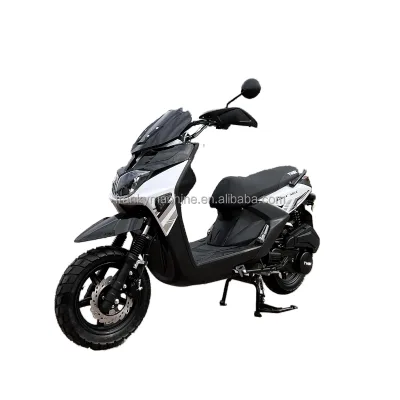

150cc Fuel Engine Motorcycle, Scooter, Motor Vehicle, Gasoline Scooter
$300.00 - $500.00
MOQ: 26 Pieces

150cc Motor Scooter, Motor Bike, Motorcycle, Motor Vehicle, 4-Stroke Gasoline Scooter
$1400.00 - $1900.00
MOQ: 18 Pieces


Comprehensive Sourcing Guide
Strategic Sourcing Guide for 150cc Air-Cooled Fuel Scooters
Understanding the Product Category and Technical Baseline
The global market for small-displacement two-wheelers has seen a consistent demand for cost-effective, fuel-efficient urban mobility solutions. The specific segment of 150cc air-cooled fuel scooters represents a critical intersection of performance and economy. Based on current product listings, these vehicles are predominantly classified as mopeds or light motorcycles designed for urban commuting and light cargo transport. The core technical identity of this category is defined by an engine displacement that typically ranges from 125cc to 150cc, with some listings indicating a broader range of 51cc to 125cc or even up to 250cc depending on the specific model configuration.
The propulsion system for these units is almost exclusively a 4-stroke engine, which offers a balance of fuel efficiency and lower emissions compared to 2-stroke alternatives. The cooling method is a defining characteristic; these units utilize air cooling, which eliminates the complexity, weight, and maintenance requirements associated with liquid cooling systems. This makes them particularly suitable for regions with varying climates where radiator maintenance might be a concern. The engine configurations observed include specific model identifiers such as the 152qmi, which suggests a standardized engine architecture often found in this displacement class.
Fuel consumption is a primary driver for this category, with the vehicles designed to run on standard gasoline. The power output for these engines is typically rated around 5.8 Kw at 7000±500 R/Min, providing sufficient torque for city traffic. The maximum torque is observed at approximately 8.8 Nm at 6000±500 R/Min. Performance metrics indicate a maximum speed capability of roughly 80 km/h, which aligns with regulatory limits for many urban environments. The transmission system frequently employs a combination of belt and shaft drive, a configuration known for durability and low maintenance compared to chain drives.
Compliance and Certification Verification
When sourcing 150cc air-cooled fuel scooters, verifying compliance with international and domestic standards is paramount. The supply chain for these vehicles often originates from China, a major manufacturing hub for this class of vehicle. Buyers must rigorously check the certification status of each supplier, as the market contains a mix of products meeting different regulatory thresholds.
The observed certification landscape includes CQC (China Quality Certification), CCC (China Compulsory Certification), and EEC (European Economic Community) standards. Some listings specifically highlight CQC and CCC, which are essential for domestic sales within China and indicate a baseline of manufacturing quality. For export markets, particularly to Europe, the EEC certification is a critical requirement. It is important to note that while CE is often associated with European compliance, the specific high-confidence data points provided list EEC as the primary certification for certain models. Buyers should not assume that all listed products possess every certification; verification must be done on a per-supplier basis.
Furthermore, the production standards for these scooters often reference specific dimensional and structural requirements. For instance, the physical dimensions of the units can vary, with standard sizes observed around 17606601090mm or 18806901140mm. These dimensions impact shipping logistics and container loading efficiency. The frame material is consistently noted as steel, which provides the necessary structural integrity for the vehicle. Buyers should request copies of the actual certification documents for the specific model they intend to purchase, rather than relying on general marketing claims.
Cost Drivers and Pricing Structure
The pricing for 150cc air-cooled fuel scooters is influenced by a complex array of factors, including engine displacement, customization options, and the level of certification. The observed market price range for these units spans from 300 USD to 3000 USD. This wide variance suggests that the lower end of the spectrum likely corresponds to basic models with minimal features, while the higher end may include units with advanced electronics, specific certifications, or higher customization levels.
Several key cost drivers must be considered during the procurement process. First, the engine size and type play a significant role. Models with 150cc engines generally command a higher price than those with 125cc or lower displacements, although the difference may be marginal depending on the manufacturer's cost structure. Second, customization is a major variable. The availability of options such as remote control systems, Bluetooth MP3 players, and tail boxes can significantly increase the unit cost. Buyers should clarify exactly which features are included in the base price and which are add-ons.
The Minimum Order Quantity (MOQ) is another critical financial factor. The observed MOQ range is between 1 and 150 units. Suppliers with lower MOQs may charge a premium per unit due to the lack of economies of scale, whereas bulk orders of 150 units or more may benefit from reduced per-unit costs. Additionally, the packing method affects the final landed cost. Products packed in "Carton with Iron Bracket" or "Frame+Carton" configurations require different shipping volumes and handling costs. The container loading capacity, observed at 32 units per 20gp container, 70 per 40gp, and 105 per 40hq, is a vital metric for calculating the total shipping cost per unit. Buyers must factor in these logistics costs when evaluating the total cost of ownership.
Typical Applications and Operational Use Cases
The versatility of the 150cc air-cooled fuel scooter makes it suitable for a diverse range of applications. Primarily, these vehicles are designed for urban commuting, where their compact dimensions and manageable weight are advantageous. The dry weight of these scooters typically ranges from 81 kg to 84 kg, making them easy to maneuver in heavy traffic and simple to park. The seat height is generally around 760 mm, providing a comfortable riding position for a wide demographic of riders.
Beyond personal transportation, these scooters are frequently utilized for commercial delivery services. The maximum load capacity, observed between 140 kg and 150 kg, allows for the transport of goods, making them ideal for last-mile delivery operations in dense urban areas. The inclusion of a tail box option further enhances their utility for commercial use, providing secure storage for packages or tools. The robust braking system, featuring a front disc brake and a rear drum brake, ensures safety during frequent stops and starts typical of delivery routes.
In some contexts, these scooters serve as recreational vehicles or entry-level motorcycles for riders transitioning from bicycles. The 4-stroke engine provides a smoother power delivery that is forgiving for less experienced riders. The electrical and kick-start options offer redundancy, ensuring the vehicle can be started even if the battery is depleted. The ground clearance of approximately 140 mm allows for traversal of minor road imperfections, though they are not designed for off-road use. The tire specifications, such as 350-10 or 90/90-10 tubeless tires, are optimized for paved surfaces, offering a balance of grip and durability for daily commuting.
Supplier Evaluation and Selection Criteria
Selecting the right supplier for 150cc air-cooled fuel scooters requires a thorough evaluation of their capabilities and reliability. Since the product origin is consistently listed as China, buyers should focus on suppliers who have a proven track record of exporting to their target market. The presence of specific certifications like CQC, CCC, and EEC is a strong indicator of a supplier's commitment to quality and regulatory compliance. However, buyers must verify that the certifications apply to the specific model they are purchasing, as suppliers may hold certifications for some models but not others.
The ability to offer customization is another key differentiator. Suppliers that provide options for remote control, Bluetooth MP3 integration, and custom tail boxes demonstrate a flexible manufacturing process. This flexibility is crucial for buyers looking to brand the vehicles or adapt them to specific market needs. The production model numbers, such as TZM125D-3, TZM125G-2B, and TZM150H-7, indicate that suppliers often have a portfolio of related models. Buyers should inquire about the interchangeability of parts across these models to ensure long-term maintenance support.
Quality control processes should be a central part of the supplier evaluation. Buyers should ask about the inspection procedures for critical components such as the engine, frame, and braking system. The use of steel frames and single-cylinder engines is standard, but the quality of the welding and assembly can vary. Suppliers who can provide detailed specifications on the bore and stroke dimensions (e.g., 52.4*57.8 mm) and the rated power output demonstrate transparency and technical competence. Additionally, the condition of the product, which is listed as "New," should be verified to ensure that no refurbished or used units are being sold as new.
Quality Control and Long-Term Procurement Considerations
Ensuring the long-term reliability of 150cc air-cooled fuel scooters requires a robust quality control strategy. The technical specifications, such as the ignition system (transistor) and the starter type (electrical/kick), are standard features that should be tested for consistency. Buyers should request sample units for independent testing to verify the maximum speed, load capacity, and braking performance against the claimed specifications. The observed max speed of 80 km/h and max load of 140-150 kg should be validated under real-world conditions.
Maintenance and parts availability are critical for long-term procurement success. The 4-stroke engine design is generally reliable, but the availability of spare parts such as tires, brake pads, and engine components must be confirmed. The tire size of 350-10 tubeless is a common standard, which should facilitate easy replacement. However, buyers should ensure that the supplier can provide a steady supply of genuine parts to avoid downtime. The packing method, whether "Carton with Iron Bracket" or "Frame+Carton," should be evaluated for its ability to protect the vehicle during transit and storage.
Lead times and production capacity are also important considerations. While specific lead times are not provided in the source data, the MOQ range of 1 to 150 units suggests that suppliers can handle both small and large orders. Buyers should negotiate clear delivery schedules and penalties for delays. The container loading capacity, with 32 units in a 20gp container, should be used to optimize shipping costs. For large orders, utilizing 40gp or 40hq containers can significantly reduce the per-unit shipping cost.
Comparative Analysis of Key Specifications
To assist buyers in making informed decisions, the following table summarizes the key technical specifications observed across the different model variations. This comparison highlights the consistency in core features while noting the variations in dimensions and load capacities.
| Specification | Model Variant A (TZM125D-3) | Model Variant B (TZM125G-2B) | Model Variant C (TZM150H-7) |
|---|---|---|---|
| Engine Displacement | 51-125CC | 126-250CC | 150cc (152qmi) |
| Engine Type | 4-Stroke | 4-Stroke | 4-Stroke |
| Cooling Method | Air Cooling | Air Cooling | Air Cooling |
| Max. Speed | 80 km/h | 80 km/h | 80 km/h |
| Max. Load | 140 Kg | 150 Kg | 150 Kg |
| Dry Weight | 81 Kg | 84 Kg | 84 Kg |
| Wheel Base | 1230 mm | 1230 mm | 1230 mm |
| Braking System | Front Disc / Rear Drum | Disc/Hand; Drum/Hand | Disc/Hand; Drum/Hand |
| Transmission | Belt + Shaft | Belt + Shaft | Belt + Shaft |
| Tire Size | 350-10 or 90/90-10 | 350-10 Tubeless | 350-10 Tubeless |
| Certifications | CQC, CCC | CQC, EEC, CCC | EEC |
| Year Range | 1990-1999 | After 2010 | Not Specified |
This table illustrates that while the core performance metrics like speed and transmission remain consistent, the load capacity and dimensions can vary. Buyers should pay close attention to the specific model number and its associated specifications to ensure it meets their operational requirements. The variation in year ranges also suggests that some models may be legacy designs, while others are more modern. This distinction is important for buyers concerned with the availability of parts and the relevance of the technology.
Final Procurement Recommendations
Sourcing 150cc air-cooled fuel scooters requires a balanced approach that considers technical specifications, regulatory compliance, and cost efficiency. Buyers should prioritize suppliers who can provide transparent documentation regarding certifications and technical performance. The wide price range and MOQ flexibility offer opportunities for both small-scale startups and large-scale distributors. However, the complexity of the market necessitates careful due diligence to avoid pitfalls related to non-compliant products or unreliable supply chains.
By focusing on the verified facts provided, such as the engine specifications, certification requirements, and physical dimensions, buyers can make data-driven decisions. The emphasis on air cooling and 4-stroke engines ensures a product that is reliable and easy to maintain. As the market continues to evolve, staying informed about the latest model variations and certification standards will be essential for successful procurement. Ultimately, the goal is to secure a supply of high-quality scooters that meet the specific needs of the target market while maintaining cost-effectiveness and operational reliability.
FAQs
What certifications do these 150cc air-cooled fuel scooters have?
These scooters typically hold CQC, CCC, and EEC certifications depending on the specific model. Buyers must verify that the certification applies to the exact model number like TZM150H-7 before purchasing for export markets.
How much does a 150cc air-cooled fuel scooter cost?
The observed price range spans from 300 to 3000 USD based on features and customization. Basic models fall at the lower end while units with Bluetooth or tail boxes command higher prices.
Can I customize the 150cc air-cooled fuel scooter with extra features?
Yes, customization is available for options like remote control, Bluetooth MP3 players, and tail boxes. Buyers should confirm which specific features are included in the base price versus as add-ons.
What is the minimum order quantity for these scooters?
The minimum order quantity ranges from 1 to 150 units depending on the supplier. Lower MOQs may incur higher per-unit costs compared to bulk orders that benefit from economies of scale.
Where are these 150cc air-cooled fuel scooters manufactured?
All listed products originate from China, which is a major manufacturing hub for this vehicle class. Buyers should verify the specific factory location and export capabilities of their chosen supplier.
What is the maximum speed of a 150cc air-cooled fuel scooter?
The maximum speed is typically rated at 80 km/h for these models. This performance aligns with urban regulatory limits and is consistent across the observed engine specifications.