Source USB Humidifier Module for Car, Home, and Industry
Explore 30 available USB Humidifier Module options featuring ultrasonic mist discharge and USB power types. Buyers can compare specifications like water capacity, dimensions, and protection features to find suitable solutions for car, home, and industrial applications.
Key considerations
Products List
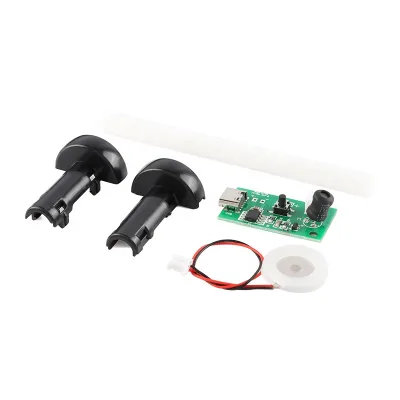
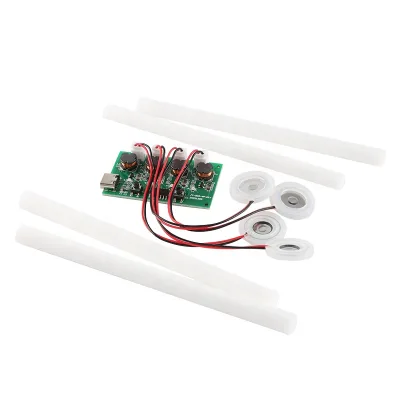


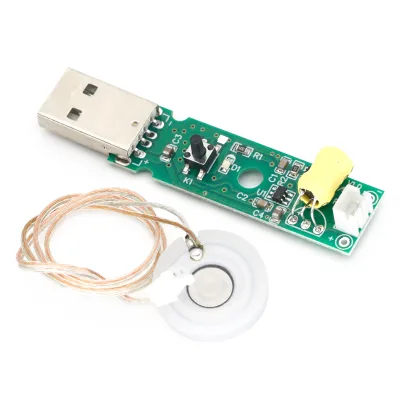

USB Humidifier Night Light Bulb Humidifier Air Purifier Atomizer Esg10428
$4.90 - $5.00
MOQ: 100 Pieces
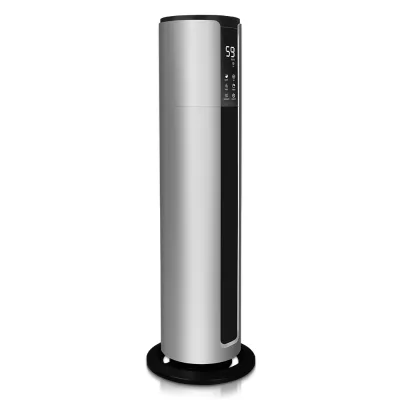

View Larger Imagesharecheap Air Cooler Humidifier Mini Humidifier Bottle
$3.66 - $4.28
MOQ: 150 Pieces


Ultrasonic Air Humidifier USB Portable Water Bottle Humidifier with Night Light
$6.74 - $7.34
MOQ: 100 Pieces
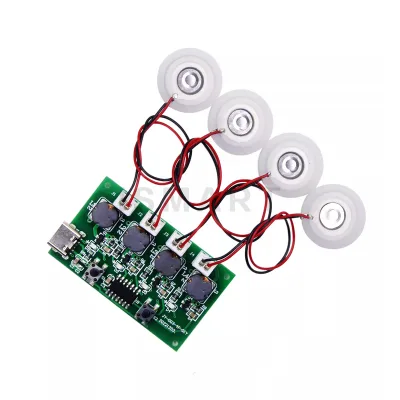


USB Mini Humidifier Air Purifier Essential Oil Fragrance Aroma Diffuser
$11.42 - $16.97
MOQ: 200 Pieces


Desktop Mini USB Multifunction Car Humidifier Mute Office Air Humidifier
$4.70 - $5.70
MOQ: 600 Pieces


Fbwhb010 Humidifier Atomizer Module Deodorizer Accessories Atomizer Board 10
$12.00 - $15.00
MOQ: 10 Pieces

Fbwhb006 Ultrasonic Humidifier Atomizer Module Accessories Atomizer Board 6
$12.00 - $15.00
MOQ: 10 Pieces
Comprehensive Sourcing Guide
Strategic Sourcing Guide for USB Humidifier Modules
Navigating the global market for USB humidifier modules requires a disciplined approach that balances technical precision with supply chain reliability. For procurement professionals, the core keyword "USB Humidifier Module" represents a critical component category used to integrate moisture control into diverse electronic devices, ranging from automotive accessories to compact home appliances. The available data indicates a highly fragmented market with products originating primarily from Guangdong, China, a recognized hub for electronics manufacturing. Buyers must distinguish between generic module specifications and customized solutions to ensure compatibility with their end products. This guide outlines the essential factors for evaluating suppliers, understanding technical constraints, and mitigating procurement risks without relying on unverified claims or specific vendor recommendations.
Technical Specifications and Module Architecture
The technical landscape of USB humidifier modules is defined by specific architectural choices that dictate performance and integration complexity. Based on observed product attributes, the primary humidification method utilized in this category is ultrasonic mist discharge. This technology relies on high-frequency vibrations to break water into a fine mist, offering energy efficiency and quiet operation compared to traditional heating methods. The power type is consistently identified as USB, which simplifies integration into battery-powered or low-voltage systems. However, the power consumption varies significantly across different models, with specific units observed operating at 28 watts, while others may have different ratings depending on the water capacity and mist output required.
Dimensions and physical form factors are critical constraints for module selection. The market presents a wide range of standard sizes, including compact units measuring 48x48x13mm, mid-range modules at 78x78x119mm, and larger industrial variants reaching 98x98x146mm. Some specialized designs, such as bulb-shaped modules, offer unique aesthetic integration for consumer-facing products. The physical specifications also include single package sizes, such as 10x10x1 cm for smaller components, and larger cartons for bulk shipments. Buyers must verify that the module's physical dimensions, including the standard 153x88x60mm variant, align with the internal chassis of their target device. Furthermore, the specification of the atomization mechanism varies, with options including water cotton sticks, atomizing sheets, and three-in-one integrated modules. Selecting the correct atomization technology is vital for ensuring longevity and preventing clogging in the misting path.
Functional Capabilities and Operational Modes
Understanding the functional capabilities of a module is essential for matching the product to its intended application. The data reveals a clear divergence between manual and automatic control systems. Some modules operate with manual humidity control, requiring user intervention to adjust output levels, while others feature automatic humidity control to maintain a set environment. A significant differentiator in the market is the presence or absence of water shortage power-off protection. While some units are equipped with this safety feature to prevent damage during dry running, others lack this protection entirely. Procurement teams must rigorously verify this attribute, as the absence of water shortage protection can lead to premature failure of the ultrasonic transducer if the device is operated without sufficient water.
Additional functional attributes include the availability of timing functions and aromatherapy capabilities. Current observations indicate that many standard modules do not include a timing function, operating continuously until the water is depleted or the power is cut. Similarly, aromatherapy is often not a standard feature, though some suppliers may offer customization to allow for essential oil integration. The usage scenarios are broad, covering applications in cars, homes, and industrial settings. The "standard" functional application suggests a baseline utility, but the "OEM" business type indicates that many manufacturers are willing to tailor these functions to specific client needs. Buyers should explicitly confirm whether the module supports the specific operational modes required for their final product, such as continuous operation for industrial use or intermittent cycles for automotive environments.
Compliance, Certification, and Safety Standards
In the B2B procurement of electronic components, compliance and safety standards are non-negotiable. While the supplied data does not list specific certification bodies or compliance marks, the origin of these products is consistently identified as China, specifically Guangdong. Buyers must recognize that products from this region are subject to various international standards depending on the destination market. The standard dimensions provided, such as 48x48x13mm or 78x78x119mm, serve as physical benchmarks but do not inherently guarantee electrical safety compliance.
Procurement teams must verify that the modules meet the electrical safety standards of the target market, such as UL, CE, or RoHS, before finalizing orders. The absence of explicit certification data in product listings should not be interpreted as a lack of compliance; rather, it necessitates a proactive verification process. Buyers should request current test reports and certification documents from the supplier to ensure the module's electrical design, including the USB power interface, adheres to relevant safety regulations. Additionally, the "100% Brand New and High Quality" attribute found in some listings is a marketing statement rather than a certified guarantee. Independent verification through third-party testing is recommended to validate claims regarding material safety and electrical performance.
Cost Drivers and Pricing Dynamics
The pricing structure for USB humidifier modules is influenced by several key variables, including production volume, customization requirements, and technical complexity. The observed price range in the market spans from $0.15 to $38.66, reflecting the diversity of the product offerings. The lower end of this spectrum typically corresponds to basic, non-customized modules with standard specifications and minimal packaging. Conversely, the higher price points are associated with advanced features, such as automatic humidity control, water shortage protection, and complex atomization systems like the three-in-one modules.
Minimum Order Quantity (MOQ) is another significant cost driver. The market exhibits an MOQ range from 1 to 1000 units, offering flexibility for small-batch prototyping and large-scale production runs. Suppliers with lower MOQs may charge a premium per unit due to the higher overhead associated with small production batches. Conversely, bulk orders often benefit from economies of scale, reducing the unit cost. The "Accept OEM" business type indicates that customization is a primary cost factor. Customizations such as logo printing via silk screen, laser, or UV printing, as well as specific dimension adjustments, will increase the unit price and potentially extend lead times. Buyers should analyze the total cost of ownership, including the cost of customization, packaging, and logistics, rather than focusing solely on the base unit price.
Supplier Evaluation and Business Model Analysis
Evaluating suppliers requires a deep dive into their business models and operational capabilities. The data indicates that many suppliers in this category operate as OEM manufacturers, offering services such as logo/graphic design via silk screen printing, laser printing, hot stamping, inkjet printing, UV printing, heat-transfer printing, and 3D printing. This wide array of customization options suggests a mature manufacturing ecosystem capable of adapting to diverse branding needs. However, the presence of "OEM" branding on some products also implies that some suppliers may be trading companies or white-label manufacturers rather than direct factories.
To ensure a reliable supply chain, buyers should verify the supplier's production capacity and quality control processes. The "Free Spare Parts" after-sales service is a notable attribute that can reduce long-term maintenance costs. However, this service should be clearly defined in the contract, specifying the conditions under which spare parts are provided and the lead time for delivery. The "Standard" functional application and "Portable" style suggest a focus on mass-market appeal, but buyers must ensure the supplier can scale production to meet demand fluctuations. Additionally, the single gross weight of the modules, ranging from 0.022 kg to 0.040 kg, impacts shipping costs and logistics planning. Buyers should request detailed shipping quotes and verify the packaging standards, such as the "Carton" packing method, to ensure safe transit.
Quality Control and Long-Term Procurement Strategy
Implementing a robust quality control strategy is essential for mitigating risks associated with component failure. Given the variation in features like water shortage protection and timing functions, a sample testing protocol is highly recommended. Buyers should test modules under real-world conditions to verify the accuracy of the humidity control, the effectiveness of the mist discharge, and the reliability of the USB power interface. The "100% Brand New and High Quality" claim should be validated through visual inspection and functional testing of incoming shipments.
Long-term procurement considerations involve establishing a strategic partnership with a supplier who can provide consistent quality and support. The availability of customization, including various printing methods and model numbers like BT 251119p8 or BT-L-2025112604, indicates a flexible supply chain. However, buyers must ensure that the supplier maintains strict version control to prevent unintended changes in specifications over time. The "Without Water Shortage Power-off Protection" attribute in some models highlights the need for clear communication regarding safety features. Procurement teams should develop a comprehensive supplier scorecard that evaluates technical capability, quality consistency, responsiveness, and cost competitiveness. By focusing on these factors, buyers can secure a reliable supply of USB humidifier modules that meet their specific product requirements and market demands.
Comparative Analysis of Module Specifications
To facilitate decision-making, the following table summarizes the key technical and functional variations observed in the market. This comparison highlights the critical differences that buyers must consider when selecting a module for their specific application.
| Feature Category | Observation A | Observation B | Observation C |
|---|---|---|---|
| Humidification Method | Mist Discharge (Ultrasonic) | Mist Discharge (Ultrasonic) | Mist Discharge (Ultrasonic) |
| Power Type | USB | USB | USB |
| Humidity Control | Manual | Automatic | Manual |
| Water Shortage Protection | Without Protection | With Protection | Without Protection |
| Timing Function | Without Timing Function | Without Timing Function | Without Timing Function |
| Atomization Type | Water cotton stick | Atomizing sheet | Three in one |
| Standard Dimensions | 48x48x13mm | 78x78x119mm | 153x88x60mm |
| Customization | Available (OEM) | Available (OEM) | Available (OEM) |
| Usage Application | Car, Home, Industry | Outdoor, Hotel, Household | Car, Home, Industry |
| Power Consumption | 28W (Specific Model) | Variable | Variable |
This comparative view underscores the necessity of precise specification matching. A module suitable for a portable car humidifier may differ significantly from one designed for a stationary industrial unit, particularly regarding water capacity, protection features, and control mechanisms. Buyers should use this framework to align their technical requirements with the available product attributes, ensuring that the selected module delivers optimal performance in its intended environment.
FAQs
What humidification method do these modules use?
These modules primarily use ultrasonic mist discharge technology to generate fine water vapor. This method offers energy efficiency and quiet operation compared to heating-based alternatives, making it suitable for portable and compact applications.
Which power type is standard for these units?
The standard power type for these modules is USB, allowing direct integration into low-voltage systems. Some specific units operate at 28 watts, but power consumption varies based on water capacity and mist output requirements.
Can I find modules with automatic humidity control?
Yes, some models feature automatic humidity control to maintain a set environment without user intervention. Other units rely on manual control, so buyers must verify the specific control mode required for their application before ordering.
Do all modules include water shortage protection?
No, water shortage power-off protection is not present in all models. Some units lack this safety feature, which can lead to premature failure if operated without sufficient water, so verification is essential for reliability.
What customization options are available for branding?
Suppliers offer extensive customization including silk screen, laser, UV, and 3D printing for logos. The business type accepts OEM requests, allowing buyers to tailor graphic designs and specific dimensions to match their product requirements.
Where are these products primarily manufactured?
The products originate primarily from Guangdong, China, a recognized hub for electronics manufacturing. Buyers should expect this location for most listings, though specific factory details may vary by supplier.
What is the typical price range for these modules?
The observed price range spans from 0.15 to 38.66 USD depending on features and volume. Basic non-customized modules are cheaper, while advanced units with automatic control or complex atomization systems command higher prices.