Source Electric Marine Winch for Boat Anchoring and Towing
Find 30 Electric Marine Winch for Boat options with varying load capacities from 5t to 200t. Buyers can compare specifications, certifications, and pricing for shipyard and vessel applications.
Key considerations
Products List
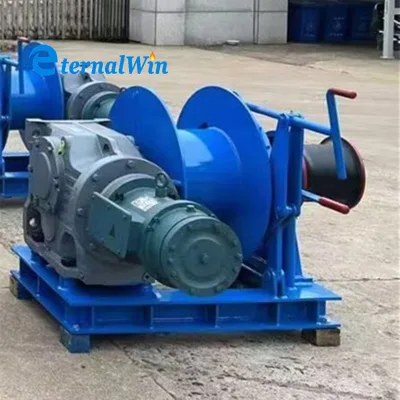


Offshore Towing High Power Marine Electric Winch/Windlass/Hoist/Tugger
$5000.00 - $35000.00
MOQ: 1 Sets


Marine Deck Machinery Mooring Winch Electric Hydraulic Anchor Winch
$5000.00 - $50000.00
MOQ: 1 Pieces
Comprehensive Sourcing Guide
Strategic Sourcing Guide for Electric Marine Winches
Understanding Core Technical Specifications and Variability
When sourcing an Electric Marine Winch for Boat applications, buyers must first navigate a landscape of diverse technical configurations rather than assuming a single standardized product. The market offers units driven by various power sources, including hydraulic, electricity, and diesel systems, though the specific focus here is on electric variants. A critical observation in the current supply data indicates that driven types are frequently listed as "Electric" or "AC," suggesting that alternating current is a common power input for these marine deck units. However, the power supply section also notes the availability of hydraulic and diesel options, which implies that buyers must explicitly verify the power source compatibility with their vessel's existing infrastructure before placing an order.
The load capacity and tonnage ratings vary significantly across available listings. Observed data points to a broad operational range, with specific models cited with capacities of 5 tons and 10 tons, while general product descriptions mention a span from 1 ton to 200 tons. This wide variance necessitates a precise calculation of the vessel's requirements. For instance, a specific model is noted with a rated load of 106.3 kN and an overload load of 159.9 kN, while another listing specifies a holding load of 617 kN. These figures are not universal; they apply to specific configurations. Buyers should treat these numbers as observations of specific listings rather than guaranteed performance metrics for all electric marine winches. The material composition is consistently described as heavy-duty steel, which is essential for withstanding the corrosive marine environment and the high mechanical stresses of towing and anchoring operations.
Speed is another variable parameter. Some product attributes list the running mode as "Fast" with a winch speed of 12 meters per minute, while other configurations, such as those involving chain mechanisms, may operate at 9 meters per minute. The running mode itself can be either moving or stationary, depending on the specific deck installation requirements. Furthermore, the reel configuration is offered in single or double options, which directly impacts the length of wire rope or chain that can be stored and deployed. Understanding these granular specifications is the first step in filtering the market to find a unit that matches the physical and operational constraints of the intended vessel.
Compliance, Certification, and Regulatory Standards
Navigating the compliance landscape for marine equipment is critical, as regulations vary by flag state and operational region. The supply data reveals a complex array of certifications and standards associated with these winches. Commonly observed certifications include BV (Bureau Veritas), CCS (China Classification Society), RMRS (Russian Maritime Register of Shipping), ABS (American Bureau of Shipping), and NK (Nippon Kaiji Kyokai). Additionally, ISOCE and CE are mentioned in the context of product attributes. It is vital for buyers to understand that the presence of a certification in a product listing does not automatically guarantee that every unit of that model holds that specific certification. Instead, these should be treated as observed attributes of specific listings that require verification.
Regarding standards, the data presents a dichotomy. Some products are explicitly marked as "Nonstandard," while others adhere to "National Standards" or specific classification society standards like CCS. This indicates that the market includes both custom-built, non-standardized solutions and those built to established regulatory frameworks. For international shipping, reliance on a classification society certificate such as CCS, BV, or ABS is often mandatory. Buyers must not assume that a product labeled with a "CE" mark or "ISOCE" automatically meets the rigorous safety requirements of a specific maritime jurisdiction. The verification process must involve requesting the actual certificate documents for the specific serial number or batch of the winch being purchased.
The "Standard" attribute is listed as "Nonstandard" in some contexts and "National Standards" in others. This suggests that many electric marine winches are custom-engineered to fit specific vessel layouts rather than being mass-produced to a universal ISO standard. Consequently, buyers should prioritize suppliers who can provide detailed documentation proving that their specific unit meets the classification society rules required for the vessel's flag state. Relying on a general "CE" claim without supporting classification society documentation is a significant risk in marine procurement. The buyer's due diligence must focus on obtaining the specific test reports and certification certificates relevant to the intended application, whether it is for a shipyard, a commercial vessel, or a seaport dock.
Cost Drivers and Pricing Structure Analysis
The pricing structure for electric marine winches is influenced by a complex interplay of factors, including load capacity, customization, and certification levels. The observed listed price range in the current market spans from 1,000 to 100,000 USD. This vast range reflects the difference between a small, 1-ton unit and a heavy-duty, 200-ton towing winch. The cost is not linear; a jump from a 5-ton to a 10-ton capacity may result in a disproportionately higher price increase due to the exponential growth in material requirements and motor power.
Electric power consumption is a significant cost driver. Listings indicate electric power ratings such as 30/30/22 kW or hydraulic power ratings like 37 MPa. Higher power ratings require larger motors, more robust electrical components, and more complex control systems, all of which drive up the manufacturing cost. Additionally, the "Driven Type" being electric or AC implies specific electrical infrastructure needs, which may add to the total cost of ownership if the vessel requires significant upgrades to support the new winch.
Customization is another major factor. The attribute "Customized or Not" is listed as "Yes," indicating that many suppliers offer tailored solutions. Customization, such as adapting the winch to a specific deck layout, altering the reel number, or integrating a crane console for operation, will invariably increase the price. The "OEM Service" being available further supports the notion that buyers can request branding and specific feature modifications, which come at a premium.
The material cost is also a consideration. With "Heavy duty steel" being the standard material, fluctuations in global steel prices can impact the final cost. Furthermore, the "Product Packing" varies between "Wooden Case" and "Carton." While packaging might seem like a minor detail, heavy-duty steel winches often require robust wooden crating to prevent damage during ocean freight, which adds to the overall shipping and handling costs. Buyers should anticipate that the base price of the winch is only one component of the total landed cost, which must also include freight, insurance, and potential installation expenses.
Typical Applications and Operational Environments
Electric marine winches are designed for a wide array of applications, primarily centered around maritime operations. The observed product attributes list applications in shipyards, on ships, for marine vessels, at seaports, and at docks. This versatility highlights the winch's role in critical maritime tasks such as anchoring, towing, and mooring. In a shipyard environment, these winches are often used for heavy lifting and positioning of large components during construction or repair. On board a vessel, the primary function is typically anchoring, where the winch must reliably handle the sudden shock loads of a dropping anchor.
The "Running Mode" of the winch can be either moving or stationary. A stationary winch is typically fixed to the deck for anchoring operations, while a moving winch might be part of a larger towing or positioning system. The "Reel Number" being single or double allows for flexibility in rope or chain storage, which is crucial for vessels that require long deployment lengths. For example, a vessel operating in deep waters may require a double-reel system to manage the extensive length of chain needed for anchoring.
The "Operation Form" is frequently listed as "Crane Console," suggesting that these winches are often integrated into a broader control system or operated remotely for safety and efficiency. This is particularly relevant in shipyard environments where operators need to control heavy loads from a safe distance. The "Feature" of being "Explosion-Proof" is a critical specification for vessels operating in hazardous environments, such as oil tankers or chemical carriers, where electrical sparks could pose a severe risk. Buyers must ensure that the winch's explosion-proof rating matches the specific hazardous zone requirements of their vessel.
Supplier Evaluation and Origin Verification
When evaluating potential suppliers for electric marine winches, the origin of the product is a key factor. The data indicates that products originate from regions such as Henan, China, and Jiangsu, China. While these locations are hubs for manufacturing, buyers should not assume that all products from these regions have identical quality standards. The "Place of Origin" and "Prod Origin" are listed separately in some contexts, which may indicate different stages of the supply chain or assembly locations.
The "Brand Name" "Eternalwin" is observed in the data, but buyers should be cautious about relying on brand recognition alone. The "OEM Service" being available suggests that many suppliers operate as manufacturers who can produce goods under their own brand or under a buyer's brand. This flexibility is beneficial for buyers looking to establish their own product line or for shipyards requiring specific branding. However, it also means that the quality control processes may vary between different OEM partners.
Buyers should verify the supplier's ability to provide the specific certifications observed in the data, such as CCS, BV, or ABS. The presence of these certifications in a product listing is a positive indicator, but the supplier must be able to provide the actual documentation. Additionally, the "MOQ" (Minimum Order Quantity) is consistently listed as 1 set or 1 PC, which indicates a flexible purchasing model suitable for both small-scale projects and large fleet upgrades. This low MOQ reduces the financial risk for buyers testing a new supplier or purchasing a single unit for a specific vessel.
Quality Control and Long-Term Procurement Considerations
Ensuring the long-term reliability of an electric marine winch requires a robust quality control strategy. The "Warranty" period is listed as 1 Year, which serves as a baseline for the manufacturer's confidence in their product. However, buyers should negotiate warranty terms that cover critical components such as the motor, gearbox, and braking system. The "Standard" attribute being "Nonstandard" in some cases implies that the product may be custom-built, which necessitates a more rigorous inspection process before shipment.
The "Product Packing" is listed as "Wooden Case" or "Carton." For heavy-duty steel winches, a wooden case is generally preferred to protect against the rigors of ocean freight. Buyers should verify that the packaging meets international shipping standards to prevent damage during transit. The "Delivery Time" is observed to be around 15 days, which is a relatively short lead time, suggesting that many suppliers maintain inventory or have efficient production lines. However, for customized orders, this lead time may extend, and buyers should confirm the actual production schedule.
Long-term procurement considerations include the availability of spare parts and technical support. Since the "Driven Type" is electric or AC, buyers should ensure that the supplier can provide replacement motors, controllers, and electrical components. The "Speed" being listed as "Fast" or specific values like 12 m/Min indicates that the winch is designed for high-performance operations, which may require more frequent maintenance. Buyers should establish a maintenance schedule that aligns with the manufacturer's recommendations to ensure the winch remains operational and safe throughout its service life.
Comparative Analysis of Key Product Attributes
To assist buyers in making informed decisions, the following table summarizes the key attributes observed in the market for electric marine winches. This comparison highlights the variability in specifications and helps buyers identify the critical parameters they must verify.
| Attribute Category | Observed Values / Options | Verification Requirement |
|---|---|---|
| Load Capacity | 1 ton to 200 tons; Specific models: 5t, 10t | Confirm exact rated load (kN) and holding load for the specific vessel. |
| Power Source | Electric, AC, Hydraulic, Diesel | Verify compatibility with vessel power grid (voltage/frequency). |
| Certifications | BV, CCS, RMRS, ABS, NK, ISOCE, CE | Request valid certificates from the specific batch/serial number. |
| Material | Heavy duty steel | Inspect material grade and corrosion protection treatment. |
| Running Mode | Moving, Stationary | Ensure the mode matches the deck installation plan. |
| Reel Configuration | Single or Double | Verify rope/chain length capacity and storage requirements. |
| Operation Form | Crane Console | Confirm integration with existing vessel control systems. |
| Origin | Henan, China; Jiangsu, China | Verify factory location and quality control processes. |
| MOQ | 1 set, 1 PC | Confirm if bulk discounts apply for larger orders. |
| Lead Time | Around 15 days | Confirm actual production schedule for customized orders. |
This table serves as a checklist for buyers to ensure they are asking the right questions and verifying the correct data points. By systematically addressing each attribute, buyers can mitigate the risks associated with sourcing complex marine equipment and ensure that the final product meets their operational and safety requirements. The variability in these attributes underscores the importance of a detailed, evidence-based approach to procurement, where every claim is backed by documentation and every specification is validated against the vessel's specific needs.
FAQs
What certifications are available for electric marine winches?
Available certifications include BV, CCS, RMRS, ABS, and NK. Buyers must verify specific documentation for their vessel's flag state as not all units carry every listed certification.
How is the power supply configured for these winches?
Power supply options include hydraulic, electricity, and diesel systems. Electric variants often use AC driven types, requiring buyers to confirm compatibility with their vessel's existing electrical infrastructure.
Which load capacities are offered for marine deck winches?
Load capacities range from 1 ton to 200 tons with specific models rated at 5 tons or 10 tons. Buyers should calculate exact vessel requirements as ratings vary significantly by configuration.
Can I request customization for my marine winch order?
Yes, customization services are available for these electric winches. Buyers can request tailored solutions for deck layouts or branding, which may affect the final pricing and delivery schedule.
What is the typical lead time for delivery?
The delivery time is typically around 15 days for standard orders. This timeframe applies to units with a minimum order quantity of one set or one piece.
Where are these electric marine winches manufactured?
Products originate from regions such as Henan and Jiangsu in China. Buyers should verify the specific place of origin for their batch to ensure quality control standards are met.
What warranty is provided for the electric winch?
A standard warranty of 1 year is provided for these units. This coverage typically applies to critical components like the motor and gearbox to ensure operational reliability.