Source 24V Electromagnetic Brake for Agricultural Machinery, Mining Equipment, Packaging Machinery
Compare 30 listings for 24V Electromagnetic Brake from verified suppliers. Explore specifications, pricing, and customization options for industrial applications.
Key considerations
Products List


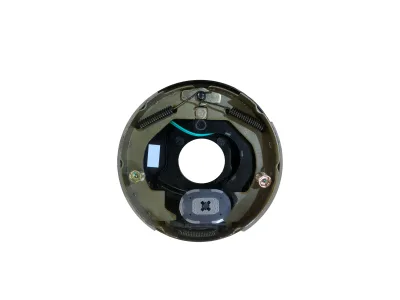
24V Electromagnetic Brake Dlk1-16 Dry Type Multidisc Electromagnetic Clutch
$160.00 - $180.00
MOQ: 1 Pieces




Comprehensive Sourcing Guide
Strategic Sourcing Guide for 24V Electromagnetic Brake Systems
Understanding the Technical Landscape of Electromagnetic Brakes
When sourcing electromagnetic brake systems, particularly those operating at 24V, buyers must first distinguish between the specific terminology used in the market. While the core keyword often references a "24V Electromagnetic Brake," the supplied product data indicates a broader category of "Electromagnetic Clutch" and "Electric Clutch" components. In many industrial contexts, the terms "clutch" and "brake" are functionally related but distinct; a clutch engages power transmission, while a brake halts motion. However, the observed product attributes describe a "Dry Single Plate Electromagnetic Clutch" with a "Voltage: DC12V" specification, alongside other listings mentioning "Electric Clutch" and "Working Mode: Electricity Combination."
It is critical for the procurement team to verify the exact voltage requirement of the target application. The supplied data explicitly lists "DC12V" as a specific attribute for certain models, yet the user's search focuses on "24V." This discrepancy suggests that while 12V units are present in the current inventory, 24V variants may exist under different model numbers or require specific verification from the supplier. The observed models include specific designations such as "DLZ4-1," "BFK458-10N," "BFK458-16N," and "DLD1-180A." These alphanumeric codes likely correspond to specific torque ratings, dimensions, or mounting configurations. Buyers should not assume that a 12V model is interchangeable with a 24V requirement without explicit confirmation from the manufacturer.
The physical construction of these units is another vital technical consideration. The data indicates that the primary material used is "Steel," which is standard for durability in high-torque applications. The "Stroke" is noted as "4 Stroke," which may refer to the operational cycle or a specific mechanical characteristic of the engagement mechanism. Furthermore, the "Working State" is described as "Semi Linkage" or "Intermittent," indicating that these components are designed for applications requiring frequent start-stop cycles rather than continuous engagement. The "Installation" orientation is specified as "Vertical," which is a crucial constraint for mechanical integration. If a buyer's application requires a horizontal mounting configuration, they must identify a supplier capable of customizing the mounting interface, as the standard "Vertical" orientation may not fit all machinery layouts.
Compliance, Certification, and Standard Verification
Navigating the compliance landscape for industrial components requires a rigorous check of certifications and standards. The supplied product information lists "ISO/TS16949:Classification:Electromagnetic Clutch" and "CE" as available certifications. ISO/TS16949 is a quality management standard specifically for the automotive industry, suggesting that these components may be suitable for automotive applications or machinery that interfaces with automotive supply chains. The "CE" marking indicates conformity with health, safety, and environmental protection standards for products sold within the European Economic Area.
However, the data also presents conflicting or varied standard classifications. Some entries list "Standard" as the classification, while others specify "Nonstandard" or "Custom." One entry notes a "prod_standard" of "P0," while another lists "25." This variability implies that buyers cannot rely on a single universal standard for all electromagnetic brake units. Instead, the procurement process must involve a direct inquiry to confirm which specific standards apply to the requested 24V model. The "Standard or Nonstandard" attribute suggests that while many units are produced to standard specifications, a significant portion of the market offers "Custom" solutions.
For buyers in highly regulated industries, such as automotive or heavy machinery, verifying the "ISO/TS16949" status is essential. This certification ensures that the manufacturing process meets the stringent quality requirements of the automotive sector. Additionally, the "CE" certification is a prerequisite for selling into the EU market. Buyers should request current, valid certificates of conformity rather than relying on general claims. The presence of "Original: Yes" in the data suggests that some suppliers offer genuine, original equipment manufacturer (OEM) parts, which is preferable to aftermarket or generic equivalents for critical safety components.
Cost Drivers and Pricing Structure Analysis
The economic factors influencing the procurement of electromagnetic brakes are multifaceted, involving unit price, minimum order quantities (MOQ), and logistical costs. The observed price range in the market spans from $5 to $10,000 USD. This wide disparity indicates that the cost is heavily dependent on the specific model, torque capacity, customization level, and volume. A basic unit might fall at the lower end of this spectrum, while a high-torque, custom-engineered 24V system with specialized materials or certifications could command a price near the upper limit.
The Minimum Order Quantity (MOQ) is another significant cost driver. The observed MOQ range is between 1 and 1000 units. Some suppliers offer an MOQ of just 1 piece, which is advantageous for prototyping or small-scale maintenance projects. Conversely, other listings specify an MOQ of 100 PCS, which is typical for bulk industrial procurement. Buyers must align their order volume with the supplier's MOQ to avoid unnecessary inventory costs or rejection of small orders. The "Payment Term: T/T" (Telegraphic Transfer) is the standard method of payment observed, which requires buyers to have established banking relationships and understand the risks associated with upfront or partial payments.
Logistics and packaging also contribute to the total cost of ownership. The data mentions "Single Box," "Carton+Pallet," and "Plywood Box" as packaging options. For international shipping, "Sea Worthy Package" is a critical requirement to prevent damage during transit. The "Freight: Reasonable" attribute suggests that shipping costs are generally competitive, but buyers should still request detailed freight quotes based on their specific destination. The "Lead Time" is noted as "on Time Delivery: Yes," implying a commitment to schedule adherence, but the exact duration in days or weeks is not specified in the data. Buyers must negotiate a specific lead time in the purchase agreement to ensure supply chain reliability.
Typical Applications and Operational Environments
The versatility of electromagnetic brake systems is evident in the diverse range of applications listed in the product data. These components are utilized in "Agricultural Machinery," "Mining Equipment," "Packaging Machinery," "Conveyer Equipment," "Garment Machinery," and "Textile Machinery." This broad applicability highlights the adaptability of the technology to various industrial sectors. The "Usage" attribute further specifies "Car," "Metallurgical Machinery," "Construction Machinery," "Elevator," and "Packing Machinery," confirming that these brakes are integral to both light and heavy industrial operations.
The "Working Mode" of "Electricity Combination" and "Intermittent" operation suggests that these brakes are ideal for applications requiring precise control over motion, such as elevators or packaging lines where frequent stopping and starting are necessary. The "Semi Linkage" working state indicates a mechanism that may be partially engaged or controlled, suitable for systems that require a degree of slip or controlled disengagement. In "Metallurgical Machinery," the high durability of the "Steel" material is essential to withstand harsh environments and high thermal loads. Similarly, in "Construction Machinery," the reliability of the brake system is paramount for safety and operational efficiency.
For buyers in the automotive sector, the "ISO/TS16949" certification is particularly relevant, as it aligns with the stringent quality standards of the industry. The "OEM: Accept" attribute confirms that suppliers are willing to produce parts that match original equipment specifications, which is crucial for maintaining the integrity of vehicle systems. The "Part: Clutch Disc" specification points to the internal components that may need replacement or upgrading, allowing for targeted procurement rather than replacing entire assemblies.
Supplier Evaluation and Sourcing Strategy
Evaluating suppliers for electromagnetic brake systems requires a multi-dimensional approach that goes beyond price comparison. The "Location" data indicates that the primary manufacturing hub is "Changzhou, Jiangsu, China," with a broader "China" origin noted for some listings. This concentration of manufacturing in Jiangsu Province suggests a mature supply chain with established logistics and production capabilities. Buyers should verify the specific factory location to assess the supplier's proximity to ports and their ability to handle international shipping efficiently.
The "Service: OEM" and "Customization: Available" attributes indicate that many suppliers offer tailored solutions. This is a significant advantage for buyers with unique application requirements, such as specific voltage inputs (e.g., 24V vs. 12V) or custom mounting configurations. However, customization often comes with longer lead times and higher costs. Buyers must clearly define their requirements and communicate them effectively to the supplier to avoid misunderstandings. The "Product Name: Electromagnetic Clutch" and "Item: Electric Clutch" variations in the data suggest that suppliers may use different terminology for similar products, so buyers should focus on the technical specifications rather than the product name alone.
Supplier reliability is further indicated by the "on Time Delivery: Yes" attribute. Buyers should request references or case studies from other clients in their industry to validate this claim. Additionally, the "Quality: High" attribute is a general observation that should be substantiated through quality audits or sample testing. Buyers should not rely solely on self-reported quality metrics but should implement a robust supplier evaluation process that includes site visits, quality system audits, and sample testing.
Quality Control and Long-Term Procurement Considerations
Ensuring the long-term reliability of electromagnetic brake systems requires a proactive quality control strategy. The "Condition: New" attribute confirms that the products are manufactured as new units, but buyers should verify the manufacturing date and storage conditions to prevent degradation of components during transit. The "Standard: Nonstandard" and "Standard" variations highlight the need for rigorous inspection upon receipt. Buyers should establish clear acceptance criteria based on the specific model's technical specifications, such as voltage tolerance, torque output, and material integrity.
Long-term procurement considerations include the availability of spare parts and the supplier's ability to support the product throughout its lifecycle. The "Customization: Available" feature suggests that suppliers may be able to produce replacement parts or modified versions if the original design becomes obsolete. Buyers should also consider the "MOQ" implications for future orders; a supplier with a low MOQ may be more flexible for small batch replacements, while a high-MOQ supplier may offer better pricing for bulk replenishment.
The "Payment Term: T/T" requires careful financial planning. Buyers should negotiate payment terms that align with their cash flow, such as partial payments upon order placement and the remainder upon delivery or inspection. The "Package: Sea Worthy Package" ensures that the products are protected during shipping, but buyers should still inspect the packaging upon arrival to ensure no damage has occurred. Finally, the "Working Mode" and "Usage" specifications should be regularly reviewed to ensure that the selected components continue to meet the evolving needs of the application. By maintaining a close relationship with the supplier and staying informed about product updates, buyers can ensure a stable and efficient supply chain for their electromagnetic brake systems.
FAQs
Can I find 24V Electromagnetic Brake units in the current inventory?
The current inventory explicitly lists DC12V units rather than 24V models. Buyers must verify specific voltage requirements with suppliers as 24V variants may exist under different model numbers or require custom configuration.
What certifications do these electromagnetic clutch systems hold?
Available certifications include ISO/TS16949 for automotive classification and CE marking for European safety standards. Buyers should request valid certificates of conformity to ensure compliance with specific industry regulations.
Which materials are used for the clutch disc construction?
The primary material specified for these units is steel, ensuring durability for high-torque applications. This construction supports reliable performance in demanding environments like mining and metallurgical machinery operations.
How does the installation orientation affect system integration?
Standard units are designed for vertical installation, which may not fit all machinery layouts. Buyers requiring horizontal mounting must identify suppliers capable of providing custom modifications to the mounting interface.
What is the minimum order quantity for these electric clutches?
The observed minimum order quantity ranges from one unit to one thousand pieces depending on the supplier. Some vendors offer single-unit purchases for prototyping while others require bulk orders of 100 pieces.
Where are these electromagnetic brake components manufactured?
The primary manufacturing hub is located in Changzhou, Jiangsu, China, with some listings noting a general China origin. This concentration suggests a mature supply chain with established logistics capabilities for international shipping.