Source 3D Embroidered Star Patch for Garment, Shoes, Bags
Compare 30 listings for the 3D Embroidered Star Patch with options in polyester and fabric, featuring customized sizes and eco-friendly attributes. Buyers can review specifications like iron-on application and various heart or face designs to find suitable decoration accessories.
Key considerations
Products List


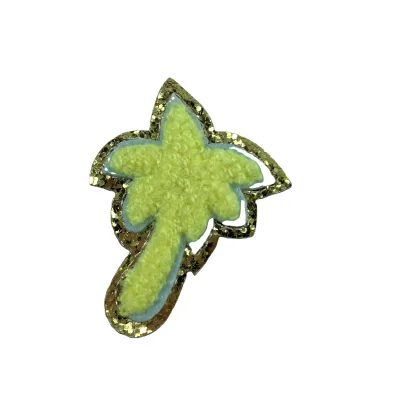


Hot Sale Custom Personalized Self Adhesive Embroidery Patch for Clothing
$0.26 - $0.42
MOQ: 100 Pieces


Comprehensive Sourcing Guide
Strategic Sourcing Guide for 3D Puffy Embroidered Star Patches
Understanding the Technical Architecture of 3D Embroidered Patches
The core keyword "3D Embroidered Star Patch" refers to a specific category of textile decoration where the design, in this case a star, is raised above the fabric surface to create a tactile, three-dimensional effect. This is distinct from flat embroidery. The production technique relies heavily on the "Techics" of embroidery, specifically utilizing a high-density stitching process that builds up thread layers. Based on available product data, the primary material used for these items is polyester, chosen for its durability and ability to hold the complex shapes required for the 3D effect. The craft is described as either "Full or Partial Embroidered," indicating that the entire star design or specific elements within it can be constructed with this raised technique.
The physical attributes of these patches are highly flexible. The "Size" is listed as "Any Customized Size" or simply "Customized," meaning buyers are not restricted to standard dimensions. Similarly, the "Shape" is customizable, allowing for variations in the star's points or overall geometry. The "Color" options are extensive, ranging from specific hues like "blue hearts," "White hearts," "Hot Pink hearts," and "Green hearts" to broader categories like "rainbow" or "colorful hearts." While the specific star shape is the focus, the underlying data shows a market where color customization is a primary driver. The "Wearing Way" is noted as "Anywhere," suggesting versatility in application, though specific usage examples include "stick bag, stick cloth," and general garment decoration.
Compliance, Certification, and Material Standards
When sourcing 3D embroidered patches, verifying compliance and material standards is critical for ensuring the product meets safety and quality expectations for end-users. The supplied data indicates that some products adhere to "SGS" standards, a globally recognized inspection, verification, testing, and certification company. However, other entries list the standard as "Customized," which implies that the buyer must explicitly define the required certification during the procurement process rather than assuming a default standard is met.
Material composition is another area requiring verification. While the observed data points to "Polyester" as the primary material, other entries list "Fabric" generally. For a 3D patch, the base fabric and the thread composition must be compatible to maintain the raised structure without fraying. A crucial safety attribute observed is "Nickel-Free." This is a significant compliance point, particularly for products intended for children's clothing or items that come into prolonged contact with skin, as nickel is a common allergen. Buyers should explicitly request confirmation that the metal components (if any, such as grommets or pins) and the thread dyes are nickel-free.
Furthermore, the "Eco-Friendly" attribute is frequently mentioned. This suggests that the manufacturing process or the materials used may align with environmental sustainability goals. However, without specific certification data (such as GOTS or OEKO-TEX), this remains an observation of the product's marketing claim rather than a verified standard. Procurement teams should request documentation to substantiate these eco-friendly claims, such as material safety data sheets or third-party environmental audits.
Cost Drivers and Pricing Dynamics
The pricing structure for 3D embroidered star patches is influenced by several variable factors, resulting in a wide observed range of 0.02 to 1.2 USD per unit. This significant variance is not arbitrary but is driven by the complexity of the customization and the order volume. The "MOQ" (Minimum Order Quantity) ranges from as low as 1 piece to as high as 6000 pieces. This flexibility allows for both prototyping and mass production, but it directly impacts the unit cost.
The primary cost driver is the level of customization. Since the "Size," "Shape," and "Color" are all customizable, each unique design requires a new setup, including the creation of custom embroidery files and potentially new molds or backing materials. The "Craft" being "Full or Partial Embroidered" also affects cost; a full 3D star will require more thread and machine time than a partial design. Additionally, the "Packing" details vary, from simple "Poly Bag" or "PVC Bag" to more complex "Clear Plastic Box" packaging. More intricate packaging increases the per-unit cost and the "Single gross weight," which is observed at 0.010 kg for single items.
Lead times and logistics also play a role in the final landed cost. The "Samples" lead time is noted as 7-10 days, which is a standard timeframe for custom textile goods. However, for bulk orders, the "Lead Time" is not explicitly defined in the data, meaning buyers must negotiate this based on the factory's current capacity. Payment terms like "EXW" (Ex Works) or "Fob" (Free on Board) indicate that the buyer may be responsible for a significant portion of the logistics costs, which should be factored into the total cost of ownership.
Typical Applications and Functional Versatility
The functional versatility of 3D embroidered star patches makes them suitable for a broad spectrum of applications. The data explicitly lists "Decoration" as the primary usage, but specific use cases include "Garment, Shoes, Bags, Scarf, Hat, etc." The "Wearing Way" being "Anywhere" reinforces this versatility. The "Iron-On" style mentioned in the data suggests that many of these patches are designed for easy application using heat, which is a popular method for DIY enthusiasts and small businesses. However, the "Usage" also includes "stick bag, stick cloth," implying that adhesive backing or sewing is also a viable method depending on the specific product variant.
The "Type" is categorized as "Other Decoration Accessory" or simply "Patch," indicating their role as an additive element to a larger product. The "Advantage" of being "Cheap, Fashion, Fast Delivry" highlights their appeal for trend-driven markets where quick turnaround and cost-effectiveness are paramount. The "Style" being "Iron-On" makes them particularly attractive for the apparel industry, where customization is a key differentiator. Whether applied to a denim jacket, a baseball cap, or a tote bag, the 3D effect adds a premium tactile quality that flat patches cannot achieve.
Supplier Evaluation and Operational Capabilities
Evaluating a supplier for 3D embroidered patches requires a deep dive into their operational capabilities and geographic location. The observed data points to "Changde, Hunan, China" and "ZHE" (Zhejiang) as key production origins. These regions are known for their textile manufacturing clusters, offering a robust supply chain for embroidery services. The "Brand name" "Ainuowei" is mentioned, but buyers should not rely on a single brand; instead, they should evaluate the factory's ability to handle "Customized" orders.
Key evaluation criteria include the supplier's flexibility in handling "Any Customized Size" and "Customized Color." A capable supplier will demonstrate a seamless workflow from design submission to sample production. The "Samples" availability is a critical indicator; the data notes a 7-10 day turnaround for samples, which is a reasonable benchmark. Buyers should verify if the supplier offers "Samples Freight Prepaid" or if the buyer must cover shipping costs, as this affects the initial prototyping budget.
Quality control is another vital aspect. The "Quality" is stated as "Depend on Your Request," which is a red flag if not managed correctly. It implies that the supplier will match the buyer's specifications, but the buyer must provide clear, detailed requirements. The "Single package size" of 7x5x3 cm and "Single gross weight" of 0.010 kg provide a baseline for logistics planning, but these figures may vary for larger or more complex orders. Buyers should request a detailed packing list to ensure that the "50PCS /Polybag, 2000PCS /CTN" standard aligns with their storage and shipping needs.
Quality Control Protocols and Long-Term Procurement
Establishing a robust quality control (QC) protocol is essential for maintaining consistency in 3D embroidered patches. Since the "Quality" depends on the buyer's request, the first step is to define a clear quality standard document. This should include acceptable tolerances for thread density, color matching accuracy, and the integrity of the 3D structure. The "Eco-Friendly" and "Nickel-Free" attributes should be verified through third-party testing, especially for batches intended for export to markets with strict chemical regulations.
Long-term procurement considerations involve building a relationship with a supplier who can scale with demand. The "MOQ" range of 1 to 6000 suggests that the supplier can accommodate both small, agile orders and large-scale production runs. However, the "Lead Time" for bulk orders needs to be negotiated explicitly, as the data does not provide a fixed number. Buyers should also consider the "Payment Term" flexibility, with "EXW" and "Fob" being common terms. For long-term partnerships, buyers might negotiate for more favorable terms or consolidated shipping to reduce costs.
Finally, the "Advantage" of "Fast Delivry" should be balanced against the "7-10 days" sample time. If a buyer requires urgent restocking, they must ensure the supplier has the capacity to expedite production without compromising the "Full or Partial Embroidered" quality. Regular audits of the production facility in "Changde, Hunan" or "ZHE" can help ensure that the "SGS" standards or other agreed-upon certifications are consistently met. By focusing on these technical and operational details, buyers can secure a reliable supply of high-quality 3D embroidered star patches that meet their specific market needs.
Comparative Analysis of Product Attributes
To assist buyers in making informed decisions, the following table summarizes the key attributes observed in the market for 3D embroidered star patches. This comparison highlights the variability in specifications and helps identify the critical factors for selection.
| Attribute Category | Observed Options | Critical Verification Point |
|---|---|---|
| Material | Polyester, Fabric | Confirm thread and base fabric composition for durability. |
| Craft/Technics | Embroidered, Full or Partial | Verify the density of stitching for the 3D effect. |
| Customization | Size, Shape, Color, Standard | Ensure the supplier can handle specific design files. |
| Certification | SGS, Customized, Nickel-Free | Request third-party test reports for safety claims. |
| Packing | Poly Bag, PVC Bag, Clear Box | Confirm packaging meets shipping and retail requirements. |
| Origin | Changde, Hunan, China; ZHE | Verify logistics capabilities from these specific regions. |
| MOQ | 1 - 6000 pcs | Align order volume with supplier capacity and pricing tiers. |
| Lead Time | Samples: 7-10 days | Negotiate bulk lead times explicitly before ordering. |
This table serves as a checklist for procurement teams to ensure all necessary variables are addressed during the supplier selection process. By systematically evaluating these attributes, buyers can mitigate risks and ensure the final product meets the high standards expected for 3D embroidered star patches.
FAQs
What materials are used for 3d embroidered star patches?
The primary material used is polyester, chosen for its durability and ability to hold complex 3D shapes. Some entries also list general fabric, but polyester is the standard for maintaining the raised structure without fraying.
Can I customize the size and shape of these patches?
Yes, both size and shape are fully customizable to any specification you require. The product data confirms that any customized size and shape are welcome, allowing for variations in the star's points or overall geometry.
What is the minimum order quantity for these patches?
The minimum order quantity ranges from 1 piece to 6000 pieces depending on the supplier. This flexibility allows for both prototyping with low quantities and mass production with higher volumes, directly impacting the unit cost.
Are these patches nickel-free and eco-friendly?
Many products listed include nickel-free and eco-friendly attributes as key features. However, buyers should verify specific compliance documentation since some entries list standards as customized rather than a default certification like SGS.
How long does it take to receive samples?
Sample production typically takes 7 to 10 days for completion. Buyers should also note that sample freight is often prepaid by the buyer unless otherwise negotiated during the initial inquiry process.
Where are these patches manufactured?
Manufacturing origins include Changde, Hunan, China, and the Zhejiang region. These locations are known textile clusters offering robust supply chains for embroidery services and customized patch production.
What payment terms are accepted for these orders?
Common payment terms include EXW and FOB, indicating the buyer may handle significant logistics costs. These terms require careful calculation of total landed costs when planning the procurement budget.