Find 3D Shape Anime Key Ring for Gifts, Bags, and Events
Explore 30 listings for the 3D Shape Anime Key Ring featuring PVC, metal, and polyester options with custom printing. Buyers can compare thickness, sample times, and packaging to select the right promotional item for their needs.
Key considerations
Products List


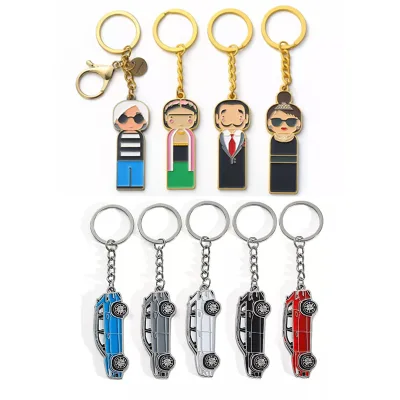
Enamel Key Chain Custom Zinc Alloy Metal Keyholder Keyring 3D Cartoon Anime Keychain
$0.35 - $0.65
MOQ: 500 pieces


PVC Keyholder Custom Key Ring Souvenir Key Chain Anime 3D Rubber Keychain
$0.65 - $0.68
MOQ: 1000 Pieces

Custom 3D Anime Rubber Silicone PVC Key Chain Ring Keychain 3D Rubber Key Chains
$0.23 - $0.50
MOQ: 100 Pieces
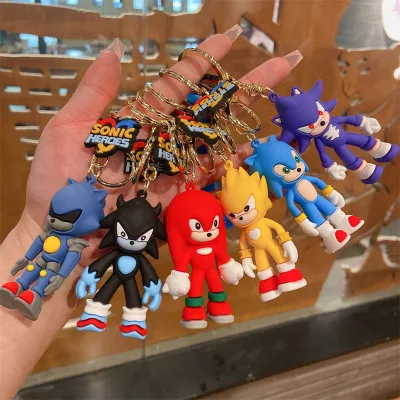

Custom Dog Keyring 3D Anime Keychain Rubber PVC Keychain Letter Key Holder
$0.15 - $0.35
MOQ: 50 Pieces


Custom Made 3D Soft & Hard Enamel Metal Keychains Anime Cartoon Souvenir Key Rings
$0.20 - $0.80
MOQ: 50 Pieces

Custom 3D Soft/Hard Enamel Metal Key Chains Anime Cartoon Themed Present Keyrings
$0.20 - $0.80
MOQ: 50 Pieces

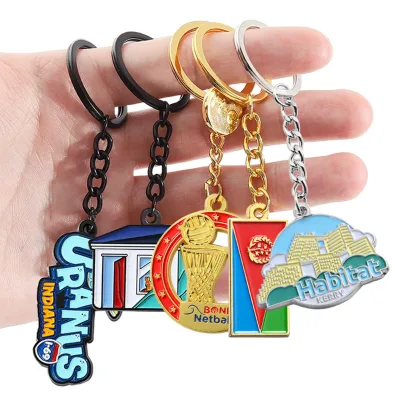


Metal Soft Hard Enamel Zinc Alloy Keyring Gold Plated 2D 3D Anime Keychain
$0.35 - $0.44
MOQ: 1000 Pieces

Comprehensive Sourcing Guide
Strategic Sourcing Guide for 3D Shape Anime Key Rings
Understanding Product Variations and Material Composition
When sourcing 3D shape anime key rings, buyers must first navigate a landscape defined by diverse material compositions and manufacturing techniques. The market offers distinct product categories that, while sharing the core function of a key ring, differ significantly in durability, aesthetic finish, and cost structure. Based on available industry data, the primary material categories include Polyvinyl Chloride (PVC), various metal alloys, and woven textiles. PVC-based options are frequently highlighted for their ability to achieve complex three-dimensional forms, often referred to as 2D/3D crafts, with thickness specifications ranging from 4mm to 6mm. These products are ideal for capturing the vibrant, cartoon-like aesthetics associated with anime characters, allowing for detailed UV printing, enamel finishes, and custom logos.
In contrast, metal-based key rings typically utilize Zinc Alloy as the base material. These products often feature enamel and UV printing techniques to achieve a premium look. The metal variants are generally more durable and offer a heavier feel, which can be a significant selling point for high-end promotional items. However, the manufacturing process for metal key chains often involves different tooling requirements compared to soft PVC. Additionally, woven polyester options exist, utilizing embroidery and 8-color printing methods. While these may not always offer the same "3D" depth as molded PVC or cast metal, they provide a unique texture and are often categorized under fashion or souvenir gifts.
The distinction between these materials is critical for procurement strategy. A buyer seeking a soft, flexible, and colorful 3D anime figure should prioritize PVC or 3D-printed resin options. Conversely, a buyer requiring a rigid, metallic, and durable souvenir might lean toward Zinc Alloy. The "3D shape" attribute is most reliably achieved through the molding processes used for PVC and metal casting, where the physical depth is inherent to the product structure rather than just a printed illusion.
Technical Specifications and Customization Parameters
Defining the technical specifications is the second pillar of a successful sourcing strategy. The core keyword "3D Shape Anime Key Ring" implies a need for specific dimensional and aesthetic controls. In the current market, standard dimensions for these items often align with a footprint of approximately 5cm by 10cm, though custom sizing is a prevalent feature. Buyers should expect that "Size: Custom" is a standard offering, allowing for the precise scaling of anime characters to fit specific design requirements.
Thickness is a critical specification that directly impacts the perceived quality and the "3D" effect. Observed data indicates that PVC keychains often come in thicknesses of 4mm or 6mm. The 6mm variant generally provides a more pronounced 3D relief, making it suitable for detailed character designs, while the 4mm option may be preferred for cost-sensitive orders or flatter designs. The surface finish is equally important. The "Back Side" of these key rings is typically plain or printed with a logo, offering flexibility for branding on both the front and back.
Customization extends beyond physical dimensions to include the printing and crafting methods. The market supports a wide array of techniques, including UV printing, enamel filling, silk screen printing, and digital printing. For 3D anime figures, the "Craft" attribute often specifies 2D/3D print options, allowing for multi-layered designs that create depth. The color palette is generally flexible, with suppliers capable of producing items in single colors or multi-color configurations (e.g., 1 through 5 colors). The inclusion of accessories, such as chains and rings, is standard, but the type of attachment (e.g., lobster clasp vs. split ring) should be verified during the specification phase.
Cost Drivers and Pricing Dynamics
The pricing structure for 3D shape anime key rings is influenced by a complex interplay of material costs, customization levels, and order volume. The observed price range in the market spans from $0.06 to $1.45 per unit. This wide variance is not arbitrary; it reflects the fundamental differences in material and production complexity. The lower end of the spectrum typically corresponds to simple PVC keychains with standard thickness (4mm) and minimal color usage, produced in high volumes. The upper end of the range is associated with intricate metal key chains, multi-color enamel work, custom packaging, or smaller order quantities that do not benefit from economies of scale.
Material selection is the primary cost driver. Zinc Alloy and high-grade PVC generally command higher prices than standard polyester or basic plastic options. Furthermore, the complexity of the 3D mold plays a significant role. Creating a custom mold for a specific anime character involves upfront tooling costs, which are amortized over the production run. For buyers with low Minimum Order Quantities (MOQ), the unit cost will be significantly higher due to the fixed cost of the mold being spread over fewer units.
MOQ requirements also heavily influence the final price. While some suppliers offer an MOQ as low as 1 unit for sample purposes, standard production runs often require a minimum of 100 to 1000 units. The "Selling Units" are typically listed as single items, but the transactional reality involves bulk purchasing. Buyers should be aware that the "Customization: Available" attribute often comes with a tiered pricing model, where more complex customizations (such as unique 3D shapes or multi-step printing processes) increase the base price. Additionally, packaging choices, ranging from simple OPP bags to velvet boxes or gift boxes, add to the total landed cost.
Compliance, Certification, and Safety Standards
For B2B procurement, particularly when dealing with promotional gifts and consumer goods, compliance and safety are non-negotiable. While specific certification documents were not explicitly detailed in the provided product attributes, buyers must proactively verify that suppliers adhere to relevant international safety standards. Products intended for global export, as indicated by the "Export Markets: Global" attribute, must meet the regulatory requirements of the destination country.
For PVC and metal key rings, the primary concerns involve chemical safety and physical durability. PVC products must be free from harmful phthalates and heavy metals, adhering to standards such as REACH in Europe or CPSIA in the United States. Metal key chains, especially those with enamel coatings, must ensure that the paints and finishes are non-toxic and do not contain lead or cadmium in excess of legal limits. The "Metal Type: Zinc Alloy" specification requires verification that the alloy composition meets safety thresholds for jewelry and children's products, depending on the target demographic.
Buyers should also consider the "prod_standard" attribute, which in some contexts lists specific dimensions like 5101cm. While this describes the product size, it implies a level of standardization that suppliers may use to ensure consistency. However, for custom 3D anime key rings, the "Standard" is often "Custom," meaning the buyer must define the acceptance criteria. This includes verifying that the 3D shape does not have sharp edges that could cause injury, a common requirement for toys and promotional items.
Furthermore, the "Sample Time" of 5-7 days or 8-10 days suggests a need for a rigorous pre-production verification process. Buyers should request physical samples that are tested for colorfastness, adhesion of the enamel or print, and the strength of the attachment hardware. While specific test results were not provided in the source data, the expectation of a sample phase indicates that quality assurance is a standard part of the procurement workflow.
Supplier Evaluation and Operational Capabilities
Evaluating potential suppliers requires a focus on their operational capabilities, particularly regarding customization and lead times. The "Location: Guangdong, China" is a significant indicator, as this region is a global hub for keychain manufacturing, offering a mature supply chain for PVC, metal, and textile products. Buyers should verify that the supplier has the specific technical expertise to handle 3D molding and complex printing techniques like UV and enamel.
The "Customization: Available" and "Customized: Customized" attributes suggest that the supplier is flexible, but buyers must assess the depth of this capability. Can the supplier handle complex anime character designs with multiple colors and 3D depth? Do they have in-house design teams to assist with vectorizing artwork for 3D modeling? The "Style" attributes, ranging from "Fashion" to "Cute" and "Souvenir Gifts," indicate a versatility in design that should be matched with the buyer's specific brand identity.
Lead time is another critical factor. The observed "Sample Time" ranges from 5 to 10 days, while "Production Time" for larger orders is estimated at 13-15 days. These timelines are indicative of a responsive supply chain, but buyers should confirm if these are standard lead times or if they vary based on order complexity. The "Packing" options, which include Backer Cards, OPP Bags, Bubble Bags, and Gift Boxes, demonstrate that the supplier can handle various packaging requirements, which is essential for retail-ready products.
Quality Control and Long-Term Procurement Strategy
Implementing a robust quality control (QC) strategy is essential for maintaining product integrity, especially for 3D items where structural defects are more visible. The "Craft: 2D/3D, Print" attribute highlights the need for visual inspection of the 3D relief and print quality. Buyers should establish clear acceptance criteria for the "Thickness" (4mm/6mm) and ensure that the 3D shape maintains its form without warping or collapsing. For metal key chains, QC should focus on the smoothness of the edges and the durability of the enamel coating.
Long-term procurement considerations involve building a relationship with suppliers who can scale with demand. The "MOQ" range of 1 to 1000 units suggests that suppliers are willing to accommodate both small test orders and large volume runs. However, for consistent quality, buyers should aim to work with suppliers who have a track record of handling the specific "Product Type: Light Keychain" or "Anime Enamel Keychain" categories. The "Brand Name: ACE" and "Model Number: JS-17" or "002" examples in the data suggest that suppliers may have their own proprietary lines, but they are also open to OEM (Original Equipment Manufacturer) work.
To ensure long-term success, buyers should document all technical specifications, including the exact "Printing" method (Silk Screen, Digital, UV) and "Color" requirements. Regular audits of the production process, particularly for the "Export Markets: Global" compliance, will help mitigate risks. Finally, maintaining open communication regarding "Sample Time" and "Production Time" ensures that inventory planning remains accurate, preventing stockouts or overstock situations. By adhering to these structured procurement principles, buyers can effectively source high-quality 3D shape anime key rings that meet both aesthetic and functional requirements.
FAQs
How thick are the 3d shape anime key rings available?
Thickness typically ranges from 4mm to 6mm depending on the material and design complexity. PVC options often come in 4mm or custom thicknesses, while 6mm variants provide a more pronounced 3D relief for detailed anime characters.
What materials are used for 3d shape anime key rings?
Primary materials include PVC, Zinc Alloy metal, and Polyester. PVC allows for flexible 3D molding, metal offers durability with enamel finishes, and polyester provides a woven texture for fashion or souvenir styles.
Can I customize the size and logo on these key rings?
Yes, customization is available for size, logo, and printing methods. Buyers can specify custom dimensions and choose from UV printing, enamel, or silk screen printing to apply their unique logos or designs.
Which printing methods are supported for these key rings?
Supported methods include UV printing, enamel filling, silk screen printing, and digital printing. The choice depends on the material, with metal often using enamel and PVC utilizing UV or digital techniques for vibrant colors.
How long does it take to receive samples of 3d shape anime key rings?
Sample time generally ranges from 5 to 10 days depending on the supplier and design complexity. Some suppliers offer samples within 5-7 days, while others may require 8-10 days for production and shipping.
What is the minimum order quantity for 3d shape anime key rings?
MOQ varies from 1 unit for samples to 100 or 1000 units for production runs. Standard production orders often start at 100 pieces, but specific suppliers may have different thresholds based on customization levels.
Where are the manufacturers of 3d shape anime key rings located?
Most manufacturers are located in Guangdong, China, a major hub for keychain production. This region offers a mature supply chain for PVC, metal, and textile products with global export capabilities.
How are 3d shape anime key rings packaged for shipment?
Packaging options include OPP bags, bubble bags, velvet boxes, gift boxes, and backer cards. Buyers can select packaging based on their retail needs, ranging from simple protection to premium presentation.