Source 3D Snowman LED String Lights for Festival Home Commercial
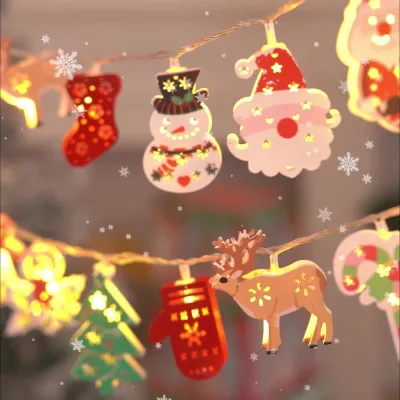
Compare 30 listings of 3D Snowman LED String Lights with varying power sources, lengths, and customization options. Buyers can review specifications for indoor and outdoor use across festival, home, and commercial applications.
Key considerations
Products List


LED Lights Christmas Snowmen Colorful Crystal Grain Christmas Snowman Night Lamp LED
$0.15 - $0.98
MOQ: 500 Pieces


Factory Wholesale Christmas Decoration Snowman LED Garland String Light
$1.00 - $5.00
MOQ: 1000 Pieces



Holiday Large Outdoor Decoration LED 3D Motif Snowman Christmas Lights
$2900.00 - $3500.00
MOQ: 1 Pieces


3D Motif Snowman Holiday Lighting LED Christmas Festival Decorations Lights
$2800.00 - $3000.00
MOQ: 1 Pieces


LED Outdoor LED Christmas Decorative 3D Snowman Motif Light for Street
$1999.99 - $2099.99
MOQ: 1 Pieces


Comprehensive Sourcing Guide
Strategic Sourcing Guide for 3D Snowman LED String Lights
Understanding Product Specifications and Variations
When sourcing 3D Snowman LED String Lights, buyers must first navigate a complex landscape of product attributes that define the physical and functional nature of the item. The core keyword suggests a specific aesthetic, yet the actual market data reveals a diverse range of models and configurations. The product category is broadly classified under Christmas Tree String Lights, with specific model identifiers such as BT-Y-1204-04, BT-Y-1211-10, and BT-Y-1022-04 appearing in the supply chain. These alphanumeric codes serve as critical identifiers for distinguishing between different manufacturing batches or design iterations.
The physical composition of these lights varies significantly across listings. While the primary light source is consistently identified as LED material, the structural housing often utilizes plastic. This combination allows for the creation of three-dimensional forms, such as the snowman shapes referenced in the key words "LED Snowman String Light" and "LED Garland." The emitting color is predominantly white, which aligns with the traditional winter aesthetic, though some variations offer multicolour options to suit different decorative themes. The power consumption is a critical technical parameter, with observed specifications indicating a power rating of less than 6W per unit or segment. This low-power characteristic is essential for battery-operated applications and ensures energy efficiency for larger commercial installations.
The physical dimensions and standard configurations are equally variable. Buyers will encounter standards listed as 10L/20L/40L, suggesting different lengths or quantities per string, alongside specific length standards like 2M and ranges from 1-4.5m. Weight specifications also fluctuate, with observed values ranging from 0.07kg to 0.2kg per unit, which impacts shipping logistics and packaging requirements. The protection level is a vital safety metric, with IP54 being a common specification. This rating indicates protection against dust and water jets, making the product suitable for both indoor and outdoor applications, a distinction that is explicitly supported by the "Application" attribute listing both Indoor and Outdoor use cases.
Compliance and Certification Verification
Navigating the regulatory landscape is a non-negotiable step in the procurement of electrical lighting products. The supply data indicates that CE and RoHS certifications are the primary compliance markers associated with these products. The attribute "Authentication" lists "Ce/RoHS," and the "Certification" field explicitly mentions "CE, RoHS." However, buyers must treat these as observed attributes rather than universal guarantees for every single unit in a shipment. The presence of these certifications implies adherence to European safety standards for electrical equipment and restrictions on hazardous substances, but verification is required on a per-shipment basis.
The distinction between "Certification" and "Authentication" in the data suggests that while the product line may be designed to meet these standards, the specific batch being ordered must be confirmed. For instance, some listings mention "Ce/RoHS" under authentication, while others list them under certification. This variance underscores the need for buyers to request current test reports or certificates of conformity (CoC) from the supplier before finalizing an order. The origin of the products is primarily listed as China, with specific mentions of Zhejiang as a manufacturing hub. This geographic concentration can be beneficial for supply chain efficiency but requires rigorous due diligence regarding the specific factory's compliance history.
Buyers should also be aware that while the data lists "CE" and "RoHS" as high-confidence facts, the background information notes them as low-confidence. This discrepancy highlights the importance of independent verification. In the B2B context, relying solely on supplier assertions is risky. Procurement teams should mandate that the supplier provides valid, up-to-date documentation from accredited testing laboratories. The "Protection Level" of IP54 further supports the need for compliance checks, as this rating involves specific testing protocols for ingress protection that must be validated against the actual product batch.
Cost Drivers and Pricing Dynamics
The pricing structure for 3D Snowman LED String Lights is influenced by a multitude of factors, including customization, material quality, and order volume. The observed price range in the market spans from $0.10 to $3,500.00 USD. This wide disparity is not indicative of a single product tier but rather reflects the spectrum from small, single-unit decorative items to large-scale commercial lighting systems. The lower end of the range likely corresponds to basic, non-customized units with standard packaging, while the higher end may encompass bulk commercial orders, custom designs, or integrated systems with advanced features.
Customization is a significant cost driver. The data explicitly states that "Customization: Available" is a key attribute, yet other entries list "Customized: Non-Customized" or "Customized: Customized." This indicates that the base product may be standard, but buyers can opt for tailored solutions. Customization options might include specific lengths (e.g., 2M, 1-4.5m), unique color schemes, or bespoke packaging. The "Standard" attribute also lists "as customer's requirements," reinforcing the potential for variable pricing based on bespoke specifications.
Order volume plays a crucial role in determining the final unit cost. The observed Minimum Order Quantity (MOQ) ranges from 1 to 1000 units. A buyer purchasing a single unit will likely pay a premium compared to a bulk purchaser. The packaging type also influences cost; options include "Carton," "Color Box," and "OPP" bags. More robust packaging, such as a color box, adds to the material and labor costs but may be necessary for retail-ready products. Conversely, OPP bags are typically used for wholesale or bulk shipments where retail presentation is not the immediate concern. Buyers must balance the need for attractive packaging against the cost implications, especially when the product is intended for wholesale distribution rather than direct retail sale.
Typical Applications and Usage Scenarios
The versatility of 3D Snowman LED String Lights makes them suitable for a wide array of applications, ranging from residential decoration to large-scale commercial events. The "Usage" attribute lists Festival, Home, and Commercial as primary categories. This broad applicability is further supported by the "Application" attribute, which specifies both Indoor and Outdoor use. The "Protection Level" of IP54 is particularly relevant here, as it ensures the lights can withstand outdoor elements like rain and dust, making them ideal for garden, patio, or storefront displays.
Specific use cases include holiday parties, as indicated by the "Party Type: Holiday Party" attribute. The "Suitable for: Children" attribute suggests that these lights are also appropriate for family-oriented environments, such as nurseries or playrooms, provided the electrical safety standards are met. The "Style" is identified as "Western," which aligns with traditional Christmas and winter holiday aesthetics common in Western markets. The "Key Word" attributes further clarify the intended use, mentioning "Indoor Use LED Light," "Christmas Decoration Light," and "Home Decoration LED Light."
In a commercial setting, these lights can be used for window displays, building facades, or event staging. The "Type" attribute lists "Christmas Lights," "Christmas Decorations," and "Decoration," indicating their primary function is aesthetic enhancement. The "Power Source" varies between Battery and Electric, offering flexibility in installation. Battery-operated units are ideal for locations where power outlets are inaccessible, such as hanging decorations on trees or mantles. Electric-powered units are better suited for fixed installations where a continuous power supply is available. Buyers should consider the specific environment when selecting the power source, as battery-operated units require ongoing maintenance for battery replacement, while electric units require safe wiring and connection to a power grid.
Supplier Evaluation and Selection Criteria
Selecting the right supplier is critical for ensuring product quality, reliability, and compliance. The data indicates that the primary origin of these products is China, with Zhejiang being a specific manufacturing region. This concentration suggests a robust supply chain ecosystem, but it also necessitates careful vetting of individual suppliers. Buyers should evaluate suppliers based on their ability to provide the specific attributes observed in the market, such as the "Customization: Available" capability and the "prod_packing" options like Carton or Color Box.
Verification of the supplier's production capacity is essential. The "Standard" attribute lists various lengths and weights, implying that suppliers must have the flexibility to produce different configurations. Buyers should inquire about the supplier's ability to handle the "prod_model" variations, such as BT-Y-1204-04 or 28518, to ensure they can meet specific design requirements. The "Customized: Customized" attribute suggests that some suppliers offer bespoke services, which may require a longer lead time and higher MOQ.
Quality control is another key evaluation criterion. Given the "Protection Level" of IP54 and the "Certification" requirements, suppliers must demonstrate a commitment to quality assurance. Buyers should request evidence of the supplier's quality management systems, such as ISO certifications, and ask for samples to verify the build quality, particularly the "Material" (LED and Plastic) and the "Emitting Color" consistency. The "Authentication" of CE/RoHS should be confirmed with valid documentation. Additionally, the "prod_packing" method should be assessed to ensure it protects the product during transit, especially for fragile components like the 3D snowman shapes.
Quality Control and Long-Term Procurement Considerations
Ensuring consistent quality is paramount in the long-term procurement of 3D Snowman LED String Lights. The "Material" composition of LED and plastic requires specific attention to durability and safety. Buyers should establish clear quality control protocols that include pre-shipment inspections. These inspections should verify the "Protection Level" (IP54), the "Power" consumption (<6W), and the "Emitting Color" accuracy. The "Standard" attributes, such as 10L/20L/40L, should be checked to ensure the product meets the ordered specifications.
Long-term procurement considerations also involve managing the supply chain relationship. The "Customization: Available" attribute suggests that buyers may need to work closely with suppliers on design iterations. Establishing a clear communication channel and defining the scope of customization early in the process can prevent misunderstandings and delays. The "prod_packing" options, such as Carton or Color Box, should be standardized to ensure consistency in the final product presentation.
Buyers should also consider the lifecycle of the product. The "Power Source" (Battery or Electric) impacts the maintenance requirements. For battery-operated units, the supplier should provide guidance on battery life and replacement. For electric units, the wiring and connection points should be inspected for safety and durability. The "Application" (Indoor/Outdoor) dictates the environmental stress the product will face, and the "Protection Level" must be maintained throughout the product's lifespan.
Finally, buyers should monitor the market for changes in standards and certifications. The "Certification" and "Authentication" fields indicate that compliance is a dynamic requirement. Staying informed about updates to CE, RoHS, and other relevant standards will help buyers maintain a competitive edge and ensure their products remain compliant in target markets. By focusing on these quality control and long-term considerations, buyers can build a reliable supply chain for 3D Snowman LED String Lights that meets both current and future demands.
Comparative Analysis of Product Attributes
To facilitate informed decision-making, the following table summarizes the key attributes observed in the market data. This comparison highlights the variability in specifications and helps buyers identify the specific requirements for their procurement needs.
| Attribute Category | Observed Values | Relevance to Procurement |
|---|---|---|
| Product Model | BT-Y-1204-04, BT-Y-1211-10, 28518, A-0046 | Critical for identifying specific designs and configurations. |
| Material | LED, Plastic | Determines durability, safety, and aesthetic quality. |
| Power Source | Battery, Electric | Influences installation flexibility and maintenance needs. |
| Protection Level | IP54 | Essential for verifying indoor/outdoor suitability. |
| Certification | CE, RoHS | Mandatory for regulatory compliance in target markets. |
| Customization | Available, Non-Customized, Customized | Affects lead time, MOQ, and unit cost. |
| Packing | Carton, Color Box, OPP | Impacts shipping costs and retail presentation. |
| Origin | China, Zhejiang | Indicates supply chain location and potential logistics costs. |
| Usage | Festival, Home, Commercial | Defines the target market and application scope. |
| Power | <6W | Important for energy efficiency and safety calculations. |
This table serves as a quick reference for buyers to align their specific needs with the available market offerings. By cross-referencing these attributes, procurement teams can streamline the selection process and ensure that the chosen products meet all technical and regulatory requirements.
FAQs
What certifications do 3D Snowman LED String Lights have?
These lights typically carry CE and RoHS certifications. Buyers must verify these marks on specific batches as data shows variations in authentication records. Independent test reports from accredited labs are recommended before finalizing orders.
Can I customize the length of these string lights?
Customization is available for many models including specific lengths like 2M or ranges up to 4.5m. Some listings offer standard configurations like 10L or 20L while others allow bespoke requirements. Check if the specific supplier supports your desired dimensions.
Where are 3D Snowman LED String Lights manufactured?
The primary manufacturing origin is China, with specific hubs in Zhejiang. This geographic concentration supports supply chain efficiency but requires careful supplier vetting. Always confirm the exact factory location to ensure quality control and compliance standards.
What is the minimum order quantity for these lights?
The minimum order quantity ranges from 1 to 1000 units depending on the supplier and customization level. Single-unit purchases are possible but may carry a higher unit cost. Bulk orders often unlock better pricing tiers and shipping options.
Are these lights suitable for outdoor use?
Yes, many models feature an IP54 protection level making them suitable for both indoor and outdoor applications. This rating ensures resistance against dust and water jets. Verify the specific product listing to confirm outdoor suitability for your intended environment.
What power source do these lights use?
Products are available with either battery or electric power sources. Battery-operated units offer flexibility for tree hanging while electric models suit fixed installations. Select the power source based on your installation location and access to electrical outlets.
How much do 3D Snowman LED String Lights cost?
Prices vary widely from 0.10 to 3500 USD based on scale and customization. Lower prices typically cover basic single units while higher costs reflect bulk commercial systems. The final price depends heavily on order volume and specific packaging requirements.