Source 3D Wall Panel Options for Offices, Schools, and Homes
Browse 30 listed 3D Wall Panel products sourced from manufacturers in China, including MDF, PVC, and polystyrene options. Compare materials, dimensions, NRC values, MOQ ranges, and packing details to match your office, school, or home project needs; compare the available evidence and request quotations based on your requirements.
Updated
Key considerations
Products List


$1.13 - $1.27
MOQ: 3000 Meters


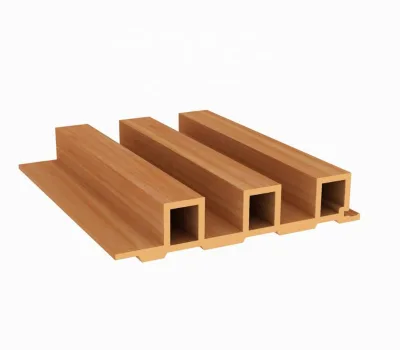
Polyester Panel Decoration Material PVC Wall Panel High Quality 3D Wall Panel
$5.80 - $6.30
MOQ: 200 Square Meters
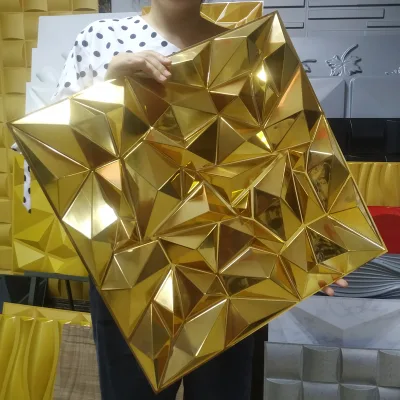
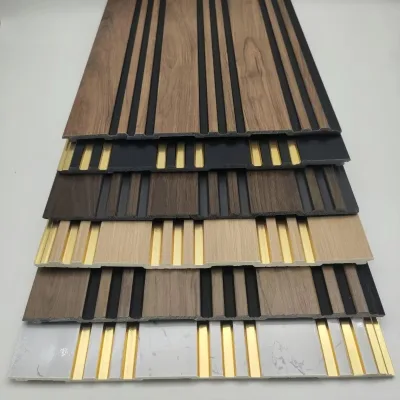


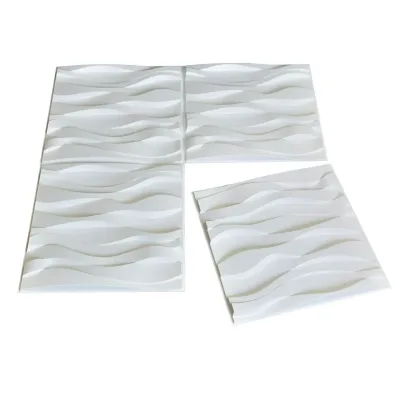
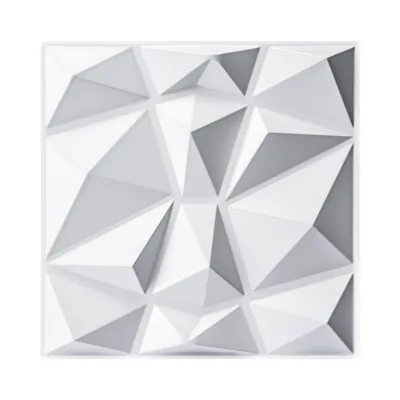
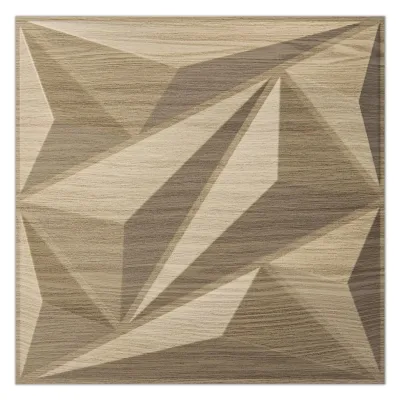
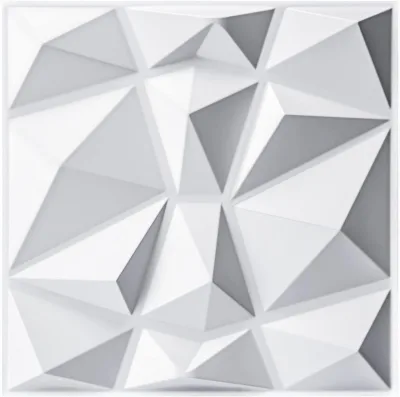
2025 New Arrival White PVC Wall Panels 3D Wall Panels for Interior Wall Decoration
$0.6886 - $0.7605
MOQ: 500 Minimum
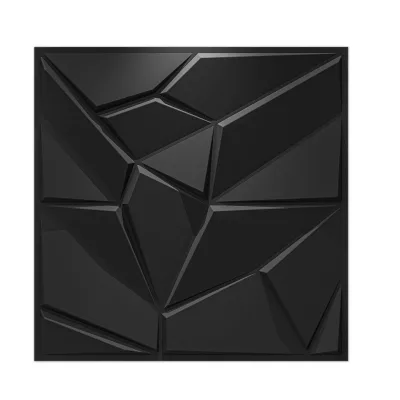
Modern 3D PVC Wall Panels for Home Decoration Stylish Boards for Interior Design
$0.3728 - $0.3922
MOQ: 300 pieces



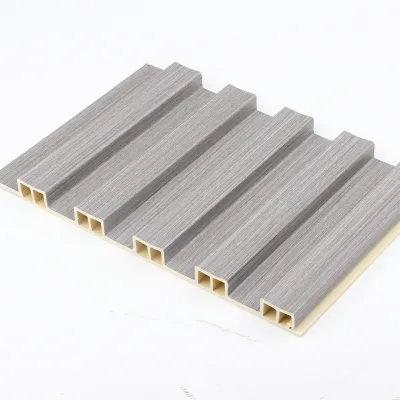
Comprehensive Sourcing Guide
3D Wall Panel Sourcing Guide
Sourcing 3D wall panels through online B2B marketplaces exposes buyers to a wide spread of product types, materials, and commercial structures. The listings observed for this guide span MDF acoustic panels, PVC panels, and polystyrene-based decorative boards, with listed prices ranging from $0.37 to $300 and minimum order quantities from a single piece to 3,000 meters. That spread means a buyer searching only by the keyword "3D Wall Panel" will encounter fundamentally different products: sound-absorbing slat panels for offices, schools, and homes, lightweight indoor decorative wall boards, and narrow-profile wall cladding sold by the meter. Treating these as one category leads to poor comparisons and wasted sampling budgets.
This guide is written for procurement teams, interior fit-out contractors, and distributors who need to move from a keyword search to a defensible shortlist. Each section addresses one decision point: scoping the product, verifying specifications, checking compliance documentation, understanding cost drivers, qualifying suppliers, and planning long-term quality checks. Throughout, only the attributes actually observed in the listings are treated as facts; everything else is framed as a verification task the buyer must complete before committing to an order. Buyers should treat listing claims as a starting point for due diligence rather than a substitute for it.
Product Scope and Observed Listing Signals
The observed listings cluster into three recognizable product families. The first is MDF-based 3D and slat-style acoustic wall panels, branded under names such as Colorbo, with a stated noise reduction coefficient of 0.75 to 0.95, an MDF density of 550–760 kg/m³, and an application range covering offices, schools, and homes. The second family is polystyrene 3D wall panels of the DPW/MDF-type listing model, with dimensions around 16 cm width, 1.2 cm thickness, and lengths of 2.9–3.0 meters, sold at a minimum of 3,000 meters from a Jinhua, Zhejiang origin. The third includes PVC wall panels such as the E2 PVC Panel model, packed 50 pieces per carton.
Buyers should use these observed signals to segment their search. Origin details in the listings point to Shanghai and to Jinhua and Zhejiang in China, which helps narrow the geographic scope of supplier outreach. Packing descriptions also differ meaningfully: carton packing for acoustic panels, individual wrapped packing for larger polystyrene panels, and foam-and-carton packaging for narrow decorative profiles. These differences affect freight planning, so segment the product family before comparing quotes across suppliers.
Technical Specifications to Verify
For MDF acoustic panels, the key verification points are the stated NRC range of 0.75–0.95 and the MDF density of 550–760 kg/m³. Buyers should ask for the underlying test report rather than accepting the number in the listing, because acoustic performance depends heavily on panel thickness, backing, and installation method. The listings indicate pasting or nailing as installation methods, so confirm which method the quoted panel is designed for and whether the substrate at the project site is compatible. Colors are supplied "as the color sheet," so request the physical color sheet and approve a sample panel before bulk production.
For the polystyrene and PVC families, dimensional consistency matters most. Observed dimensions include 220 × 61 × 3.5 cm for one panel model, 200 × 12.5 mm for a narrow wooden-color profile, and 160 × 12 mm for a slat-style board. Verify tolerance on length, width, and thickness across a production run, not just a single sample, since panels designed to interlock or butt-join will show gaps if dimensions drift. Also confirm whether the material is genuinely suitable for indoor use as stated, and request the formal product model designation in the contract to avoid substitution.
Compliance and Safety Documentation
The strongest compliance signals in the observed listings are the stated standards of SGS and SGS/FSC, and a test report covering eco protection, sound absorption, and flame retardancy. Buyers should not treat these listing entries as proof of certification. Instead, request the actual SGS report, check its issue date and the product model it covers, and confirm that the report corresponds to the exact panel specification being quoted. For FSC, ask for a valid chain-of-custody certificate covering the MDF supply if certified wood content is a requirement of your project or market.
Flame retardancy deserves particular attention for commercial installations in offices and schools, where fire codes typically apply to wall finishes. The listing mentions a flame retardant test report, but the buyer must confirm which fire standard the panel was tested against and whether that standard matches the target market's requirements — this cannot be assumed from the listing. Similarly, "eco-friendly" is a feature claim, not a certification; ask for emissions documentation such as formaldehyde release data for MDF panels. Keep copies of all reports in the procurement file and reference the report numbers in the purchase contract to prevent silent specification changes between orders.
Cost Drivers and Commercial Terms
The observed price range of $0.37 to $300 reflects category heterogeneity more than supplier pricing quality: narrow decorative profiles sold by the meter sit at the low end, while large-format or acoustic panels sit higher. The main cost drivers to model are material type (MDF versus PVC versus polystyrene), panel size and thickness, surface finish and color matching, packing format, and order volume. Because several listings quote per meter or per piece with different units, normalize all quotes to a cost per square meter of installed wall area before comparing suppliers.
Commercial terms vary just as widely. Observed MOQs range from 1 piece for acoustic panels, to 10 pieces for large-format panels, to 3,000 meters for profile boards. This structure favors buyers differently: low-piece MOQs allow sampling and small projects, while meter-based MOQs require realistic quantity forecasts. Confirm whether quoted prices are ex-works, FOB, or delivered, since freight for bulky 3.5 cm-thick panels packed individually can materially change landed cost. Also clarify payment terms, whether customization carries a surcharge, and whether the quoted price holds for repeat orders — then lock these terms into a written agreement before the first deposit.
Supplier Qualification and Quality Control
Qualification should begin with the listing data and end with independent verification. Use the observed origin locations — Shanghai for the acoustic panel listing and Jinhua/Zhejiang for the polystyrene and profile listings — to prioritize supplier outreach, then verify the supplier's business license, factory status, and production capability directly. Ask each candidate to confirm the exact product model (for example, BRQB-D3, BRBH06-G, or BRQB-B1 in the observed listings), the applicable packing standard, and whether customization is genuinely available in-house or subcontracted. A supplier that cannot map listing attributes to its own production line is a higher-risk partner.
Quality control should combine pre-production samples, in-process checks, and final random inspection. For acoustic panels, verify NRC performance and density consistency against the contract specification; for dimensional panels, measure length, width, and thickness against stated tolerances on a statistically meaningful sample. Inspect packing at the container stage — foam-and-carton systems for narrow profiles, individual wrapping for large panels, and carton counts such as 50 pieces per carton for PVC panels — since transit damage is a common failure mode for bulky decorative panels. Document agreed inspection criteria in writing and specify who bears the cost of rejected goods.
Long-Term Procurement Checks
After the first successful order, shift focus from sampling to consistency and supply reliability. Track batch-to-batch variation in color, since the listings define color by reference to a color sheet; require the supplier to retain a sealed reference sample so future production runs can be compared objectively. Monitor whether test reports and standards references (SGS, flame retardancy, sound absorption) remain current and cover the product model actually shipped. For customized panels, confirm that tooling, molds, and color formulations are retained by the supplier and documented, protecting you when reordering.
Structural resilience matters for repeat procurement. Maintain a qualified second source for each product family, particularly for high-volume profile boards with 3,000-meter MOQs, where a single-supplier dependency creates schedule risk. Review landed cost quarterly against freight and material movements, and reconfirm commercial terms before annual renewals rather than assuming the original quotation still applies. Finally, collect post-installation feedback from offices, schools, and residential projects — acoustic performance, joint visibility, and durability — and feed that data back into specification updates so each procurement cycle improves on the last.
Conclusion
The 3D Wall Panel category rewards buyers who segment first and negotiate second. The observed listings show three distinct product families — MDF acoustic panels with NRC 0.75–0.95, polystyrene decorative boards, and PVC wall panels — each with its own specification logic, packing format, and MOQ structure ranging from 1 piece to 3,000 meters. By normalizing quotes, verifying certifications rather than trusting listing badges, and building quality control into the contract, procurement teams can turn a broad keyword search into a reliable, repeatable supply program. Treat every listed attribute as a claim to confirm, and document each verification in the supplier file.
FAQs
What materials are used for 3d wall panels?
3d wall panels are primarily manufactured from Medium Density Fiberboard (MDF) or Polystyrene. Some variants utilize PVC for specific applications. These materials provide structural integrity and allow for detailed texturing. Buyers can select based on desired weight, durability, and acoustic properties for their specific interior design requirements.
What certifications do 3d wall panels have?
Manufacturers typically provide SGS and FSC certifications for their 3d wall panels. These documents verify compliance with international safety and environmental standards. Test reports often cover eco-protection, sound absorption, and flame retardant performance. Buyers should request these specific documents to ensure the products meet their project's regulatory and safety requirements.
How are 3d wall panels installed?
Installation is generally achieved through pasting or nailing methods. This flexibility allows for secure attachment to various wall surfaces. The panels are designed for straightforward application, often requiring minimal specialized tools. Buyers can choose the method that best suits their wall condition and desired aesthetic finish for a professional result.
What is the minimum order quantity for 3d wall panels?
The minimum order quantity varies by product type and supplier. Some acoustic panels have an MOQ of just one piece, while others require 3000 meters or 10 pieces. Buyers should verify the specific MOQ for their chosen model, as it depends on whether the item is a standard panel or a customized design.
Where are 3d wall panels manufactured?
These panels are predominantly manufactured in China, with key production hubs in Shanghai and Zhejiang. Specific origins include Jinhua in Zhejiang province. Buyers can source products from these regions, which are known for their established manufacturing infrastructure and supply chain efficiency for interior decoration materials.
What are the standard dimensions of 3d wall panels?
Standard dimensions vary by model, with common sizes including 16cm width by 2.9m to 3m length. Other specifications include 61cm by 220cm with 3.5cm thickness. Some panels measure 200mm by 12.5mm. Buyers should check the specific model details to ensure the dimensions fit their wall space and design layout requirements.