Source 3D Virtual Autopsy Table with Histology Pathology Modules for Medical Schools, Training Centers, and Research Labs
Find and compare 30 listings for a 3D Virtual Autopsy Table with Histology Pathology Modules. Evaluate specifications such as screen size, resolution, and weight to select the right system for medical education and anatomical study.
Key considerations
Products List


Mecan Education Training Equipment Anatomy 3D Digital Body Virtual Autopsy Table for University
$9999.00 - $39999.00
MOQ: 1 Pieces

3D Human Body Virtual Anatomy System Virtual Anatomy Dissection Table for University
$8950.00 - $59999.00
MOQ: 1 Pieces


HD Digital Human Anatomy Dissection Table 3D Body Virtual Autopsy Table
$8950.00 - $39999.00
MOQ: 1 Pieces

Digital Virtual Anatomage Table 3D Body Virtual Autopsy Table for University
$12999.00 - $55999.00
MOQ: 1 Pieces

3D Anatomy Table Human Body Digital Interactive Dissection Table Virtual Autopsy Table
$2999.00 - $29888.00
MOQ: 1 Pieces


Digital Human Anatomy System Anatoma Ge 3D Body Virtual Autopsy Table for School
$8950.00 - $39999.00
MOQ: 1 Pieces
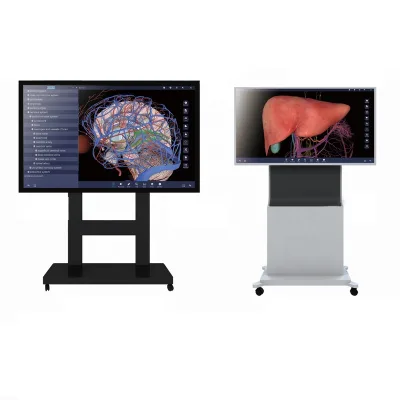
Digital Human Anatomy System Anatomage 3D Body Virtual Autopsy Table for University
$10283.71 - $61702.29
MOQ: 1 Minimum
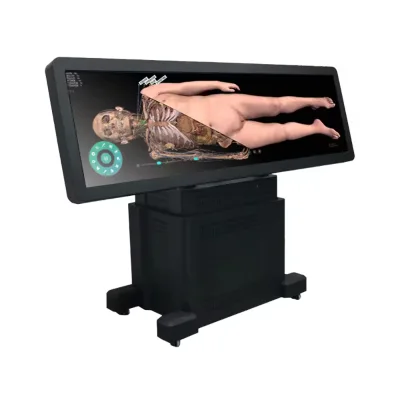
3D Human Anatomy System Anatomage 3D Body HD Digihuman Virtual Anatomage Table
$10108.81 - $60652.87
MOQ: 1 Minimum
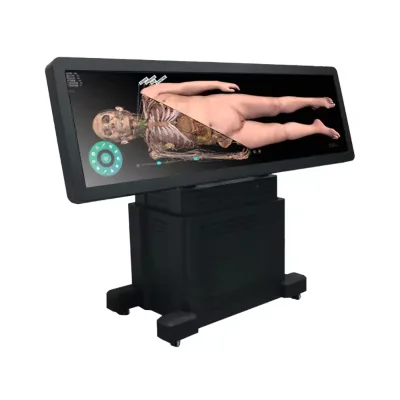

Medical Education System Virtual Anatomy Table 3D Virtual Autopsy Table
$9999.00 - $38999.00
MOQ: 1 Pieces

3D Body Virtual Autopsy Table Virtual Anatomy Dissection Table for School
$64884.00 - $389339.00
MOQ: 1 Pieces

Human Anatomy System Virtual 3D Anatomy Digital Dissection 3D Virtual Autopsy Table for School
$12032.00 - $32012.00
MOQ: 1 sets

New Body Dissection for University 3D Education Medical Anatomy Virtual Autopsy Table
$9999.00 - $38999.00
MOQ: 1 Pieces

Factory Autopsy Medical for School Digital 3D Anatomy Education Virtual Table
$9999.00 - $38999.00
MOQ: 1 Pieces

Autopsy New 3D Education Virtual Anatomy Dissection Table for University
$9999.00 - $38999.00
MOQ: 1 Pieces

High Techonogy 3D Virtual Autopsy Table Virtual Anatomy Table for University
$8999.00 - $69999.00
MOQ: 8 Pieces

Anatomy Digital Human Body System, Virtual Autopsy Table for Teaching
$8999.00 - $69999.00
MOQ: 8 Pieces

Digital Human Anatomy System Anatoma Ge 3D Body Virtual Autopsy Table for School
$8999.00 - $69999.00
MOQ: 8 Pieces

New Body Dissection for University 3D Education Medical Anatomy Virtual Autopsy Table
$8999.00 - $69999.00
MOQ: 8 Pieces


Virtual Anatomy Dissection Table for University Fashion New Autopsy Digital Human
$8999.00 - $69999.00
MOQ: 8 Pieces


Digital Human Anatomy System 3D Body Virtual Autopsy Table for School
$8999.00 - $39999.00
MOQ: 1 Pieces

3D Human Body Virtual System Virtual Anatomy Dissection Table for University
$18999.00 - $39999.00
MOQ: 1 Pieces

Sy-Yu01 High Techonogy 3D Virtual Autopsy Table Virtual Anatomy Table for University
$6999.00 - $26999.00
MOQ: 1 Pieces

Sy-Yu01 3D Body Virtual Autopsy Table Anatomy Digital Human Body Anatomy System
$6999.00 - $26999.00
MOQ: 1 Pieces
Comprehensive Sourcing Guide
3D Virtual Autopsy Table with Histology Pathology Modules Sourcing Guide
The procurement of a 3D Virtual Autopsy Table with Histology Pathology Modules represents a significant capital investment for medical education institutions, research centers, and forensic training facilities. These systems integrate high-resolution digital displays with advanced anatomical modeling to simulate dissection and tissue analysis without the need for physical cadavers. Buyers must recognize that while the core function remains consistent, the specific implementation of histology modules and the fidelity of the 3D rendering vary significantly between manufacturers. The observed market data indicates a diverse range of configurations, from standard teaching units to specialized forensic setups, requiring a rigorous evaluation of how well a specific model aligns with the institution's curriculum and research needs.
Sourcing decisions should be driven by a clear understanding of the physical and digital constraints of the available inventory. Current listings reveal substantial variations in screen technology, with some units featuring dual 46-inch LCD screens spliced for panoramic views, while others utilize single large-format displays or 87.8-inch screens. The physical footprint is equally critical, as models range from compact units measuring approximately 1.6 meters in length to larger installations exceeding 2.2 meters. Buyers must assess whether the specific dimensions, weight, and power requirements of a listed model fit within their facility's infrastructure before proceeding with a purchase order.
Product Scope and Observed Listing Signals
The product scope for these systems encompasses a wide array of hardware configurations designed to support both gross anatomy visualization and detailed histological examination. Observed listings include models explicitly labeled as "Virtual Autopsy Table" or "3D Virtual Anatomy Table," often paired with specific model numbers such as MCE-AT86, MCL-86, and YJ-DHA88P. These devices are marketed primarily as school teaching products and medical school applications, suggesting their primary utility lies in educational environments where high-volume student access is required. The presence of "Human Anatomy Module" as a functional attribute confirms the software's capability to render complex biological structures, though the depth of histology integration must be verified against the specific software package included.
Buyers should carefully scrutinize the listing signals regarding screen resolution and display technology, as these directly impact the clarity of pathological details. The market data shows resolutions ranging from 34801080 to 38402160, with some units boasting 87.8-inch screens and others utilizing 55-inch LCD panels. Brightness levels also vary, with observed values of 450 CD/M2 and 700 CD/M3, which are critical factors for visibility in well-lit lecture halls or dimly lit forensic labs. The distinction between "Customization: Available" and "Non-Customized" in the product attributes indicates that some suppliers may offer tailored software interfaces or hardware modifications, while others provide a fixed, off-the-shelf solution that may limit future adaptability.
Technical Specifications to Verify
Technical verification must begin with the display architecture, as the visual fidelity of histology slides and 3D tissue models depends heavily on screen resolution and contrast ratios. Buyers should confirm that the selected unit offers a resolution of at least 3840*2160 to ensure crisp rendering of cellular structures, and verify the contrast ratio, which ranges from 1100:1 to 5000:1 in observed listings. The visual angle is another critical parameter, with some units offering 175-degree viewing angles while others specify narrower ranges like 89 degrees; this determines how many students can view the screen simultaneously without image degradation. Additionally, the power requirements, typically listed as 220V with wattages between 750W and 800W, must be compatible with the facility's electrical infrastructure to prevent operational disruptions.
Physical specifications and material composition are equally vital for long-term durability and spatial planning. The weight of these units varies significantly, from 85kg to 185kg, necessitating a review of floor load capacity and the need for specialized moving equipment. The product size, often listed in millimeters, dictates the required room dimensions, with some models measuring over 2.2 meters in length and others under 1.7 meters. Buyers must also verify the material composition, noting that some components may be constructed from PVC or other durable polymers, and confirm the packing method, which is typically a standard export package or a wooden box for international shipping. Ensuring the model number matches the specific technical requirements is essential, as discrepancies between the listed model and the actual hardware can lead to compatibility issues with the histology software.
Compliance and Safety Documentation
Compliance documentation is a non-negotiable aspect of sourcing medical and educational equipment, particularly when the devices involve high-voltage components and complex digital interfaces. The observed listings frequently cite certifications such as CE, ISO, and RoHS, with some entries also mentioning FDA and ISOCE standards. Buyers must request and validate the specific certification documents for the exact model number being purchased, as the presence of a certification label on a general product page does not guarantee that every configuration meets the required safety standards for the buyer's jurisdiction. The distinction between "CE, ISO RoHS" and "FDA, ISOCE" suggests different regulatory pathways, and the buyer must ensure the equipment complies with local medical device regulations and electrical safety codes.
Safety verification extends beyond certification to include the physical condition and operational safety of the unit. All observed listings describe the products as "New," but buyers should insist on a detailed inspection report or a video demonstration of the unit's operational state prior to shipment. The power requirement of 220V necessitates a check on voltage stability and the inclusion of appropriate surge protection or grounding mechanisms. Furthermore, the standard of the product, often listed simply as "Standard," should be cross-referenced with international safety norms to ensure that the electrical and mechanical components meet the necessary safety thresholds for public use in educational settings.
Cost Drivers and Commercial Terms
The cost of a 3D virtual autopsy table is driven primarily by the complexity of the display system, the resolution of the screen, and the inclusion of specialized histology software modules. The observed price range is extensive, spanning from $500 to over $389,000, reflecting the vast difference between basic display units and fully integrated, high-fidelity forensic simulation systems. Buyers must understand that the lower end of this range likely corresponds to simpler configurations with smaller screens and basic anatomical models, while the higher end represents systems with dual large-format screens, high contrast ratios, and comprehensive pathology databases. The specific model number and its associated technical specifications are the primary determinants of the final price, rather than a generic category average.
Commercial terms, including Minimum Order Quantity (MOQ) and lead times, vary significantly across the market and must be clarified before finalizing a contract. The observed MOQ range is between 1 and 8 units, indicating that some suppliers are willing to sell single units for pilot programs, while others may require a minimum batch for production runs. Buyers should verify the lead time and the specific terms of the "Standard Export Package" or "Wooden Box" shipping method, as these affect the total landed cost and delivery schedule. Additionally, the availability of customization options can introduce variable costs, and buyers should negotiate these fees upfront to avoid unexpected expenses during the procurement process.
Supplier Qualification and Quality Control
Supplier qualification requires a thorough vetting of the manufacturer's origin and their track record in producing medical educational equipment. The majority of observed listings indicate the product origin as China (Mainland) or simply China, which is a common hub for this type of manufacturing. Buyers should verify the supplier's history with similar projects, specifically their experience in delivering units with the required certifications like CE and ISO. The presence of a "Standard" product standard in the listings suggests a baseline level of quality, but buyers must demand evidence of quality control processes, such as factory audits or third-party inspection reports, to ensure consistency across the production batch.
Quality control measures should focus on the integrity of the hardware and the reliability of the software integration. Buyers must confirm that the "New" condition of the product is guaranteed through a comprehensive pre-shipment inspection that tests the display resolution, brightness, and contrast ratios against the advertised specifications. The weight and dimensions listed in the product specifications must be verified to ensure the unit arrives undamaged and fits the intended installation space. Additionally, the supplier should provide a clear warranty policy and a support plan for the "Human Anatomy Module" software, ensuring that any technical issues related to the histology pathology modules can be resolved promptly without disrupting the educational schedule.
Long-Term Procurement Checks
Long-term procurement success depends on the availability of software updates and the longevity of the hardware components. Buyers should inquire about the supplier's policy on software maintenance, particularly for the histology pathology modules, which may require regular updates to reflect new medical standards or anatomical data. The durability of the LCD screens and the mechanical stability of the table structure are critical factors, as these units are subject to frequent use by students and faculty. A robust maintenance plan should include provisions for screen replacement, software licensing renewals, and technical support for any hardware failures that may occur after the initial warranty period.
Future scalability and compatibility with emerging technologies should also be a primary consideration in the procurement strategy. As medical education evolves, the ability to integrate new imaging modalities or connect to other digital learning platforms will be essential. Buyers should verify whether the current model supports future hardware upgrades or if the system is a closed ecosystem that limits expansion. The "Customization: Available" attribute suggests some flexibility, but buyers must clarify the scope of these customizations and the associated costs for future modifications. Establishing a long-term relationship with a supplier who can support these evolving needs is crucial for maximizing the return on investment in 3D virtual autopsy technology.
FAQs
What certifications do these tables have?
These tables typically carry CE, ISO, and RoHS certifications. Some models also include FDA approval. Buyers should verify specific certification documents for each supplier to ensure compliance with local medical regulations.
Can I customize the display size?
Customization is available for display configurations. Specific models offer options like dual 46-inch screens or single 87.8-inch displays. Buyers must confirm exact screen dimensions and resolution requirements with the manufacturer before ordering.
What is the minimum order quantity?
The minimum order quantity is generally one unit. Some listings indicate an MOQ of one, while others may list up to eight. Buyers should check individual supplier terms as requirements vary by model and customization level.
How heavy is the standard unit?
Standard units weigh between 85kg and 185kg depending on the model. Specific configurations like the 3D Virtual Anatomy Table weigh 185kg. Buyers need to account for this weight when planning shipping and installation logistics.
Where are these products manufactured?
These products are manufactured in China, specifically Mainland China. All listed models originate from this region. Buyers should consider lead times and shipping costs associated with sourcing from this specific geographic location.
What power requirements do they need?
Power requirements typically range from 750W to 800W at 220V. Specific models like the 3D Body Virtual Autopsy Table require 220V 800W. Buyers must ensure their facility has compatible electrical infrastructure before installation.