Source 4 Modes Motorcycle Spotlight for bikes, trucks, and off-road use
Find 30 verified listings for the 4 Modes Motorcycle Spotlight to compare specifications like voltage, lumens, and lens count. Buyers can evaluate options from Guangdong and Hebei suppliers for retrofit or upgrade projects.
Key considerations
Products List
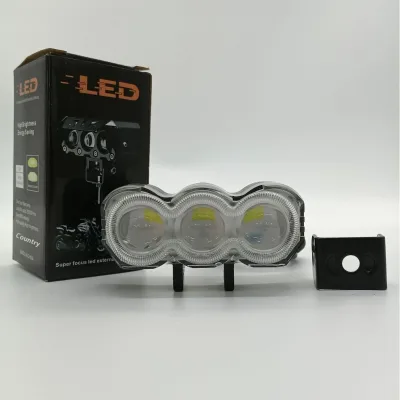
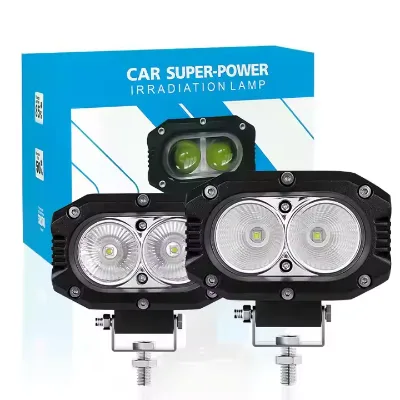
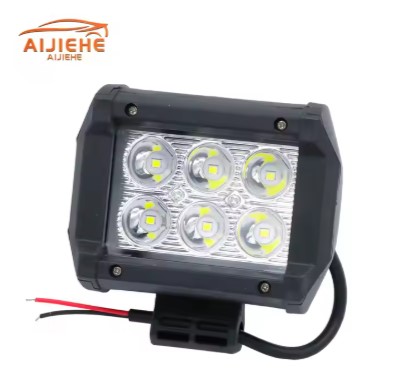
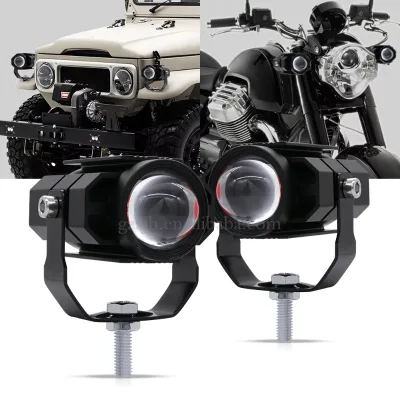
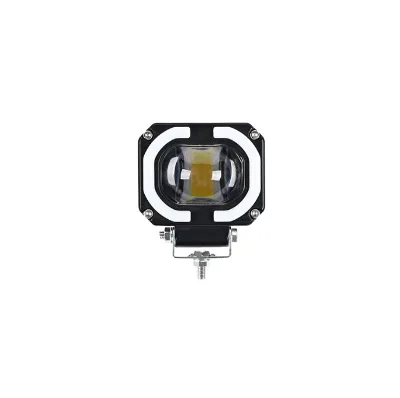
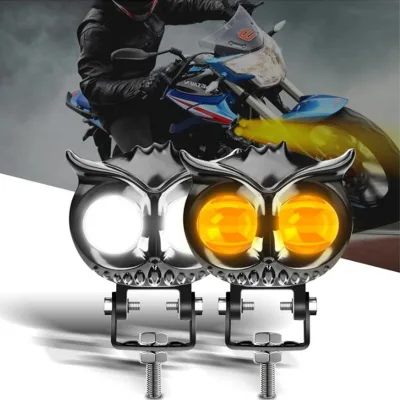


The New Waterproof Four-Eye High and Low Beam Motorcycle Spotlight Dual Color LED Headlight
$6.30 - $6.90
MOQ: 150 Pieces


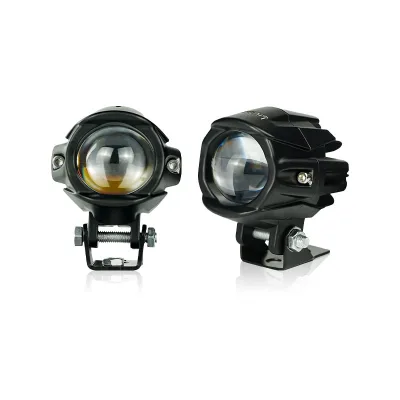
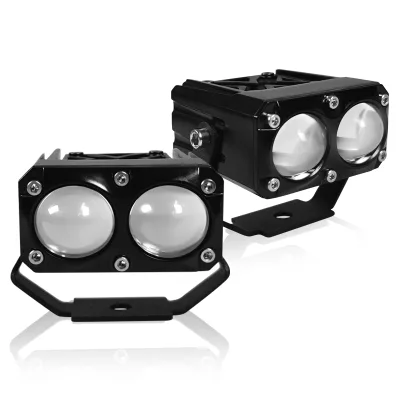
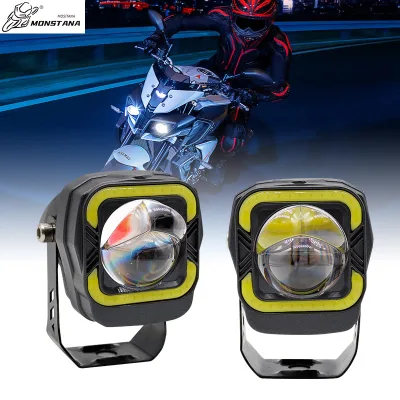


Comprehensive Sourcing Guide
Strategic Sourcing Guide for 4-Mode Motorcycle Spotlights
Understanding the Product Category and Core Specifications
The search term "4 Modes Motorcycle Spotlight" refers to a specific class of auxiliary lighting designed to enhance visibility for motorcyclists in low-light conditions. In the B2B procurement landscape, these units are distinct from standard headlamps due to their modular functionality and adaptability. Based on observed market data, these products are frequently categorized under functional applications such as "Motorcycle LED spotlight" or "Motorcycle external spotlights." The core technical requirement for a "4-mode" unit is the ability to switch between different light output configurations, typically ranging from high beam, low beam, fog light, or strobe functions, though the specific implementation varies by manufacturer.
When evaluating product listings, buyers must distinguish between the physical specifications and the functional modes. The observed product attributes indicate a strong prevalence of LED technology, with specific references to "LED" as the light source and "3570" as a potential LED chip specification. The material composition is equally critical; high-quality units often utilize "Aluminum" for the lamp body to ensure heat dissipation, while others may use "Abs" (Acrylonitrile Butadiene Styrene) for the housing. The lens configuration is another variable, with observed listings showing units with "2 Lens" or "6 Lens" arrangements. For a 4-mode spotlight, the internal driver circuitry must be robust enough to handle multiple current settings without flickering or premature failure.
The physical dimensions and packaging are also essential for logistics planning. Observed data points to a single package size of approximately 10x8x6 cm and a single gross weight of 0.350 kg for certain models. However, buyers should not assume these dimensions apply universally. The "Model Number" field in supplier catalogs often contains specific identifiers like "Arc three-eye band RGB" or "4 Inch 18W 6 LED Double Row," which indicate the form factor. A 4-inch diameter is a common standard for these auxiliary lights, but the wattage can vary significantly, with some listings specifying 18W while others may offer higher or lower power ratings depending on the intended application.
Technical Verification and Electrical Compatibility
Electrical compatibility is the most critical technical factor when sourcing motorcycle lighting. Unlike automotive applications that often run on a standard 12V system, motorcycle electrical systems can vary. The supplied data highlights a voltage range of "12-24V," which is a crucial specification for universal fitment. Some listings explicitly state "24 V" or "24 V" as a standalone attribute, suggesting that certain units are designed for larger touring motorcycles or specific regional markets where 24V systems are more common. Buyers must verify that the product's voltage rating matches the motorcycle's electrical system to prevent damage to the light or the vehicle's wiring harness.
The "4 modes" functionality implies a complex internal driver. In a standard LED spotlight, the driver regulates current to maintain consistent brightness. In a multi-mode unit, the driver must switch between different current levels or pulse-width modulation (PWM) patterns. Buyers should request technical datasheets that detail the driver's efficiency and the specific current draw for each mode. For instance, a high-intensity mode might draw significantly more power than a low-intensity or fog mode. The "Lumens" output is another key metric; observed data mentions "3000 Lm" for specific models, but this figure should be treated as an observation of a specific listing rather than a universal standard.
Color temperature and light color are also vital for compliance and usability. The observed attributes list "Natural White," "Cool White," and "5000K" as common specifications. A 5000K color temperature provides a neutral white light that balances visibility with reduced eye strain, whereas "Cool White" may appear bluer. The "Color" attribute in some listings mentions "white+yellow," which could indicate a dual-color LED setup or a specific lens tint. For a 4-mode spotlight, the ability to switch between white and yellow light (often used for fog penetration) is a valuable feature. Buyers must confirm that the light color is consistent across all modes or if the color changes based on the selected mode.
Compliance, Certification, and Safety Standards
In the B2B sector, compliance is not merely a formality but a prerequisite for market access and liability protection. While the supplied product data does not explicitly list specific certification bodies (such as E-mark, DOT, or CE), buyers must treat the absence of such data as a red flag requiring immediate verification. Motorcycle lighting is subject to strict regulations regarding beam pattern, intensity, and glare. A "4-mode" spotlight that includes a strobe function may be illegal for road use in certain jurisdictions, even if it is marketed for off-road applications.
Buyers should verify that the supplier can provide documentation proving the product meets the safety standards of the target market. This includes checking for IP ratings related to waterproofing, as the observed attributes mention "Waterproof" as a feature. However, "Waterproof" is a general term; buyers must demand specific IP ratings (e.g., IP67 or IP68) to ensure the unit can withstand rain, dust, and vibration typical of motorcycle travel. The "Feature" attribute also lists "Lightweight," which is beneficial for mounting but does not replace the need for structural integrity testing.
Furthermore, the "Warranty" attribute observed in the data is consistently "1 year" or "1 years." This standard warranty period suggests a baseline expectation for product reliability. However, a warranty is only as good as the supplier's ability to honor it. Buyers should investigate the supplier's return policy and their process for handling defective units. The "Condition" is listed as "New," which is standard, but buyers must ensure that the "New" condition applies to the actual goods and not just the listing description.
Cost Drivers and Pricing Dynamics
The pricing for motorcycle spotlights is influenced by several factors, including material quality, LED chip efficiency, and the complexity of the driver circuitry. The observed price range in the market is broad, spanning from 0.66 to 19.5 USD. This wide variance indicates a highly segmented market with products ranging from basic, low-cost units to premium, high-performance models. The lower end of the price spectrum likely corresponds to products with simpler construction, possibly using "Abs" plastic bodies and lower-grade LEDs. The higher end likely reflects units with "Aluminum" bodies, higher lumen outputs, and more sophisticated multi-mode drivers.
The "MOQ" (Minimum Order Quantity) is another significant cost driver. The observed MOQ range is 1 to 700 units. For buyers looking to test the market, a low MOQ of 1 allows for sample acquisition without significant financial commitment. However, for bulk procurement, the MOQ of 700 suggests that economies of scale are available. Buyers should negotiate based on volume, understanding that the unit price will likely decrease as the order quantity increases. The "Selling Units" attribute indicates that some suppliers offer "Single item" sales, which is convenient for small orders but may carry a higher per-unit cost.
Material costs also play a role in pricing. "Aluminum" is generally more expensive than "Abs" due to the raw material cost and the manufacturing process involved in casting or extruding the housing. The "Single gross weight" of 0.350 kg provides a baseline for shipping cost calculations, but heavier units with larger aluminum housings will incur higher freight charges. Buyers should factor in the total landed cost, including shipping, duties, and taxes, rather than focusing solely on the ex-works price.
Supplier Evaluation and Sourcing Strategy
Evaluating suppliers for motorcycle spotlights requires a multi-faceted approach. The observed data shows a concentration of products originating from "Guangdong, China" and "Hebei, China." These regions are known for their manufacturing capabilities in electronics and lighting. However, the presence of multiple brands, including "DDL," "OEM," "AIJIEHE," and "XUANYI," suggests a competitive market with both branded and private-label options. Buyers should prioritize suppliers who offer "Universal Fitment," as indicated by the "Yes" attribute in the data, as this increases the addressable market for the product.
When assessing a supplier, buyers should look for transparency in their product specifications. The "Model Number" field should be specific and consistent. For example, a listing with "Model Number: 4 Inch 18W 6 LED Double Row" provides clear information about the size, power, and LED configuration. Suppliers who provide vague or inconsistent model numbers may be less reliable. Additionally, the "Lifespan" attribute, observed as "5000 Hours," is a key performance indicator. Buyers should verify this claim through third-party testing or by requesting detailed technical documentation.
The "Purpose" attribute, listed as "for retrofit/upgrade" or "for replace/repair," indicates the intended use case. Buyers should ensure that the product aligns with their specific application. For instance, a spotlight designed for "retrofit" may have different mounting requirements than one designed for "repair." The "Position" attribute, often listed as "Front," confirms the intended mounting location. Buyers should also check if the supplier accepts "Small Orders," as this flexibility can be crucial for startups or small businesses.
Quality Control and Long-Term Procurement Considerations
Quality control is paramount in the lighting industry, where product failure can lead to safety hazards. Buyers should implement a rigorous quality control process that includes visual inspection, functional testing, and durability testing. The "Feature" attribute lists "Waterproof" and "Lightweight," but these claims must be validated. Buyers should request samples to test the waterproofing capabilities under real-world conditions, such as exposure to water jets or submersion. The "Lifespan" of 5000 hours should be verified through accelerated aging tests to ensure the LEDs do not degrade prematurely.
Long-term procurement considerations involve building a sustainable supply chain. Buyers should evaluate the supplier's ability to maintain consistent quality over time. The "Warranty" of 1 year is a standard expectation, but buyers should consider the supplier's track record for honoring warranties. Additionally, the "Small Orders: Accepted" attribute suggests that the supplier is flexible, which is beneficial for managing inventory levels. However, buyers should also consider the "Lead Time" and "Location" of the supplier to ensure timely delivery. The "Place of Origin" being "Guangdong, China" or "Hebei, China" indicates that the supplier is likely located in a major manufacturing hub, which can facilitate faster production and shipping.
Finally, buyers should consider the "Application" of the product. The observed attributes list "Outdoor" and "Outdoor light" as common applications. This means the product must be durable enough to withstand environmental stressors such as UV exposure, temperature fluctuations, and vibration. Buyers should ensure that the product is designed for these conditions and that the materials used are resistant to degradation. By focusing on these long-term considerations, buyers can secure a reliable supply of high-quality motorcycle spotlights that meet their specific needs and market demands.
Comparative Analysis of Product Attributes
To facilitate a clearer understanding of the market landscape, the following table summarizes the key attributes observed in the supplied data. This comparison highlights the variability in specifications and helps buyers identify the most relevant products for their needs.
| Attribute | Observation A | Observation B | Observation C | Observation D |
|---|---|---|---|---|
| Brand Name | DDL | OEM | AIJIEHE | XUANYI |
| Material | Aluminum | Abs | Aluminum | Not Specified |
| Voltage | 12-24V | 24 V | 12-24V | Not Specified |
| Light Color | Natural White, Cool White | Cool White | White+Yellow | Not Specified |
| Lens Count | 2 Lens | 6 Lens | Not Specified | Not Specified |
| Warranty | 1 year | 1 years | 1 year | Not Specified |
| Lifespan | 5000 Hours | Not Specified | Not Specified | Not Specified |
| Lumens | 3000 Lm | Not Specified | Not Specified | Not Specified |
| Place of Origin | Guangdong, China | Hebei, China | Not Specified | Not Specified |
| MOQ Range | 1-700 | 1-700 | 1-700 | 1-700 |
This table illustrates that while there is a common thread of LED technology and motorcycle application, the specific attributes vary significantly. Buyers must carefully match these attributes to their requirements, ensuring that the product's voltage, material, and light color align with their operational needs. The variability in brand names and origins also underscores the importance of thorough supplier due diligence. By leveraging this data, buyers can make informed decisions that balance cost, quality, and functionality in the procurement of 4-mode motorcycle spotlights.
FAQs
What voltage range do these motorcycle spotlights support?
These units typically support a voltage range of 12 to 24 volts. This dual-voltage capability ensures compatibility with various motorcycle electrical systems, including those designed for larger touring bikes or specific regional markets that utilize 24V standards.
Which materials are commonly used for the lamp body?
Manufacturers frequently use aluminum or ABS plastic for the lamp body. Aluminum is preferred for superior heat dissipation, while ABS offers a lightweight alternative, though both materials aim to provide durability for outdoor and retrofit applications.
How long is the standard warranty period for these lights?
The standard warranty period for these products is one year. This coverage applies to new units and serves as a baseline expectation for product reliability, though specific terms may vary depending on the supplier and brand.
Can I find these spotlights with a 5000-hour lifespan?
Yes, some models are specified with a lifespan of 5000 hours. Buyers should verify this claim through technical datasheets or third-party testing to ensure the LEDs maintain brightness without premature degradation during extended use.
What light colors are available for these LED units?
Available light colors include natural white, cool white, and combinations of white and yellow. A 5000K color temperature is common, providing neutral white light, while dual-color options may offer enhanced visibility in foggy conditions.
Are these lights suitable for universal fitment on motorcycles?
Many listings confirm universal fitment for these motorcycle spotlights. This feature allows the lights to be installed on various vehicle types, making them ideal for retrofit and upgrade purposes across different motorcycle models.