Source 4 Piston Racing Brake Calipers for cars, trucks, and SUVs
Find and compare 30 listings for 4 Piston Racing Brake Calipers from verified Chinese manufacturers. Buyers can evaluate options based on material, piston configuration, and customization availability for various vehicle brands.
Key considerations
Products List


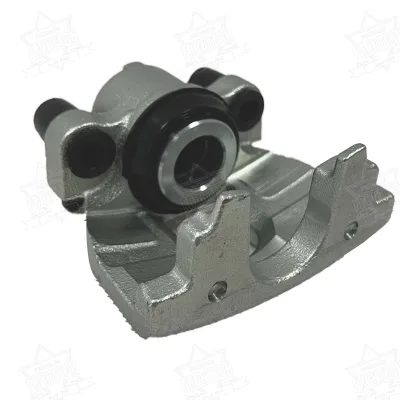
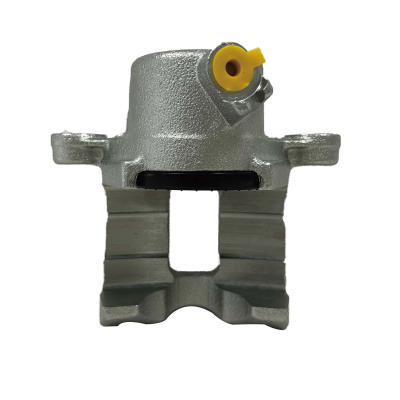
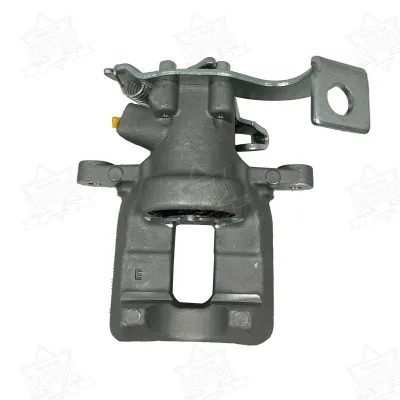
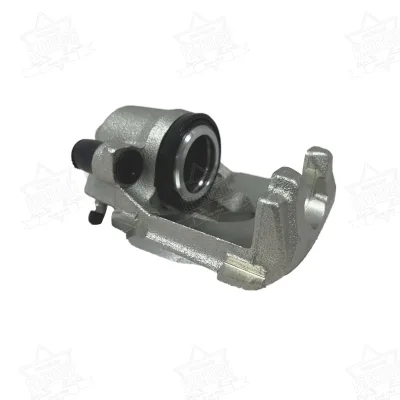



Comprehensive Sourcing Guide
Strategic Sourcing Guide for 4 Piston Racing Brake Calipers
The procurement of 4 Piston Racing Brake Calipers represents a critical decision point for automotive manufacturers, motorsport teams, and high-performance aftermarket distributors. These components are engineered to deliver superior stopping power, heat dissipation, and modulation compared to standard single or dual-piston assemblies. Sourcing these parts requires a rigorous understanding of material science, manufacturing processes, and compliance frameworks. The following guide synthesizes available market data to assist buyers in navigating the complex landscape of high-performance braking systems, ensuring that procurement decisions are grounded in verified facts rather than marketing assertions.
Technical Specifications and Material Engineering
When evaluating 4 Piston Racing Brake Calipers, the primary technical differentiator lies in the material composition and the mechanical architecture of the piston system. The supplied product data indicates a diverse range of materials utilized in the industry, including Aluminum, Iron, and Ceramic Fiber. Aluminum is frequently cited for its high strength-to-weight ratio, making it a preferred choice for racing applications where unsprung mass reduction is paramount. Conversely, Iron-based calipers may be specified for durability in heavy-duty or specific OEM replacement scenarios. The presence of Ceramic Fiber in the product attributes suggests specialized applications, potentially related to friction components or high-temperature insulation within the brake system assembly.
The piston configuration is a defining specification for this category. The market data explicitly references "2/4/6 Piston" configurations, with a specific focus on the "4 piston" variant for this guide. A 4-piston design typically offers a balanced approach between the clamping force of multi-piston systems and the complexity of 6-piston units. The data notes that these calipers are available in "2/4/6 Pistons" and specifically lists "4 Piston" as a distinct model type. Buyers must verify the exact piston count and diameter, as these directly influence the hydraulic pressure distribution and pad contact area. Furthermore, the processing methods identified include "Casting+CNC," indicating that high-precision machining is essential to ensure the concentricity and surface finish required for optimal brake performance. The "Standard" specification suggests that while customizations are available, many suppliers adhere to established dimensional baselines, though the "Customized" attribute confirms that tailoring to specific vehicle models is a viable procurement path.
Compliance, Certification, and Regulatory Standards
Navigating the regulatory landscape for automotive braking components is non-negotiable. The supplied facts highlight a complex array of certifications that buyers must verify against their target markets. The data lists "DOT, ISO/TS, ISO, ISO, ECE, GSV, GMP, IATF, FSC, HACCP, AMECA" as potential certifications. It is crucial to distinguish between product-specific certifications and broader corporate quality management standards. For instance, "IATF-Classification: Disc" and "IATF-ISO" point to adherence to the International Automotive Task Force standards, which are essential for suppliers providing parts to major automotive manufacturers. The "ECE" designation is particularly relevant for European markets, indicating compliance with Economic Commission for Europe regulations regarding vehicle safety.
Buyers must exercise caution when interpreting these lists. The presence of certifications like "HACCP" and "FSC" in the data suggests that some suppliers may hold certifications for broader manufacturing processes (such as food safety or forestry) rather than specific to the brake caliper itself. Therefore, procurement teams should request specific test reports and certificates of conformity that explicitly cover the brake caliper product under the relevant automotive standards (e.g., ECE R90 for brake linings or specific ISO standards for caliper strength). The "100% Test" attribute mentioned in the data is a positive indicator of quality control, but it must be backed by documented test protocols. Additionally, the "Standard" product specification of "303030" and "20.00cm * 10.00cm * 10.00cm" highlights the need to verify packaging and dimensional standards, which can impact shipping costs and storage requirements.
Cost Drivers and Pricing Dynamics
The pricing structure for 4 Piston Racing Brake Calipers is highly variable, as evidenced by the observed listed price range of $0.7 to $1,027.6 USD. This wide disparity is not indicative of a single product line but rather reflects the spectrum from basic components to fully engineered, high-performance racing units. Several factors drive these costs. First, the material choice is a primary determinant; Aluminum calipers generally command a higher price than cast iron equivalents due to material costs and the energy-intensive machining processes required. Second, the level of customization significantly impacts cost. The "Customization: Available" and "Color: Customized" attributes suggest that bespoke finishes, specific piston diameters, or unique mounting brackets will incur premium pricing.
The Minimum Order Quantity (MOQ) also plays a critical role in unit economics. The observed MOQ range spans from 1 to 500 units. For buyers seeking small batches for prototyping or niche racing teams, suppliers with an MOQ of 1 may offer flexibility but at a higher per-unit cost. Conversely, buyers purchasing for fleet replacement or mass production can leverage the higher MOQ tiers (up to 500) to negotiate better pricing. The "Selling Units: Single item" attribute indicates that some suppliers allow for sample purchases, which is vital for quality validation before committing to larger orders. Buyers should analyze the total cost of ownership, including shipping, which is influenced by the "Packing and Pallets" and "Neutral Package in Pallets" specifications, as well as the "Standard" packaging dimensions provided.
Typical Applications and Vehicle Compatibility
The application scope for 4 Piston Racing Brake Calipers is broad, extending from street performance upgrades to dedicated motorsport use. The data explicitly mentions "Racing Modified Brake Caliper" as a key keyword, confirming the primary use case in high-performance environments. The "Function: 50% Improve Brake Performance" attribute underscores the intended benefit for these systems, targeting drivers who require enhanced stopping power and fade resistance. The "Purpose: for replace/repair" and "Product name: for mercedes brake calipers and for 350z brake caliper" indicate that these components are frequently used as direct replacements for original equipment manufacturer (OEM) parts in specific vehicle models.
Compatibility is a critical consideration. The "Car Model: cars" and "OE NO.: OEM" attributes suggest that while generic fitment exists, specific part numbers are often required for precise installation. The data lists various OE numbers such as "8K0615123B, RX5798227A0, PAL42350, DC84356, BHZ628E, BHZ628," which buyers must cross-reference with their vehicle specifications. The "Position: Front" attribute clarifies that these calipers are typically designed for the front axle, where the majority of braking force is applied. Furthermore, the "Accessory: Shims + Sensors + Other Accessories" note implies that a complete system may require additional components, and buyers should ensure that the supplier provides or sources these necessary accessories to ensure a functional assembly. The "Main Market" data, covering regions from South America to Western Europe, indicates a global demand, suggesting that buyers should verify local compliance standards for their specific geographic market.
Supplier Evaluation and Quality Assurance
Selecting a reliable supplier for 4 Piston Racing Brake Calipers requires a multi-faceted evaluation strategy. The "Brand Name" field lists "OEM/ODM/Huarui/Epikauto" and "Frontech," indicating that buyers may encounter both branded and private-label options. The "Condition: New" attribute is a baseline requirement, but the true differentiator lies in the manufacturing process and quality control. The "Processing: Casting+CNC" method suggests that the supplier must possess both casting capabilities and advanced CNC machining facilities to ensure the tight tolerances required for racing calipers.
Buyers should prioritize suppliers who can demonstrate a robust quality assurance program. The "100% Test" attribute is a strong indicator, but it must be verified through third-party audit reports or internal quality logs. The "Warranty: 80000-90000KMs/18Months" provides a benchmark for expected product longevity, though buyers should clarify the terms of this warranty, including coverage for racing use versus street use. The "Place of Origin: Shandong, China" and "prod_origin: China" confirm the primary manufacturing hub, but buyers should not assume uniform quality across all Chinese suppliers. Instead, they should evaluate the supplier's specific track record, their adherence to the "IATF" and "ISO" standards mentioned, and their ability to provide detailed documentation for the "OE NO." and "prod_model" specifications. The "Quality: High-quality" attribute is a self-reported claim and should be validated through sample testing and reference checks from previous clients.
Long-Term Procurement and Supply Chain Resilience
Sourcing 4 Piston Racing Brake Calipers is not merely a transactional activity but a strategic partnership that requires long-term planning. The "Main Market" diversity suggests that supply chains are global, but buyers must assess the resilience of their suppliers against geopolitical and logistical disruptions. The "prod_packing: Packing and Pallets" and "Neutral Package in Pallets" details highlight the importance of standardized packaging to ensure safe transport and efficient warehousing. Buyers should verify the lead times associated with different order volumes, as the "MOQ: 50 PCS" and "MOQ: 1-500" ranges suggest that production schedules may vary based on order size.
Long-term considerations also include the availability of spare parts and the potential for product evolution. The "Customization: Available" and "Color: Customized" attributes indicate that suppliers can adapt to changing design requirements, which is essential for racing teams that frequently update their vehicle setups. However, buyers should ensure that the supplier maintains a stable supply chain for raw materials like Aluminum and Iron to prevent production delays. The "Standard" specifications for size and model (e.g., "CP9440-2", "4 Piston - CP9446-2/3S4L") provide a framework for standardization, but buyers should maintain open communication channels with suppliers to stay informed about any updates to these standards or the introduction of new models. Finally, the "Friction Coefficient: 0.35-0.45" is a critical performance metric that should be monitored over time to ensure consistent braking performance, as variations in this coefficient can significantly affect vehicle safety and handling. By maintaining a proactive approach to supplier management and quality verification, buyers can secure a reliable supply of high-performance brake calipers that meet the demanding requirements of racing and high-performance automotive applications.
FAQs
What materials are used for 4 Piston Racing Brake Calipers?
These calipers are commonly manufactured from Aluminum, Iron, or Ceramic Fiber. Aluminum is preferred for racing due to its high strength-to-weight ratio, while Iron offers durability for heavy-duty applications.
Which certifications should I verify for these brake calipers?
Look for IATF, ISO, ECE, and DOT certifications to ensure compliance. Buyers must distinguish between product-specific safety standards and broader corporate quality management certifications like HACCP or FSC.
How does customization affect the price of brake calipers?
Customization significantly impacts cost, with prices ranging from 0.7 to 1027.6 USD. Bespoke finishes, specific piston diameters, or unique mounting brackets will incur premium pricing compared to standard models.
Can I find suppliers with a low minimum order quantity?
Yes, suppliers offer Minimum Order Quantities ranging from 1 to 500 units. Buyers seeking small batches for prototyping can find flexible options, though per-unit costs may be higher than for bulk orders.
What processing methods are used to manufacture these calipers?
The primary processing method involves Casting combined with CNC machining. This ensures the tight tolerances and surface finish required for optimal brake performance in high-speed racing environments.
Where are these brake calipers typically manufactured?
The primary manufacturing hub for these components is located in China, specifically Shandong. Buyers should verify the specific supplier's track record and adherence to quality standards regardless of the general origin.