Source 4 Sided LED Chess Timer for Clubs, Tournaments, and Training
Compare 30 listings for the 4 Sided LED Chess Timer featuring digital countdowns, LCD displays, and customizable logos. Buyers can evaluate specifications like battery type, material, and certification to find the right timer for clubs, tournaments, and training sessions.
Key considerations
Products List
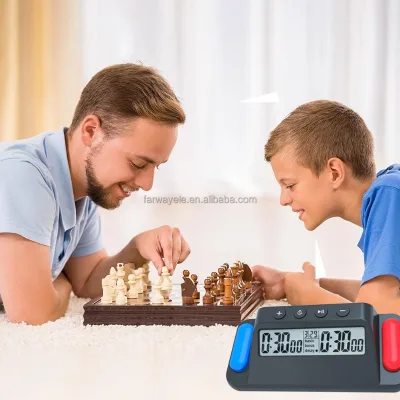


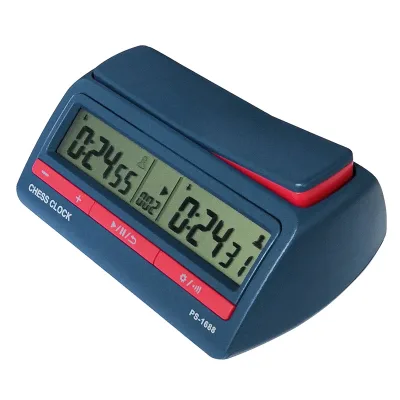
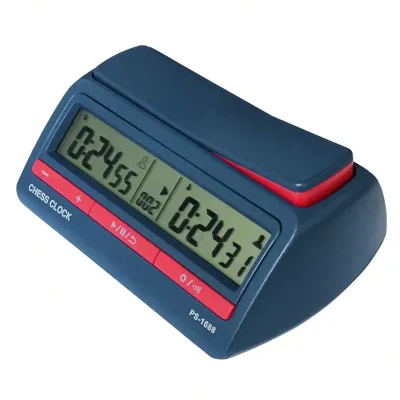
High Quality ABS Digital Display Professional International Chess Clock
$5.98 - $6.98
MOQ: 1000 Pieces

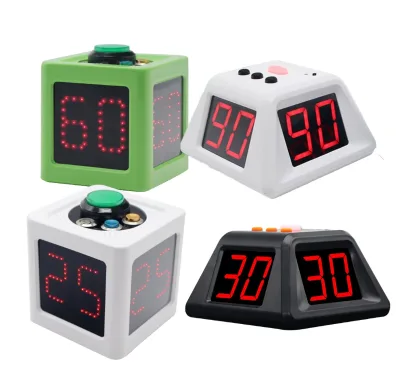
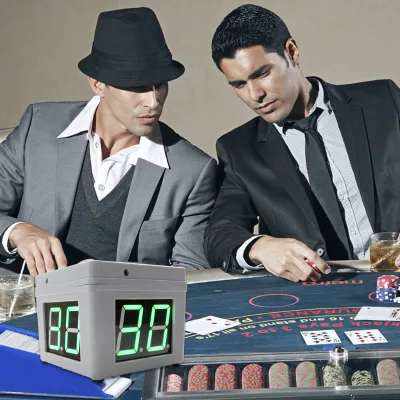
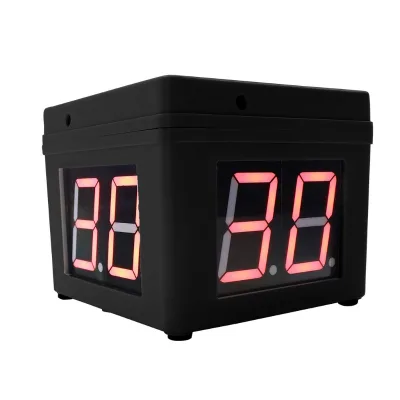
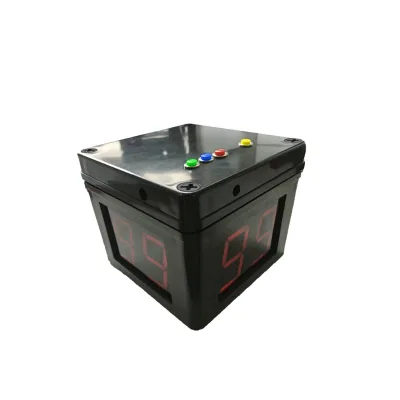
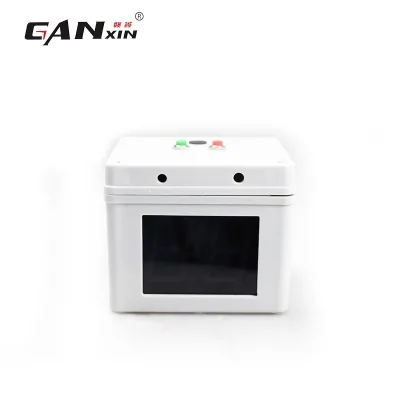
Ganxin Factory Supplier 2 Digits Cube Chess Poker Hot Sale 4 Sides Poker Timer
$124.00 - $140.00
MOQ: 1 pieces




Comprehensive Sourcing Guide
Strategic Sourcing Guide for 4-Sided LED Chess Timers
The global chess market has evolved significantly, driven by the digitalization of competitive play and the need for precise time management in high-stakes tournaments. While the core keyword "4 Sided LED Chess Timer" suggests a specific multi-sided device, the procurement landscape for such equipment requires a nuanced understanding of available variations, technical constraints, and supplier capabilities. Buyers must navigate a market where "4-sided" configurations may be specialized variants of standard digital timers or distinct industrial counting units. This guide provides a disciplined framework for sourcing these devices, focusing on verified product attributes, compliance standards, and supply chain reliability without relying on unverified marketing claims.
Technical Specifications and Functional Architecture
When evaluating digital timers for chess applications, the primary focus must be on the display technology and timing mechanisms. The available product data indicates a strong prevalence of LCD (Liquid Crystal Display) technology rather than LED for the primary display interface in the observed inventory. Specifically, the documented specifications list "Display Type: LCD" and "Timers Type: Digital." However, the keyword "LED" in the search query often refers to the visual feedback indicators or specific high-visibility models. Buyers must verify if the "4-sided" attribute refers to a physical design where the timer is visible from multiple angles, a common requirement for tournament tables where players sit opposite each other.
The functional architecture of these devices is critical. The observed data confirms capabilities such as "Countdown," "Count up," "Delay," and "Additional time." These functions are essential for chess variants like Fischer delay or Bronstein delay, where a specific amount of time is added after each move. The maximum countdown capacity is documented as "120min," which covers standard tournament time controls. Furthermore, some units in the supply chain offer "Addition Counter," "Subtract Counter," and "Reversible Counter" modes, suggesting a broader utility for industrial or educational counting applications alongside chess.
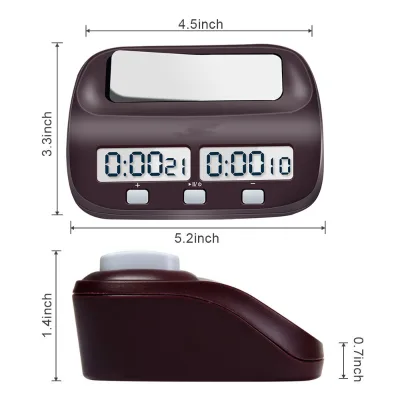
The physical dimensions are a key constraint for table placement. The standard observed size is "1574 cm," with a single package size of "17X8X12 cm." The weight is recorded at "220g," and the gross weight per unit is "0.300 kg." These metrics indicate a compact, portable form factor suitable for desktop use. The material composition is consistently listed as "ABS" or general "Plastic," ensuring durability against the frequent handling typical in chess clubs. The shape is uniformly "Rectangle," and the style is described as "Modern." Buyers should note that while the keyword specifies "LED," the verified data points to LCD displays; therefore, procurement specifications must explicitly clarify the display technology to avoid receiving units that do not meet the visibility requirements of a 4-sided setup.
Compliance, Certification, and Safety Standards
In the B2B procurement of electronic timing devices, regulatory compliance is non-negotiable. The provided product facts explicitly state that the observed inventory holds "CE" and "ROHS" certifications. These are listed under both "prod_prop.Certification" and "prod_prop.Certificate" fields, confirming that the devices meet European safety and environmental standards. The CE mark indicates conformity with health, safety, and environmental protection standards for products sold within the European Economic Area, while ROHS (Restriction of Hazardous Substances) ensures the device is free from specific hazardous materials like lead and mercury.
For buyers targeting markets outside the EU, such as the United States or Asia, these certifications serve as a baseline for quality but may not be sufficient on their own. Buyers must verify if the supplier can provide additional documentation for local standards, such as FCC compliance for the US market. The "prod_standard" field lists a dimension of "1409349mm," which appears to be a specific packaging or internal standard rather than a safety regulation. It is crucial to distinguish between product dimensions and regulatory standards. The "Made by Hand and Machine" process description suggests a hybrid manufacturing approach, which requires rigorous quality control to ensure that manual assembly does not compromise the electrical safety covered by the CE certification.
Cost Drivers and Pricing Dynamics
The pricing landscape for digital chess timers is influenced by several factors, including customization, certification, and volume. The observed listed price range in the market is between $0.8 and $151.1 USD. This wide disparity suggests a tiered market structure. The lower end of the spectrum likely corresponds to basic, non-customized units with standard packaging, while the higher end may reflect specialized models with advanced features, custom branding, or bulk industrial configurations.
The Minimum Order Quantity (MOQ) ranges from 1 to 1000 units. This flexibility allows buyers to test the market with small orders or commit to large-scale procurement for tournament organizers. The "Selling Units" are listed as "Single item," indicating that the base price is per unit. However, the "Customization" attribute is marked as "Available," and the "Logo" section notes "Customize Logo Acceptable." Customization is a significant cost driver; adding a custom logo, changing the color to a specific "Customized Color," or altering the "Appearance" from "COMMON" to a specific design will increase the unit cost and potentially the MOQ.
Buyers should also consider the power supply requirements. The devices utilize "2 AAA batteries" or "AAA Battery" type power. While this reduces the initial cost of the device compared to rechargeable lithium-ion models, it introduces a recurring operational cost for battery replacement. For high-volume tournament use, the long-term cost of batteries must be factored into the total cost of ownership (TCO). The "Condition" is listed as "New," and the "Process" involves both hand and machine work, which can impact labor costs and, consequently, the final price.
Typical Applications and Usage Scenarios
The versatility of these digital timers extends beyond standard chess matches. The documented "Usage" fields include "Living Room," "Bar," "Hotel," and "Bedroom," indicating suitability for casual home play and hospitality environments. However, the functional attributes also list "Multifunctional," "Industrial," "Timer Switch," "Time Counter," and "Electromagnetic Counter." This suggests that the same hardware platform can be adapted for industrial time tracking or educational counting exercises.
For the specific "4-sided" requirement, the application is likely focused on competitive environments where multiple players or observers need to view the timer simultaneously. The "Style" is "Modern," and the "Appearance" is "COMMON," which implies a design that fits well in professional settings. The "Carry Mode" is described as "Synchronous Counter," a technical term that may refer to the synchronization of time across multiple units or the internal logic of the counter. In a chess context, this could imply the ability to link timers for simultaneous games or specific tournament formats.
The "Folded" attribute is listed as "Unfolded," suggesting the device is a rigid, non-folding unit. This is consistent with the "Rectangle" shape and "ABS" material. The "Packing" method involves "Bubble Bag + White Box" or "Neutral Packing," ensuring the device arrives in good condition. For industrial applications, the "Safe Packing" standard is crucial to prevent damage during transit. The "Usage" in "Hotel" and "Bar" suggests a need for durability and ease of operation, which aligns with the "Easy operation" feature listed in the product attributes.
Supplier Evaluation and Customization Capabilities
Selecting the right supplier requires a deep dive into their customization capabilities and origin. The "Brand Name" is listed as "customerized," and the "Customized" attribute is marked as "True." This indicates that the suppliers are primarily OEM (Original Equipment Manufacturer) or ODM (Original Design Manufacturer) partners rather than brands selling off-the-shelf proprietary products. The "Place of Origin" is consistently "Fujian, China," and "prod_origin" is "China." Fujian is a known manufacturing hub for electronics and plastics, offering a robust supply chain for ABS components and electronic assemblies.
Buyers should verify the "Model Number" variety. The data lists multiple models, including "2225," "WLSFC792," "TH-2215," "YS-902," and "TH-2281." This variety suggests that different models may have different feature sets, such as varying display types or counter mechanisms. When requesting a "4-sided" unit, the buyer must ensure the specific model number supports the required physical configuration. The "Logo" customization is "Acceptable," and "Color" is "Customized," allowing for brand alignment. However, the "Color" is also listed as "Brown" in some entries, indicating that while customization is available, standard stock colors may vary.
The "Process" of "Made by Hand and Machine" implies a need for human oversight in the assembly line. This can be a double-edged sword; it allows for complex assembly that machines cannot handle but introduces variability. Buyers should request samples to verify the consistency of the "Easy operation" and the quality of the "LCD" display. The "Single gross weight" of "0.300 kg" is a useful metric for calculating shipping costs, especially for international orders.
Quality Control and Long-Term Procurement Considerations
Ensuring long-term reliability requires a robust quality control (QC) strategy. The "Condition" is "New," but the "Process" involves manual and machine work, necessitating strict QC checks for soldering quality, button responsiveness, and display clarity. The "Certification" of CE and ROHS provides a baseline, but buyers should request specific test reports for the "Battery Type" and "Power Supply" to ensure the device does not suffer from premature battery drain or leakage.
For long-term procurement, the "Single package size" of "17X8X12 cm" and "Weight" of "220g" are critical for logistics planning. The "Packing" of "Bubble Bag + White Box" is standard, but for large orders, "Safe Packing" or "Neutral Packing" options should be confirmed to minimize damage. The "Fixed time" range of "1-6 hours" and "Count down max" of "120min" are functional limits that must be respected in the product specification to avoid purchasing units that cannot handle specific tournament time controls.
Buyers should also consider the "Theory" of "Countdown" and the "Mechanism" of "Electronic." These confirm that the device is not mechanical, which reduces wear and tear but increases the risk of electronic failure. The "Function" of "Set Time Reminder" is a key feature for chess, ensuring players are notified when time is running low. For industrial applications, the "Addition Counter" and "Subtract Counter" functions offer additional value.
In conclusion, sourcing a 4-sided LED chess timer requires careful alignment of the keyword with the actual product data, which predominantly features LCD displays and digital countdown mechanisms. By focusing on the verified certifications, understanding the cost drivers of customization, and evaluating the supplier's ability to meet specific model requirements, buyers can secure reliable equipment for both competitive and casual use. The wide range of models and customization options in the Fujian supply chain offers significant flexibility, provided that the buyer conducts thorough due diligence on the specific technical attributes and compliance standards of each unit.
FAQs
What display type do these digital chess timers use?
These devices typically use an LCD display rather than LED for the main interface. The observed inventory confirms LCD technology is standard, so buyers must explicitly request LED variants if that specific visibility is required for a four-sided setup.
Can I customize the logo and color of the timer?
Yes, customization is available for both the logo and the color of the device. Suppliers accept custom logo requests and offer customized color options, though standard stock colors like brown may also be available depending on the specific model.
What certifications do these electronic timers hold?
The products are certified with CE and ROHS marks for safety and environmental compliance. These certifications confirm the devices meet European standards for health, safety, and restriction of hazardous substances, serving as a baseline for international procurement.
How long can the timer count down at maximum?
The maximum countdown capacity for these units is 120 minutes. This duration covers standard tournament time controls, and some models also support fixed time settings ranging from 1 to 6 hours for various game formats.
What is the minimum order quantity for these timers?
The minimum order quantity ranges from 1 to 1000 units depending on the supplier and customization needs. This flexibility allows buyers to test the market with small single-item orders or commit to large-scale procurement for tournaments.
Where are these digital timers manufactured?
The products originate from Fujian, China, which is a known manufacturing hub for electronics. The supply chain consistently lists the place of origin as China, ensuring a robust network for sourcing ABS plastic and electronic assembly components.
How are these timers powered and what is their weight?
The devices are powered by 2 AAA batteries and weigh approximately 220 grams per unit. This battery type reduces initial costs but adds recurring operational expenses, while the lightweight design ensures portability for desktop or table use.