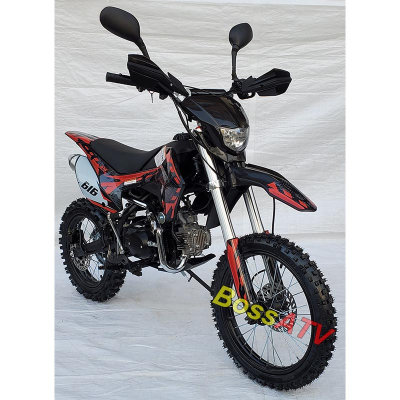
Source 4-Stroke Sports Dirt Bike for trails, racing, and off-road use
Explore 13 listings of 4-Stroke Sports Dirt Bike models with varying engine capacities and dimensions. Buyers can compare specifications like displacement, power output, and tire sizes to find suitable options for recreational or competitive riding.
Key considerations
Products List




Comprehensive Sourcing Guide
4-Stroke Sports Dirt Bike Sourcing Guide
Sourcing a 4-stroke sports dirt bike requires a disciplined approach to verifying engine architecture, chassis geometry, and compliance documentation. Unlike 2-stroke engines, which rely on oil-gasoline mixtures for lubrication, 4-stroke engines utilize a dedicated oil sump and a more complex valve train, offering smoother power delivery and lower emissions. This distinction is critical for buyers targeting markets with strict environmental regulations or end-users seeking durability over raw peak power. The procurement process must begin with a clear definition of the bike’s intended use, whether for competitive motocross, recreational trail riding, or entry-level training, as these applications dictate the necessary specifications for suspension travel, tire tread, and engine tuning.
Buyers must navigate a fragmented supply chain where manufacturers in regions like Zhejiang and Chongqing in China offer a wide array of models, from small-displacement training bikes to high-performance 250cc machines. The observed market data indicates a significant variance in product dimensions, weights, and power outputs, reflecting the diversity of available configurations. For instance, some models are designed with compact footprints for younger riders, while others feature extended wheelbases and larger tires for adult competitors. Understanding these physical and mechanical differences is essential for aligning supplier offerings with specific customer demographics and performance expectations, ensuring that the sourced inventory meets both functional requirements and market demand.
Product Scope and Observed Listing Signals
The current market landscape for 4-stroke sports dirt bikes reveals a broad spectrum of models, each tailored to different performance tiers and user profiles. Listings indicate the presence of various model numbers, such as the DB710, DB712, and KR5 250PR-2, suggesting a diverse portfolio of offerings from different manufacturers. These models vary significantly in their physical dimensions, with standard measurements ranging from approximately 1230mm in length to over 2100mm for larger, more robust frames. This variation allows buyers to select bikes that fit specific storage constraints or transport requirements, while also catering to different rider sizes and skill levels. The presence of both 125cc and 250cc displacement options further highlights the need for buyers to carefully match engine size to the target audience’s experience and regulatory environment.
Observations from product listings also highlight specific technical attributes that serve as key indicators of quality and performance. For example, some models feature hydraulic disc brakes on both the front and rear wheels, providing superior stopping power compared to drum brakes, which is crucial for high-speed sports applications. Additionally, the use of CDI ignition systems and specific battery types, such as 12V 7Ah or 12V 4Ah units, points to the electronic sophistication of the bikes. Buyers should note that while some listings mention customization availability, the extent of this customization can vary widely between suppliers. It is imperative to verify whether customization refers to cosmetic changes, such as color schemes, or mechanical modifications, such as engine tuning or suspension upgrades, to ensure that the final product aligns with the buyer’s specifications.
Technical Specifications to Verify
When evaluating 4-stroke sports dirt bikes, buyers must prioritize the verification of engine performance metrics, including maximum power, torque, and displacement. For instance, a 249.9cc engine might deliver a maximum power of 14kW at 8000r/min and a torque of 18N·m at 6000rpm, while a smaller 149.8cc engine may produce 10.2kW at 9500r/min and 11.2N·m of torque. These figures are not merely marketing points but critical determinants of the bike’s acceleration, top speed, and overall rideability. Buyers should request detailed engine test reports or dyno sheets to confirm these performance claims, as discrepancies between listed specifications and actual performance can lead to customer dissatisfaction and returns. Additionally, verifying the bore and stroke dimensions, such as 72mm x 61.4mm or 60mm x 53mm, provides insight into the engine’s design philosophy, whether it prioritizes low-end torque or high-RPM power.
Chassis and suspension specifications are equally important for ensuring the bike’s handling and durability in sports applications. Key parameters to verify include the wheelbase, ground clearance, and tire dimensions. A wheelbase of 1460mm and a ground clearance of 320mm, for example, suggest a bike designed for stability and obstacle clearance, while tire sizes like 80/100-21 and 110/90-18 indicate a setup optimized for off-road traction. Buyers should also inspect the net weight of the bike, as a lighter frame can enhance agility and rider control, while a heavier frame may offer more stability at high speeds. Furthermore, verifying the fuel and engine oil capacities, such as a 1.3L tank and 1.1L oil capacity, ensures that the bike has adequate range and lubrication for extended riding sessions, reducing the risk of mechanical failure during use.
Compliance and Safety Documentation
Compliance with regional safety and environmental standards is a non-negotiable aspect of sourcing 4-stroke sports dirt bikes. Buyers must ensure that all products carry the necessary certifications, such as CE marking, which indicates conformity with health, safety, and environmental protection standards for products sold within the European Economic Area. However, the presence of a CE mark alone is not sufficient; buyers should request the full technical file and test reports from accredited laboratories to verify that the bike meets specific directives related to noise emissions, exhaust pollutants, and mechanical safety. This due diligence is particularly important for bikes intended for competitive use, where strict regulations govern engine modifications and safety equipment.
In addition to regulatory compliance, buyers should verify the safety features integrated into the bike’s design. This includes the type and condition of the braking system, the reliability of the ignition system, and the structural integrity of the frame and chassis. For example, hydraulic disc brakes must be tested for consistent performance under repeated use, and the CDI ignition system must be verified for reliable spark generation across all operating conditions. Buyers should also ensure that the bikes are supplied with comprehensive user manuals and safety warnings, clearly outlining proper operation, maintenance procedures, and potential hazards. This documentation not only protects the buyer from liability but also enhances the end-user’s experience by providing clear guidance on how to operate and maintain the bike safely.
Cost Drivers and Commercial Terms
The cost of sourcing 4-stroke sports dirt bikes is influenced by several factors, including engine displacement, material quality, and the level of customization offered. Higher displacement engines, such as 250cc models, typically command higher prices due to the increased complexity and cost of manufacturing. Similarly, bikes featuring premium components, such as hydraulic disc brakes and advanced suspension systems, will be more expensive than those with basic drum brakes and standard suspension. Buyers should also consider the impact of customization on pricing, as bespoke modifications can significantly increase the unit cost and lead time. It is essential to obtain detailed quotes that break down the cost of each component and service, allowing for accurate comparison and budgeting.
Commercial terms, including minimum order quantities (MOQ), payment terms, and lead times, play a crucial role in the procurement process. Observed MOQs range from 1 to 100 units, offering flexibility for both small-scale retailers and large distributors. Buyers should negotiate favorable payment terms, such as partial upfront payments and balance upon shipment, to mitigate financial risk. Additionally, lead times can vary depending on the complexity of the order and the supplier’s production capacity. Buyers should establish clear communication channels with suppliers to track production progress and ensure timely delivery. Understanding these commercial dynamics is essential for managing inventory levels, cash flow, and customer expectations effectively.
Supplier Qualification and Quality Control
Selecting a reliable supplier is paramount to ensuring the quality and consistency of 4-stroke sports dirt bikes. Buyers should conduct thorough due diligence on potential suppliers, verifying their business licenses, manufacturing capabilities, and quality control processes. Suppliers located in industrial hubs like Zhejiang and Chongqing may have established reputations for producing high-quality motorcycles, but buyers should not rely solely on location. Instead, they should request factory audits, either in person or through third-party inspection agencies, to assess the supplier’s production environment, equipment, and workforce expertise. This verification process helps identify suppliers who adhere to best practices in manufacturing and quality assurance.
Quality control measures should be implemented at every stage of the production process, from raw material sourcing to final assembly and testing. Buyers should require suppliers to provide detailed quality control plans, including inspection checkpoints, testing protocols, and acceptance criteria. For example, each bike should undergo a rigorous road test to verify engine performance, braking efficiency, and handling characteristics. Additionally, buyers should specify packaging requirements, such as wooden box packaging, to protect the bikes during transit and prevent damage. Establishing a clear quality agreement with the supplier, outlining responsibilities and remedies for non-conforming products, is essential for maintaining high standards and protecting the buyer’s brand reputation.
Long-Term Procurement Checks
Long-term procurement success depends on the ability to monitor supplier performance and adapt to changing market conditions. Buyers should establish key performance indicators (KPIs) to track supplier reliability, including on-time delivery rates, product defect rates, and responsiveness to issues. Regular performance reviews, conducted quarterly or annually, provide an opportunity to discuss areas for improvement and reinforce expectations. Suppliers who consistently meet or exceed KPIs should be considered for long-term partnerships, while those who fall short may need to be replaced or given a probationary period to improve. This proactive approach helps maintain a stable and efficient supply chain, reducing the risk of disruptions and ensuring a steady flow of high-quality products.
Furthermore, buyers should stay informed about emerging trends and technologies in the 4-stroke sports dirt bike market. This includes advancements in engine efficiency, lightweight materials, and electronic control systems. By staying ahead of these trends, buyers can offer innovative products that meet evolving customer demands and maintain a competitive edge. Additionally, buyers should continuously evaluate their product portfolio, assessing the performance and customer feedback for each model. This feedback loop provides valuable insights into which features and specifications are most valued by customers, guiding future sourcing decisions and product development. By combining rigorous supplier management with market intelligence, buyers can build a resilient and responsive procurement strategy that drives long-term growth and profitability.
FAQs
What are the common specifications for 4-Stroke Sports Dirt Bike models?
Specifications vary by model, with dimensions ranging from 1230x560x770mm to 2140x815x1260mm. Displacement options include 149.8cc and 249.9cc engines. Power outputs range from 10.2kW to 14kW, with maximum speeds reaching 107km/h. Wheelbases typically span 1460mm, and net weights average around 113kg. These attributes define the physical and performance characteristics of the available inventory.
Can I customize 4-Stroke Sports Dirt Bike orders for specific needs?
Yes, customization is available for these dirt bikes. Buyers can request specific modifications to meet unique operational requirements. This flexibility allows for tailored solutions in various markets. The availability of customization ensures that the product can adapt to different user preferences or regulatory standards without compromising the core engine performance or structural integrity.
Which certifications are required for 4-Stroke Sports Dirt Bike imports?
The CE certification is a key standard for these products. This certification indicates compliance with European health, safety, and environmental protection standards. Buyers should verify this documentation to ensure smooth customs clearance in relevant regions. The presence of CE marking is a critical factor for international trade and regulatory adherence in many global markets.
How does the engine type affect 4-Stroke Sports Dirt Bike performance?
The 4-stroke engine design provides efficient power delivery and lower emissions compared to 2-stroke alternatives. Models feature displacements like 125cc or 250cc, offering torque ranges from 11.2N·m to 18N·m. This configuration ensures reliable operation and sustained performance. The CDI ignition system further enhances starting reliability and overall engine efficiency for consistent riding experiences.
What is the typical packaging method for 4-Stroke Sports Dirt Bike shipments?
Products are typically packed in wooden boxes for secure transportation. This packaging method protects the bike from damage during transit. The dimensions of the packaging align with the bike's standard size, such as 2140mm x 815mm x 1260mm for larger models. Secure packaging ensures that the product arrives in new condition, ready for immediate assembly or display.
Where are 4 stroke sports dirt bikes primarily manufactured?
Manufacturing origins include Zhejiang and Chongqing in China. These regions are known for their robust automotive and motorcycle manufacturing industries. Buyers can source products directly from these locations, ensuring access to established supply chains. The geographic concentration of suppliers facilitates efficient logistics and consistent quality control for international orders.