Source 5-axis linkage cnc controller for Metal Cutting, Turning, Milling
Explore 30 listings for the 5-axis linkage cnc controller designed for metal cutting, turning, and milling applications. Buyers can compare specifications like spindle speed, axis accuracy, and control systems from verified suppliers in China.
Key considerations
Products List

Automated Five-Axis 5 Axis Machining Center Linkage CNC Machining Center
$138599.00 - $146690.00
MOQ: 1 Pieces

High Precision Automated Five-Axis 5 Axis Machining Center Linkage CNC Machining Center
$138599.00 - $146690.00
MOQ: 1 Pieces

High Precision 5 Axis 4 Linkages CNC Machining Center CNC650 CNC Milling
$138599.00 - $146690.00
MOQ: 1 Pieces

Precision 5 Axis Linkage Machine Center for Advanced CNC Machining
$138599.00 - $146690.00
MOQ: 1 Pieces


Customizable Colour 5 Axis Linkage CNC Machine Tools with 15000rpm
$138599.00 - $146690.00
MOQ: 1 Pieces
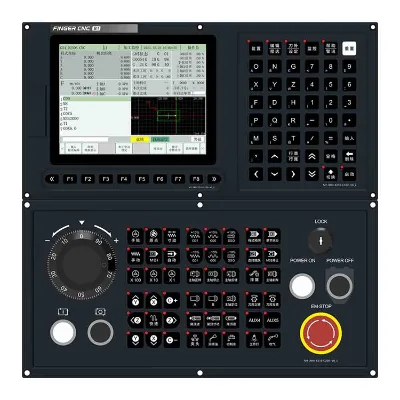


5-Axis Simultaneous CNC Controller for Complex Surface and Sculptured Parts
$600.00 - $750.00
MOQ: 1 Pieces


CNC High Speed 5 Axis Llinkage Machining Center CNC Machining CNC Machine Tools
$45000.00 - $65000.00
MOQ: 1 Sets


Comprehensive Sourcing Guide
5-Axis Linkage Cnc Controller Sourcing Guide
Product Scope and Observed Listing Signals
The market for 5-axis linkage CNC controllers encompasses a diverse range of hardware, from standalone motion control units to integrated systems embedded within larger machine tools. Based on observed listing signals, buyers will encounter products ranging from specialized controllers, such as the 800TC2-H and Siyuer 808m, to complete machine assemblies like the LiSN-WZ500 and LiSN-WZ650 models. These listings indicate a broad spectrum of capabilities, including high-end metal-cutting and metal-forming applications, with some units explicitly marketed as turning and milling compound controllers. The presence of both dedicated controller modules and full machine tool listings suggests that procurement strategies must distinguish between upgrading existing machinery and sourcing complete automated production lines.
Price observations reveal a significant variance, with listed values spanning from approximately $220 to over $146,000 USD. This wide range reflects the difference between basic control interfaces and complex, high-precision systems featuring advanced features like closed-loop control and linear movement methods. Minimum Order Quantities (MOQ) are frequently observed at a single unit, indicating that suppliers are accustomed to serving individual machine builders or small-scale industrial upgrades rather than requiring bulk industrial purchases. Buyers should interpret these price points as indicative of the tier of technology, where lower-cost items may represent entry-level controllers or accessories, while higher-priced items correspond to fully integrated, high-accuracy machining centers with substantial tool capacities and heavy load-bearing tables.
Technical Specifications to Verify
When evaluating technical specifications, the axis configuration and control architecture are paramount. Buyers should verify whether the controller supports true 5-axis linkage, as some listings mention 3-5 axis capabilities, which may imply modular or limited functionality. The processing precision is a critical metric, with observed values ranging from 0.01 to 0.02 mm, indicating the level of detail the system can achieve in metal-cutting operations. Additionally, the re-position accuracy of the X, Y, and Z axes is a key performance indicator, with some high-end models boasting accuracies as tight as 0.003 mm. It is essential to confirm that the controller’s numerical control system, whether CNC or MNC, aligns with the required rapid feed speeds, which can reach up to 24 meters per minute on individual axes, to ensure the system meets the throughput demands of the intended application.
Memory, processing power, and interface capabilities also dictate the controller’s versatility. Listings show variations in memory capacity, with some units offering 2GB of memory and others providing 8GB of program capacity, which directly impacts the complexity of toolpaths that can be stored and executed. The operating system, such as RT Linux, and the CPU architecture, including 32-bit processors combined with FPGA technology, influence the real-time performance and stability of the control loop. Buyers must also assess the physical interface, noting that display screens range from 8-inch to 10.4-inch LCDs, and I/O counts vary, with some models supporting 32/32 input/output channels. Verifying the spindle interface, such as the HSKA63 standard, and the tool capacity, which can extend to 200 tools, ensures compatibility with the existing tooling infrastructure and workflow requirements.
Compliance and Safety Documentation
Compliance with international safety and quality standards is non-negotiable for industrial machinery. Buyers must verify that all supplied controllers and associated machinery carry valid CE certification, which is a common requirement for market access in many regions. Some listings also indicate GS certification, providing an additional layer of safety assurance. It is crucial to request official certification documents and ensure they are current and applicable to the specific model number being purchased. The absence of valid certification can lead to significant legal and operational risks, including the inability to install the equipment in regulated facilities or the voiding of insurance coverage in the event of an accident.
Beyond certification, comprehensive documentation is required to ensure safe operation and maintenance. Buyers should insist on the provision of machinery test reports, which validate the performance claims made by the supplier. These reports should detail the results of stress tests, accuracy checks, and safety interlock verifications. Additionally, warranty terms, such as the 3-year warranty observed in some listings, must be clearly defined in the contract, specifying what components are covered and the response time for technical support. Understanding the warranty scope is vital for managing long-term operational costs and ensuring that any defects discovered during the initial commissioning phase are addressed without additional expense.
Cost Drivers and Commercial Terms
The cost of a 5-axis linkage CNC controller is driven by several factors, including the level of customization, the complexity of the control algorithm, and the integration of high-precision components. Customization options are available, allowing buyers to tailor the controller to specific workflow needs, but this often incurs additional engineering and setup fees. The material composition, such as the use of stainless steel for certain components, and the physical dimensions of the unit also contribute to the final price. Buyers should analyze the total cost of ownership, considering not just the purchase price but also the energy consumption, maintenance requirements, and potential downtime associated with the system.
Commercial terms, including packaging and shipping, play a significant role in the overall procurement cost. Products are typically packed in wooden boxes to protect sensitive electronic components during transit, with dimensions varying based on the size of the controller or machine. For instance, some controllers are packaged in compact boxes measuring 49x33x42 cm, while larger machine tools require significantly more space. Buyers must clarify whether shipping costs are included in the quoted price and who is responsible for import duties and taxes. Understanding the lead time for production and delivery is also essential, as delays can impact production schedules. Clear communication regarding these commercial terms helps avoid unexpected expenses and ensures a smooth transaction process.
Supplier Qualification and Quality Control
Selecting a qualified supplier is critical to ensuring the reliability and longevity of the 5-axis linkage CNC controller. Buyers should verify the supplier’s place of origin, with many high-quality controllers originating from established manufacturing hubs like Guangdong, China. It is important to assess the supplier’s technical support capabilities, including their ability to provide programming assistance, troubleshooting, and software updates. Suppliers that offer comprehensive machinery test reports and have a history of providing reliable warranty service are generally more trustworthy. Additionally, checking for any relevant industry certifications or partnerships with major component manufacturers can provide further assurance of the supplier’s credibility.
Quality control measures should be implemented both by the supplier and the buyer. Buyers should request detailed specifications and performance data before placing an order, ensuring that the product meets their exact requirements. Upon receipt, a thorough inspection should be conducted to verify that the product matches the ordered specifications, including the model number, axis configuration, and physical dimensions. It is advisable to perform a functional test during the installation phase to confirm that the controller operates correctly and achieves the promised precision levels. Establishing a clear communication channel with the supplier for any post-installation issues is also essential for maintaining optimal performance and addressing any technical challenges that may arise.
Long-Term Procurement Checks
Long-term procurement success depends on the ability to maintain and upgrade the 5-axis linkage CNC controller over its operational lifespan. Buyers should establish a preventive maintenance schedule that includes regular checks of the linear control systems, lead screws, and spindle interfaces. Keeping a stock of critical spare parts, such as fuses, cables, and replacement modules, can minimize downtime in the event of a failure. Additionally, staying informed about software updates and firmware enhancements provided by the supplier can help optimize the controller’s performance and add new functionalities over time.
As manufacturing technologies evolve, buyers must remain vigilant about the compatibility of their controllers with new tools, materials, and software standards. Periodic reviews of the controller’s performance against current production requirements are necessary to determine if upgrades or replacements are needed. Engaging with the supplier for periodic technical consultations can provide insights into emerging trends and best practices for 5-axis machining. By maintaining a proactive approach to maintenance and technology adoption, buyers can ensure that their investment in 5-axis linkage CNC controllers continues to deliver high-quality results and competitive advantage in the long run.
FAQs
What is the maximum load capacity of the work table?
The maximum load of the work table is 200kg. This capacity supports heavy metal components during high-end machining operations while maintaining stability.
Which certifications do these CNC controllers hold?
These controllers hold CE and GS certifications. These standards ensure compliance with safety and quality requirements for industrial machinery in international markets.
How precise is the re-positioning accuracy of the axes?
The X, Y, and Z axis re-positioning accuracy is 0.003mm. This high precision ensures tight tolerances for complex metal-cutting applications.
Can the product be customized for specific needs?
Yes, customization is available for this product. Buyers can request specific modifications to meet unique production requirements or branding needs.
What is the warranty period for the machine?
The warranty period is 3 years. This coverage provides long-term protection against manufacturing defects and ensures reliable operation for industrial users.
Which control method is used for movement?
The machine uses closed-loop control for movement. This method ensures precise linear control and accurate positioning during metal-cutting processes.
What is the spindle speed range of the machine?
The spindle speed range reaches up to 15000 RPM. This high speed allows for efficient machining of various metal materials with fine surface finishes.