Source 5 Channel Digital Flame Photometer for labs, hospitals, schools
Compare 30 listings of the 5 Channel Digital Flame Photometer designed for clinical, educational, and industrial applications. Buyers can evaluate specifications like wavelength ranges, sampling rates, and certifications to find the right equipment for their needs.
Key considerations
Products List


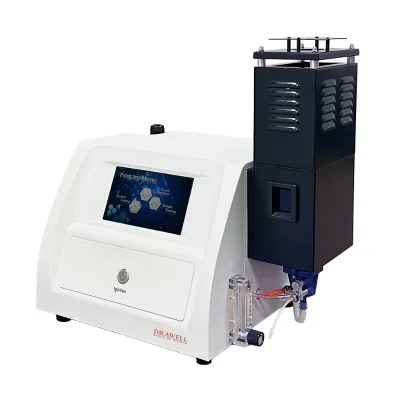
DW-FP6450 LPG Fuel Flame Photometer Instrument 5-Channel Flame Photometer
$1922.60 - $2024.87
MOQ: 1 Minimum


Ltcs03 Color Spectrometer Photometer Laboratory Digital Flame Photometer
$867.00 - $903.00
MOQ: 1 Pieces

Ltcs05 LCD Display Flame Photometer Principle Laboratory Flame Photometer
$1110.00 - $1158.00
MOQ: 1 Pieces

Ltcs04 Manufacturer Cost Price Digital Function of Flame Photometer Detector
$735.00 - $765.00
MOQ: 1 Pieces


K Na Li Ca Ba Flame Photometer Touch Screen Automatic Flame Photometer
$599.00 - $799.00
MOQ: 1 Pieces

Automatic Flame Photometer Fp640 Flame Spectrophotometer for Agriculture
$711.00 - $2290.00
MOQ: 1 Pieces

Laboratory Digital Flame Photometer Metal Analysis Flame Photometer for K Na Li Ca Ba
$649.00 - $2290.00
MOQ: 1 Pieces


Flame Photometer K Na Photoelectric Multi-Parameter Flame Photometer Laboratory Use
$700.00 - $880.00
MOQ: 5 Pieces


Comprehensive Sourcing Guide
Strategic Sourcing Guide for 5-Channel Digital Flame Photometers
Understanding the Core Technology and Functional Scope
A 5-channel digital flame photometer represents a specialized class of analytical instrumentation designed for the quantitative determination of specific alkali and alkaline earth metals in liquid samples. In the context of B2B procurement, understanding the operational mechanics is critical before engaging with suppliers. These devices typically utilize a flame atomization process where a liquid sample is aspirated into a flame, causing the metal ions to emit light at characteristic wavelengths. The "5-channel" designation indicates the instrument's capacity to measure five distinct elements simultaneously or sequentially without the need for manual lamp changes, significantly enhancing throughput in high-volume environments.
When evaluating the technical architecture, buyers must look for the integration of a robust optical system capable of isolating specific emission lines. For instance, standard configurations often include channels for Potassium (K), Sodium (Na), Lithium (Li), Calcium (Ca), and Barium (Ba). The spectral ranges for these elements are critical; a compliant unit should cover ranges such as 0.15-100ppm for Potassium and 0.1-1000ppm for Calcium. The digital aspect of the instrument implies the presence of a microprocessor-based control system that manages the flame stability, gas flow, and data processing. This digital interface often includes a display unit, such as a 7-inch color LCD touch screen, which facilitates real-time monitoring and data entry. The system's ability to handle multiple concentration units, including ug/ml, mg/100ml, mmol/l, and meq/l, is a key feature for versatility across different industries, allowing laboratories to switch between reporting standards seamlessly.
Technical Specifications and Performance Metrics
When sourcing a 5-channel digital flame photometer, the procurement team must rigorously verify the performance metrics provided in the product datasheets. The reliability of the instrument is often defined by its stability and reproducibility. A high-performance unit should demonstrate a stability of less than 8 seconds, ensuring that the baseline reading remains consistent during the measurement process. Furthermore, the reproducibility of the results is a vital quality indicator; specifications indicating a reproducibility of ≤ 2% suggest a high degree of precision suitable for clinical and industrial diagnostics.
The physical dimensions and weight of the unit are also essential for facility planning. Buyers should expect variations in packaging and gross weight depending on the specific model and manufacturer. For example, some configurations list a gross weight of 12.5 Kg with a net weight of 11 Kg, while others may present a single gross weight of 23.000 kg with a net weight of 19 kg. The physical footprint, often described by dimensions such as 400 * 250 * 500 mm or 390310640mm, dictates the required bench space in a laboratory. The sample uptake volume is another critical specification; efficient models typically require less than 6ml per minute, which is advantageous when working with limited or precious samples.
The construction material plays a significant role in the durability and safety of the instrument. Units are frequently constructed from ABS plastic or aluminum, providing a balance between lightweight portability and structural integrity. The protection level, often rated at IP41, indicates a degree of protection against solid objects and water splashes, which is relevant for laboratory environments where spills may occur. Additionally, the gas compatibility is a fundamental safety and operational requirement. The instrument must be compatible with common fuel sources such as LPG, natural gas, and propane butane, ensuring that the flame can be sustained under various operational conditions.
Compliance, Certification, and Regulatory Standards
In the global B2B market, compliance with international standards is non-negotiable for medical and laboratory equipment. When sourcing a 5-channel digital flame photometer, buyers must verify that the product carries the necessary certifications to operate legally in their target market. Common certifications observed in the industry include ISOMSDS, EEC, CE, RoHS, SGS, and ISO. These certifications indicate that the manufacturer adheres to specific safety, environmental, and quality management protocols. For instance, CE marking suggests conformity with health, safety, and environmental protection standards for products sold within the European Economic Area, while RoHS compliance ensures the restriction of hazardous substances.
The classification of the product as "Biological Diagnostics" or "Visual Light Meters" further dictates the regulatory pathway. Products intended for use in hospitals and clinical laboratories often require stricter adherence to medical device regulations compared to those used in general educational or industrial settings. The "Middle-aged and Old" classification may refer to the target demographic for specific diagnostic applications, though this is less common for the instrument itself and more likely a categorization within a specific supplier's inventory system. Buyers should also check for the "Standard" designation, which may refer to specific manufacturing or performance standards like 390310640mm, although this specific notation often refers to dimensions rather than a formal regulatory standard.
It is imperative to note that while certifications like CE and ISO are frequently listed, buyers must request valid certificates of conformity from the supplier. The presence of a certification mark on a product listing does not automatically guarantee current validity; the documentation must be up-to-date and issued by an accredited body. Additionally, the "Customized support" and "OEM" capabilities of the supplier are relevant for buyers who need to meet specific local regulatory requirements that may differ from the manufacturer's standard offerings.
Cost Drivers and Procurement Economics
The pricing of a 5-channel digital flame photometer is influenced by a complex array of factors, including the complexity of the optical system, the quality of the digital interface, and the level of customization required. The observed price range in the market spans from 1 to 5000 USD, reflecting the vast difference between basic entry-level models and high-end, fully automated systems. This wide variance suggests that buyers must clearly define their budget constraints against their performance requirements. A unit priced at the lower end of the spectrum may lack advanced features such as a large touch screen or comprehensive data collection software, whereas a higher-priced unit might include integrated printers, advanced software for data analysis, and extended warranty periods.
The Minimum Order Quantity (MOQ) is another significant economic factor. In this category, the observed MOQ range is typically between 1 and 5 units. This flexibility allows small laboratories to purchase a single unit for immediate deployment, while larger institutions can leverage bulk purchasing to negotiate better terms. The "Selling Units" are often listed as "Single item," indicating that the product is sold individually rather than in pre-packaged sets, which simplifies the procurement process for mixed orders.
Shipping and packaging costs also contribute to the total cost of ownership. The "prod_packing" details, such as "1 Piece in Carton" or "1 Piece in a Box," along with the single package size of 77X56X39 cm, are critical for logistics planning. The weight of the shipment, ranging from 8kgs to 23.000 kg depending on the model, directly impacts freight charges. Buyers should consider the "G.W" (Gross Weight) and "N.W" (Net Weight) when calculating shipping costs, as these figures determine the volumetric weight and the handling requirements for freight forwarders.
Typical Applications and Operational Environments
The versatility of the 5-channel digital flame photometer makes it suitable for a diverse range of applications across multiple sectors. The primary application areas include laboratories, hospitals, and schools, as indicated by the product attributes. In clinical settings, these instruments are essential for analyzing blood and urine samples to determine electrolyte levels, which is crucial for diagnosing conditions related to potassium, sodium, and calcium imbalances. The ability to measure multiple parameters simultaneously makes them ideal for high-throughput diagnostic centers.
Beyond healthcare, these instruments are widely used in agricultural research to analyze soil and plant extracts for nutrient content. The "Heating Type" structure and the ability to handle various gas types make them robust tools for field and laboratory analysis in agricultural sciences. In the industrial sector, they are employed for quality control in water treatment facilities, where monitoring the concentration of alkali metals is necessary to ensure water safety and compliance with environmental regulations. The "Sampling Rate" of 2 Times/Second further enhances their utility in continuous monitoring applications where rapid feedback is required.
The "Application" field also notes suitability for schools, indicating that these units are robust enough for educational purposes while maintaining the precision required for scientific research. The "Advantage" of being "High Sensitive" is particularly relevant for applications requiring the detection of trace elements, where even minute variations in concentration can have significant implications. The optional "FP win data collection software" and the integrated printer allow for detailed record-keeping and reporting, which is essential for academic and regulatory compliance in educational and research institutions.
Supplier Evaluation and Quality Assurance Protocols
Selecting the right supplier for a 5-channel digital flame photometer requires a thorough evaluation of their technical capabilities, manufacturing standards, and after-sales support. The "place of origin" is a key indicator of the manufacturing ecosystem; products originating from regions like Chongqing or Shenzhen, China, are common in this category. Buyers should verify the specific manufacturing location to ensure it aligns with their supply chain risk management strategies. The "Customization" availability is a strong indicator of a supplier's flexibility; suppliers that offer OEM support and customized solutions are better equipped to meet unique client requirements.
Quality control is paramount in the procurement of analytical instruments. Buyers should request detailed test results and performance data from the supplier to verify claims regarding stability, reproducibility, and wavelength accuracy. The "Wavelength Range" specifications, such as K: 0.15-100ppm, must be validated through independent testing or third-party certification. The "Warranty" period, typically 1 year, is a standard metric for assessing the manufacturer's confidence in their product. However, buyers should also inquire about the availability of extended warranty options and the terms of service coverage.
The "Structure" of the instrument, described as "Desktop," implies a stationary setup, which requires stable power and gas connections. Suppliers should provide comprehensive installation guides and training materials to ensure that the equipment is set up correctly. The "Material" composition, whether ABS or Aluminum, should be verified for durability and resistance to chemical corrosion, especially in environments where the instrument is exposed to harsh reagents. Finally, the "Protection Level" of IP41 should be confirmed to ensure the instrument can withstand the specific environmental conditions of the intended location.
Long-Term Procurement and Lifecycle Management
Procuring a 5-channel digital flame photometer is not merely a one-time transaction but the beginning of a long-term relationship with the supplier. Buyers must consider the lifecycle management of the instrument, including maintenance, calibration, and the availability of spare parts. The "Optional FP win data collection software" suggests that software updates may be necessary over time, and the supplier should be committed to providing these updates to ensure compatibility with evolving operating systems.
The "Reproducibility" and "Stability" metrics discussed earlier are not static; they can degrade over time without proper maintenance. Buyers should establish a maintenance schedule that includes regular calibration checks and cleaning of the nebulizer and burner assembly. The "Sample uptake volume" and "Printer" components are subject to wear and tear and should be monitored for performance degradation. The "Single package size" and "Weight" are relevant for storage and potential relocation of the instrument, which may be necessary as laboratory needs evolve.
Furthermore, the "Certification" status of the instrument may need to be re-verified periodically to ensure continued compliance with changing regulations. Buyers should maintain a record of all certifications and ensure that the supplier provides timely notifications of any regulatory changes that might affect the operation of the instrument. The "Brand name," such as Drawell, can be a factor in the resale value and the availability of community support, but the technical specifications and supplier reliability remain the primary drivers of long-term success. By focusing on these lifecycle considerations, buyers can ensure that their investment in a 5-channel digital flame photometer delivers consistent value and performance over its entire operational life.
FAQs
What certifications do 5 channel digital flame photometers have?
These instruments typically carry ISOMSDS, EEC, CE, RoHS, SGS, and ISO certifications. Buyers must verify valid certificates of conformity from the supplier to ensure current compliance with safety and environmental standards.
Which gas types are compatible with the device?
The device supports LPG, natural gas, and propane butane for flame atomization. This compatibility ensures the flame can be sustained under various operational conditions in different laboratory environments.
How stable is the measurement performance of the unit?
High-performance units demonstrate a stability of less than 8 seconds during the measurement process. This ensures the baseline reading remains consistent, which is critical for accurate quantitative determination of metal ions.
Can the supplier provide OEM customization support?
Yes, suppliers offer customized support and OEM capabilities for specific client requirements. This flexibility allows buyers to meet unique local regulatory requirements or specific laboratory needs beyond standard offerings.
What is the minimum order quantity for purchase?
The observed minimum order quantity ranges from 1 to 5 units depending on the supplier. This flexibility allows small laboratories to purchase a single unit while larger institutions can leverage bulk purchasing.
What is the warranty period for the instrument?
The standard warranty period for these instruments is typically 1 year. Buyers should confirm this duration during procurement to assess the manufacturer's confidence in product durability and after-sales support.