Find 5-in-1 mug heat press for mugs, tumblers, and plates
Explore 30 listings for the 5-in-1 mug heat press to compare specifications like voltage, power, and temperature range. Buyers can evaluate semi-automatic and electric models suitable for various printing tasks and custom orders.
Key considerations
Products List




Comprehensive Sourcing Guide
Strategic Sourcing Guide for 5-in-1 Mug Heat Press Equipment
Technical Specifications and Operational Capabilities
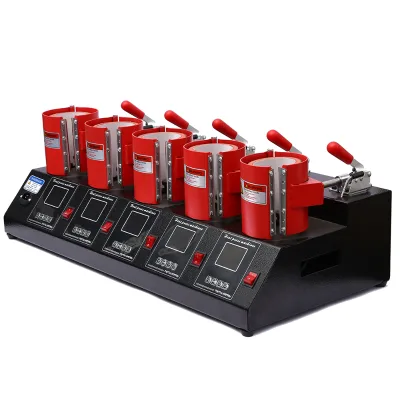
When evaluating a 5-in-1 mug heat press machine for industrial or commercial procurement, the primary focus must be on the convergence of mechanical structure, thermal performance, and electrical compatibility. The core functionality of these units relies on a heating mechanism capable of maintaining precise temperature control within a specific operational window. Based on observed market data, the effective temperature range for these machines typically spans from 180°C to 200°C, with broader specifications often cited between 0°C and 220°C. This variance suggests that buyers must verify the specific operational limits of the unit being sourced, as the heating element's maximum capacity directly influences the types of substrates and transfer materials that can be processed.
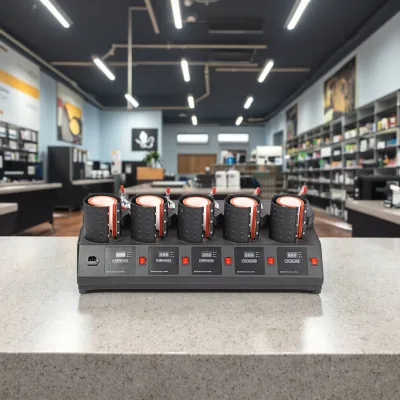
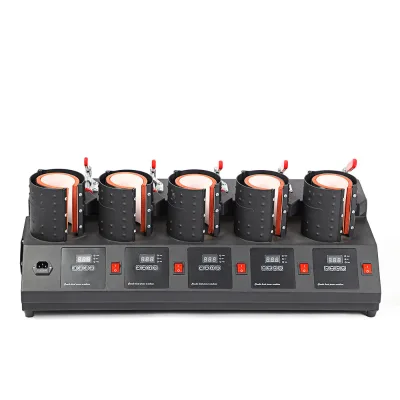
The physical dimensions of the equipment are critical for facility planning. A standard footprint for these units is approximately 93cm in length, 45cm in width, and 38cm in height. However, alternative configurations may present different dimensions, such as 54cm by 47cm by 47cm. The weight of the machine is a significant factor for logistics and installation; observed data indicates a gross weight of 25kg per unit. This substantial mass is necessary to ensure stability during the pressing cycle, particularly when the machine utilizes a rotary or platen structure to apply consistent pressure.
Electrical requirements vary by region and specific model configuration. The voltage specifications observed in the market include both 110V and 220V options, allowing for flexibility in deployment across different power grids. The power consumption is a key metric for operational cost estimation, with observed ratings ranging from 700W to 1750W. A higher wattage, such as 1500W or 1750W, generally correlates with faster heating times, with some units achieving operational readiness within 10 to 15 minutes. The driven type for these machines is consistently electric, and the control systems often feature a time control range of 0 to 999 seconds, allowing for precise cycle management. The temperature error band is a crucial quality indicator, with acceptable tolerances often cited at +/-5 degrees Celsius, ensuring that the thermal profile remains consistent across multiple production cycles.
Structural Design and Printing Mechanisms
The mechanical architecture of a 5-in-1 mug heat press determines its versatility and the quality of the final print. The market features two primary structural types: Rotary Letterpress and Platen Press. The rotary design is often associated with continuous production capabilities, whereas the platen press structure is typically designed for specific, fixed-position applications. The plate type is universally identified as a heat press, utilizing a heating element that clamps around the cylindrical mug to ensure even heat distribution.
A critical distinction in these machines is the printing technology integration. While the primary function is heat transfer, some listings reference "Ink Jet" or "Lithography Printing" in conjunction with the heat press structure. This indicates that the "5-in-1" designation may refer to the machine's ability to handle multiple print formats or its integration with different printing subsystems. The printing speed, measured in CPI (characters per inch or cycles per inch depending on context), varies between 6.7 CPI and 7.5 CPI. This metric is essential for calculating throughput in a high-volume environment.
The automatic grade of these machines is classified as semi-automatic. This classification implies that while the heating and pressing cycles are automated, the loading and unloading of the mugs may require manual intervention. This semi-automated approach balances production speed with operational flexibility, allowing operators to adjust positioning for different mug sizes or shapes. The customization options available for these units allow buyers to tailor the machine to specific workflow requirements, such as adjusting the clamp size for different capacities, including the standard 11oz size which is a common industry benchmark.
Compliance, Certification, and Safety Standards
In the B2B procurement of industrial machinery, verifying compliance with safety and quality standards is non-negotiable. The supplied data indicates that the products originate from manufacturing hubs in Zhejiang, China, with dispatch ports in Ningbo and Shanghai. While the specific certification status of individual units is not explicitly detailed in the general product attributes, buyers must rigorously verify that the electrical components meet the safety standards of the destination country.
The voltage specifications of 110V/220V suggest that the machines are designed for international markets, but the specific plug types and internal wiring must comply with local electrical codes. The warranty period is a standard indicator of manufacturer confidence, with a typical offering of 1 Year. This warranty should cover critical components such as the heating element, the thermostat, and the motor. Buyers should also confirm the condition of the goods, ensuring that the "New" status applies to the specific unit being purchased and that it has not been refurbished or repackaged without disclosure.
Regarding material standards, the machines are designed to handle specific product standards, such as the 11oz capacity. The structural integrity of the heating plate and the clamping mechanism must be verified to ensure they can withstand repeated thermal cycling without degradation. The "Even heating" feature is a claimed attribute that requires validation through thermal imaging or spot-checking during the acceptance testing phase. Buyers should request documentation regarding the temperature error band, ensuring it stays within the +/-5 degrees specification to prevent under-curing or burning of the transfer material.
Cost Drivers and Pricing Dynamics
The pricing of 5-in-1 mug heat press machines is influenced by several variables, including power rating, structural complexity, and included features. The observed price range in the market spans from $35 to $600 USD. This wide disparity indicates that the lower end of the spectrum may represent basic, single-function units or smaller capacity models, while the higher end likely encompasses fully featured, semi-automatic machines with advanced temperature control and higher power ratings.
The Minimum Order Quantity (MOQ) is a significant cost driver. The observed MOQ range is between 1 and 10 sets, with a specific listing noting an MOQ of 1 set. This flexibility allows small businesses to enter the market with minimal capital outlay, while larger enterprises can negotiate volume discounts. The supply ability of manufacturers, often cited as 1000 sets per week, suggests that the market is not constrained by production capacity, but rather by logistics and raw material availability.
Packaging details also impact the total landed cost. Units are typically shipped in cartons with dimensions of 934538cm and a gross weight of 25kg. The packaging must be robust enough to protect the machine during transit, especially given the delicate nature of the heating elements and control panels. Buyers should factor in the cost of specialized packaging if the destination requires additional protection against humidity or rough handling. The "Single item" selling unit structure simplifies the procurement process, but buyers must ensure that all necessary accessories, such as mugs, transfer paper, or jigs, are included or available as separate line items.
Typical Applications and Production Scenarios
The primary application for these machines is mug printing, specifically for the decoration of ceramic or metal mugs using heat transfer paper. The "Multicolor" capability allows for the production of complex, full-color designs, making these units suitable for promotional merchandise, corporate gifts, and custom retail products. The ability to handle 11oz mugs, a standard size in the industry, ensures compatibility with the vast majority of commercial mug blanks.
The semi-automatic nature of the machine makes it ideal for small to medium-sized production runs. It is particularly well-suited for businesses that require customization, such as printing names, logos, or seasonal designs on demand. The "Continuous" species attribute suggests that the machine can handle a steady stream of production without significant downtime, provided the operator maintains a consistent workflow. The "Even heating" feature is critical for ensuring that the ink transfers uniformly across the curved surface of the mug, preventing hot spots or incomplete transfers.
For businesses looking to expand their product lines, the "Customization" feature allows for the adaptation of the machine to handle different mug sizes or shapes. This versatility is a key advantage for manufacturers who need to pivot quickly to meet changing market demands. The "Rotary Letterpress" and "Platen Press" structures offer different advantages depending on the specific printing technique employed, allowing buyers to select the configuration that best matches their existing production processes.
Supplier Evaluation and Quality Control Protocols
Selecting the right supplier requires a thorough evaluation of their technical capabilities and quality assurance processes. Buyers should verify the "Place of Origin" and ensure that the manufacturing facility adheres to consistent quality standards. The "Condition: New" attribute must be confirmed through photos or video evidence prior to shipment. The "Warranty: 1 Year" should be clearly defined in the contract, specifying what components are covered and the process for claiming repairs or replacements.
Quality control should begin with a review of the technical specifications. Buyers must verify that the actual temperature range, power consumption, and dimensions match the product description. The "Temperature Error Band" of +/-5 degrees is a critical metric that should be tested upon receipt. Additionally, the "Printing Speed" should be validated to ensure it meets the production requirements of the buyer. The "Gross Power" rating of 1500W or 1750W should be confirmed to ensure that the facility's electrical infrastructure can support the machine without overloading.
The packaging details, such as the "Carton" or "Carton Box Packing," should be inspected for integrity. The "Port of Dispatch" being Ningbo or Shanghai is standard, but buyers should confirm the specific shipping terms and lead times. The "Supply Ability" of 1000 sets per week indicates a robust production capacity, but buyers should still request a production schedule to ensure timely delivery. The "Model Number," such as DCHE-05 or BYC-012E, serves as a unique identifier for the specific configuration, and buyers should ensure that the model number on the machine matches the order confirmation.
Long-Term Procurement and Maintenance Considerations
Investing in a 5-in-1 mug heat press machine is a long-term decision that requires careful consideration of maintenance and operational longevity. The "Electric" driven type and "Semi-Automatic" grade suggest that the machine will require regular maintenance to ensure optimal performance. Buyers should establish a maintenance schedule that includes cleaning the heating plates, checking the electrical connections, and calibrating the temperature controls.
The "1 Year" warranty provides a safety net for the initial period of operation, but buyers should plan for the costs of consumables and potential repairs beyond the warranty period. The "Customization" feature may require specialized parts or tools, which should be sourced from the original manufacturer to ensure compatibility. The "Even heating" feature, while a key selling point, relies on the integrity of the heating element, which may degrade over time with heavy use.
Buyers should also consider the scalability of the machine. The "Supply Ability" of the manufacturer suggests that they can support future growth, but buyers should verify the availability of spare parts and technical support. The "Product Name" and "Model Number" should be recorded for future reference, ensuring that any replacements or upgrades are compatible with the existing equipment. The "Gross Weight" and "Dimensions" are important for planning the layout of the production facility, ensuring that there is adequate space for operation and maintenance.
In conclusion, sourcing a 5-in-1 mug heat press machine requires a detailed understanding of the technical specifications, compliance requirements, and operational needs of the buyer. By carefully evaluating the supplier, verifying the quality of the product, and planning for long-term maintenance, buyers can ensure a successful procurement that meets their production goals. The wide range of prices and specifications available in the market offers flexibility, but buyers must remain vigilant in their due diligence to avoid substandard equipment.
FAQs
What is the typical temperature range for this machine?
The effective operational temperature range typically spans from 180 to 200 degrees Celsius, though broader specifications may cite 0 to 220 degrees. Buyers must verify the specific limits of the unit being sourced as the heating element capacity influences substrate processing.
Which voltage options are available for international use?
Voltage specifications include both 110V and 220V options to allow flexibility across different power grids. This dual-voltage design ensures the machine can be deployed in various regions without requiring immediate electrical infrastructure modifications.
How much does the machine weigh for logistics planning?
The observed gross weight of the machine is 25 kilograms per unit. This substantial mass is necessary to ensure stability during the pressing cycle and is a critical factor for calculating shipping costs and installation requirements.
Can I customize the machine for different mug sizes?
Customization is available for these units to tailor the machine to specific workflow requirements. Buyers can often adjust the clamp size for different capacities, such as the standard 11oz size which is a common industry benchmark.
What is the minimum order quantity for purchasing?
The minimum order quantity ranges between 1 and 10 sets, with some listings noting an MOQ of just 1 set. This flexibility allows small businesses to enter the market with minimal capital outlay while larger enterprises can negotiate volume discounts.
Which structural types are available for this equipment?
The market features two primary structural types: Rotary Letterpress and Platen Press. The rotary design is often associated with continuous production capabilities, whereas the platen press structure is typically designed for specific, fixed-position applications.
How long does the machine take to heat up?
Some units achieve operational readiness within 10 to 15 minutes of starting the heating process. Higher wattage ratings generally correlate with faster heating times, allowing for quicker cycle management in a production environment.