Find 5-gas diesel vehicle exhaust analyzer for Emissions Testing, Fleet Maintenance, and Workshop Diagnostics
Source 30 units of the 5-gas diesel vehicle exhaust analyzer to compare specifications like preheating time, power supply, and certifications. Buyers can evaluate options from manufacturers in China for accurate emissions analysis in various industrial settings.
Key considerations
Products List


Vehicle Emission Testing Machine Automobile Exhaust Gas Analyzer
$1100.00 - $2300.00
MOQ: 1 Pieces
Shandong China Coal Industrial & Mining Supplies Group Co., Ltd.


Biobase Automobile Exhaust Analyzer Measure Vehicle Emissions of Gas Concentration
$1000.00 - $1400.00
MOQ: 1 Pieces


Ptm500 5 Gas Vehicle Emission Analyzer for Inspection and Maintenance
$1500.00 - $2500.00
MOQ: 1 Pieces


Ptm500 Vehicle Exhaust Gas Analyzer for Inspection and Maintenance Use
$1500.00 - $2500.00
MOQ: 1 Pieces

Ptm500 5 Gas Vehicle Emission Analyzer for Automotive Exhaust Testing
$1500.00 - $2500.00
MOQ: 1 Pieces

Automobile Exhaust Analyzer Measure Mehicle Emissions Bk-Ea401 Car Automotive Emission
$599.00 - $1399.00
MOQ: 1 Pieces

Vehicle Emission Gas Testing Machine Automobile Exhaust Analyzer Bk-Ea201 with Built-in Printer
$599.00 - $1399.00
MOQ: 1 Pieces


Ss-7968 Car Truck Bus Emission Tester Automobile Exhaust Concentration Detector
$2000.00 - $10000.00
MOQ: 1 Pieces
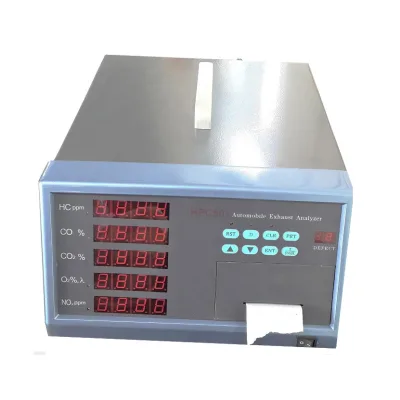
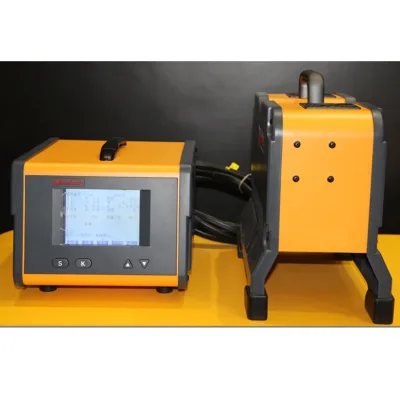

Industrial Use Exhaust Gas Analyzer for Car Emission Hc/Nox/CO2/Co/O2
$5000.00 - $30000.00
MOQ: 1 Pieces

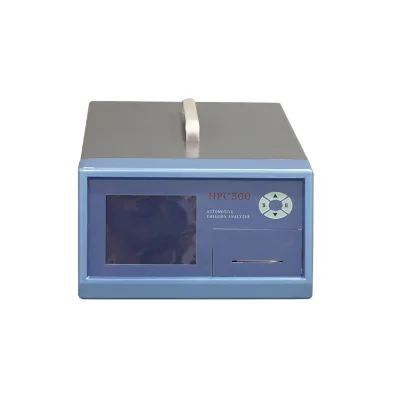
Comprehensive Sourcing Guide
Strategic Sourcing Guide for 5-Gas Diesel Vehicle Exhaust Analyzers
Understanding Core Technical Specifications and Operational Parameters
When sourcing a 5-gas diesel vehicle exhaust analyzer, buyers must first distinguish between the specific analytical capabilities required for diesel engines versus gasoline engines. Diesel exhaust analysis typically focuses on Hydrocarbons (HC), Carbon Monoxide (CO), Carbon Dioxide (CO2), Oxygen (O2), and often Nitrogen Oxides (NOx) or smoke opacity, depending on the regulatory environment. The supplied product data indicates that specific models in the market are designed to detect HC, CO, CO2, and O2, which aligns with the fundamental requirements for diesel emission testing.
A critical technical observation from the available product listings is the variance in physical dimensions and weight, which directly impacts portability and installation. For instance, one observed model, identified by the product model NHA-506EN, has a standard dimension of 260mm (Width) × 180mm (Height) × 450mm (Depth) and weighs 6.0kg. In contrast, other units in the same category, such as the HPC501, list a weight of 15kg with bare machine dimensions of 430 × 300 × 190mm. This discrepancy suggests that "portable" units vary significantly in design philosophy; some prioritize compactness for field use, while others may include larger internal components for stability or extended sensor life.
Buyers must verify the power supply requirements, as industrial environments often have varying electrical standards. The data shows a consistent requirement for AC220V 50Hz power sources across multiple models, including the GA-Z358 and GA-Z384. However, the operating environment also dictates other specifications. The operating temperature range is listed as -5 to 40 degrees Centigrade for certain units, while others specify a warm-up time of 10 minutes or 10 minutes. This preheating period is crucial for sensor stability, particularly for infrared absorption analyzers which rely on thermal equilibrium to ensure accurate gas concentration readings.
Furthermore, the operating humidity is a key constraint, with some specifications noting a limit of less than 95% relative humidity. For buyers operating in coastal or tropical regions, this specification requires careful verification against local weather patterns. The barometric pressure range of 70.0 to 106 kPa is another parameter that must be checked, as high-altitude operations can affect the accuracy of gas density measurements if the analyzer is not calibrated for lower atmospheric pressures.
Compliance, Certification, and Regulatory Standards
In the B2B procurement of emission testing equipment, certification is not merely a formality but a prerequisite for legal compliance and market acceptance. The supplied product facts highlight that units often carry CE and RoHS certifications. The CE mark indicates conformity with health, safety, and environmental protection standards for products sold within the European Economic Area, while RoHS (Restriction of Hazardous Substances) ensures the device does not contain specific hazardous materials.
Some listings also reference ISO9001 certification, which pertains to the quality management systems of the manufacturer rather than the device itself. Additionally, standards such as SGS are mentioned in the context of product standards, suggesting that third-party verification may be part of the quality assurance process. Buyers should note that while "SGS, ISO, CE" are listed as standards for certain models, the specific emission testing standards (such as ISO 11562 or EPA methods) that the analyzer complies with must be explicitly confirmed by the supplier. The data does not provide specific emission testing standard numbers, so procurement teams must request documentation proving the analyzer meets the specific regulatory framework of their target market, whether it be Euro 6, China VI, or local EPA regulations.
The product origin is listed as Qingdao, China, or generally Shandong, China, for several models. While this provides insight into the manufacturing hub, it does not guarantee the specific certification status of a unit unless explicitly stated in the commercial contract. Buyers should verify that the CE and RoHS certificates provided are current and issued by accredited bodies, as counterfeit certifications are a risk in the global supply chain. The presence of a "Color: Orange" specification in one certification entry is an anomaly that suggests potential data entry errors in public listings; therefore, buyers should rely on official certification documents rather than visual descriptions found in general product summaries.
Cost Drivers and Pricing Structure Analysis
The pricing landscape for 5-gas diesel vehicle exhaust analyzers exhibits a wide range, with observed listed prices spanning from $599 to $30,000 USD. This significant variance is not arbitrary but is driven by several key factors including sensor technology, build quality, and the inclusion of advanced features. The lower end of the price spectrum likely corresponds to basic handheld units with standard electrochemical or infrared sensors, suitable for general maintenance checks. The higher price points, approaching $30,000, may reflect industrial-grade benchtop systems, units with integrated computer control, or those capable of complex data logging and connectivity.
The Minimum Order Quantity (MOQ) for these products is consistently observed as 1 unit across the provided data. This indicates a market structure that supports single-unit procurement, which is advantageous for small workshops or individual consultants who do not wish to commit to bulk inventory. However, buyers should be aware that while the MOQ is low, the unit price may be higher for single purchases compared to bulk orders, although specific volume discounts are not detailed in the source facts.
Other cost drivers include the type of packaging and the level of customization. Some units are shipped in standard boxes, while others require wooden packages or plywood cases, which adds to the shipping cost and handling complexity. Customization options are noted as available for certain models, which can increase the final cost but may be necessary for specific integration requirements. The "as Required" packing option for some models suggests that packaging can be tailored to the buyer's logistics needs, potentially affecting the total landed cost.
Typical Applications and Operational Use Cases
The versatility of 5-gas diesel vehicle exhaust analyzers allows them to serve a broad spectrum of applications in the automotive and industrial sectors. The primary use case is in vehicle inspection stations and emission testing centers, where accurate measurement of HC, CO, CO2, and O2 is mandatory for regulatory compliance. The ability to detect these specific gases makes these analyzers essential for ensuring that diesel engines meet environmental standards before being certified for road use.
Beyond official testing stations, these devices are widely used in heavy-duty vehicle maintenance workshops. Diesel engines in trucks, buses, and construction equipment often require periodic tuning to optimize fuel efficiency and reduce emissions. The portable nature of many units, such as those described with weights around 6kg to 15kg, allows technicians to perform on-site diagnostics without moving the vehicle to a dedicated testing bay. The "Portable" attribute listed for several models supports this mobile application scenario.
In the industrial sector, these analyzers may be used for monitoring stationary diesel generators or backup power systems. The operating temperature range of -5 to 40 degrees Centigrade suggests suitability for both indoor and outdoor environments, provided the humidity remains within acceptable limits. The "Computer Control" feature mentioned in some specifications indicates that these units can be integrated into larger monitoring systems, allowing for automated data collection and trend analysis over time. This is particularly valuable for fleet management companies seeking to optimize their vehicle maintenance schedules based on emission performance data.
Supplier Evaluation and Quality Assurance Protocols
When evaluating potential suppliers for 5-gas diesel vehicle exhaust analyzers, buyers must look beyond the basic product specifications. The data indicates that suppliers offer "Online" after-sales service and a "1 Year" warranty for certain models. These are critical indicators of supplier reliability and commitment to customer support. A supplier that provides online technical support can assist with troubleshooting sensor calibration issues or software errors, which are common in complex electronic devices.
The condition of the product is listed as "New" in the provided facts, which is a standard expectation but worth verifying in the purchase agreement to ensure no refurbished units are sold as new without disclosure. The brand "China Coal" is mentioned in the context of one model, serving as a reference point for brand recognition, though buyers should not limit their search to this single entity. Instead, the focus should be on the supplier's ability to provide valid certification documents and a clear warranty process.
Quality control should be a priority during the procurement process. Buyers should verify that the manufacturer adheres to ISO9001 standards, as indicated in some product listings. This certification implies a systematic approach to quality management, reducing the risk of defective units. Additionally, the presence of "SGS" as a standard suggests that third-party testing may be part of the quality assurance workflow. Buyers should request test reports or calibration certificates for the specific units they intend to purchase to ensure they meet the required accuracy standards for gas detection.
Long-Term Procurement Considerations and Maintenance
Sourcing a 5-gas diesel vehicle exhaust analyzer is not a one-time transaction but the beginning of a long-term operational relationship. The "1 Year" warranty period is a standard baseline, but buyers should consider the long-term costs associated with sensor replacement and calibration. Infrared absorption analyzers, as noted in the product type, may require periodic maintenance to ensure the optical components remain clean and functional. The "Preheating Time" of 10 minutes indicates that the device requires a warm-up period before each use, which can impact workflow efficiency if not managed properly.
The "Rotate Speed" of 0 to 10000 rpm and "Oil Temperature" of 0-120 degrees Centigrade listed in the data appear to be attributes of a different type of machinery, possibly a mixing or processing unit, rather than the exhaust analyzer itself. This highlights the importance of carefully reviewing product specifications to avoid confusion between different product lines. Buyers must ensure that the specifications they are evaluating actually pertain to the exhaust analyzer and not to auxiliary equipment.
For long-term procurement, buyers should also consider the availability of spare parts and the cost of consumables. The "Customized" attribute suggests that some units can be tailored to specific needs, which may affect the availability of standard spare parts. It is advisable to negotiate a service agreement that includes regular calibration services and sensor replacements. The "Digital" display and "Electronic Load" features suggest that these units rely on complex electronics, making them susceptible to wear and tear over time. Establishing a relationship with a supplier who offers robust after-sales support is essential for maintaining the accuracy and reliability of the equipment over its lifespan.
Comparative Analysis of Key Product Attributes
To facilitate informed decision-making, the following table summarizes the key attributes observed in the supplied product data, highlighting the variations that buyers should consider during the sourcing process.
| Attribute | Observation A (Model NHA-506EN) | Observation B (Model HPC501) | Observation C (Model GA-Z358) | Observation D (General/Other) |
|---|---|---|---|---|
| Product Model | NHA-506EN | HPC501 | GA-Z358 | GA-Z384, GA-SWLB, GA-HPC401 |
| Weight | 6.0 kg | 15 kg | N/A | 0-100 Kg (Load Way) |
| Dimensions | 260x180x450 mm | 430x300x190 mm (Bare) | N/A | 420x320x250 mm |
| Power Supply | AC220V 50Hz | AC220V | AC220V | AC220V |
| Certification | RoHS, CE | CE, RoHS | CE, ISO9001 | CE, SGS, ISO |
| Preheating Time | 10 min | 10 minutes | N/A | N/A |
| Packing | Box | As Required | Wooden Package | Plywood Case |
| Origin | Qingdao, China | Shandong, China | China | China |
| Gas Detection | N/A | HC, CO, CO2, O2 | N/A | N/A |
| Condition | N/A | New | N/A | N/A |
| Warranty | N/A | 1 Year | N/A | N/A |
| After-Sales | N/A | Online | N/A | N/A |
This comparison underscores the necessity for buyers to match specific technical requirements with the correct model. For instance, if a buyer requires a lightweight unit for field work, the 6.0kg model (NHA-506EN) is preferable to the 15kg model (HPC501). Conversely, if a buyer requires a unit with a specific warranty and online support, the HPC501 model offers a clear advantage. The variation in packaging, from standard boxes to wooden crates, also impacts logistics planning and should be factored into the total cost of ownership. By carefully analyzing these attributes, buyers can select a 5-gas diesel vehicle exhaust analyzer that aligns with their operational needs, budget constraints, and regulatory requirements.
FAQs
What certifications do 5-gas diesel vehicle exhaust analyzers typically have?
Most units carry CE and RoHS certifications to ensure safety and environmental compliance. Some listings also reference ISO9001 for quality management, though specific emission testing standards must be verified with the supplier before purchase.
How much does a 5-gas diesel vehicle exhaust analyzer cost?
Listed prices range from 599 to 30000 USD depending on sensor technology and build quality. Basic handheld units are cheaper, while industrial-grade systems with computer control command higher prices.
Can I customize the packaging for a 5-gas diesel vehicle exhaust analyzer?
Customization is available for certain models, including flexible packaging options like boxes or wooden cases. Some units offer packing as required, allowing buyers to tailor logistics to their specific shipping needs.
What is the preheating time for these analyzers?
The warm-up time is typically 10 minutes to ensure sensor stability and accurate readings. This preheating period is crucial for infrared absorption analyzers to reach thermal equilibrium before operation.
Where are 5-gas diesel vehicle exhaust analyzers manufactured?
Products originate from locations such as Qingdao and Shandong in China. Buyers should verify that the specific unit includes valid certification documents regardless of the manufacturing hub.
What is the minimum order quantity for these devices?
The minimum order quantity is consistently 1 unit across the provided product listings. This allows small workshops and individual consultants to procure single units without committing to bulk inventory.
Which gases can these analyzers detect in diesel exhaust?
Specific models are designed to detect HC, CO, CO2, and O2 concentrations. These four gases align with the fundamental requirements for diesel emission testing and regulatory compliance.