Source 58mm Thermal Receipt Printer for Retail, Logistics, and Hospitality
Explore 30 listings of the 58mm Thermal Receipt Printer designed for retail, logistics, and hospitality sectors. Buyers can compare features like thermal printing, battery capacity, and connectivity options to find the right device for their business needs.
Key considerations
Products List




Comprehensive Sourcing Guide
Strategic Sourcing Guide for 58mm Thermal Receipt Printers
Understanding the Technical Landscape of Handheld Thermal Printers
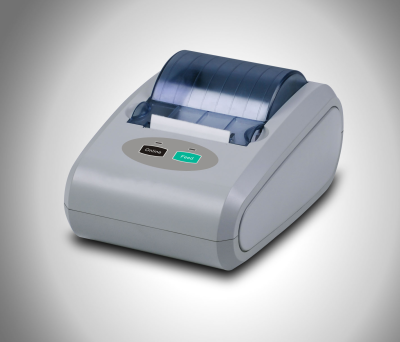
When sourcing a 58mm Thermal Receipt Printer, buyers must first distinguish between fixed desktop units and the increasingly popular handheld variants designed for mobile operations. The core keyword implies a specific print width, but the form factor significantly dictates the internal architecture and connectivity options. Based on observed market data, the 58mm width is a standard specification for portable thermal line printing devices, often categorized under "Hand Held" types. These units are engineered for mobility, frequently featuring integrated rechargeable lithium batteries, such as the 1500 mAh 7.4V units observed in current listings, to ensure operation without a constant power source.
The printing mechanism is almost exclusively thermal line printing, which eliminates the need for ink cartridges or toner, relying instead on heat-sensitive paper. This method supports high-speed output, with observed print speeds ranging between 70mm and 90mm per second. The resolution is a critical technical parameter for readability; a standard of 384 dots per line is common for these devices, ensuring that barcodes, QR codes, and text are crisp enough for scanning and human verification. The physical dimensions of these handheld units vary, with some models measuring approximately 1007545mm, while others may be slightly larger, such as 126.984.450.6mm, depending on the internal battery capacity and paper roll holder design.
Connectivity remains a primary differentiator in the technical evaluation. While some handheld models operate with a "Not Support Network" status, relying solely on direct interface connections like USB, others are equipped with wired network capabilities or Bluetooth for wireless integration with mobile devices. The interface type is a decisive factor for integration with existing Point of Sale (POS) systems or inventory management software. Buyers should verify whether the device supports "Automatic and Manual Integration" for paper supply or if it is strictly manual, as this impacts the speed of paper loading in high-volume environments. The maximum paper roll diameter is another specification to confirm; a 40mm diameter limit is typical for compact handheld units, restricting the total number of receipts per roll but maintaining portability.
Compliance and Certification Verification Protocols
In the global B2B market, compliance is not merely a regulatory formality but a prerequisite for market access and liability protection. When sourcing thermal printers, particularly those originating from manufacturing hubs like Xiamen, China, buyers must rigorously verify the certification status of the specific batch or model. The observed product data indicates a mix of certifications, including CE, CCC, FCC, BIS, and ISO standards. The presence of CE marking suggests compliance with European Union safety, health, and environmental protection requirements, while CCC (China Compulsory Certification) is mandatory for products sold within the Chinese domestic market.
It is crucial to distinguish between the product's standard certifications and specific regional approvals. For instance, the BIS (Bureau of Indian Standards) certification is essential for selling in India, whereas FCC (Federal Communications Commission) approval is required for electronic devices in the United States to ensure they do not interfere with radio frequencies. The data also references ISO standards, specifically ISO9001, which pertains to quality management systems rather than the product itself, though it indicates the manufacturer's commitment to consistent quality processes. Buyers should not assume that a supplier's general certification covers all their models; verification must be model-specific, as some listings show "ISO, CE, CCC" while others list "CE, CCC, CIC, ROHS."
The RoHS (Restriction of Hazardous Substances) directive is another critical standard to check, ensuring that the printer does not contain lead, mercury, or other hazardous materials. While some background data mentions RoHS, the primary product facts list it alongside CIC and other standards. Buyers must request valid, up-to-date test reports from the supplier for each model they intend to purchase. Relying on general claims without specific documentation can lead to customs seizures or legal liabilities in the destination market. Furthermore, the "Certificate" field in product listings often varies; some units list CE and CCC, while others include additional marks. This inconsistency highlights the need for buyers to treat certification claims as observations that require independent verification rather than guaranteed attributes of every listed product.
Cost Drivers and Pricing Structure Analysis
The pricing of 58mm thermal receipt printers is influenced by a complex interplay of technical specifications, certification requirements, and order volume. The observed price range in the market spans from $1 to $150 USD, a significant variance that reflects differences in build quality, battery capacity, and feature sets. Lower-priced units typically fall into the basic category, often lacking advanced features like network connectivity or high-capacity batteries, and may be sold with minimal packaging. Conversely, the upper end of the price spectrum usually corresponds to models with robust construction, integrated batteries, and comprehensive certification suites.
Minimum Order Quantity (MOQ) is a critical cost driver in B2B procurement. The observed MOQ range is 1 to 300 units, offering flexibility for small businesses while providing economies of scale for larger enterprises. Buyers purchasing in bulk, such as orders exceeding 100 units, often negotiate better unit prices and may benefit from consolidated shipping costs. The packaging method also impacts the final landed cost; units "Packed in Carton" with a standard count of 20 pieces per carton (20PCS/CTN) are common, but variations exist. Bulk packaging reduces the per-unit shipping volume, which can significantly lower logistics expenses.
Beyond the unit price, buyers must consider the total cost of ownership, which includes consumables and maintenance. The "Consumable Type" is listed as "One Cartridge" in some contexts, though thermal printers generally do not use ink cartridges, suggesting this may refer to specific ribbon or paper roll configurations in certain models. The "After-Sales Service" offering "Free Spare Parts" is a significant value-add that reduces long-term operational costs. Additionally, the warranty period, typically observed as a "1-Year" coverage, is a standard benchmark. Buyers should evaluate whether the supplier offers extended warranty options or if the cost of spare parts is factored into the initial purchase price. Payment methods, such as "Mobile Payment," offer convenience but may carry transaction fees that affect the overall cost structure for smaller buyers.
Typical Applications and Operational Scenarios
The versatility of the 58mm Thermal Receipt Printer makes it suitable for a wide array of B2B applications, primarily driven by its portability and ease of use. The "Usage" field in product data explicitly lists "Barcode Printer," "Document Printer," and "Receipt Printer," indicating a multi-functional capability. In retail environments, these devices are essential for generating immediate transaction receipts, often featuring an "Auto Cutter" to separate the receipt cleanly after printing. The ability to print "English, Numbers, Symbols, Graphics, Curves, Icons" ensures that receipts can include detailed product information, logos, and promotional graphics.
In logistics and warehousing, the handheld nature of these printers allows for on-the-spot labeling and tracking. The "Supply Paper Mode" being "Automatic and Manual Integration" in some models facilitates quick paper loading, which is vital for high-speed inventory operations. The "Automatic Two-sided Printing" is noted as "Not Support," which is typical for thermal receipt printers, as most receipts require single-sided printing for cost and speed efficiency. However, for document printing applications, the ability to print graphics and curves is advantageous for creating simple forms or labels.
The "Style" of these printers is predominantly "Black and White," which is standard for thermal technology. This limitation is rarely a drawback in receipt printing, where clarity and contrast are paramount. The "Network Function" varies; while some models support "Wired Network" or "Not Support Network," the lack of wireless connectivity in some units may require a physical tether to a mobile device or POS terminal. This is acceptable in fixed locations but less ideal for mobile field operations. The "Character Structure" being "Full-Width Characters Printers" suggests suitability for languages that require complex character sets, making these devices viable for international markets where local language support is necessary.
Supplier Evaluation and Quality Assurance Standards
Evaluating a supplier for 58mm thermal receipt printers requires a multi-dimensional approach that goes beyond price comparison. The "prod_origin" is frequently listed as "Xiamen, China" or "Xiamen, Fujian," a region known for its electronics manufacturing ecosystem. Buyers should verify the supplier's capacity to maintain consistent quality across different batches. The "Standard" field often cites ISO9001, which indicates a quality management system, but this should be cross-referenced with actual production audits.
Quality control (QC) is paramount, especially given the variation in observed specifications. For instance, the "Single Gross Weight" is listed as 1.000kg, and the "Net Weight" as 205g, indicating a discrepancy that may stem from different packaging configurations or model variations. Buyers must request detailed weight and dimension specifications for the exact model they intend to purchase to avoid logistical surprises. The "Single Package Size" of 15X13X8.Cm is another critical metric for calculating shipping costs and storage requirements.
Suppliers should be assessed on their ability to provide "Free Spare Parts" and their responsiveness to after-sales service requests. The "Warranty(Year)" of 1 year is a baseline; suppliers offering longer warranties or better support terms demonstrate higher confidence in their product quality. Additionally, the "Customization" attribute being "Available" is a significant advantage for buyers seeking branded or specialized units. Buyers should inquire about the lead time for customized orders and the minimum order quantities required for such modifications.
Long-Term Procurement and Operational Sustainability
Sourcing a 58mm Thermal Receipt Printer is not just a one-time transaction but a long-term partnership that impacts operational efficiency. The "Battery" specification, often a 1500 mAh 7.4V Rechargeable Lithium Battery, is a critical component for the longevity of handheld units. Buyers should verify the battery's cycle life and replacement policy, as battery degradation is a common failure point in portable devices. The "Power Adapter" requirement of a 5V-1A Adapter is standard, but compatibility with local power standards must be confirmed to avoid the need for additional adapters.
The "Printing Content" capabilities, including the ability to print graphics and icons, ensure that the printer remains relevant as business needs evolve. However, the "Network Function" limitations in some models may necessitate future upgrades if the business expands to require real-time data synchronization. Buyers should consider the scalability of the device; can it be integrated with new software systems? The "Interface Type" being USB is a universal standard, but the availability of drivers and software support is crucial for long-term usability.
Finally, the "Supply Paper Mode" and "Maximum Roll" diameter of 40mm affect the operational workflow. A smaller roll diameter means more frequent paper changes, which can increase downtime in high-volume settings. Buyers should evaluate whether the cost of paper rolls and the frequency of replacement align with their operational budget. The "Packed in Carton" method, with 20PCS/CTN, is efficient for storage but requires adequate warehouse space. Long-term procurement strategies should include a review of the supplier's ability to maintain a steady supply of consumables and spare parts to ensure uninterrupted operations. By focusing on these long-term factors, buyers can secure a reliable supply chain that supports their business growth and operational stability.
FAQs
What certifications are available for 58mm thermal receipt printers?
Common certifications include CE, CCC, FCC, BIS, and ISO standards. Buyers must verify specific model documentation as listings vary between CE and CCC alone or combined with FCC and BIS for regional compliance.
How is the paper supply mode configured for these handheld printers?
Supply modes range from manual to automatic integration depending on the specific model. Some units support both automatic and manual paper feeding, while others rely strictly on manual loading for simplicity.
Can these printers support wired network connections for data transfer?
Yes, some models support wired network functions alongside USB interfaces. However, other handheld variants do not support any network connectivity and rely solely on direct physical connections to host devices.
What is the typical battery capacity for portable 58mm thermal printers?
Portable units often feature a 1500 mAh 7.4V rechargeable lithium battery. This capacity supports mobile operations without a constant power source, though specific battery specs vary by model design.
Which printing speed can be expected from these thermal line devices?
Print speeds typically range between 70mm and 90mm per second. This high-speed output is achieved through thermal line printing technology which eliminates the need for ink cartridges or toner.
What is the maximum paper roll diameter these printers accept?
The maximum paper roll diameter is typically 40mm for compact handheld units. This limit maintains portability while restricting the total number of receipts per roll compared to larger desktop models.
Are customization options available for branded 58mm thermal receipt printers?
Customization is available for buyers seeking branded or specialized units. Suppliers may offer modifications, but buyers should inquire about specific lead times and minimum order quantities required for such changes.