Source LGA1155 DDR3 Motherboard for Servers, Gaming, and Data Centers
Explore 30 available options for the LGA1155 DDR3 Motherboard tailored for server, gaming, and data center applications. Buyers can compare specifications like chipset, memory capacity, and form factor to find the right solution for their needs; compare the available evidence and request quotations based on your requirements.
Key considerations
Products List


High Performance Gaming DDR3 PC Mainboard B75 H61 LGA1155 Socket Motherboard
$13.00 - $15.00
MOQ: 50 Pieces

Esonic Brand LGA1155 H61 Motherboard with Nvme for 2ND 3rd Generation Motherboards
$13.10 - $15.90
MOQ: 20 Pieces


Esonic H81 M. 2 Motherboard LGA1150 DDR3 ATX Mainboard for Intel 4th Generation
$13.00 - $15.00
MOQ: 20 Pieces
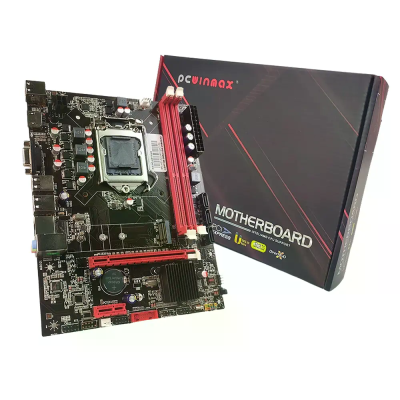
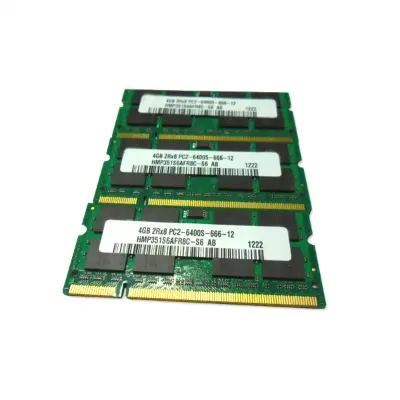
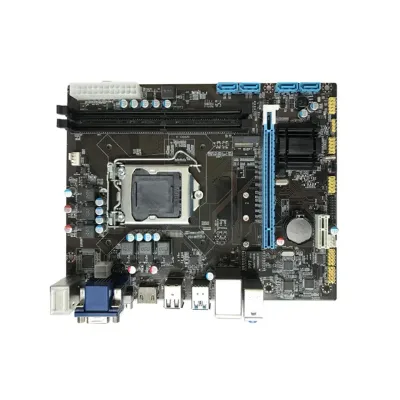


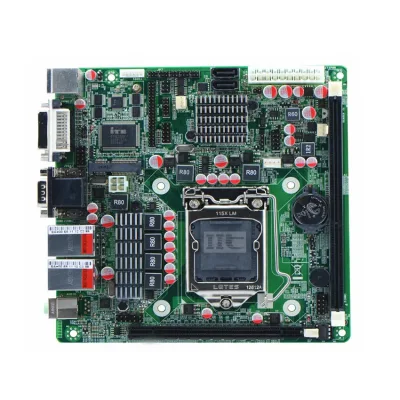
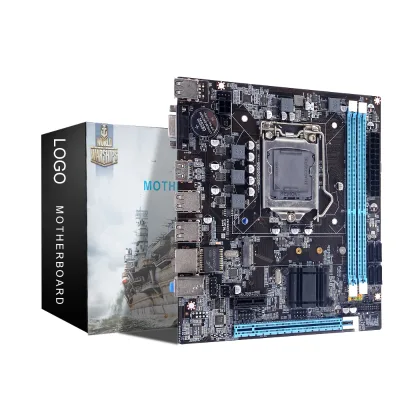
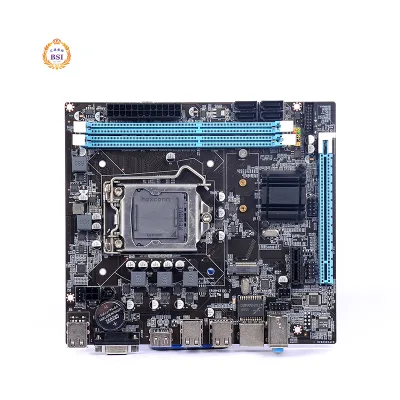
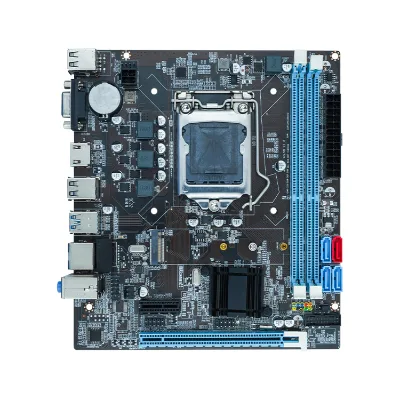
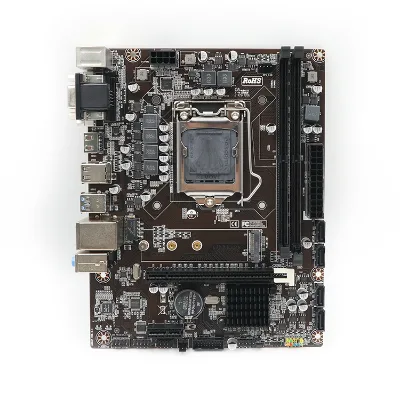
Hot Selling OEM H61 Motherboard 1155 Mainboard I5 H61-G578 Motherboard for PC
$50.00 - $67.00
MOQ: 2 Minimum
Comprehensive Sourcing Guide
LGA1155 DDR3 Motherboard Sourcing Guide
Procuring an LGA1155 DDR3 Motherboard requires careful attention to the specific chipset generation and socket compatibility to ensure system stability. The available inventory includes models explicitly designated as H61 and LGA1155 variants, which are designed to support Intel processors such as the i5 and i7 series. Buyers must verify that the physical socket matches the intended CPU to prevent installation failures or performance bottlenecks in the final assembly.
The market for these components often targets server and data center applications, though gaming configurations with multiple GPU support are also observed. Sourcing teams should prioritize listings that confirm the presence of DDR3 memory slots and verify the maximum memory capacity, which can range from 16GB to 32GB depending on the specific board revision. Understanding these constraints is essential for matching the motherboard to the intended workload and ensuring the system meets the required operational specifications.
Product Scope and Observed Listing Signals
The observed product listings reveal a diverse range of form factors, including ATX, Micro ATX, and Mini-ITX structures, each catering to different chassis and cooling requirements. Buyers should scrutinize the physical dimensions, such as the 21.5*17cm specification found in certain models, to ensure compatibility with existing server racks or desktop enclosures. The variation in board structure indicates that procurement strategies must account for space constraints and airflow dynamics specific to the deployment environment.
Listing signals also highlight significant differences in packaging and customization options, with some units offered in custom boxes while others utilize standard carton packing. The availability of OEM and ODM services suggests that buyers can request tailored solutions for branding or specific interface requirements. However, the presence of mixed attributes like HiFi audio effects versus non-HiFi configurations necessitates a clear definition of audio needs before finalizing any purchase order to avoid receiving units that do not meet the application's sensory requirements.
Technical Specifications to Verify
Technical verification must begin with the main chipset and integrated graphics capabilities, as these define the core processing power and display output options. The supplied data indicates that integrated graphics support depends heavily on the specific CPU installed, meaning the motherboard alone does not guarantee video output without a compatible processor. Buyers should confirm the chipset model, such as H61 or H110, to ensure it aligns with the desired feature set and driver support for the target operating system.
Memory and storage interfaces are equally critical, with listings showing both SATA2 and SATA3 interfaces alongside DDR3 memory support. The printed circuit board construction is consistently noted as four layers, which influences signal integrity and thermal dissipation capabilities. Procurement teams must verify the specific SATA version to ensure compatibility with high-speed storage drives, as mixing SATA2 boards with SATA3 drives may result in reduced transfer speeds that could bottleneck overall system performance.
Compliance and Safety Documentation
While specific certification documents are not explicitly detailed in the provided facts, the "Top Notch" quality attribute implies a baseline expectation for manufacturing standards. Buyers should request evidence of compliance with international safety standards, particularly regarding electrical safety and electromagnetic compatibility, to ensure the boards can operate reliably in sensitive data center environments. The absence of explicit certification claims in the listing data means that verification of these documents is a mandatory step before accepting any bulk shipment.
Warranty terms vary significantly across the observed listings, with options ranging from one year to three years of coverage. This variation directly impacts the total cost of ownership and the risk management strategy for the procurement team. It is essential to clarify the warranty scope, including what constitutes a defect versus normal wear and tear, and to confirm the process for claiming repairs or replacements. A longer warranty period often correlates with higher confidence in the supplier's quality control processes and long-term product reliability.
Cost Drivers and Commercial Terms
The price range for these motherboards is extensive, spanning from 0.5 to 319 USD, driven by factors such as form factor, chipset generation, and included features like audio quality. High-end models with advanced features or specific customizations will naturally command higher prices, while basic H61 variants may be available at the lower end of the spectrum. Buyers must align their budget with the specific technical requirements to avoid overspending on unnecessary features or under-specifying critical components.
Minimum Order Quantities (MOQ) and delivery timelines also play a crucial role in commercial negotiations, with observed MOQs ranging from 1 to 100 units and delivery times typically set at 3-7 work days. These terms affect inventory planning and cash flow management, especially for projects requiring immediate deployment. Negotiating favorable MOQs and lead times can provide significant operational flexibility, allowing buyers to scale orders up or down based on real-time demand without incurring excessive storage costs or production delays.
Supplier Qualification and Quality Control
Supplier qualification should focus on their ability to provide consistent quality and reliable customization services, as indicated by the "Customization: Available" and "OEM/ODM: Accepted" attributes. The origin of the products is listed as China, which is a major manufacturing hub, but buyers must verify the specific factory standards and quality assurance protocols employed by the supplier. Relying solely on the "Top Notch" claim is insufficient; direct audits or third-party quality reports are necessary to validate the manufacturing consistency.
Quality control processes must be rigorously defined to ensure that every unit meets the specified electrical and structural standards. The presence of different product statuses, such as "Stock," suggests that immediate availability is possible, but buyers should verify the condition of the stock to ensure it is not refurbished or damaged. Establishing clear acceptance criteria for the four-layer PCB structure and integrated graphics support will help filter out non-compliant units before they enter the production line or deployment phase.
Long-Term Procurement Checks
Long-term procurement success depends on monitoring the product lifecycle and ensuring continued availability of compatible components like CPUs and memory modules. The LGA1155 socket and DDR3 memory standard are mature technologies, but buyers must verify that the supplier can support these platforms for the duration of the product's intended lifespan. Planning for end-of-life scenarios and identifying potential obsolescence risks is essential to prevent supply chain disruptions in the future.
Regular performance reviews and feedback loops with the supplier are necessary to maintain the high standards expected for server and data center applications. Buyers should track the actual performance of the deployed motherboards against the promised specifications, such as operating temperatures between 0℃ to 60℃ and maximum memory capacities. Continuous monitoring allows for early detection of any systemic issues and provides the data needed to negotiate better terms or switch suppliers if quality standards begin to degrade over time.
FAQs
What is the operating temperature range for this motherboard?
The operating temperature range is 0℃ to 60℃. This ensures stable performance in server and data center environments without overheating issues during continuous operation.
Which memory types are supported by the LGA1155 motherboard?
This motherboard supports DDR3 memory with a maximum capacity of 16G or 32G depending on the specific model. It is designed for high-speed RAM to enhance gaming and server performance effectively.
Can I customize the packaging for bulk orders of these boards?
Yes, customization is available for packaging needs. The standard options include custom packing or boxd, allowing buyers to tailor the presentation for wholesale distribution or specific client requirements.
What is the warranty period for the H61 motherboard models?
Warranty periods vary between 1 Year and 3 Years depending on the specific product model selected. Buyers should verify the exact warranty terms for the H61 or H110 series before purchasing.
How long does delivery take for stock items of this board?
Delivery time is typically 3-7 work days for products currently in stock. This ensures quick turnaround for urgent orders while maintaining the top-notch quality expected from these integrated graphics motherboards.
Which CPU sockets are compatible with the H61 motherboard series?
The H61 series supports LGA1155 sockets, while other models may support LGA775 or LGA2011 variants. These boards are designed to work with Intel processors like i5 and i7 for optimal performance.
Does the motherboard support integrated graphics without a separate GPU?
Yes, the motherboard features integrated graphics support that depends on the installed CPU. This allows for functional systems without needing a dedicated graphics card for basic server or gaming tasks.