Source 8bit 16kb Flash Microcontrollers for IoT, Home Automation, and Industrial Control
Compare 30 available 8bit 16kb Flash Microcontrollers from verified Chinese suppliers. This selection includes various models like ATMEGA8A and STM8S105 with diverse packaging options and lead times for your projects.
Key considerations
Products List


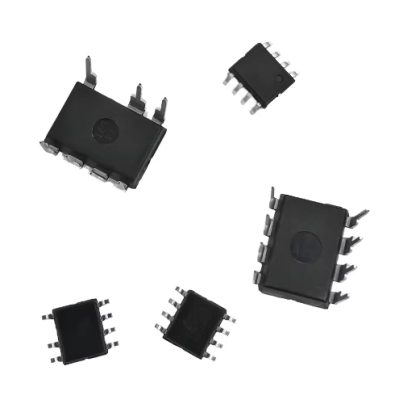


ATMEGA16A-AU ATmega Series 16 KB Flash 8-Bit Microcontroller TQFP-44 IC
$3.20 - $15.00
MOQ: 1000 Pieces


Comprehensive Sourcing Guide
Strategic Sourcing Guide for 8-Bit Microcontrollers with 16KB Flash
Understanding the Core Technology and Market Context
The procurement of 8-bit microcontrollers (MCUs) with 16KB of flash memory represents a critical segment in the embedded systems supply chain. These devices are engineered to balance processing power with cost-efficiency, making them the preferred choice for applications where complex 32-bit architectures are unnecessary or cost-prohibitive. The specific focus on 16KB flash capacity indicates a requirement for moderate firmware storage, suitable for applications involving sensor data logging, basic user interface management, or intermediate control logic.
In the current market landscape, buyers encounter a diverse array of architectures, including AVR, PIC, and STM8 families. The supplied data confirms the availability of specific models such as the ATMEGA8A-PU and ATMEGA16L-8PU, which are prominent examples of 8-bit devices in this category. These components are typically characterized by their Unipolar Integrated Circuit conductive type, although some listings may reference Bipolar Integrated Circuit attributes depending on the specific internal architecture or legacy classification. The integration level for these devices is generally categorized as VLSI (Very Large Scale Integration) or ULSI (Ultra Large Scale Integration), reflecting the density of transistors packed onto the silicon die.
When sourcing these components, it is essential to recognize that "8-bit" refers to the data path width, while the 16KB flash specification dictates the non-volatile memory available for program storage. This combination allows for efficient execution of control loops and data handling without the power overhead associated with higher-bit processors. Buyers must verify that the specific model number aligns with their firmware requirements, as variations in pin counts and peripheral sets can significantly impact the design. The supply chain for these components is robust, with manufacturers in China serving as a primary origin point, ensuring a steady flow of inventory for global distribution.
Technical Specifications and Package Variability
Selecting the correct physical and electrical specifications is paramount to ensuring compatibility with the target application board. The supplied product data highlights a wide variety of package types, ranging from traditional Dual In-line Packages (DIP) to modern surface-mount options like QFN-32, TQFP-32, TQFP-44, and TQFP-64. The shape of the component is a critical factor; while some units are listed with a DIP shape, others are described as Flat, indicating surface-mount technology (SMT) compatibility.
The following table summarizes the observed package and case types available in the current market for 8-bit microcontrollers with similar flash capacities:
| Package Type | Case Designation | Typical Application Context |
|---|---|---|
| Dual In-line Package | DIP | Prototyping, through-hole assembly, legacy systems |
| Quad Flat No-leads | QFN-32 | Compact consumer electronics, high-density PCBs |
| Thin Quad Flat Package | TQFP-32 | Industrial control, automotive interfaces |
| Thin Quad Flat Package | TQFP-44 | Complex sensor nodes, communication modules |
| Thin Quad Flat Package | TQFP-64 | High I/O count applications, advanced control logic |
Beyond the physical package, the operating temperature range is a vital technical parameter. The data indicates a standard operating temperature range of -40°C to +85°C, which covers the vast majority of commercial and industrial environments. However, buyers must verify if their specific application requires extended temperature ranges, as this is not universally guaranteed across all listings. The number of Input/Output (I/O) pins is another significant specification; the observed data points to configurations with 32 I/O lines, which provides ample connectivity for peripheral devices but may require careful pin mapping during the PCB layout phase.
Furthermore, the integration of features such as EEPROM (0.5kb in some observed models) and the specific architecture (e.g., ATMEGA328PB-AU or ATMEGA128L-8AU) must be cross-referenced with the firmware code. The "Semiconductor IC" technical classification confirms the nature of the component, but the specific "Technics" employed can vary between manufacturers. Buyers should ensure that the pinout and electrical characteristics of the chosen package match the PCB footprint exactly, as even minor deviations in package dimensions can lead to assembly failures.
Compliance, Certification, and Regulatory Standards
Navigating the regulatory landscape is a non-negotiable aspect of B2B procurement, particularly for electronic components destined for global markets. The supplied facts confirm that the products in this category are generally Lead Free (Pb) and RoHS Compliant. This compliance is essential for meeting environmental regulations in the European Union, North America, and other regions that restrict the use of hazardous substances in electronic equipment. The "Lead Free Status" being explicitly listed as "Lead Free Pb" suggests that the solder balls and lead frames adhere to modern environmental standards, reducing the risk of regulatory non-compliance during product certification.
However, while the data explicitly mentions RoHS compliance, other certifications such as ISO 9001, ISO 13485, and ISO 45001 are listed as low-confidence background information. Buyers should not assume that every supplier or specific batch of components holds these certifications unless explicitly verified through the supplier's documentation. The distinction between "Standard" and "RoHS Compliant" is crucial; a product may meet general industry standards but lack specific environmental certifications. Therefore, procurement teams must request a Certificate of Compliance (CoC) or a Declaration of Conformity (DoC) for every batch purchased.
The "Standard" attribute in the product data is sometimes listed as "iron and plastic" or simply "Standard," which may refer to the packaging materials or general manufacturing standards rather than a specific regulatory body. It is vital to clarify what this standard entails. For medical or aerospace applications, the absence of ISO 13485 certification could be a dealbreaker, necessitating a more rigorous vetting process. Additionally, the "Lead Time" being listed as "in Stock" for some items suggests that compliance documentation should be readily available, but buyers must confirm that the specific batch they are purchasing has the necessary paperwork attached.
Cost Drivers and Commercial Terms
The pricing and commercial terms for 8-bit microcontrollers are influenced by several factors, including the specific model, package type, and order volume. The observed price range in the market is between $0 and $200 USD, which indicates a significant variance based on the component's scarcity, packaging, and supplier margin. While the lower end of the spectrum likely represents high-volume, standard packages like DIP or TQFP-32, the higher end may include specialized versions, smaller quantities, or premium packaging.
Minimum Order Quantity (MOQ) is another critical cost driver. The observed MOQ range spans from 1 to 1000 units. This flexibility allows buyers to procure small quantities for prototyping or testing without incurring excessive costs, while larger orders can leverage economies of scale. The "Service" attribute mentions a "One-Stop Bom Service," which can be a significant value-add for buyers looking to consolidate their supply chain. This service implies that the supplier can provide not just the microcontroller but also associated passive components and other necessary parts, potentially reducing logistics costs and lead times.
Payment terms and shipping methods also play a role in the total cost of ownership. The data lists payment options such as PayPal, TT (Telegraphic Transfer), Western Union, and Trade Assurance. Trade Assurance is particularly relevant for international buyers as it offers a layer of protection against non-delivery or quality issues. Shipping methods include DHL, UPS, FedEx, EMS, and HK Post, with terms like DAP (Delivered at Place) or DDP (Delivered Duty Paid) available. DDP terms are advantageous as they include all costs up to the buyer's location, eliminating hidden customs fees, whereas DAP requires the buyer to handle import duties.
The "Warranty" period is listed as 365 Days, which is a standard industry benchmark for new original components. This warranty provides a safety net for quality issues, but buyers must understand the claims process. The "Quality" attribute claims "New Original 100%," which is a strong selling point, but verification through third-party testing is often recommended for high-volume orders. The "Package Status" being "Anti-Water" suggests that the packaging is designed to protect the components from moisture during transit, which is crucial for maintaining the integrity of the semiconductor devices.
Supplier Evaluation and Quality Assurance
Evaluating suppliers for 8-bit microcontrollers requires a rigorous approach to ensure the authenticity and reliability of the components. The "Quality" attribute explicitly states "New Original 100%," but this claim must be substantiated. Buyers should verify the supplier's ability to provide traceability for each batch, including the original invoice and data sheets. The "Data Sheet" attribute suggests contacting a specific representative, "Christen Jin," for technical documentation, which highlights the importance of direct communication for resolving technical queries.
The "Product Packing" methods observed include Tube, Tray, Tape, Reel, Bag, or Box. The choice of packaging can impact the quality of the components upon arrival. For surface-mount devices, Tape and Reel are preferred for automated assembly, while Tubes and Trays are common for through-hole or manual assembly. The "Standard" packing listed as "Tube" for certain models indicates a specific handling requirement that must be matched with the buyer's assembly line capabilities.
To mitigate the risk of counterfeit parts, buyers should prioritize suppliers who offer "Original Invoice" documentation. This document serves as proof of the component's origin and chain of custody. Additionally, the "Lead Time" being "in Stock" for many items suggests that the supplier maintains a healthy inventory, reducing the risk of supply chain disruptions. However, buyers should also consider the "Delivery Time" of 3-5 days for in-stock items, which allows for rapid prototyping and quick turnaround on production runs.
Quality control should extend beyond the initial purchase. Implementing incoming inspection protocols, such as visual inspection and X-ray analysis, can help detect any anomalies in the components. The "RoHS Status" being "RoHS Compliant" should be verified with a test report for each batch, especially if the components are destined for regulated markets. The "Service" of providing a One-Stop Bom Service can also be leveraged to ensure that all components in the bill of materials meet the same quality standards, reducing the complexity of managing multiple suppliers.
Long-Term Procurement and Application Strategy
Sourcing 8-bit microcontrollers with 16KB flash is not merely a transactional activity but a strategic decision that impacts the long-term viability of the product. The "Operating Temperature" range of -40°C to +85°C ensures reliability in most commercial and industrial settings, but buyers must consider the lifecycle of the product. If the application is expected to run for many years, the availability of the specific model (e.g., ATMEGA8A-PU or STM8S105K4T6C) must be guaranteed. Obsolescence is a significant risk in the semiconductor industry, and relying on a single source for a critical component can be dangerous.
The "Integration" level of VLSI or ULSI suggests that these components are part of a broader ecosystem of compatible chips. Buyers should plan for the long term by ensuring that the chosen MCU has a robust community and development support. The "Description" mentioning "8-Bit Microcontrollers - MCU 16kb Flash 0.5kb Eepr" indicates a specific feature set that should be matched with the firmware requirements. If the application requires more memory or I/O in the future, the current selection may become a bottleneck.
Furthermore, the "Shipping Term" of DAP/DDP and the "Lead Time" of "in Stock" provide a stable foundation for supply chain planning. However, buyers should maintain a safety stock to buffer against potential disruptions. The "Warranty" of 365 Days offers a short-term guarantee, but long-term reliability depends on the quality of the manufacturing process and the stability of the supply chain. Buyers should establish a relationship with the supplier that allows for volume discounts and priority support, ensuring that the procurement process remains efficient as the product scales.
In conclusion, sourcing 8-bit microcontrollers with 16KB flash requires a balanced approach that considers technical specifications, compliance, cost, and supplier reliability. By adhering to the facts provided and maintaining a rigorous evaluation process, buyers can secure high-quality components that meet their application needs while mitigating the risks associated with the global semiconductor market. The availability of diverse package types, competitive pricing, and robust warranty terms makes this category an attractive option for a wide range of embedded systems applications.
FAQs
Which 8-bit microcontrollers with 16KB flash are available?
Models like ATMEGA16L-8PU and AT90USB162-16MU are available in this category. These devices feature Unipolar Integrated Circuit technology and typically offer 32 I/O lines for diverse embedded applications.
What package types are offered for these microcontrollers?
Available packages include DIP, QFN-32, TQFP-32, TQFP-44, and TQFP-64 shapes. The specific case design depends on the model, with options ranging from through-hole DIP to surface-mount QFN and TQFP variants.
Can I get these components with RoHS compliance?
Yes, the products are listed as RoHS Compliant and Lead Free Pb. This ensures they meet environmental standards for hazardous substance restrictions in global markets.
What is the lead time for in-stock items?
Lead time is listed as in Stock with a delivery time of 3-5 days. This allows for rapid prototyping and quick turnaround on production runs without long manufacturing waits.
How is the quality guaranteed for these ICs?
Quality is described as New Original 100% with a 365-day warranty. Buyers should request an Original Invoice to verify the chain of custody and authenticity of the components.
What payment methods are accepted for orders?
Accepted payment methods include PayPal, TT, Western Union, and Trade Assurance. These options provide flexibility for international transactions while Trade Assurance offers protection against delivery issues.