Source ABS Wall Column Slab Formwork for Construction Projects
Find 27 options for ABS Wall Column Slab Formwork suitable for wall, column, and slab construction. Compare specifications including material types, load capacity, and reuse cycles from verified Chinese manufacturers.
Key considerations
Products List


Building Steel Formwork for Concrete Construction Wall Column Slab Formwork
$1200.00 - $1500.00
MOQ: 10 Tons


Steel Frame Formwork for Column Slab Wall Formwork Construction
$70.00 - $75.00
MOQ: 100 Square Meters


Construction Base ABS Formwork for The Wall and Column Building
$40.00 - $45.00
MOQ: 100 Square Meters


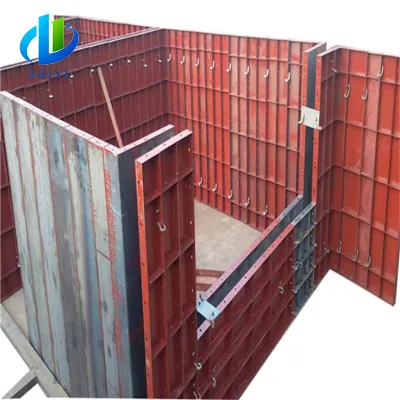


High Strength Construction Formwork for Column Wall Adjustable Size
$62.00 - $150.00
MOQ: 50 Square Meters


Comprehensive Sourcing Guide
Strategic Sourcing Guide for ABS Wall, Column, and Slab Formwork Systems
The global construction industry continues to demand formwork solutions that balance structural integrity with operational efficiency. For buyers specifically researching ABS Wall Column Slab Formwork, the procurement landscape presents a distinct set of technical and commercial variables. This guide synthesizes observed market data to provide a disciplined framework for evaluating suppliers, verifying product specifications, and mitigating supply chain risks. The focus remains on objective analysis of available product attributes rather than generalized market assumptions.
Technical Specifications and Material Composition
When evaluating formwork systems, the primary differentiator is the material composition and its resulting physical properties. The supplied product data indicates a diverse range of materials available in the market, including Plastic, Steel, Steel Wood, and specifically ABS Plastic. For the core keyword of ABS formwork, buyers must scrutinize the specific formulation. One observed standard explicitly lists ABS+Fiber glass as a material composition, suggesting that high-performance ABS systems often incorporate fiber reinforcement to enhance rigidity and impact resistance.
The physical attributes of these systems vary significantly across listings. While some products are described with a Black color, others appear in Red, Blue, Yellow, or White, or offer Customized color options. This variance is not merely aesthetic; it often correlates with specific project requirements for visibility, safety coding, or branding. A critical observation regarding the ABS Plastic variants is their application scope, which is consistently listed for Wall, Column, and Slab Construction.
Load-bearing capabilities are another essential technical parameter. Data points indicate a Load Capacity of 50kN for certain units, while others specify a Fresh Concrete Pressure tolerance of Above 60kN/Sqm. These figures represent the maximum stress the formwork can withstand before failure. Buyers must verify if the specific ABS unit selected matches the hydrostatic pressure calculations of their intended pour. Furthermore, the Unit Weight for some observed systems is approximately 14kg/Sqm, a metric that directly influences labor efficiency and handling requirements on-site.
Compliance, Certification, and Standard Verification
In the construction sector, compliance is non-negotiable. The observed product listings provide a clear snapshot of the certifications currently associated with formwork systems in the supply chain. High-confidence data confirms that CE and ISO certifications are present across multiple product entries. Some listings also include ROHS, indicating compliance with restrictions on hazardous substances, which is increasingly relevant for international projects.
However, buyers must exercise caution regarding the universality of these claims. The data shows that while some products are certified under CE, ISO, others are listed with ISO only, and some have Customized standard status. There is no single universal standard that applies to every listed item. For instance, while one product standard is listed as ABS+Fiber glass, another is marked as Common, and a third as Standard & Customized. This variability necessitates a rigorous verification process where the buyer requests specific certification documents for the exact model number being procured.
The prod_standard field reveals that standards can be Common, Standard & Customized, or specific material-based definitions. Buyers should not assume that a product labeled with "ABS" automatically meets a specific international structural standard unless the certification documentation explicitly links the material to that standard. The presence of Graphic Design and 3D Model Design in the project solution capacity suggests that some suppliers offer digital compliance modeling, which can be a valuable asset for verifying fit and pressure distribution before physical installation.
Cost Drivers and Economic Factors
Understanding the cost structure of ABS formwork requires an analysis of the observed pricing and Minimum Order Quantity (MOQ) ranges. The market data indicates a listed price range spanning from 9.96 USD to 2100 USD. This wide disparity suggests that the cost is heavily dependent on the scale of the unit, the specific configuration (e.g., a single panel versus a complete system), and the complexity of the customization.
The MOQ range is equally broad, extending from 1 to 2000 units. This flexibility allows for different procurement strategies. Small-scale projects or prototype phases may utilize suppliers with an MOQ of 1, while large infrastructure projects requiring 100 Times or 80-120 Times reuse cycles will likely negotiate volumes closer to the 2000-unit threshold to achieve economies of scale.
Several factors drive these costs. The Surface Treatment is a significant variable; options include Painted, Customised, or standard finishes. Customized treatments generally incur higher costs. Additionally, the Packing method, whether Standard Package, Standard Packing, or in Bulk, impacts logistics expenses. Products originating from Jiangsu, Yancheng, or Jiaxing, Zhejiang in China may have different freight implications based on port proximity and regional manufacturing clusters. The Reusable Times is a critical economic driver; systems rated for 5~10 Years Reusable or 100 Times usage offer a lower total cost of ownership compared to single-use alternatives, despite potentially higher upfront unit costs.
Typical Applications and Operational Performance
The versatility of ABS formwork is evidenced by its diverse application listings. The primary use cases identified are Wall, Column, and Slab Construction. Beyond these core structural elements, applications extend to Hotel, Core Tube, and general Column Formwork scenarios. The Type of formwork varies, with specific mentions of Wall Formwork, Column Formwork, and Steel Frame Formwork, indicating that ABS systems are often integrated into hybrid structures or used as specific components within a larger framework.
Operational performance is defined by the Usage metrics. Some products are rated for 100 Times usage, while others specify a range of 80-120 Times. This durability is crucial for high-cycle projects where formwork is stripped and re-used frequently. The Lateral Pressure tolerance of 60kN and Fresh Concrete Pressure above 60kN/Sqm define the operational envelope for these systems. Buyers must ensure that the formwork selected can withstand the specific pour rates and concrete densities of their project.
The Feature of Light Weight is a recurring attribute, which directly correlates to installation speed and reduced labor fatigue. However, the Unit Weight of 14kg/Sqm must be balanced against the Load Capacity requirements. For projects involving Graphic Design or complex Total Solution for Projects, the ability to customize the Model No. (e.g., ADTO-SF, plastic formwork, Common) becomes a key operational advantage, allowing for precise fitting in non-standard geometries.
Supplier Evaluation and Origin Analysis
Evaluating suppliers requires a focus on their geographic origin and solution capabilities. The data identifies China as the primary origin, with specific manufacturing hubs in Jiangsu, Yancheng, and Jiaxing, Zhejiang. While these regions are known for manufacturing prowess, buyers should verify the specific factory capabilities rather than relying on regional generalizations.
Supplier capabilities extend beyond simple manufacturing. The Project Soluction Capacity (sic) includes Graphic Design, 3D Model Design, and Total Solution for Projects. This indicates that advanced suppliers offer engineering support, which is vital for complex formwork applications. When evaluating a supplier, buyers should request evidence of these design capabilities, such as sample 3D models or case studies of previous Wall, Column, and Slab projects.
The Customization attribute is a critical differentiator. Some products offer Customized colors, standards, and surface treatments, while others are Common. A supplier that offers Customized solutions is better positioned to handle unique project requirements, such as specific Formwork Type configurations like B-Form. Buyers should assess the lead time implications of customization versus standard inventory, as custom orders may require longer production cycles.
Quality Control and Long-Term Procurement Considerations
Quality control in formwork procurement hinges on the verification of material consistency and durability claims. The Material listings show a mix of Plastic, Steel, Steel Wood, and ABS Plastic. For ABS systems, the presence of Fiber glass in the standard is a positive indicator of enhanced structural properties. However, buyers must verify that the ABS Plastic used meets the specific Standard requirements for the project, as "ABS" alone does not guarantee a specific grade or impact resistance.
Long-term procurement considerations involve the Reusable Times and Product Packing. Systems designed for 5~10 Years Reusable or 100 Times usage represent a significant investment. To protect this investment, the prod_packing method must be robust. Options like Standard Package or in Bulk must be evaluated for their ability to prevent damage during transit and storage. Damaged formwork reduces the effective reuse cycle, increasing the long-term cost per pour.
Furthermore, the Surface Treatment plays a role in longevity. Painted or Customised surfaces may offer better protection against concrete adhesion and chemical degradation, extending the usable life of the formwork. Buyers should inquire about the maintenance requirements for the specific surface treatment selected. Finally, the Certification status, particularly CE, ISO, and ROHS, should be reviewed annually or per project to ensure continued compliance with evolving international regulations.
Comparative Analysis of Formwork Attributes
To facilitate decision-making, the following table summarizes the key observed attributes of the formwork systems available in the market. This comparison highlights the variability in specifications that buyers must navigate.
| Attribute Category | Observed Variations | Key Verification Point |
|---|---|---|
| Material Composition | Plastic, Steel, Steel Wood, ABS Plastic, ABS+Fiber glass | Confirm specific material grade and reinforcement details. |
| Certification | CE, ISO, ROHS, None listed | Request valid certificate for the specific model number. |
| Load Capacity | 50kN, Above 60kN/Sqm, 60kN Lateral Pressure | Match capacity to calculated concrete pour pressure. |
| Reuse Cycle | 100 Times, 80-120 Times, 5~10 Years | Verify actual cycle count vs. theoretical design life. |
| Color Options | Black, Red, Blue, Yellow, White, Customized | Confirm if color affects material properties or cost. |
| Origin | China (Jiangsu, Yancheng, Jiaxing) | Verify factory location and logistics lead times. |
| Customization | Available, Customized, Standard, Common | Assess impact on lead time and unit price. |
| Application | Wall, Column, Slab, Hotel, Core Tube | Ensure specific application matches project needs. |
Conclusion
Sourcing ABS Wall Column Slab Formwork requires a meticulous approach that prioritizes technical verification over generic marketing claims. The market offers a wide spectrum of options, from standard Common models to highly Customized systems with ABS+Fiber glass reinforcement. Buyers must rigorously validate Load Capacity, Certification status, and Reuse Cycle data against their specific project requirements. By focusing on the observed attributes of Material, Origin, and Project Solution Capacity, procurement teams can build a resilient supply chain that delivers value through durability and operational efficiency. The wide range of prices and MOQs further underscores the need for a tailored procurement strategy that aligns with the scale and complexity of the construction project at hand.
FAQs
What materials are used for ABS Wall Column Slab Formwork?
ABS plastic is the primary material, often reinforced with fiber glass for rigidity. Some systems also combine steel or steel wood components to enhance structural integrity for wall, column, and slab construction applications.
How many times can ABS formwork be reused?
ABS formwork systems are designed for high reuse, typically lasting between 80 to 120 times or up to 100 times per cycle. Certain high-performance units may offer a reusable lifespan of 5 to 10 years depending on maintenance.
Which certifications are available for these formwork systems?
High-confidence listings confirm CE, ISO, and ROHS certifications are available for these products. Buyers should verify specific documents as some units may only hold ISO certification or have customized standard statuses.
Can I customize the color and specifications of the formwork?
Yes, customization is available for colors like red, blue, yellow, or white, as well as standard and customized specifications. Suppliers often provide graphic design and 3D model design services to support these tailored project solutions.
What is the load capacity and lateral pressure tolerance?
Observed units support a load capacity of 50kN and a lateral pressure of 60kN. Fresh concrete pressure tolerance can exceed 60kN per square meter, ensuring stability during wall and column construction pours.
Where are these formwork systems manufactured?
Products originate from China, with specific manufacturing hubs in Jiangsu, Yancheng, and Jiaxing, Zhejiang. Buyers should verify the exact origin to understand logistics and potential lead times associated with these regional factories.