Source ABS Truck Fender Flares with Decorative Screws for Trailer, Truck, and ATV
Explore 30 listings for ABS Truck Fender Flares with Decorative Screws tailored for trailers, trucks, and off-road vehicles. Buyers can compare customization options, certifications like ISO, and delivery times ranging from 7 to 15 days to find suitable suppliers.
Key considerations
Products List


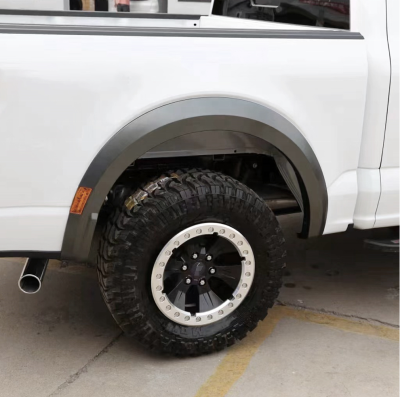


Waterproof Lightweight OEM ODM Custom Truck Mud Flaps Splash Guard Fender
$28.00 - $30.00
MOQ: 500 Pieces


Comprehensive Sourcing Guide
Strategic Sourcing Guide for ABS Truck Fender Flares with Decorative Screws
The procurement of ABS Truck Fender Flares with Decorative Screws represents a specialized segment within the automotive aftermarket and commercial vehicle supply chain. Buyers seeking these components must navigate a landscape defined by material consistency, precise fitment, and rigorous quality assurance. The core keyword suggests a focus on durable plastic construction, specifically Acrylonitrile Butadiene Styrene (ABS), which offers a balance of impact resistance and formability essential for heavy-duty applications. The inclusion of decorative screws indicates a dual requirement for structural integrity and aesthetic customization, a feature often demanded by fleet operators and customization enthusiasts alike. This guide synthesizes observed market data and technical requirements to provide a disciplined framework for sourcing these specific parts without relying on unverified claims or speculative market figures.
Technical Specifications and Material Integrity
When evaluating ABS truck fender flares, the primary technical focus must be on the material composition and dimensional accuracy. The supplied data confirms that the base material for these components is explicitly identified as Plastic, with specific references to ABS in the broader context of truck accessories. A critical observation from the product attributes is the temperature tolerance range, which is specified as -40 to +120 degrees Celsius. This wide operational window is non-negotiable for truck fenders, which are exposed to extreme environmental conditions ranging from sub-zero winter climates to the heat generated by braking systems and engine proximity. Buyers must verify that the specific supplier's ABS formulation maintains structural integrity within this range, as degradation at the lower or upper limits can lead to cracking or warping.
Furthermore, the manufacturing process plays a pivotal role in the final product's quality. The observed data points to "Extrusion" as a relevant process, though for complex fender shapes, injection molding is often the standard. Regardless of the specific method, the "Size" attribute is frequently listed as "Custom" or "Can Be Customized," indicating that off-the-shelf solutions may not fit every vehicle model. The "Fitting Position" varies, with listings covering both "Front Fender" and "Rear Fender" applications, and specific mentions of "Trailer" and "Truck" applications. This variability necessitates a rigorous review of the "prod_model" identifiers, such as kx708, KXH, kx399, kx1007, kx577, and kx139, to ensure compatibility with the buyer's specific fleet or target market. The presence of "Decorative Screws" implies a need for pre-drilled holes or specific mounting hardware that aligns with the aesthetic design, requiring the supplier to provide precise "Installation" guidelines, with "Direct installation" being a preferred attribute for reducing labor costs.
Compliance, Certification, and Standard Verification
In the B2B automotive sector, compliance is not merely a formality but a prerequisite for market access and liability protection. The supplied facts highlight several critical standards and certifications that buyers should prioritize during the supplier evaluation phase. The most frequently observed certification is "ISO," specifically referencing "ISO9001" and "ISO/TS 16949: 2009." The ISO/TS 16949 standard is particularly significant as it is the global technical specification for quality management systems in the automotive industry. A supplier holding this certification demonstrates a commitment to defect prevention, variation reduction, and continuous improvement in the automotive supply chain.
Additionally, the "SGS" certification appears in the data, indicating that third-party testing and verification are available for the products. Buyers should request current SGS test reports to validate claims regarding material strength, UV resistance, and colorfastness, especially given the "Black" and "Red" color options observed. It is important to note that while "customized" standards are listed, relying on internal standards without third-party validation is risky. The "prod_standard" field also mentions dimensions like "2424/2430etc," which likely refers to packaging or specific dimensional tolerances, but these must be cross-referenced with the actual product drawings.
Buyers must also be vigilant about the distinction between "New" and "Used" conditions. The data shows both attributes present in the market. For a procurement strategy focused on reliability and warranty, "New" condition is the only acceptable standard. The presence of "Used" listings in the general market data serves as a reminder to explicitly specify "New" in all purchase orders to avoid receiving refurbished or salvaged parts that may not meet safety or performance expectations.
Cost Drivers and Pricing Structure Analysis
Understanding the cost structure of ABS fender flares requires an analysis of the variables that influence the final unit price. The observed price range in the market spans from 0.45 to 200 USD, a vast disparity that reflects differences in material quality, customization levels, and order volume. The lower end of this spectrum likely corresponds to standard, non-customized sizes with minimal packaging, while the upper end reflects heavy-duty, custom-molded units with specialized decorative hardware and advanced packaging.
The "MOQ" (Minimum Order Quantity) is a significant cost driver, with observed ranges from 1 to 1000 units. Suppliers with an MOQ of "5sets" or "According to the Customer" offer flexibility for smaller buyers, whereas those requiring 1000 units may offer better per-unit economics for large fleet contracts. The "Payment" terms, specifically "T/T" (Telegraphic Transfer) and "L/C" (Letter of Credit), are standard in international trade but can impact cash flow. Buyers should negotiate payment terms that align with their financial cycles, potentially leveraging the "Sample: Free" attribute to validate quality before committing to a large financial transaction.
Packaging costs also contribute to the total landed cost. The data indicates options ranging from "Carton" to "Cartons or Custom" and "in Cartons or as Your Request." Custom packaging, while increasing the unit cost, can reduce damage rates during transit and enhance brand presentation, which is crucial for B2B buyers selling to end consumers. The "Business Type" being listed as "Factory" or "Manufacturer" suggests a direct sourcing opportunity, potentially eliminating middleman markups, but buyers must verify the factory's actual capacity and quality control infrastructure.
Typical Applications and Fitment Verification
The versatility of ABS fender flares is evident in the diverse applications listed in the product data. The primary applications identified are "Truck" and "Trailer," with specific mentions of "Front Fender" and "Rear Fender" positions. This indicates that the product line is designed to accommodate a wide range of vehicle types, from light commercial trucks to heavy-duty trailers. The "Function" attribute, described as "Waterproof Dustproof," highlights the protective nature of these flares, which are essential for preventing debris, water, and dust from damaging the vehicle body or suspension components.
The "Fitting Position" data shows that some products are designed for specific positions, while others are versatile enough for both front and rear applications. This distinction is critical for procurement planning. A buyer sourcing for a mixed fleet must ensure that the supplier can provide the correct "prod_model" for each vehicle type. For instance, model "kx708" might be designated for rear fenders, while "KXH" could be for front applications. The "Installation" method is noted as "Direct installation," which implies that the flares are designed to bolt directly onto the existing mounting points of the truck or trailer without requiring extensive modification. This feature significantly reduces installation time and labor costs, making it a key selling point for fleet managers.
Supplier Evaluation and Operational Capabilities
Selecting the right supplier is as important as selecting the right product. The data provides several indicators of supplier capability, including "Business Type" (Factory/Manufacturer), "Location" (China, specifically Hebei and Guangdong), and "Service" offerings (OEM Service). The presence of "OEM Service" suggests that suppliers are willing to customize products based on the buyer's design requirements, which is essential for brands looking to differentiate their offerings.
The "Delivery Time" is consistently listed as "7-15 Days" or "7-15 Days After Order Confirmed." This lead time is relatively short, indicating efficient production cycles, but buyers must account for the time required for order confirmation and potential shipping delays. The "Place of Origin" being in Mainland China, specifically Hebei and Guangdong, provides context for the supply chain. Hebei is known for its manufacturing base, while Guangdong is a hub for electronics and precision manufacturing. Buyers should verify the specific factory location to ensure it aligns with their logistical preferences and risk management strategies.
The "Logo" attribute, which includes "Printed," "Custom," and "Printed or Lettered," offers opportunities for branding. Buyers can request custom logos to be printed on the flares or packaging, enhancing brand visibility. However, the quality of the printing must be verified to ensure it does not fade or peel over time, especially given the "Waterproof Dustproof" function which implies exposure to harsh environments.
Quality Control and Long-Term Procurement Strategy
Maintaining quality consistency is paramount in long-term procurement. The "Condition" of the product must be strictly defined as "New," and the "Standard" must be verified against ISO/TS 16949: 2009 and SGS certifications. Buyers should implement a robust quality control protocol that includes pre-shipment inspections, random sampling, and verification of the "Temperature" tolerance range. The ability of the supplier to provide "Free" samples is a valuable asset for initial quality testing.
Long-term procurement considerations also involve the scalability of the supply chain. The "MOQ" flexibility allows buyers to start with smaller orders and scale up as demand grows. The "Custom" size and "Custom" packing options ensure that the supply chain can adapt to changing market needs. However, buyers must be cautious of the "customized" standard attribute, ensuring that any custom specifications are clearly documented and agreed upon in the contract to avoid disputes.
The following table summarizes the key attributes and verification points for sourcing ABS truck fender flares:
| Attribute Category | Observed Data Points | Verification Requirement |
|---|---|---|
| Material | Plastic, ABS | Verify temperature range (-40 to +120°C) and impact resistance. |
| Certification | ISO, ISO9001, ISO/TS 16949: 2009, SGS | Request valid certificates and recent test reports. |
| Application | Truck, Trailer, Front/Rear Fender | Confirm fitment for specific vehicle models using prod_model. |
| Condition | New, Used | Explicitly specify "New" in purchase orders. |
| Customization | Size, Logo, Packing, Standard | Define all custom requirements in the technical drawing. |
| Lead Time | 7-15 Days | Confirm "After Order Confirmed" timeline and shipping duration. |
| Payment | T/T, L/C | Negotiate terms based on order volume and relationship. |
| Origin | China (Hebei, Guangdong) | Verify factory location and audit if necessary. |
In conclusion, sourcing ABS Truck Fender Flares with Decorative Screws requires a meticulous approach that balances technical specifications, compliance, and cost efficiency. By leveraging the observed data and adhering to the verification protocols outlined above, buyers can establish a reliable supply chain that delivers high-quality products tailored to their specific needs. The focus must remain on validating the supplier's capabilities against the rigorous standards of the automotive industry, ensuring that every component meets the demands of durability, safety, and aesthetic appeal.
FAQs
What certifications do these ABS truck fender flares hold?
These flares typically hold ISO9001 and ISO/TS 16949: 2009 certifications. Third-party SGS verification is also available for material strength and durability. Buyers should request current test reports to confirm compliance with automotive quality standards before placing large orders.
Can I get custom sizes for specific truck models?
Yes, custom sizes are available and can be tailored to specific requirements. The product specifications list size as customizable, allowing for precise fitment on various truck and trailer models. Buyers should provide exact dimensions to the manufacturer for accurate production.
How long does delivery take after order confirmation?
Delivery time is typically 7 to 15 days after the order is confirmed. This lead time applies to standard production cycles for these plastic components. Buyers should account for this window when planning fleet maintenance schedules or inventory replenishment.
What is the minimum order quantity for these fender flares?
The minimum order quantity ranges from 5 sets to 1000 units depending on the supplier. Some vendors offer flexible MOQs according to customer needs, while others require higher volumes for custom runs. Buyers should negotiate terms based on their specific fleet size.
Are these flares suitable for extreme temperature conditions?
Yes, the plastic material is rated for temperatures between -40 and +120 degrees Celsius. This wide range ensures structural integrity in harsh winter climates and hot engine environments. This specification makes them suitable for heavy-duty truck and trailer applications.
Which payment methods are accepted for bulk orders?
Accepted payment methods include T/T and L/C for international transactions. These standard terms facilitate secure financial exchanges between buyers and manufacturers. Buyers should confirm specific payment schedules with the factory before finalizing the purchase agreement.
Can the product logo be customized for branding?
Yes, logo customization is available with options for printed or lettered designs. Buyers can request custom logos on the flares or packaging to enhance brand visibility. The printing quality should be verified to ensure durability against waterproof and dustproof conditions.