Source Acai Berry Extract Powder for Food Health Care Products
Compare 30 listings of Acai Berry Extract Powder from verified suppliers in China. Buyers can review specifications like purity, packaging, and certifications to find suitable options for food, health care products, and medicine applications.
Key considerations
Products List


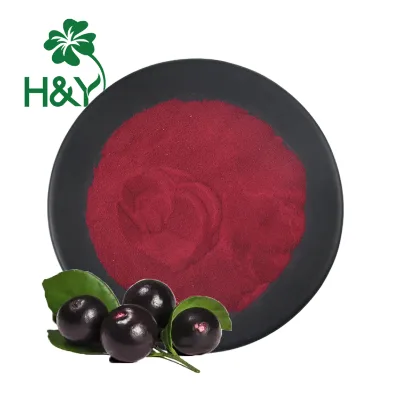
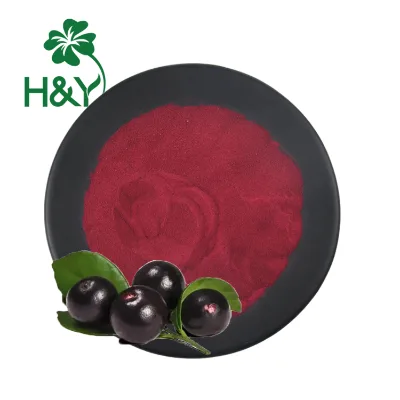
Natural Antioxidant Fruit Extract Polyphenols Acai Berry Extract Anthocyanidins
$10.00 - $100.00
MOQ: 25 kg


Comprehensive Sourcing Guide
Strategic Sourcing Guide for Acai Berry Extract Powder
Understanding Product Variants and Technical Specifications
When initiating a procurement strategy for Acai Berry Extract Powder, the first critical step is distinguishing between the various forms in which this botanical ingredient is supplied. The market offers distinct product categories that serve different manufacturing needs, ranging from simple fruit powders to concentrated extracts. Buyers must carefully review the product model and specification sheets to ensure alignment with their formulation requirements. The core keyword "Acai Berry Extract Powder" often encompasses several variations, including standard fruit powders, juice powders, and concentrated extracts with specific ratio standards.
Technical specifications vary significantly across these variants. For instance, some listings describe the product simply as "Acai Berry Powder" or "Acai Berry Juice Powder," characterized by a red or red-purple fine powder appearance. These forms typically maintain the natural color profile of the fruit, described variously as "Red Powder" or "Purple Red Powder." In contrast, extract forms, such as those labeled "LM-Acai Berry Extract," often adhere to specific concentration ratios. The supplied data indicates standards such as "10:1" or "20:1," which denote the ratio of raw material to final extract. This ratio is a vital technical parameter for formulators, as it directly influences the potency and dosage required in the final product.
Furthermore, the physical state and solubility are paramount for application compatibility. The observed product attributes confirm that the material is generally in a "Powder" state, with specific styles noted as "Instant Powder." Solubility is another key technical trait; the available data specifies that the product is "Water-Soluble," a characteristic that simplifies integration into liquid formulations like healthy drinks or functional beverages. However, buyers should verify if the specific batch or variant meets this solubility requirement, as not all fruit powders are guaranteed to be fully water-soluble without further processing. The active substance content is another critical metric, with some high-confidence facts indicating an active substance content of greater than 90%, while others reference a standard purity of 99%. These discrepancies highlight the necessity of verifying the assay method and specific content claims for each supplier before finalizing a purchase order.
Compliance, Certification, and Regulatory Standards
Navigating the regulatory landscape is essential for sourcing Acai Berry Extract Powder, particularly when the intended application involves food, health care products, or medicine. The global supply chain for botanical ingredients is subject to rigorous scrutiny, and suppliers must demonstrate adherence to international quality management systems. Based on the available market data, several certifications are frequently associated with reputable suppliers in this sector. These include ISO, HACCP, FDA, BRC, and RoHS. The presence of these certifications suggests that the supplier has undergone audits for food safety management, hazard analysis, and regulatory compliance in major markets like the United States and Europe.
However, buyers must exercise caution and treat certification claims as observations rather than absolute guarantees for every listed product. The data shows that while some product entries list a comprehensive suite of certifications including ISO, HACCP, FDA, BRC, and RoHS, others may only list ISO or specific certificates like COA (Certificate of Analysis) and MSDS (Material Safety Data Sheet). This variance underscores the importance of requesting current, valid certification documents for the specific batch or facility supplying the material. A supplier claiming "FDA" status should be able to provide proof of registration or facility listing, as "FDA" is not a certification granted to the product itself but rather a regulatory status of the facility.
Additionally, the standard of the product is a critical compliance factor. The observed data mentions standards such as "99%" and concentration ratios like "10:1" or "20:1." These standards often align with pharmacopoeia or industry-specific quality benchmarks. For applications in the medicine or health care sectors, the "Food Grade" designation is a baseline requirement, but higher-grade specifications may be necessary. Buyers should verify that the supplier's production standards align with the regulatory requirements of the destination country. For instance, if the product is destined for the European market, BRC certification becomes particularly relevant. Similarly, for the North American market, FDA compliance and HACCP implementation are critical. The absence of a specific certification in a product listing does not necessarily indicate non-compliance, but it requires the buyer to initiate a verification process to ensure the supplier meets the necessary legal and safety thresholds.
Cost Drivers and Pricing Structure Analysis
The pricing structure for Acai Berry Extract Powder is influenced by a complex interplay of factors, including the concentration ratio, purity levels, packaging format, and the scale of the order. The observed market data indicates a wide price range, with listed prices varying from 1 to 200 USD. This broad spectrum reflects the diversity of product grades and the varying MOQ (Minimum Order Quantity) requirements. Understanding these cost drivers is essential for budgeting and negotiating effective procurement contracts.
One of the primary cost drivers is the extraction ratio. Products labeled with a "10:1" ratio generally command a different price point compared to those with a "20:1" ratio. Higher concentration ratios imply a more intensive extraction process, requiring more raw material to produce a unit of extract, which naturally increases the cost per kilogram. Additionally, the purity of the active substances plays a significant role. Listings that specify an active substance content of greater than 90% or a standard of 99% may be priced higher than those with lower purity claims. Buyers should correlate the price with the assay results and the specific concentration ratio to ensure they are paying for the actual potency and quality they require.
Packaging and logistics also contribute to the final cost. The data shows that products are available in various packaging formats, such as "1kg/Aluminum Foil Bag," "1kg/Bag," or "25kg/Drum" with inner aluminum foil bags. The choice of packaging affects the unit price; smaller packaging units like 1kg bags are typically more expensive per kilogram due to higher labor and material costs per unit, whereas bulk packaging like 25kg drums offers a more economical option for large-scale industrial buyers. Furthermore, the MOQ is a critical factor in pricing. The observed MOQ range spans from 1kg to 100kg, with some specific listings noting an MOQ of 1kg. Lower MOQs often come with a premium price, while larger orders may qualify for volume discounts. Buyers should calculate the total landed cost, including shipping methods like FedEx, UPS, or special lines, to get a comprehensive view of the financial commitment.
Typical Applications and Formulation Considerations
Acai Berry Extract Powder is a versatile ingredient with a wide range of applications across multiple industries, primarily driven by its functional properties and nutritional profile. The observed product attributes highlight applications in health care products, food, and medicine. This versatility allows manufacturers to incorporate the extract into diverse product categories, from dietary supplements to functional beverages and confectionery items.
In the health care and supplement sector, the extract is frequently utilized in capsule and tablet forms. The data explicitly mentions "Application Form: Capsule" and "Application Form: Capsule, Tablet," indicating its suitability for solid dosage forms. The "Superfood" and "Healthy Drink" functional claims associated with the product suggest its popularity in the wellness market, where consumers seek natural sources of antioxidants and nutrients. The "Instant Powder" style further enhances its utility in beverage formulations, as it dissolves readily in water, facilitating the creation of ready-to-drink products or mixable powders.
For the food industry, the red or red-purple color of the powder makes it an attractive natural colorant for various applications. The "Food Grade" status ensures its safety for consumption in processed foods. However, formulators must consider the stability of the color and the active compounds under different processing conditions. The storage requirements, such as "Cool Dry Area" or "Normal" storage, are crucial for maintaining the integrity of the product during shelf life, which is observed to be between 12 months and 2 years. The solubility of the powder is a key consideration for liquid applications, ensuring that the final product maintains a consistent texture and appearance. Additionally, the "Other Name" attributes, such as "Juice Powder" or "Fruit Powder," indicate that the ingredient can be used to enhance the flavor profile of fruit-based products, adding a distinct acai berry taste without the need for fresh fruit processing.
Supplier Evaluation and Quality Control Protocols
Evaluating potential suppliers for Acai Berry Extract Powder requires a rigorous assessment of their quality control systems and production capabilities. The reliability of the supply chain is paramount, especially when dealing with botanical ingredients that can vary in composition based on harvest conditions and processing methods. Buyers should prioritize suppliers who provide comprehensive documentation, including Certificates of Analysis (COA) and Material Safety Data Sheets (MSDS). The data indicates that "COA/MSDS" are common certifications, which serve as essential tools for verifying the identity, purity, and safety of the product.
Quality control protocols should include specific testing methods to ensure consistency. The observed data lists "HPLC" (High-Performance Liquid Chromatography), "UV" (Ultraviolet Spectroscopy), and "HPLC-MS" (Mass Spectrometry) as assay methods. These advanced analytical techniques are critical for quantifying the active substances and detecting potential contaminants. Buyers should request test results that utilize these methods to verify the claimed purity and concentration ratios. The "Test Method: HPLC" and "Assay Method: UV, HPLC, HPLC-MS" entries suggest that high-quality suppliers employ sophisticated laboratory equipment to maintain product integrity.
Furthermore, the supplier's origin and storage practices are important indicators of quality. The data mentions "China" and "Shaanxi" as production origins. While these locations are significant hubs for botanical extraction, buyers should verify the specific facility's adherence to Good Manufacturing Practices (GMP). Storage conditions, such as "Cool Dry Area," are vital for preserving the shelf life and preventing degradation of the active compounds. Suppliers who demonstrate transparency in their sourcing and processing methods, along with a commitment to continuous quality improvement, are more likely to deliver consistent and high-quality products. Buyers should also consider the supplier's ability to handle customization requests, as the data indicates that "Customization: Available" is a common feature, allowing for tailored solutions to meet specific client needs.
Long-Term Procurement and Supply Chain Resilience
Establishing a long-term procurement strategy for Acai Berry Extract Powder involves more than just securing a single transaction; it requires building a resilient supply chain capable of adapting to market fluctuations and regulatory changes. The shelf life of the product, observed to be greater than 12 months and up to 2 years, provides a buffer for inventory management, but it also necessitates careful planning to avoid stock obsolescence. Buyers should develop a demand forecasting model that accounts for seasonal variations in raw material availability and potential supply chain disruptions.
Payment terms and shipping logistics are also critical components of long-term procurement. The data lists various payment methods, including "Tt" (Telegraphic Transfer), "Paypal," and "Western Union," as well as shipping options like "FedEx," "UPS," and "Specially Line." Negotiating favorable payment terms and establishing reliable shipping partnerships can mitigate financial risks and ensure timely delivery. Additionally, the ability of the supplier to offer different packaging options, from small 1kg bags to bulk 25kg drums, allows buyers to optimize their inventory levels and reduce storage costs.
Finally, maintaining a strong relationship with suppliers is essential for long-term success. Suppliers who offer customization and are responsive to quality inquiries can become strategic partners in product development. Buyers should engage in regular communication to stay informed about changes in product standards, certification renewals, and new extraction technologies. By fostering a collaborative relationship, buyers can ensure a steady supply of high-quality Acai Berry Extract Powder that meets their evolving business needs and maintains compliance with global regulatory standards.
FAQs
What certifications do Acai Berry Extract Powder suppliers typically hold?
Suppliers often hold ISO, HACCP, FDA, BRC, and RoHS certifications. Some listings also provide COA and MSDS documents. Buyers should verify specific batch certificates to ensure compliance with their target market regulations.
How is the concentration ratio defined for acai berry extract products?
Concentration ratios like 10:1 or 20:1 indicate the amount of raw material used per unit of extract. Higher ratios imply greater potency and may affect pricing. This standard helps formulators calculate the correct dosage for their specific applications.
Which packaging formats are available for bulk orders of this powder?
Products are available in 1kg aluminum foil bags or 25kg drums with inner foil lining. Smaller bags suit sample orders while drums are economical for large-scale production. The packaging ensures protection during shipping and storage.
Can Acai Berry Extract Powder be used in capsule and tablet forms?
Yes, the powder is suitable for capsule and tablet application forms. It is also compatible with health care products and food items. The instant powder style facilitates easy integration into various solid dosage formulations.
What is the typical shelf life for Acai Berry Extract Powder?
The shelf life ranges from over 12 months up to 2 years. Proper storage in a cool, dry area is required to maintain quality. Buyers should check specific product dates to ensure freshness upon receipt.
How does the MOQ vary for different acai berry extract variants?
Minimum Order Quantities typically range from 1kg to 100kg depending on the supplier and product type. Some vendors offer 1kg MOQs for samples while bulk drums may require higher quantities. Pricing often adjusts based on the order volume.
What active substance content levels are common in this extract?
Active substance content is often greater than 90% with some standards reaching 99%. Purity levels vary by product model and extraction method. Buyers should request assay results using HPLC or UV methods to verify specific content claims.