Source Acid Alkali Resistant Spray Pump for Electroplating, Wastewater, PCB
Find and compare 30 Acid Alkali Resistant Spray Pump options suitable for electroplating, wastewater treatment, and PCB applications. Buyers can review specifications like motor power, head height, and material composition to select the right pump for their industrial needs.
Key considerations
Products List


Reliable Lotion Application High Quality Spray Mist Pump with Efficient Spray
$0.09 - $0.10
MOQ: 50000 Pieces


Premium Quality Dispenser, Sprayer Pump with Heavy Duty Spray Pump for Lotion
$0.09 - $0.10
MOQ: 50000 Pieces

Premium Sprayer Pump with Reliable Nozzle & Efficient Fine Mist Output
$0.09 - $0.10
MOQ: 50000 Pieces

Durable High Performance Versatile Liquid Pump for Quality Sprayer Dispensing
$0.09 - $0.10
MOQ: 50000 Pieces


Premium Hot Sale Trigger Sprayer Pump for Effective Cleaning Solutions
$0.06 - $0.07
MOQ: 20000 Pieces


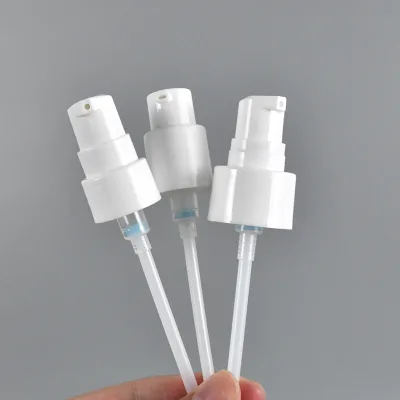


$0.06 - $0.06
MOQ: 10000 Pieces


Comprehensive Sourcing Guide
Strategic Sourcing Guide for Acid Alkali Resistant Spray Pumps
Understanding Technical Specifications and Material Compatibility
When sourcing acid alkali resistant spray pumps, the primary technical challenge lies in matching the pump's construction materials to the specific chemical environment. The supplied product data indicates a diverse range of elastomer and body materials designed to withstand corrosive agents. Buyers must prioritize the selection of pump body materials, which are explicitly listed as F (FRPP), C (Cfrpp), a (CPVC), and P (PVDF). These polymers offer varying degrees of resistance to strong acids and alkalis, making them suitable for industrial applications where metal corrosion is a significant risk. The choice between FRPP, Cfrpp, CPVC, and PVDF should be dictated by the specific pH levels and temperature constraints of the fluid being handled.
Furthermore, the elastomer materials used in seals and diaphragms are critical for maintaining integrity under chemical stress. The available options include N (NBR) and E (EPDM). NBR is generally effective for a broad range of oils and fuels, while EPDM offers superior resistance to hot water, steam, and certain acids and alkalis. Selecting the correct elastomer is not merely a preference but a safety requirement to prevent leaks and equipment failure. The impeller design also plays a pivotal role; the data specifies a "Closed" impeller type and a "Single Suction" configuration. This design is typical for high-efficiency transfer of liquids but requires careful alignment with the system's head and flow requirements.
The driving type for these units is consistently identified as "Motor," with power options ranging from 1/2 HP to 2 HP. This electric power source ensures consistent operation in automated settings. However, the working pressure is classified as "High Pressure Pump," which necessitates rigorous engineering checks on the casing and sealing mechanisms. The maximum head capacity varies significantly across the product pool, with some units exceeding 150 meters while others are rated below 10 meters. This wide variance suggests that buyers must clearly define their vertical lift requirements before selecting a model. The position of the pump shaft is noted as "Horizontal," which influences the installation footprint and piping configuration. Additionally, the port sizes available range from 1 inch to 2 inches, corresponding to specific flow capacities, with some models supporting a maximum capacity exceeding 400 liters per minute.
Compliance, Certification, and Regulatory Standards
In the B2B procurement of industrial fluid handling equipment, verifying compliance with international standards is non-negotiable. The product data explicitly lists CE and ISO certifications as available attributes for these pumps. The CE marking indicates conformity with health, safety, and environmental protection standards for products sold within the European Economic Area. The ISO certification, specifically mentioned in the context of the product origin, suggests adherence to quality management systems that ensure consistent manufacturing processes. Buyers should not assume that every unit in a supplier's catalog carries these certifications; rather, they must request specific certification documents for the exact model being procured.
The origin of the products is a critical factor in understanding the regulatory landscape. The data points to two primary manufacturing locations: Suzhou, China (Mainland), and Ningbo. These regions are known for robust manufacturing capabilities but require strict quality assurance protocols to ensure that the exported goods meet the destination country's specific regulatory requirements. For instance, while the data mentions "ISO" and "CE," it does not specify the exact ISO standard number (e.g., ISO 9001) or the specific CE directive (e.g., Machinery Directive 2006/42/EC). Therefore, procurement teams must verify the exact standard numbers and the validity of the certificates with the issuing bodies.
Another aspect of compliance involves the product standards themselves. The data notes that the product standard can be "Customized" or adhere to specific dimensions like "18mm" for certain components. This variability implies that there is no single universal standard for all units in this category. Buyers must ensure that the supplier's internal standards align with their own operational safety requirements. The "Customized" nature of the standard also suggests flexibility in design, which is beneficial for unique applications but requires clear documentation to avoid ambiguity in the final product specifications.
Cost Drivers and Pricing Structure Analysis
The pricing landscape for acid alkali resistant spray pumps is highly variable, influenced by material composition, customization levels, and order volume. The observed price range spans from $0.01 to $971.42, a disparity that reflects the difference between small-scale components, such as sprayers, and larger industrial pump assemblies. This wide range indicates that buyers must look beyond the unit price to understand the total cost of ownership. The lower end of the spectrum likely corresponds to smaller, disposable, or less complex units, while the higher end represents robust, multi-stage, high-pressure industrial pumps with advanced material constructions.
Material costs are a primary driver of price variation. Pumps constructed with PVDF or specialized Cfrpp materials will inherently cost more than those made from standard PP or FRPP due to the higher raw material costs and processing requirements. Additionally, the motor power is a significant cost factor; units with 2 HP motors will be priced higher than those with 1/2 HP motors, assuming all other factors remain constant. The complexity of the pump design, such as the "Multistage Pump" configuration which implies a higher head capability, also adds to the manufacturing cost.
Order volume plays a crucial role in determining the final unit price. The data reveals a wide MOQ range from 1 to 50,000 units. For buyers seeking large quantities, the ability to negotiate lower unit prices is evident, especially given the "Customization" availability. However, specific MOQs for color customization are noted at 20,000 pieces, which is a significant threshold for buyers requiring branded or specific color-coded pumps. The "Color MOQ" of 20,000 pieces suggests that color variations are a premium feature that requires substantial production runs to be economically viable. Buyers must balance their need for customization against the financial impact of meeting these high volume thresholds.
Typical Applications and Industry Use Cases
The versatility of acid alkali resistant spray pumps is evident in the diverse range of applications listed in the product data. These units are explicitly designed for use in electroplating, PCB manufacturing, and wastewater treatment. In electroplating and PCB industries, the pumps must handle aggressive chemical baths containing strong acids and alkalis, making the corrosion-resistant materials like PVDF and CPVC essential. The "Recyclable" and "Degradable" features mentioned for some units suggest an environmental consideration, which is increasingly important in these sectors due to strict waste disposal regulations.
Beyond industrial manufacturing, the data indicates applications in travel, personal care, and beauty products. This suggests a dual market presence where the same technology is adapted for smaller, consumer-facing spray mechanisms. The "Disposable" feature for certain models aligns with the hygiene requirements of the personal care industry, where single-use or easily replaceable components are preferred. The "Pump Sprayer" sealing type further supports this application, indicating a design optimized for fine misting or controlled dispensing in cosmetic and cleaning product packaging.
The high-pressure capability and large capacity (exceeding 400 L/min) make these pumps suitable for large-scale circulating systems and condensate handling. The "Condensate Pump" and "Slurry Pump" usage tags highlight their utility in heavy-duty environments where abrasive or dense fluids are present. The "Circulating Pump" designation implies a role in closed-loop systems, such as cooling towers or chemical recycling processes, where continuous flow and reliability are paramount. Buyers should match the specific application requirements, such as flow rate and head pressure, with the pump's technical specifications to ensure optimal performance.
Supplier Evaluation and Sourcing Strategy
Evaluating suppliers for acid alkali resistant spray pumps requires a multi-faceted approach that goes beyond simple price comparison. The data highlights that customization is "Available" and "Acceptable," indicating that suppliers are likely willing to adapt products to specific client needs. However, this flexibility must be managed carefully. Buyers should assess the supplier's ability to maintain quality while accommodating customizations, particularly regarding the "Customized" product standard and specific material selections.
The origin of the products, specifically Suzhou and Ningbo, provides insight into the supply chain dynamics. These regions are hubs for plastic and pump manufacturing, offering a competitive advantage in terms of production capacity and cost efficiency. However, buyers must verify the supplier's logistical capabilities, as the "Delivery Time" is noted as 25 days for certain items. This lead time can vary significantly based on the level of customization and the current production load. The "Wooden Case Freighter Transport" or "Carton" packing options suggest that the supplier offers flexible packaging solutions, which is crucial for protecting sensitive equipment during international shipping.
When evaluating suppliers, buyers should also consider the "Feature" attributes such as "Recyclable" and "Degradable." These features may be marketing claims or actual product characteristics, and verification is necessary. A reputable supplier will provide evidence of these claims, such as material safety data sheets (MSDS) or third-party testing reports. Additionally, the "Sealing Type" of "Pump Sprayer" and the "Closure Type" of "Screw Cap" for certain models indicate a focus on specific functional requirements. Buyers should ensure that the supplier has a proven track record in manufacturing these specific components to avoid compatibility issues.
Quality Control and Long-Term Procurement Considerations
Ensuring long-term reliability requires a robust quality control (QC) framework. The "High Pressure Pump" classification and the "Multistage Pump" design demand rigorous testing to prevent catastrophic failure under operational stress. Buyers should insist on pre-shipment inspections that verify the integrity of the pump casing, the alignment of the impeller, and the performance of the sealing mechanisms. The "Closed" impeller and "Single Suction" design require precise manufacturing tolerances to maintain efficiency and prevent cavitation.
The "Frequency" of operation, listed as 50 Hz and 60 Hz, indicates that these pumps are designed for global markets. Buyers must ensure that the motor and electrical components are compatible with the local power grid standards. The "Electric Pump" and "Electric" power attributes confirm the reliance on electrical systems, which must be certified for safety in the destination country. The "Start Up" mechanism being "Electric" implies the need for reliable control systems, which should be tested for consistent performance.
Long-term procurement considerations also include the availability of spare parts and maintenance support. The "Customization" aspect suggests that some components may be unique to the buyer's order, potentially complicating future repairs. Buyers should negotiate for a supply of critical spare parts, such as seals, impellers, and motor components, as part of the initial procurement agreement. The "Recyclable" feature of the materials also offers an opportunity for sustainability initiatives, where end-of-life pumps can be processed according to local environmental regulations.
Final Procurement Recommendations and Verification Checklist
To conclude the sourcing process, buyers should adopt a verification checklist that aligns with the specific data points provided. This checklist ensures that all critical parameters are met before finalizing a purchase. The following table summarizes the key verification points based on the observed product data:
| Verification Category | Key Attributes to Confirm | Data Source Reference |
|---|---|---|
| Material Compatibility | Body: FRPP, Cfrpp, CPVC, PVDF; Elastomer: NBR, EPDM | prod_prop.Pump Body Material, prod_prop.Elastomer Material |
| Performance Specs | Max Head: >150m or <10m; Capacity: >400 L/min | prod_prop.Max.Head, prod_prop.Max.Capacity |
| Certification | CE, ISO (Verify specific standard numbers) | prod_prop.Certification |
| Customization | Standard: Customized; Color MOQ: 20,000 PCS | prod_prop.prod_standard, prod_prop.Color MOQ |
| Logistics | Origin: Suzhou/Ningbo; Delivery: 25 days; Packing: Wooden/Carton | prod_prop.prod_origin, prod_prop.Delivery Time, prod_prop.prod_packing |
| Application Fit | Electroplating, PCB, Wastewater, Personal Care | prod_prop.Application |
By systematically addressing these categories, buyers can mitigate risks associated with material failure, regulatory non-compliance, and logistical delays. The "Customized" nature of the product standard and the wide range of applications require a tailored approach to each procurement project. Buyers should engage in detailed technical discussions with suppliers to ensure that the selected pump model aligns perfectly with their operational requirements. Ultimately, the success of the procurement lies in the ability to balance technical specifications, cost efficiency, and long-term reliability while adhering to the strict constraints of the supply chain.
FAQs
What materials are used for Acid Alkali Resistant Spray Pump bodies?
Pump bodies are constructed from FRPP, Cfrpp, CPVC, or PVDF polymers to ensure corrosion resistance. These materials are selected based on the specific chemical environment and pH levels of the fluid being handled to prevent equipment failure.
Which certifications are available for these industrial pumps?
Available certifications include CE and ISO marks to verify compliance with safety and quality standards. Buyers must request specific documentation for the exact model, as not every unit in a catalog automatically carries these certifications.
Can I customize the product standard and packaging for orders?
Yes, customization is available for product standards and packaging options like wooden cases or cartons. Buyers should note that color customization requires a minimum order quantity of 20,000 pieces to be economically viable.
What is the maximum head capacity for high-pressure models?
High-pressure models can achieve a maximum head exceeding 150 meters, while others are rated below 10 meters. Buyers must define their vertical lift requirements clearly to select the correct model for their specific application needs.
How long is the delivery time for these pump units?
The standard delivery time is approximately 25 days for most orders. This lead time may vary depending on the level of customization required and the current production load at the manufacturing facility in Suzhou or Ningbo.
What elastomer materials are used for seals and diaphragms?
Seals and diaphragms utilize NBR or EPDM elastomers to maintain integrity under chemical stress. EPDM offers superior resistance to hot water and certain acids, while NBR is effective for a broad range of oils and fuels.
Which industries commonly use these acid alkali resistant spray pumps?
These pumps are commonly used in electroplating, PCB manufacturing, and wastewater treatment applications. They are also adapted for travel, personal care, and beauty products where disposable or recyclable features are required for hygiene.