Source Adjustable Rope Braided Bracelet for Gifts, Events, and Decor
Find 30 Adjustable Rope Braided Bracelet options from verified manufacturers. Buyers can compare styles, materials, and customization features to select the right wristbands for advertising, formal occasions, or general decoration.
Key considerations
Products List


Length Adjustable Hand Braided Red Rope Buckle Bracelet for Men and Women
$0.59 - $0.59
MOQ: 5000 Pieces

Woven Friendship Braided Red Rope with Diamonds Handmade Braided Charm Adjustable Bracelet
$1.21 - $1.23
MOQ: 500 Pieces
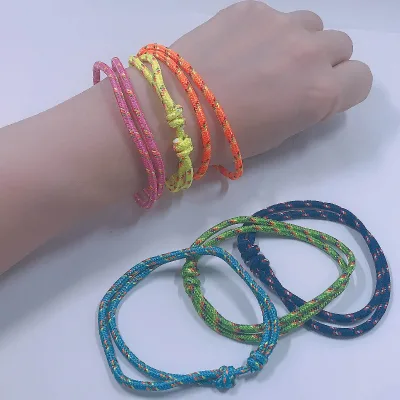


Handmade Fashionable 26 Letters Adjustable Rope Bracelet for Trendy Accessories
$0.14 - $0.25
MOQ: 12 Pieces


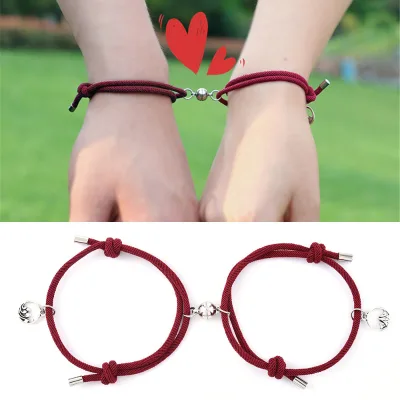
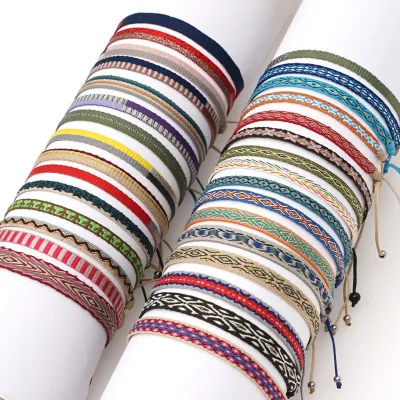
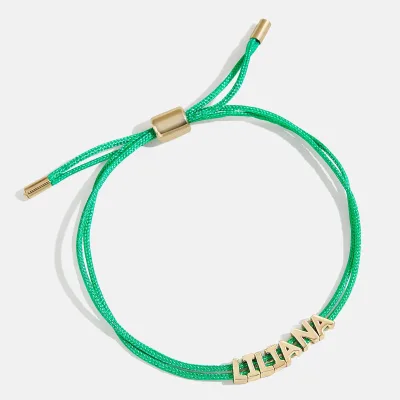


Paracord Bracelet with Plastic Whistle Buckle, Promotional Gift Bracelet
$0.50 - $0.53
MOQ: 3000 Pieces


Style Simple Beaded Bracelet Elastic Stacked Bracelet Adjustable Bracelets
$1.25 - $2.15
MOQ: 60 Pieces
Comprehensive Sourcing Guide
Strategic Sourcing Guide for Adjustable Rope Braided Bracelets
Navigating the global market for adjustable rope braided bracelets requires a disciplined approach that balances aesthetic versatility with rigorous supply chain verification. For procurement professionals, the core keyword "Adjustable Rope Braided Bracelet" represents a category defined by material diversity, customizable sizing, and broad application potential ranging from promotional giveaways to fashion accessories. The following guide synthesizes observed market data and technical requirements to assist buyers in establishing a robust sourcing strategy without relying on unverified claims or speculative data.
Technical Specifications and Material Variability
The technical landscape of adjustable rope braided bracelets is characterized by significant variation in material composition and dimensional standards. Buyers must first distinguish between the structural requirements of the product. Observed data indicates a spectrum of materials, including polyester for woven, colorful options and stainless steel for more durable, metallic variants. The choice of material directly influences the manufacturing technique, with "woven" being a documented method for creating the braided texture, while other iterations may rely on different assembly processes.
Dimensional consistency is a critical technical parameter. Market observations reveal specific standard dimensions, such as a diameter range of 10-13cm, 13-15cm, 15-17cm, and 17-19cm, with a consistent band width of 6mm for certain models. Other specifications point to single package sizes as small as 20x0.3x0.03 cm, suggesting a highly compact and lightweight product profile, with a recorded single gross weight of 0.005 kg. Conversely, some product lines list dimensions like 21cm-26cm (8.27-10.24 inches) or specific widths of 0.5cm by 32cm. This variance necessitates that buyers do not assume a universal size standard but rather verify the specific model number against the required fit for the target demographic.
The adjustability feature, central to the product's utility, is often achieved through specific design elements. While the exact mechanism (such as sliding knots or metal clasps) varies by model, the "Universal" suitability attribute suggests that the design accommodates a wide range of wrist sizes. Buyers should request technical drawings or physical samples to confirm the adjustment range, ensuring it meets the needs of the intended user base, whether for children, adults, or the elderly.
Compliance, Certification, and Safety Standards
In the realm of B2B procurement, compliance is not merely a formality but a prerequisite for market entry. When sourcing braided bracelets, particularly those intended for general consumer use or promotional distribution, verifying adherence to safety standards is essential. The supplied data mentions a "prod_standard" of 250.80.3cm, which appears to be a dimensional specification rather than a regulatory standard. Consequently, buyers must independently verify that the product meets the safety regulations of the destination market, such as REACH in Europe or CPSIA in the United States, particularly regarding heavy metals in metal components or chemical restrictions in polyester and PVC materials.
Certification status should be treated as a variable attribute rather than a guaranteed feature. While some products may carry eco-friendly certifications due to the use of sustainable materials, this must be validated through third-party documentation. The "Eco-Friendly" feature observed in some listings indicates a potential alignment with sustainability goals, but this claim requires proof of material sourcing and manufacturing processes. Buyers should explicitly request test reports for materials like PVC or stainless steel to ensure they are free from harmful substances. Furthermore, if the product is intended for children or specific demographics like the elderly, additional safety checks regarding choking hazards or skin irritation from rough edges or materials are necessary.
Cost Drivers and Pricing Dynamics
The pricing structure for adjustable rope braided bracelets is influenced by a complex interplay of material costs, customization levels, and order volume. The observed price range in the market spans from $0.09 to $10.00 USD, a wide disparity that reflects differences in material quality, production complexity, and branding. The lower end of the spectrum typically corresponds to basic polyester or simple woven designs with minimal customization, while the higher end likely encompasses stainless steel variants, complex braiding techniques, or products with significant branding elements.
Customization is a primary cost driver. The availability of "Customization" and "OEM/ODM/Custom" services allows buyers to alter colors, logos, and packaging. However, these services introduce variable costs. The "sample time" of 3 to 7 days suggests a relatively agile production cycle, but the setup costs for custom molds or printing plates (such as PVC plates) can impact the unit price, especially for smaller orders. The Minimum Order Quantity (MOQ) ranges from 2 to 5000 units, indicating that buyers can access the market at various scales. However, the unit cost will inevitably decrease as the order volume increases, leveraging economies of scale in material procurement and production line efficiency.
Typical Applications and Market Segmentation
The versatility of adjustable rope braided bracelets allows them to serve multiple market segments, each with distinct requirements. The "Suitable for: Universal" and "Suitable for: Elderly" attributes highlight the product's broad demographic appeal. In the fashion sector, these bracelets are marketed for "Formal Occasions" and as "Natural" or "Fashionable" accessories, often featuring colors like "Pure," "Black," "White," or "Multicolour." The "Decoration" usage confirms their role as aesthetic enhancements for personal style.
Beyond fashion, the "Advertising" and "Application: other" attributes point to a significant B2B and promotional market. Companies often utilize these bracelets as branded merchandise, leveraging the "logo" customization option to display corporate identity. The "Business Type: manufacture" observation suggests that many suppliers are direct producers, capable of handling large-scale promotional orders. The "Short strap braided bracelet" category further narrows the application to specific wrist-worn items that are easy to distribute and wear. Buyers should align their sourcing strategy with the intended application; promotional items may prioritize low cost and high volume, while fashion items may demand higher aesthetic quality and material durability.
Supplier Evaluation and Operational Capabilities
Selecting the right supplier is critical for ensuring product consistency and supply chain reliability. The data indicates that suppliers are located in China, with specific origins noted in Guangdong, a major manufacturing hub. This concentration suggests a mature ecosystem of raw material suppliers and finishing factories. When evaluating potential partners, buyers should verify the "Business Type" to ensure they are dealing with manufacturers rather than intermediaries, which can affect pricing and communication efficiency.
Key operational metrics to assess include the "sample time" of 3 to 7 days, which indicates the supplier's responsiveness to design changes and prototyping needs. The "prod_packing" methods, ranging from "Double Layer Corrugated Carton" to "OPP Bag + Bubble Bag + Carton," provide insight into the supplier's attention to product protection during transit. Buyers should evaluate whether the packaging aligns with their sustainability goals and logistical requirements. Additionally, the "Customization: Available" attribute confirms that suppliers are flexible, but buyers must assess the supplier's capacity to handle complex customization requests without compromising lead times or quality.
Quality Control and Inspection Protocols
Maintaining quality standards is paramount, especially given the wide range of materials and designs in this category. A robust quality control (QC) protocol should begin with the verification of raw materials. For polyester products, this involves checking for colorfastness and tensile strength. For stainless steel variants, corrosion resistance and finish quality are key indicators. The "Feature: Durable" attribute suggests that durability is a common expectation, but this must be validated through physical testing.
Inspection points should include the integrity of the braiding, the functionality of the adjustable mechanism, and the accuracy of the dimensions. Given the small size of the items (e.g., 0.5*32cm), visual inspection for loose threads, uneven coloring, or defective clasps is essential. Buyers should also verify the "prod_standard" dimensions against the physical samples to ensure consistency across the batch. For promotional items, the clarity and durability of the printed logo (PVC or other plates) must be tested to ensure it withstands handling and wear. Implementing a pre-shipment inspection is recommended to catch any deviations before the goods leave the factory.
Long-Term Procurement Considerations
Sourcing adjustable rope braided bracelets is not a one-off transaction but part of a long-term supply chain strategy. Buyers should consider the scalability of their suppliers to handle fluctuating demand, particularly for seasonal fashion items or large promotional campaigns. The "MOQ" range of 2 to 5000 offers flexibility, but buyers must negotiate terms that allow for volume increases without significant price hikes or lead time extensions.
Sustainability is an increasingly important factor in long-term procurement. With the "Eco-Friendly" feature noted in some listings, buyers should explore suppliers who utilize recycled materials or environmentally responsible manufacturing processes. This not only aligns with corporate social responsibility goals but also appeals to environmentally conscious consumers. Furthermore, maintaining a strong relationship with suppliers can facilitate better communication regarding design trends and material innovations, ensuring that the product line remains competitive. Regular audits and performance reviews of suppliers will help mitigate risks and ensure a steady supply of high-quality adjustable rope braided bracelets.
Comparative Analysis of Product Attributes
To assist in decision-making, the following table summarizes key observed attributes across different product models found in the market. This comparison highlights the diversity in specifications and helps buyers identify the most suitable options for their specific needs.
| Attribute | Model A (e.g., PW-07) | Model B (e.g., WP-17) | Model C (e.g., ABS-809) | Model D (e.g., TS2026...) |
|---|---|---|---|---|
| Material | Not Specified | Not Specified | Polyester | Stainless Steel |
| Color | Pure | Black | Any/Custom | Multicolour |
| Style | Simple | Natural | Fashionable | Not Specified |
| Dimensions | 250.80.3cm | 10-19cm Diameter | 21-26cm | 8*10cm |
| Usage | Decoration | Decoration | Advertising | General |
| Packing | Double Layer Carton | Not Specified | 503030cm | OPP + Bubble + Carton |
| Customization | Available | Available | Available | Welcome |
This table illustrates that while the core product remains consistent, the specific attributes vary significantly. Buyers must use this data to match product specifications with their target market requirements, ensuring that the chosen model aligns with their functional, aesthetic, and logistical needs. By adhering to these evidence-based guidelines, procurement professionals can navigate the complexities of the Adjustable Rope Braided Bracelet market with confidence and precision.
FAQs
What materials are used for adjustable rope braided bracelets?
Common materials include polyester for woven designs and stainless steel for durable metallic variants. Buyers should verify specific material composition for each model, as options range from simple polyester to stainless steel depending on the product standard and intended use.
Can these bracelets be customized with logos or colors?
Yes, customization is available for colors and logos, including PVC or other plate options. Buyers can request specific colors like black, white, or multicolour, and OEM or ODM services are warmly welcomed for branding purposes on the product surface.
What is the typical price range for these bracelets?
The observed price range spans from 0.09 to 10 USD per unit. Pricing varies significantly based on material quality, such as polyester versus stainless steel, and the level of customization required for logos or specific packaging configurations.
How long does it take to produce a sample?
The sample time typically ranges from 3 to 7 days. This agile production cycle allows buyers to verify design and quality before committing to larger orders, though setup costs for custom molds may affect the timeline for complex requests.
What are the standard dimensions for these bracelets?
Dimensions vary by model, with some featuring diameters from 10 to 19cm and others measuring 21 to 26cm in length. Specific models may have widths under 10mm or specific package sizes like 20x0.3x0.03 cm, requiring verification against the model number.
Where are these products manufactured?
Products originate from China, with specific manufacturing hubs located in Guangdong. Buyers should confirm the place of origin to ensure alignment with logistics plans and to verify the business type as a direct manufacturer for better pricing.