Source Air Assisted Laser Cutting Module for Engraving and 3D Printing
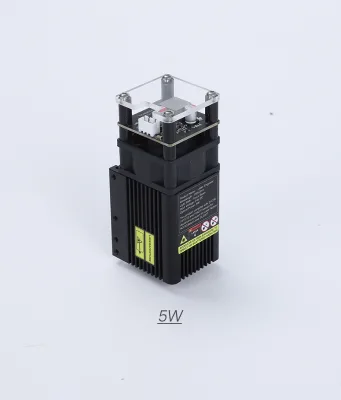
Find and compare 30 Air Assisted Laser Cutting Module options for industrial cutting, engraving, and 3D printing applications. Evaluate specifications such as 450nm wavelength, 1.6W to 20W power, and RoHS/CE certifications to select the right laser source for your manufacturing needs.
Key considerations
Products List

450nm 20W Focal Length Adjustable Laser Module for Laser Cutting Machine
$185.00 - $240.00
MOQ: 1 Pieces


Adjustable 450nm 1600MW Blue Laser Module 1.6W Laser Module for Cutting
$30.00 - $35.00
MOQ: 10 Pieces

Factory Price 450nm 20W Focal Length Adjustable Laser Module for Cutting Machine
$185.00 - $240.00
MOQ: 1 Pieces


2. Advanced Laser Cutting System for Medical and Aerospace Applications
$10000.00 - $20000.00
MOQ: 1 Pieces

Advanced Laser Cutting System for High-Precision Manufacturing Operations
$10000.00 - $20000.00
MOQ: 1 Pieces

Advanced Precision Laser Cutting System for New Material Processing
$28000.00 - $330000.00
MOQ: 1 Pieces

14. Advanced Laser Cutting System for 800mmx1000mm Material Processing
$60000.00 - $80000.00
MOQ: 1 Pieces


Advanced Laser Cutting System for 800mmx1000mm Material Dimensions
$60000.00 - $80000.00
MOQ: 1 Pieces


Comprehensive Sourcing Guide
Air Assisted Laser Cutting Module Sourcing Guide
The air-assisted laser cutting module represents a critical component in modern precision manufacturing, designed to enhance cutting efficiency by utilizing a focused stream of compressed air to clear molten material and cool the kerf. In the context of the current market, these modules are frequently identified by their specific optical power ratings, such as 20W or 1.6W variants, and are engineered for applications ranging from industrial cutting and engraving to specialized tasks like 3D printing and laser leveling. Buyers must recognize that while the core function remains consistent, the physical implementation varies significantly between through-hole and surface-mount structures, with dimensions often cited as 6663109mm or compact 333355mm forms depending on the intended integration.
Procurement decisions for these modules require a clear understanding of the distinction between standard and non-standard components, as the supply chain offers both generic off-the-shelf units and highly customized solutions. The observed market data indicates a wide spectrum of pricing, ranging from budget-friendly options to high-end industrial units, which often correlates with the complexity of the optical assembly and the durability of the cooling mechanisms. Sourcing strategies should prioritize verifying the specific wavelength, typically 450nm for blue laser modules, and ensuring the input voltage matches the system requirements, whether 12V or 24V, to prevent operational failures in the final assembly.
Product Scope and Observed Listing Signals
When evaluating product listings, buyers should look for specific signals that distinguish a functional air-assisted cutting module from a generic laser diode. The presence of detailed structural descriptions, such as "Through Hole" or "Surface Mount," provides immediate insight into the mounting method and compatibility with existing PCB designs or mechanical housings. Listings that explicitly mention "Laser Source" and "Laser Module" alongside application tags like "Cutting and Engraving" or "Laser Point" offer a clearer picture of the device's intended utility, whereas vague descriptions may indicate a component that lacks the necessary beam quality or stability for precision cutting tasks.
The observed product range includes modules with varying service lives, with some specifications citing up to 10,000 hours of working time while others list 8,000 hours, a critical factor for long-term operational planning. Buyers must scrutinize the listed dimensions and weight, as the physical footprint, such as 6663109mm versus 333355mm, dictates the spatial constraints within the cutting machine. Additionally, the mention of specific models like K66B200W-T or JLM45160ZA-O1Y5 serves as a verification anchor, allowing procurement teams to cross-reference technical datasheets and ensure the optical power, such as 1.6W or 20W, aligns with the material thickness and cutting speed requirements of the target application.
Technical Specifications to Verify
Verification of the optical power and wavelength is the first step in ensuring the module meets the cutting performance criteria. While the market data highlights 450nm blue light modules with powers ranging from 1.6W to 20W, the actual cutting capability depends heavily on the beam spot characteristics, which are described as either DOT or Line with a size of less than 15mm. Buyers must confirm that the irradiation distance, noted as 8m in some listings, is consistent with the focal length requirements of their specific machine setup, as an incorrect focal distance can lead to poor cut quality or excessive material burn.
Electrical and thermal specifications require rigorous validation to prevent system instability during operation. The input voltage and current, typically 12V at 2A or 24V, must be matched precisely to the power supply unit to avoid voltage drops that could affect beam stability. Furthermore, the operating temperature range, observed between -5°C to 45°C or -0°C to 70°C, and the storage temperature limits, often -40°C to 85°C, are critical for determining the environmental robustness of the module. Buyers should also verify the wire length, such as the 25cm specification, to ensure it accommodates the internal routing of the cutting machine without requiring risky modifications.
Compliance and Safety Documentation
Compliance with international safety and environmental standards is non-negotiable for industrial laser equipment, and buyers must demand proof of certification before finalizing any purchase. The supply chain data indicates that reputable modules often carry RoHS, CE, and ISO certifications, with some listings also including CCC marks, which are essential for market access in various regions. These certifications serve as evidence that the product has undergone testing for electromagnetic compatibility, electrical safety, and the restriction of hazardous substances, ensuring that the module does not pose a risk to operators or the environment.
Safety documentation must also address the specific hazards associated with high-intensity laser radiation, particularly in the blue spectrum. Buyers should verify that the supplier provides clear warnings regarding the working temperature and storage conditions, as exceeding these limits can degrade the optical components and compromise safety. The presence of a "High-Quality" designation in product descriptions should be backed by tangible test reports or quality assurance protocols, rather than serving as a marketing claim, to ensure that the module meets the rigorous safety standards required for industrial cutting applications.
Cost Drivers and Commercial Terms
The cost of an air-assisted laser cutting module is influenced by a complex interplay of factors, including the optical power, the complexity of the housing structure, and the level of customization required. While the observed price range spans from $0.1 to $330,000, this vast disparity reflects the difference between low-power diode modules and high-power industrial systems, as well as the inclusion of advanced cooling and control features. Buyers should be wary of prices that seem unusually low, as they may indicate a lack of necessary certifications or the use of substandard components that could lead to premature failure and increased downtime costs.
Commercial terms, particularly the Minimum Order Quantity (MOQ), play a significant role in the total cost of ownership and inventory management. The market data shows an MOQ range from 1 to 500 units, offering flexibility for prototyping and small-batch production, while larger orders may benefit from volume discounts. Buyers must also consider the packaging type, whether "Standard Package" or "Individual Package," as this affects the logistics cost and the risk of damage during transit. Understanding these commercial variables allows procurement teams to negotiate effectively and align their purchasing strategy with their production volume and budget constraints.
Supplier Qualification and Quality Control
Supplier qualification is a critical step in mitigating the risks associated with sourcing electronic components, and buyers should prioritize suppliers with a proven track record in the laser industry. The origin of the products, frequently listed as Guangdong, China, or Dongguan, suggests a concentration of manufacturing expertise in this region, but buyers must verify the specific factory capabilities and quality control processes. A qualified supplier should be able to provide detailed documentation on their production standards, including adherence to ISO and other relevant industry norms, to ensure consistency across batches.
Quality control measures must extend beyond the initial inspection to include ongoing monitoring of the product's performance and reliability. Buyers should request sample units to test the service life, which is often cited as 8,000 to 10,000 hours, and verify that the working time specifications are met under real-world operating conditions. The supplier's ability to offer customization, as indicated by the "Customization: Available" attribute, is also a key indicator of their technical capability and willingness to adapt to specific buyer requirements, ensuring that the final product integrates seamlessly into the cutting system.
Long-Term Procurement Checks
Establishing a long-term procurement strategy requires regular audits of the supplier's performance and the product's reliability over time. Buyers should implement a system for tracking the failure rates of the modules and comparing them against the expected service life to identify any trends that might indicate a quality issue. This proactive approach allows for early intervention and prevents costly disruptions in the production line, ensuring that the air-assisted laser cutting modules continue to meet the high standards required for precision manufacturing.
Continuous improvement in the procurement process involves staying informed about technological advancements and changes in industry standards. As the laser technology evolves, buyers should regularly review the specifications of their current modules against new market offerings to ensure they remain competitive. By maintaining a close relationship with suppliers and demanding transparency in their quality control and certification processes, buyers can secure a reliable supply chain that supports the long-term success of their laser cutting operations.
FAQs
What is the power output of the Air Assisted Laser Cutting Module?
The module offers a power output of 20W for cutting applications. Some variants provide 1.6W or 3.5W optical power suitable for different tasks. These units operate at 24V or 12V input voltage depending on the specific model selected for your needs.
Which certifications do these laser modules hold for safety compliance?
These laser modules hold RoHS, CE, ISO, and CCC certifications for safety compliance. This ensures they meet international standards for electronic components. Buyers can verify these credentials when sourcing from manufacturers in Guangdong, China.
Can I find customized laser modules for specific cutting requirements?
Customization is available for laser modules to meet specific cutting requirements. While some units are non-customized, options exist for tailored specifications. Buyers should check with suppliers regarding lead times and minimum order quantities for custom orders.
What is the service life of the Air Assisted Laser Cutting Module?
The service life of the module is typically 8000 hours for standard operation. Some high-quality variants offer up to 10000 hours of working time. This longevity supports continuous industrial use in cutting and engraving applications.
How does the working temperature range affect module performance?
The module operates within a working temperature range of -5 to 45 degrees Celsius or -0 to 70 degrees Celsius. Storage temperatures can extend from -40 to 85 degrees Celsius. Maintaining these ranges ensures stable performance and prevents damage to internal components.
What is the minimum order quantity for purchasing these laser modules?
The minimum order quantity is 1 unit for many standard models. Some suppliers may require up to 500 units depending on the specific product configuration. Buyers should verify the exact MOQ with the manufacturer before placing an order.
Which industries can utilize this Air Assisted Laser Cutting Module?
These modules are applicable for building material shops, manufacturing plants, and rest industries. They are also suitable for laser point, laser level, and 3D printing applications. The 450nm wavelength supports various precision cutting and engraving tasks.