Source Air Bag and Clock Spring Set for Suspension, Steering, and Safety
Compare 30 listings for Air Bag and Clock Spring Set components used in vehicle suspension, steering systems, and safety mechanisms. Buyers can review specifications, MOQs, and supplier details to find suitable parts for universal fitment applications; compare the available evidence and request quotations based on your requirements.
Key considerations
Products List


Comprehensive Sourcing Guide
Air Bag and Clock Spring Set Sourcing Guide
Procuring an Air Bag and Clock Spring Set as a combined purchase is common for repairers and parts distributors handling steering column and suspension-related replacements, but it demands careful separation of two very different component categories. An air suspension air bag is a rubber-and-aluminum air spring whose performance depends on material quality and pressure integrity, while a clock spring is a rotary electrical connector in the steering column whose failure can disable airbag deployment, horn, and steering wheel controls. Sourcing both from one listing or one supplier requires verifying that the seller genuinely manufactures or controls quality for each item rather than bundling unrelated stock.
This guide structures the buyer's decisions across seven areas: understanding what listings actually signal, verifying technical specifications, checking compliance documentation, evaluating commercial terms, qualifying suppliers, and planning long-term repeat purchasing. Throughout, treat listed product attributes as observations about a listing, not guarantees that every item in a catalog satisfies them. The facts referenced here come from observed product-page data, including MOQs from 1 to 1,000 pieces, listed prices from roughly $0.06 to $69.99, and supplier attributes such as ISO/TS16949 certification claims and 12-month guarantees, which should always be independently confirmed before contract.
Product Scope and Observed Listing Signals
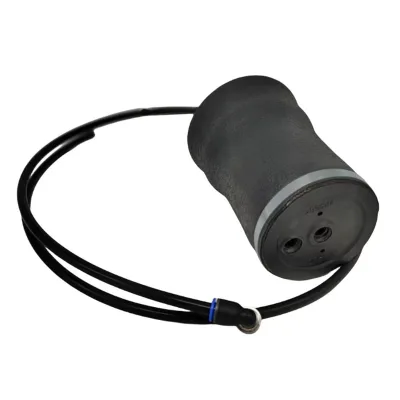
Observed listings for air bag components center on air suspension air springs, with keywords such as "Air suspension air bag," usage described as "Air Suspension System," and purpose listed as "air spring." These are universal-fit items, meaning buyers must confirm vehicle compatibility themselves rather than relying on fitment data. Related observed listings include gas-filled, double-cylinder shock absorber products with aluminum pistons, foam-cell off-road dampers, and seat parts with ±30mm adjustable range. A clock spring in a combined set is typically listed under OEM model references, so buyers should expect the clock spring portion of any set to be matched by OEM number rather than by generic fitment claims.
Listing signals such as "Universal" car fitment, "OEM: Yes," and "Minimal Qty: 1" tell you the seller targets both retail-scale and volume buyers, but they do not tell you which specific vehicles are covered. The observed price spread—from under one dollar to nearly seventy dollars—reflects genuinely different product tiers, and a set combining an air spring with a clock spring should not be priced against either single component alone. Where a listing shows model numbers like SLP-QN1, 8050, or 400-100, record these as the basis for sample comparison and repeat-order consistency checks rather than as fitment assurances.
Technical Specifications to Verify
For the air bag portion, the critical specifications are material and construction. Observed data lists rubber as the material type and aluminum as the piston material, both of which buyers should confirm against their application requirements: rubber compound quality governs flexibility and crack resistance across temperature cycles, while the aluminum piston affects sealing and durability. Verify the air spring's working pressure range, collapsed and extended heights, end-connection type, and diameter before ordering, since universal-fit air bags frequently need bracket or line adaptation. The observed single gross weight of 1.000 kg and package size of 20×15×10 cm are useful for logistics planning but say nothing about performance.
For the clock spring, verify the OEM cross-reference, connector pin count and configuration, ribbon-cable length, and steering lock-to-lock rotation tolerance. A clock spring installed with incorrect centering or insufficient rotation range will fail prematurely or sever airbag circuits, so request the supplier's centering procedure documentation. For paired shock absorber items in the same sourcing exercise, observed attributes include "Double Cylinder," "Gas-Filled," and "Single Effect" damping direction—confirm which configuration your application requires. Ask each supplier for dimensional drawings and material data sheets rather than accepting catalog photographs, and request that samples be checked against these drawings on receipt.
Compliance and Safety Documentation
Safety-critical status is the defining feature of this category. A clock spring carries the airbag electrical circuit; a defective unit can prevent deployment or cause false warning states, so request documentation showing the part meets the airbag-component requirements applicable to your destination market. Observed supplier data includes certification claims of ISO and ISO/TS16949, which indicate automotive quality-management systems, and one listing references ISO/TS in connection with drum brake classification—evidence that certification statements in this category can be loosely attached and must be matched to the specific product, not the seller's storefront.
For the air bag (air spring), request material safety documentation for the rubber compound, pressure-test records for the production batch, and confirmation of any destination-market vehicle-safety requirements. Note that observed listings carry a 12-month guarantee and 12-month after-sales service commitment; treat these as contractual starting points and clarify in writing whether the guarantee covers airbag-related consequential claims. For any set destined for regulated markets, ask the supplier to identify which certifications apply to the finished set versus individual components, and obtain copies of certificates with scope statements and validity dates. Never accept a logo alone—unscoped certificates are the most common documentation gap in this product family.
Cost Drivers and Commercial Terms
Observed commercial parameters give a realistic picture of negotiating levers. MOQs in the observed listings range from 1 piece to 1,000 pieces, and unit prices span roughly $0.06 to $69.99, meaning volume commitments materially move pricing. The observed supply capacity of 10,000 pieces per month is relevant when planning program volumes; confirm whether that figure applies to air bags, clock springs, or the combined set. Customization is listed as available, which typically raises unit cost and minimum commitments but improves fitment accuracy. Packaging is described as carton box plus bubble bag, with one piece per box—adequate for air springs but confirm clock springs receive anti-static and crush protection.
Beyond unit price, model the landed cost: single-item selling units and 1 kg gross weight keep freight modest for samples, but a 1,000-piece MOQ changes the freight equation substantially. Clarify whether the quoted price covers the full set or per component, whether OEM-branded packing is included (one listing specifies "OEM" packing), and what sample terms apply—one observed listing states "Sample: Contact with Supplier," so expect to negotiate sample cost and freight separately. Define payment milestones, inspection rights before shipment, and the guarantee (12 months in observed listings) as enforceable terms, not storefront promises.
Supplier Qualification and Quality Control
Observed supplier profiles describe themselves as manufacturers ("Business Type: Manufacture") with origins in Shaanxi, Qingdao, and Jinan, China, and main markets listed across South America, North America, the Middle East, and Africa. A manufacturer claiming ISO/TS16949 should provide the certificate scope covering the product line you are buying, not merely the company. For a set combining an air spring and a clock spring, determine whether one factory produces both or the seller consolidates from multiple sources; multi-source sets shift your quality-control burden onto incoming inspection. Where OEM supply is claimed ("OEM: Yes"), request references or traceability evidence.
Build incoming quality control around the failure modes of each component. For air springs, inspect for rubber surface defects, bead and crimp integrity at the aluminum piston, and leaks via pressure-hold testing on a sample basis. For clock springs, verify connector mating, ribbon continuity across all circuits through full rotation, and correct centering on installation. Define an acceptable quality limit with the supplier before first production order, require batch traceability via the model numbers (e.g., SLP-QN1, 8050), and retain sealed samples from each approved batch. Audit production sites personally or through a third party for ongoing volume programs.
Long-Term Procurement Checks
Sustained sourcing success depends on monitoring consistency after the first order. Re-verify with each production batch that materials, dimensions, and connector configurations match the approved samples, because supplier changes in rubber compound, piston casting, or ribbon-cable source are common and rarely announced. Track field-failure rates by model number and batch, and feed warranty claims back against the 12-month guarantee terms to establish a factual performance record. Confirm annually that certification documents remain valid and scoped correctly, particularly where listings mix certification claims across product categories.
Also revisit commercial terms as volumes grow. A supplier listing 10,000 pieces per month capacity and customization availability can usually improve pricing, packaging, and dedicated stock arrangements once your demand history justifies it—negotiate from data, not assertion. Watch for fitment creep: universal-fit air bags and OEM-referenced clock springs should be re-checked against updated vehicle coverage each model year. Maintain a qualified alternate source for each component in the set, even if unused, so a single supplier disruption does not stall your service operation. Document every agreed specification in a controlled drawing set to keep repeat orders identical.
FAQs
What is the MOQ for Air Bag and Clock Spring Set orders?
The minimum order quantity is 1 piece, allowing buyers to test quality before committing to larger volumes. This low entry point supports small-scale procurement needs. The supply ability reaches 10000 pieces per month, ensuring consistent availability for ongoing production requirements without long delays.
Can I customize the Air Bag and Clock Spring Set specifications?
Yes, customization is available for specific application requirements. Buyers can request tailored dimensions or material adjustments to fit unique vehicle models. The product supports OEM standards, ensuring compatibility with existing systems. Contact the supplier directly to discuss specific customization parameters and lead times.
What certifications does the Air Bag and Clock Spring Set hold?
The product holds ISO and ISO/TS16949 certifications, indicating adherence to quality management standards. These credentials ensure reliable manufacturing processes and material consistency. Buyers can verify these documents for compliance with international automotive industry requirements, providing confidence in the product's durability and safety performance.
Where is the Air Bag and Clock Spring Set manufactured?
The product originates from Shaanxi, China, with additional production capabilities in Qing Dao and Jinan. These locations support efficient logistics and supply chain management. Buyers can specify preferred origin regions for shipping optimization. The manufacturing facilities are equipped to handle high-volume orders while maintaining strict quality control protocols.
What is the warranty period for the Air Bag and Clock Spring Set?
The product comes with a 12-month guarantee, covering manufacturing defects and material failures. This warranty period provides buyers with adequate protection for initial installation and testing phases. After-sales service is available for 12 months, ensuring support for any technical issues that may arise during the warranty duration.
How is the Air Bag and Clock Spring Set packaged for shipping?
The product is packaged in a carton box with a bubble bag for protection. Each unit is individually boxed to prevent damage during transit. The single package size is 20x15x10 cm, with a gross weight of 1.000 kg. This packaging ensures safe delivery while minimizing storage space requirements for buyers.